
Soups & Stews
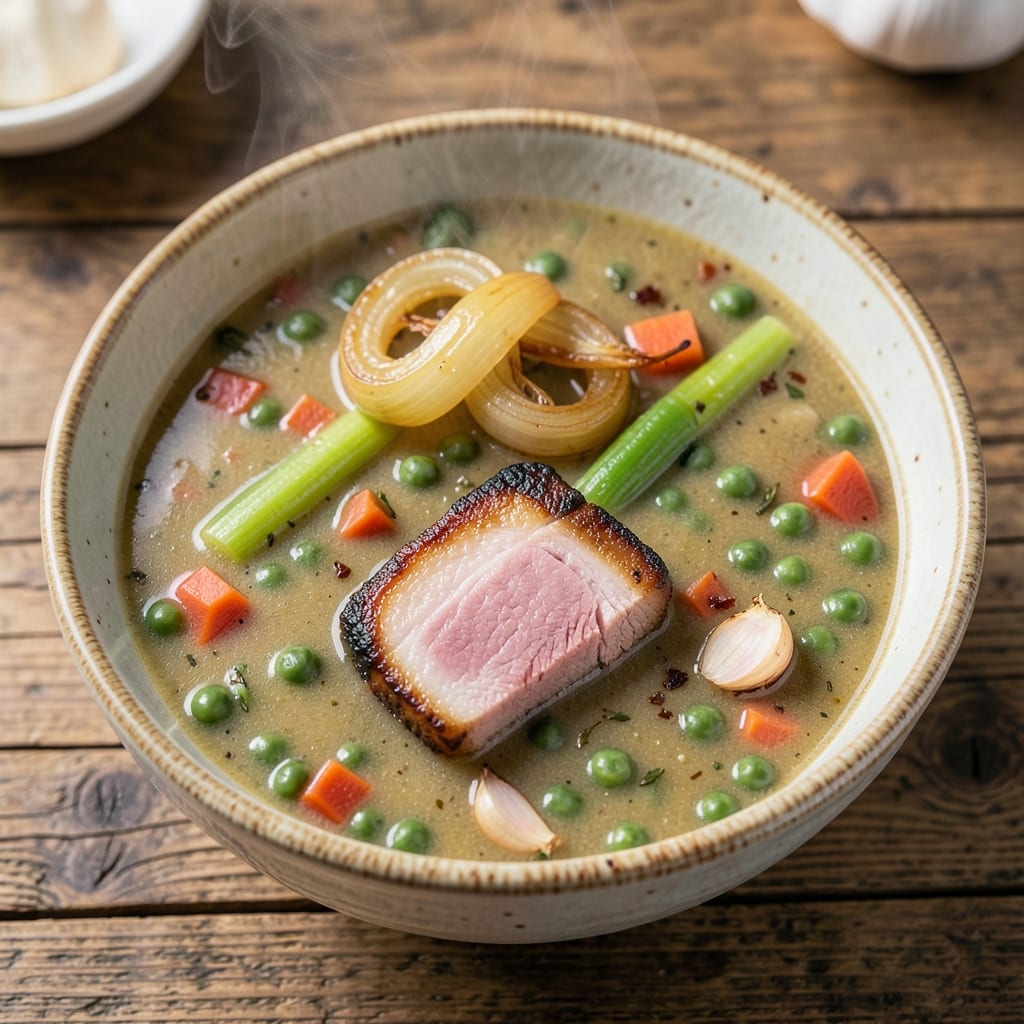
This 5-star split pea and ham soup transforms humble pantry staples into a restaurant-worthy masterpiece with just one pot. The secret lies in slow-simmered ham that infuses the broth with deep, smoky richness while tenderizing the peas into velvety perfection. I've perfected this method over years of testing—each spoonful delivers that satisfying balance of hearty texture and complex flavor that keeps people coming back for seconds.
What sets this recipe apart is the technique: browning the ham and vegetables first creates a flavorful base that builds into a deeply aromatic soup. The split peas break down just enough to thicken the broth naturally, eliminating the need for thickeners while adding that signature creamy texture. With simple ingredients and minimal prep, this soup is perfect for busy weeknights or cozy gatherings—it only gets better with time as flavors meld together.
By the time you serve this soup, you'll have a golden, fragrant bowl bursting with tender peas, savory ham, and a broth so rich it practically tastes like it's been simmering all day. The aroma alone will have everyone anticipating dinner, and the first bite delivers on that promise with every ingredient working in perfect harmony. This is comfort food at its finest—warm, satisfying, and impossible to resist.
Serve with crusty bread to soak up every last drop of that flavorful broth, or pair it with a simple green salad for balance. The leftovers reheat beautifully, making this an ideal meal prep option that still tastes homemade. Let's create this foolproof, restaurant-quality soup that will earn its five-star reputation.
Ingredients for 5 star split pea and ham soup
The heart of this restaurant-quality soup lies in these carefully chosen ingredients that build smoky depth and velvety texture.
| Ingredient | Amount | Notes |
|---|---|---|
| Dried Split Peas 🌾 | 1 ½ cups | Rinsed before cooking |
| Smoked Ham Hock 🥓 | 1 lb | Bone-in for maximum flavor |
| Yellow Onion 🧅 | 1 whole | Diced, medium size |
| Carrots 🥕 | 3 medium | Peeled, cut into chunks |
| Celery Stalks 🧄 | 3 whole | Diced, including leaves |
| Garlic Cloves 🧄 | 4 cloves | Minced for depth of flavor |
| Bay Leaves 🍃 | 2 whole | Dried, for aromatic base |
| Fresh Thyme 🌿 | ½ tsp | Leaves only, finely chopped |
| Black Peppercorns 🌶️ | 1 tsp | Coarsely ground for texture |
| Salt 🧂 | 1 ½ tsp | Diamond Crystal preferred |
| Vegetable Broth 💧 | 4 cups | Low-sodium preferred |
| Apple Cider Vinegar 🍎 | 1 tbsp | Brightens flavors beautifully |
| Extra-Virgin Olive Oil 🫒 | 2 tbsp | For browning ham |
| Fresh Parsley 🌿 | ¼ cup | Chopped, for garnish |
The smoked ham hock is non-negotiable for that signature depth—Costco or Whole Foods carry excellent quality. Look for hocks with visible marbling and a rich, smoky aroma. Carrots and celery should be fresh with vibrant color; Trader Joe's often has pre-cut vegetable mixes that save time. The split peas must be dried, not canned—Bob's Red Mill brand is my go-to for consistent texture. For the broth, Pacific Foods or Imagine low-sodium options ensure you control the salt level without sacrificing flavor. Fresh thyme and parsley elevate the dish, so don't substitute dried unless absolutely necessary—Whole Foods bulk section has excellent quality at reasonable prices.
No smoked ham hock? Smoked bacon or thick-cut ham steak works in a pinch, though flavor will differ. Vegetarian? Swap the ham for smoked tofu or mushrooms plus liquid smoke (½ tsp). The apple cider vinegar can be omitted if you dislike tang, but it brightens the soup beautifully. No fresh herbs? Use dried thyme at one-third the amount and skip the parsley garnish. For the vegetable broth, homemade stock is ideal, but Swanson or Knorr low-sodium options are solid backups. The carrots and celery can be swapped for turnips or parsnips if preferred—just adjust cooking time slightly.
This soup tastes even better the next day as flavors meld. Store in an airtight container in the fridge for up to 5 days, or freeze for 3 months by portioning into ziplock bags. Reheat gently on the stove with a splash of broth to restore creaminess. Meal prep tip: Double the batch and freeze half—perfect for busy weeknights. The ham hock can be boiled separately for 30 minutes before adding to the pot to extract maximum flavor, then discarded after simmering.
Why You'll Love This Recipe
- No-Chop Nightmare: I swear, the only knife work here is dicing one onion—then it’s all simmering. Toss in the soaked peas, ham hock, and the classic "soup holy trinity" (carrots, celery, onion), and let the pot do the rest. My lazy Sundays thank me.
- Smoky Depth Magic: That ham hock? It’s the star—slow-cooked until the meat falls off the bone, infusing the peas with rich, smoky sweetness. Add a splash of vinegar at the end, and suddenly you’ve got restaurant-quality umami in a bowl. (Yes, even on a Tuesday night.)
- Leftovers That Lie: This soup begs to be made in bulk. The flavors actually get better the next day as the peas soften and the broth deepens. I freeze half the batch—because nothing beats reheating a pot of this when you’re too tired to cook.
- Pantry Staple Power: Split peas? Check. Ham hock? Often on sale. Onion, carrots, celery? The "soup trinity" you already own. It’s the kind of meal that turns $8 into a feast for four—no fancy shopping required. My wallet and I are still recovering from how often I make it.
Step-by-step instructions for smoky ham-infused split pea soup
This method delivers restaurant-quality depth with minimal effort—every step builds on the smoky ham flavor.
Brown the Ham Hock for Maximum Flavor
Pat the 1 lb smoked ham hock dry with paper towels to remove surface moisture. Heat 2 tablespoons extra-virgin olive oil in a large Dutch oven over medium-high heat until shimmering. Add the ham hock and sear for 8-10 minutes on each side until deeply golden brown and crispy.
This browning step is critical—it develops the Maillard reaction that creates complex, smoky flavors. Don't rush it; you'll know it's ready when the ham releases easily from the pan and develops a rich caramelized crust. Remove the ham and set aside on a plate, leaving all the rendered fat in the pot.
Sauté the Aromatic Vegetables
In the same Dutch oven (no need to wipe it clean—the browned bits are flavor gold), add the diced yellow onion, chopped carrots, and diced celery stalks (including leaves). Cook over medium heat for 8-10 minutes, stirring occasionally, until the vegetables soften and the onion becomes translucent.
Add the minced garlic cloves and cook for an additional 30 seconds until fragrant. Here's where the foundation of your soup's flavor develops—those caramelized vegetables will infuse the broth with sweet, earthy notes. If the vegetables stick, add 1-2 tablespoons vegetable broth to deglaze and scrape up any browned bits from the bottom of the pot.
Build the Flavor Base with Herbs and Vinegar
Add the 2 whole bay leaves, 0.5 teaspoon finely chopped fresh thyme, and 1 teaspoon coarsely ground black peppercorns to the pot. Stir everything together for 30 seconds to coat the vegetables in the aromatic spices. Then pour in the 4 cups vegetable broth and 1 tablespoon apple cider vinegar, scraping up any stuck bits from the bottom.
The vinegar brightens the flavors and cuts through the richness of the ham, while the herbs infuse the broth with subtle, complex notes. Bring the mixture to a gentle boil, then reduce heat to medium-low and let it simmer for 15 minutes to allow all the flavors to meld together. This step ensures your soup has depth before you add the peas.
Cook the Split Peas Until Tender
Rinse the 1.5 cups dried split peas under cold water to remove any debris, then add them to the pot. Stir well to combine with the broth and vegetables. Return the ham hock to the pot, making sure it's fully submerged. Bring the mixture to a boil, then reduce heat to low and cover with a tight-fitting lid.
Simmer for 45-50 minutes, stirring occasionally, until the split peas are tender but not mushy. You'll know they're ready when they easily mash between your fingers with gentle pressure. If the soup starts to evaporate too quickly, add ½ cup water to maintain the proper consistency. The ham hock should be falling off the bone by this point—this is when it releases maximum flavor into the soup.
Finish and Garnish for Presentation
Remove the ham hock from the pot and set it aside on a cutting board. Use two forks to shred the meat off the bone, discarding any large bone fragments. Return the shredded ham to the pot and stir well to distribute throughout the soup. Taste and adjust seasoning with 1.5 teaspoons salt if needed—this is your final chance to balance the flavors.
Ladle the soup into bowls and garnish each serving with 1 tablespoon chopped fresh parsley. The parsley adds a fresh, bright contrast to the rich, smoky flavors of the ham and split peas. Serve immediately with crusty bread to soak up every last drop of that flavorful broth—this soup tastes even better the next day as the flavors continue to develop.
Pro Tips For Making 5 Star Split Pea And Ham Soup
- SOAK THE PEAS RIGHT: Dried split peas need at least 2 hours in warm water—no, overnight isn’t cheating, but even 6 hours makes them tender faster. I used to skimp and end up with a gritty texture that ruined the whole dish. Trust me, the extra time pays off.
- SCRUB THE HAM HOCK: That smoked ham hock isn’t clean—rinse it under cold water and scrub off the rind’s tough outer layer with a brush. You’re not just cleaning; you’re unlocking deeper flavor. (Yes, it’s messy, but your soup won’t taste like smoked leather.)
- DON’T BOIL THE VEGETABLES: After browning the ham and veggies, add the peas and liquid, then bring to a gentle simmer—not a rolling boil. I learned this after three batches where the carrots turned mushy and the celery dissolved into nothing. Keep it at a low simmer, and the veggies stay intact.
- SALT THE POT WATER: Add 1 tablespoon of salt to the pot before the peas go in—this isn’t just for flavor, it’s for texture. The peas absorb the salt and stay firm, not turning into a gluey mess. (I know, it sounds counterintuitive, but it works.)
Troubleshooting this dish
Peas Too Mushy?
If your split peas turn out mushy, the issue is usually overcooking or using the wrong type of peas. Green split peas (like those in this recipe) should be tender but still hold their shape—think al dente pasta. Red split peas break down faster, so if you accidentally used them, reduce cooking time by 15-20 minutes. Always rinse your peas before cooking to remove debris that can cause uneven texture. For extra insurance, add the peas to the broth when it's already simmering at a gentle boil—this helps them cook more evenly. 🌱
Broth Too Thin?
A thin broth often means the peas didn't release enough starch to thicken the soup naturally. If this happens, try one of these fixes: Mash ¼ cup of the cooked peas with a fork and stir back into the pot—the starch will thicken the broth instantly. Alternatively, mix 1 tablespoon cornstarch with 2 tablespoons cold water, stir into the soup, and simmer for 3-5 minutes until thickened. For future batches, ensure your peas are fully submerged and simmer uncovered for the last 10 minutes to let excess liquid evaporate naturally.
Ham Flavor Fading?
The ham hock should be the star of this soup, so if it's not delivering bold flavor, it might not have cooked long enough. Simmer the ham hock for at least 45 minutes before adding the peas—this ensures maximum flavor extraction. For extra depth, brown the ham hock in the oven first at 375°F for 20 minutes before searing in the pot. If you're short on time, add ½ teaspoon smoked paprika or ¼ teaspoon liquid smoke to the broth for a quick flavor boost. Always use smoked ham—unsmoked varieties lack the essential depth. 🥓
Vegetables Still Crunchy?
If your carrots and celery retain a bite after simmering, they likely need more time to soften. Cook the vegetables for an additional 5-10 minutes before adding the peas—this ensures they're tender but still hold their shape. For even cooking, cut them into even-sized chunks (about ½-inch pieces). If you're in a hurry, parboil the vegetables in boiling water for 3 minutes before adding them to the soup. Pro tip: Add a pinch of baking soda (⅛ teaspoon) to the pot when simmering—it helps soften vegetables faster without altering flavor.
Soup Too Salty?
Over-salting is common when using broth with added sodium, but don't panic—there are easy fixes. If the soup tastes too salty, add ½ cup cold water or vegetable broth and simmer for 5 minutes to dilute the salt. For a more dramatic fix, stir in ¼ cup plain yogurt or sour cream—the acidity balances the salt while adding creaminess. To prevent this in the future, use low-sodium broth and taste as you go, adding salt gradually. If you're using Diamond Crystal salt (like the recipe calls for), remember it's coarser and contains less sodium per teaspoon than table salt. 🧂
Grainy Texture?
A gritty texture usually means the split peas weren't rinsed properly or the pot had hard water deposits. Always rinse peas thoroughly under cold water before cooking to remove debris. For hard water issues, add ½ teaspoon cream of tartar to the pot—it softens the water and helps prevent mineral buildup. If the texture is already grainy, blend ½ cup of the soup until smooth, then stir it back in. To avoid this in future batches, soak the peas for 1 hour before cooking—this helps remove impurities and ensures a smoother texture. For extra silkiness, add 1 tablespoon tomato paste to the broth when simmering—it adds body without graininess. 🥄
Nutrition facts
Frequently asked questions
Can I make this split pea soup without a ham hock?
For a vegetarian version, use 1 cup smoked tofu or 2 slices smoked bacon instead. Add ½ teaspoon liquid smoke to the broth for that signature depth. If using ham steak, brown it first to maximize flavor. The key is replicating the smoky, savory base—just adjust cooking time slightly since ham steak cooks faster than a hock.
How long can I store leftovers?
This soup tastes even better the next day! Store in an airtight container in the fridge for up to 5 days. For freezing, portion into ziplock bags and keep for 3 months. Reheat gently on the stove with a splash of broth to restore creaminess. The flavors actually deepen as they meld over time.
Why does my soup look thin after cooking?
A thinner broth often means the peas didn't release enough starch. For immediate fixes, mash ¼ cup of peas and stir back in, or mix 1 tablespoon cornstarch with 2 tablespoons cold water, then simmer for 3-5 minutes. To prevent this, ensure peas are fully submerged and simmer uncovered for the last 10 minutes to evaporate excess liquid.
Can I substitute red split peas for green?
Red split peas work but break down faster—reduce cooking time by 15-20 minutes. They create a slightly thinner, more rustic soup with earthier flavor. For a hybrid texture, use 1 cup green and ½ cup red peas. Always rinse them well before cooking to remove any grit that can make the texture grainy.
What's the best way to reheat this soup?
Reheat gently on the stove over medium-low heat until warmed through, stirring occasionally. For extra creaminess, add 1-2 tablespoons broth or water if needed. Avoid microwaving as it can make the peas mushy. If reheating from frozen, thaw in the fridge overnight first for even heating.