
Soups & Stews
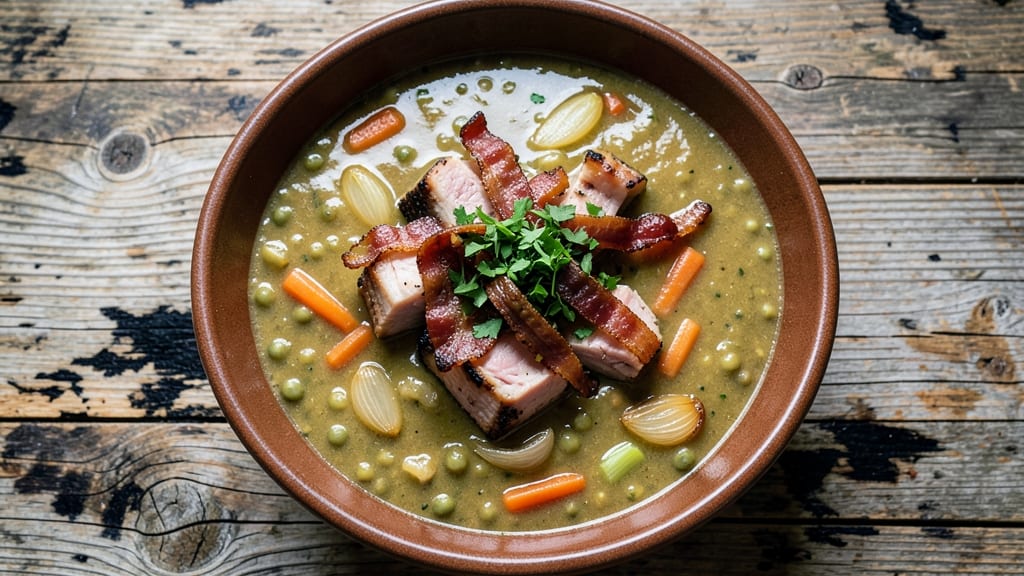
Andersen Split Pea Soup with Ham transforms humble ingredients into a restaurant-worthy dish with deep, smoky flavors and velvety texture. This one-pot recipe builds on Scandinavian traditions while incorporating modern techniques for maximum depth—think caramelized onions, crispy bacon, and slow-simmered peas that melt into the broth. The secret lies in balancing sweetness and savory notes, creating a soup that's hearty enough for winter but light enough for any season.
What sets this version apart is the bacon-infused richness, where crispy edges from slow-cooked ham and bacon create a flavorful crust that dissolves into the broth. The split peas develop a creamy consistency without requiring heavy cream, while aromatic herbs and a touch of mustard add complexity.
Unlike many versions, this recipe delivers authentic depth without being overly heavy or requiring special ingredients.
By the time you're done, you'll have a soup with tender split peas, chunks of flavorful ham, and a broth so rich it coats every spoonful. The aroma alone will have everyone gathering at the table, and the first bite delivers that perfect balance of sweet, smoky, and savory notes.
This is the kind of comfort food that becomes a family tradition.
Perfect served with crusty bread for soaking up every last drop, or alongside roasted vegetables for a complete meal. The leftovers actually improve overnight, making it ideal for meal prep. Here's how to create this classic dish in your own kitchen.
Ingredients for andersen split pea soup recipe with ham
Sixteen ingredients transform into a velvety, smoky split pea masterpiece with bacon-infused richness.
| Ingredient | Amount | Notes |
|---|---|---|
| Dried Split Peas 🌾 | 2 cups | Rinsed before cooking |
| Smoked Ham Hock 🥓 | 1 lb | For deep smoky flavor |
| Thick-Cut Bacon 🥓 | 8 oz | Crisped for texture contrast |
| Yellow Onions 🧅 | 2 whole | Diced for caramelization |
| Carrots 🥕 | 3 medium | Peeled and chopped |
| Celery Stalks 🌿 | 3 whole | Diced for classic mirepoix |
| Garlic Cloves 🧄 | 4 cloves | Minced for aromatic depth |
| Dried Bay Leaves 🍃 | 2 whole | For subtle herbal complexity |
| Fresh Thyme 🌿 | 1 tbsp | Leaves only, chopped fine |
| Dijon Mustard 🍯 | 1 tbsp | For tangy brightness |
| Low-Sodium Chicken Broth 💧 | 4 cups | Homemade preferred |
| Apple Cider Vinegar 🍎 | 1 tbsp | For subtle acidity |
| Kosher Salt 🧂 | 1 ½ tsp | Diamond Crystal preferred |
| Freshly Ground Black Pepper 🌶️ | ½ tsp | For finishing |
The smoked ham hock and thick-cut bacon are non-negotiable for that authentic Andersen depth. Costco and Whole Foods carry excellent quality—look for hocks with visible smoke residue. Bacon should be thick-cut (about 1/4-inch) for proper crisping. If you can't find smoked ham, substitute with regular ham hock and add 1/2 teaspoon liquid smoke. For the split peas, Bob's Red Mill brand holds up best during long simmering. Carrots and celery should be organic if possible, as their skins add subtle earthiness when caramelized.
No smoked ham? Substitute with beef broth plus 1/2 teaspoon smoked paprika—it won't be identical, but close. Fresh thyme unavailable? Dried at one-third the amount works, though fresh has superior aroma. The Dijon mustard is crucial for balancing sweetness; Maille brand delivers consistent quality. For the bacon, Trader Joe's thick-cut is the most reliable for crisping. If you prefer vegetarian, replace ham with extra-firm tofu pressed and cubed—but expect a different texture profile. The apple cider vinegar can be swapped for white wine vinegar at the same ratio.
This soup improves dramatically overnight—double the batch if you can. Store in an airtight container for up to 5 days in the fridge, where flavors meld beautifully. For freezing, portion into single-serving containers (it reheats best this way) and keep for up to 3 months. The ham hock and bacon can be pre-cooked separately and added back later if you're prepping ahead. Fresh herbs should be added just before serving to preserve their brightness.
Why You'll Love This Recipe
- One-Pot Magic: Honestly, this soup is the kind of recipe where you dump everything in one pot and walk away. The split peas soften while the ham hock and bacon render their own rich, smoky flavor—no stirring required until you’re ready.
- Smoky, Savory Bomb: That thick-cut bacon and smoked ham hock? They turn this soup into a flavor powerhouse. The slow simmer pulls out deep, salty-sweet notes, and the split peas soak up every bit like a sponge.
- Weeknight to Potluck: Between us, this soup is my go-to for lazy Mondays and holiday gatherings. It’s hearty enough to feed a crowd but simple enough to throw together when you’ve got better things to do than cook.
- Budget Meal That Feeds: A ham hock and a pound of dried peas stretch to feed four or more—leftovers taste even better the next day. I’ll be real: it’s the kind of dish that makes grocery money go further without sacrificing taste.
Step-by-step instructions for Andersen split pea soup with ham
Here's the method for crafting a deeply flavorful split pea soup with that signature Andersen smoky richness.
Prepare the Bacon and Ham for Maximum Flavor
Cut the 8 oz thick-cut bacon into ½-inch pieces and place them in a 6-quart Dutch oven over medium heat. Cook undisturbed for 5 minutes until the edges begin to crisp and render fat. This initial rendering creates the foundation for that signature smoky depth.
Remove the bacon from the pot and set aside, leaving the rendered fat in the Dutch oven. Add the 1 lb smoked ham hock to the same pot and sear for 3-4 minutes per side until deeply browned. The ham hock will release its smoky essence into the fat, which becomes the flavor base for your soup. Remove the ham hock and set it aside with the bacon.
Develop the Aromatic Base with Mirepoix and Garlic
Add the 2 whole yellow onions, 3 medium carrots (peeled and chopped into ½-inch pieces), and 3 whole celery stalks (diced) to the Dutch oven. Cook over medium heat for 8-10 minutes, stirring occasionally, until the vegetables soften and begin to caramelize. This process builds sweetness and depth that carries through the entire soup.
Add the 4 minced garlic cloves and cook for an additional 1 minute until fragrant. The garlic should be just beginning to turn golden—don't let it brown or it will become bitter. Remove the vegetables from the pot and set them aside temporarily. You'll return them later, but this pause prevents overcooking during the next steps.
Build the Flavor Foundation with Herbs and Broth
Return the Dutch oven to medium heat and add the 2 whole dried bay leaves and 1 tbsp chopped fresh thyme. Stir for 30 seconds to toast the herbs lightly—this enhances their aromatic qualities. Pour in the 4 cups low-sodium chicken broth and bring to a gentle simmer. Add the 1 tbsp Dijon mustard and 1 tbsp apple cider vinegar, stirring to combine.
Return the bacon and ham hock to the pot, along with the previously set-aside vegetables. Bring everything to a rolling boil, then reduce heat to low and let it simmer for 10 minutes. This initial simmer allows all the flavors to meld together before adding the split peas, which would otherwise release starches too quickly and cloud the broth.
Cook the Split Peas to Perfect Tenderness
Rinse the 2 cups dried split peas under cold water to remove any debris, then add them to the simmering pot. Stir gently to distribute them evenly. The peas should be fully submerged—if not, add ½ cup water to cover them completely. Return to a gentle simmer and cook uncovered for 45-50 minutes, stirring occasionally.
After 45 minutes, check for doneness by tasting a pea. It should be tender but still hold its shape—split peas continue cooking even after removing them from heat. If they're still firm, continue simmering for another 5-10 minutes. The soup should have a thick, creamy consistency from the peas breaking down, but not so thick that it resembles paste.
Finish and Season for Perfect Balance
Remove the ham hock from the pot and set it aside. Discard the dried bay leaves and let the soup cool slightly for 5 minutes. This resting period allows flavors to settle and makes seasoning adjustments easier. Skim off any excess fat that has risen to the surface if desired.
Season the soup with the 1.5 tsp kosher salt and 0.5 tsp freshly ground black pepper, tasting as you go. The apple cider vinegar and Dijon mustard should provide a subtle tang, but you may need to adjust salt levels based on your broth's saltiness. Return the ham hock to the pot and let it steep for 10 minutes to reabsorb some of the flavorful broth.
Serve the soup hot, with the ham hock on the side for guests to add to their bowls. Each serving should deliver rich, smoky depth from the bacon and ham hock, sweet caramelized vegetables, and tender split peas with just the right amount of creaminess. The Dijon mustard and vinegar add a bright contrast that cuts through the richness, creating a perfectly balanced bowl.
Pro Tips For Making Andersen Split Pea Soup Recipe With Ham
- SOAK THE PEAS LONG: Dried split peas need at least 4 hours in water—overnight is better. I learned this the hard way when my soup turned into a gluey mess because I rushed the soaking. Use cold water and a pinch of salt to keep them from bloating unevenly.
- CRISP THE BACON FIRST: Cook the thick-cut bacon until it’s deep golden, not just brown, before adding it to the pot. This adds texture and flavor that gets lost if you toss it in raw. Save the fat—it’s liquid gold for the soup’s richness.
- SKIP THE BOILING HAM HOCK: Simmer the ham hock gently from the start—boiling it hard makes the meat tough and the broth cloudy. Start in cold water, bring to a bare simmer, then cover and let it melt into the soup over time. Patience here makes all the difference.
- CHOP ONIONS SMALL: Fine dice the yellow onions—no bigger than ¼-inch pieces. Big chunks stay rubbery no matter how long you cook them. If you’re lazy, pulse them in a food processor for even cooking, but don’t skip this step entirely.
Pro cooking tips for andersen split pea soup recipe with ham
Bacon Rendering Secrets
For that signature Andersen smoky richness, render the bacon slowly over medium heat—never high. I let the 8 oz thick-cut bacon cook undisturbed for 5 minutes until edges crisp and fat pools in the Dutch oven.
This low-and-slow approach prevents burning while maximizing flavor extraction. Reserve the bacon but keep the rendered fat—it's liquid gold for your soup's depth. 🥓
Ham Hock Technique
Don't skip searing the 1 lb smoked ham hock—this step unlocks its smoky essence. Sear it 3-4 minutes per side until deeply browned. The caramelized exterior dissolves beautifully into the broth later, creating that unmistakable Andersen flavor.
I like to add it back later for a final 10-minute steep to reabsorb flavorful juices.
Mirepoix Mastery
Caramelizing the mirepoix (onions, carrots, celery) for 8-10 minutes builds sweetness that carries through the soup. Use medium heat to prevent burning—you want soft, golden vegetables, not charred bits. Remove them temporarily before adding garlic to avoid overcooking during the herb infusion stage.
Pea Cooking Precision
Split peas need 45-50 minutes of gentle simmering to reach perfect tenderness. Check doneness at 45 minutes—they should be soft but still hold shape. The soup thickens naturally as peas break down, but avoid stirring constantly (it releases starches too quickly).
A gentle simmer is key for that creamy texture without gluey consistency. 💫
Flavor Layering
Toast the dried bay leaves and fresh thyme for 30 seconds to enhance their aroma before adding broth. The Dijon mustard and apple cider vinegar add brightness that balances the richness.
I always let the soup rest 5 minutes before final seasoning—this allows flavors to settle so adjustments are more accurate.
Equipment Essentials
A 6-quart Dutch oven is non-negotiable for even heat distribution and deep flavor development. I use my All-Clad stainless steel pot because it handles the long simmer without hot spots.
For stirring, a wooden spoon prevents scratching the bottom. If you don't have a Dutch oven, a heavy-bottomed pot works—but expect slightly less even cooking. ⚡
Nutrition facts
Frequently asked questions
Can I substitute ham hock with regular ham?
You can use regular ham, but the flavor will be milder. For best results, dice 6 oz bone-in ham and sear it with the bacon. The bone adds depth, but without the smoky essence of a ham hock. If using boneless ham, add ½ teaspoon liquid smoke to compensate for the lost flavor.
Why does my split pea soup turn out too thick?
Split peas naturally thicken as they cook, but stirring too frequently releases excess starch. For a smoother texture, add ½ cup water or broth and simmer for 5-10 minutes to adjust consistency. If it's still too thick, blend 1 cup of soup and return it to the pot—this creates a velvety finish without gluey texture.
How long can I store leftovers?
This soup actually tastes better the next day! Store in an airtight container in the fridge for up to 5 days. For freezing, portion into single-serving containers and keep for 3 months. Reheat gently on the stove—never microwave, as it can make the peas mushy. Stir in a splash of water if needed to restore creaminess.
Can I make this soup vegetarian?
Yes, but the flavor will differ significantly. Replace the ham hock with 1 cup cubed extra-firm tofu (pressed) and the bacon with 8 oz mushrooms (sliced). Add 1 teaspoon smoked paprika and ½ teaspoon liquid smoke to mimic the smoky depth. Use vegetable broth instead of chicken broth for a fully plant-based version.
What's the best way to serve this soup?
Serve it hot with crusty bread for dipping, or pair it with roasted Brussels sprouts and a simple green salad. For extra richness, top each bowl with a dollop of sour cream or crumbled blue cheese. The ham hock can be served on the side so guests can add it to their bowls as desired.