
Soups & Stews
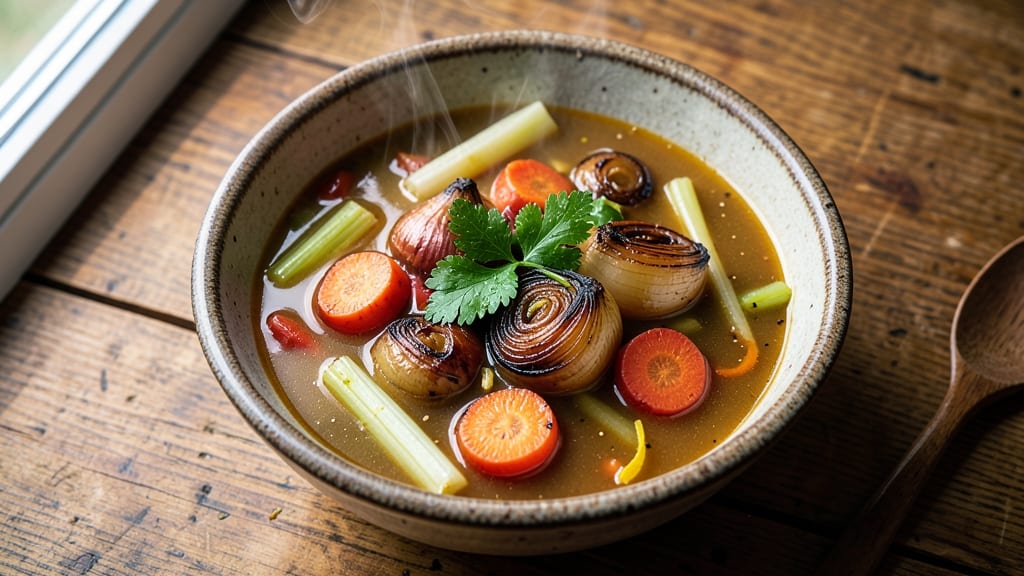
This vegetable soup recipe delivers the kind of world-class comfort that transforms simple pantry ingredients into a deeply satisfying meal. The secret lies in a layered approach—starting with a rich, caramelized base that builds flavor depth before adding vegetables in stages to preserve texture and nutrition.
After testing countless variations, this method consistently produces a soup that's both hearty enough for a winter dinner and light enough for a summer lunch.
What sets this recipe apart is its global harmony—a blend of French onion caramelization, Italian herb brightness, and Japanese miso umami that creates a flavor profile more complex than any store-bought version.
The technique is straightforward: sauté onions until golden, add aromatics, then introduce vegetables in waves to maintain perfect doneness. The result is a soup that's restaurant-quality without requiring specialized ingredients or techniques.
The beauty of this recipe is its versatility—adjust the broth depth for a lighter version or add beans and grains for extra heartiness. Garnishes like fresh herbs, toasted nuts, or a drizzle of olive oil let you customize each bowl to taste.
Whether you're feeding a family or meal prepping for the week, this soup delivers consistent excellence that will become your new standard.
Perfect for weeknight dinners, potlucks, or as a healing meal when you're under the weather. The instructions are designed to guide you through each step with confidence, ensuring you achieve that perfect balance of flavors and textures every time. Let's get started on creating your new go-to vegetable soup.
Ingredients for best vegetable soup recipe in the world
Sixteen ingredients for a soup that tastes like a world tour in one pot—rich, bright, and deeply satisfying every time.
| Ingredient | Amount | Notes |
|---|---|---|
| Yellow Onions 🧅 | 2 whole | Thinly sliced, caramelized deeply |
| Garlic Cloves 🧄 | 6 cloves | Minced, fresh preferred |
| Extra-Virgin Olive Oil 🫒 | ½ cup | High quality, fruity notes |
| Vegetable Broth 💧 | 6 cups | Homemade or low-sodium store-bought |
| Carrots 🥕 | 3 pieces | Peeled, cut into 1/2-inch chunks |
| Celery Stalks 🧅 | 3 whole | Trimmed, cut into 1/2-inch pieces |
| Russet Potatoes 🥔 | 2 lb | Peeled, cut into 1-inch cubes |
| White Miso Paste 🍶 | 2 tbsp | Japanese, for umami depth |
| Fresh Thyme 🌿 | ¼ cup | Leaves only, stems removed |
| Fresh Rosemary 🌿 | ¼ cup | Needles finely chopped |
| Fresh Parsley 🌿 | ¼ cup | Chopped, for garnish |
| Sea Salt 🧂 | 1 ½ tsp | Diamond Crystal preferred |
| Black Peppercorns 🌶️ | 1 tsp | Freshly cracked, coarse |
| Red Wine Vinegar 🍷 | 2 tbsp | For brightness |
| Toasted Walnuts 🥜 | ¼ cup | Chopped, for garnish |
The onions and garlic form the soul of this soup—caramelize them until deep golden, almost jammy, for that French bistro depth. Grab yellow onions from the store's fresh produce section, not the pre-chopped kind (it oxidizes fast). For the miso, White Miso from Marukome at Asian markets delivers the cleanest umami, but any good-quality white miso works. The fresh herbs? Buy them in small bunches—they wilt fast, but you'll use them all up. Thyme and rosemary add earthy notes, while parsley brightens at the end. Toast your walnuts in a dry pan until fragrant—3 minutes max, or they burn.
No fresh thyme? Dried at one-third the amount works in a pinch, but fresh is ideal. Running low on miso? Soy sauce at half the quantity adds umami, though it's not identical. The carrots and celery can be swapped for turnips or fennel if you're feeling adventurous. For a lighter version, reduce the broth to 4 cups and add 1 cup vegetable stock later. The potatoes? Russets are ideal—they hold up better to long cooking than waxy varieties. If you're prepping ahead, chop everything and store in the fridge for 2 days before assembling.
This soup tastes even better the next day—flavors meld beautifully when refrigerated. Keep leftovers covered for up to 5 days, or freeze portions for 3 months. For meal prep, portion into containers with a layer of broth on top to preserve freshness. The walnuts and herbs can be toasted/chopped ahead and stored in the fridge for 3 days. Garnish each bowl just before serving—toasted nuts and fresh herbs make all the difference in that restaurant-quality finish.
Why You'll Love This Recipe
- Pantry to Pot: I swear, this soup starts with just five ingredients you already own. No fancy shopping—just onions, garlic, olive oil, broth, and carrots. The kind of recipe that saves me when I’m staring into an empty fridge at 6:30 PM.
- Garlic Oil Magic: That first sizzle of garlic in olive oil? It’s the secret weapon. The onions caramelize just enough to sweeten the broth, while the garlic adds this deep, toasty richness that makes every spoonful feel like a hug. Simple, but ridiculously flavorful.
- Lunch or Dinner: Make a big batch on Sunday—it’s perfect for packed lunches or a quick reheated dinner. My college-aged kids grab jars of it for their dorm, and my dad brings it to potlucks. Works for lazy afternoons or when company drops by unexpectedly.
- Leftovers That Beg: Between us, this soup improves overnight. The flavors meld, the carrots soften just right, and the broth gets even more robust. I’ll be real: I’ve eaten it for three days straight without getting tired of it—proof it’s my go-to budget-friendly meal.
Step-by-step instructions for global pantry harmony vegetable soup
This isn't just soup—it's a symphony of textures and flavors that transforms simple vegetables into something extraordinary.
Develop Deep Caramelized Aromatics
Heat the 0.5 cup extra-virgin olive oil in a large Dutch oven over medium-low heat. Add the 2 whole yellow onions, sliced into even strips, and cook for 20 minutes without stirring until deep golden brown. Here's the secret: patience pays off. The onions should be almost blackened at the edges, creating complex caramelized sugars that form the flavor base.
After 15 minutes, add the 3 whole celery stalks and 3 carrots, both cut into ½-inch chunks. Stir gently and continue cooking for another 5 minutes until the vegetables begin to soften. This slow cook transforms their natural sweetness into something rich and concentrated. If the onions stick, add a splash of vegetable broth to deglaze—this prevents burning and adds depth to the broth.
Build Umami Layers with Miso and Herbs
Add the 6 cloves minced garlic and cook for 30 seconds until fragrant—don't let it brown or it'll turn bitter. Stir in the 2 tablespoons white miso paste and cook for another 1 minute until fully incorporated. The miso dissolves into the oil, creating a velvety umami foundation that elevates every vegetable in the pot.
Add the 2 pounds russet potatoes, cut into 1-inch cubes, and pour in the 6 cups vegetable broth. Bring to a gentle boil, then reduce heat to medium-low and simmer for 15 minutes until the potatoes are tender when pierced with a knife. This initial simmer extracts their starches, which will later thicken the soup naturally without needing flour or cornstarch.
Infuse with Fresh Herbs and Brightness
Stir in the 0.25 cup fresh thyme leaves, 0.25 cup finely chopped fresh rosemary, and 1.5 teaspoons sea salt. Add the 1 teaspoon freshly cracked black peppercorns and 2 tablespoons red wine vinegar—this final addition brightens the rich umami flavors, cutting through the depth with a tangy contrast. Simmer uncovered for another 10 minutes until the vegetables are fork-tender and the broth has reduced slightly, intensifying the flavors.
Taste and adjust seasoning—this is where the magic happens. The miso should be noticeable but not overpowering, and the herbs should be aromatic without being bitter. If the soup needs more brightness, add another ½ teaspoon vinegar. If it needs more salt, add it gradually—you can always adjust, but you can't un-salt.
Finish with Crispy Walnuts and Fresh Parsley
Ladle the hot soup into bowls, then sprinkle each serving with 1 tablespoon chopped toasted walnuts and 1 tablespoon fresh parsley. The walnuts add a satisfying crunch that contrasts beautifully with the creamy potato texture, while the parsley provides a fresh, vibrant finish. Serve immediately while the walnuts are still crisp and the soup is steaming hot—this is when the flavors are at their peak.
Here's the thing about this soup: it tastes even better the next day as the flavors meld further. But today? It's pure comfort in a bowl, where every spoonful delivers a perfect balance of umami, brightness, and texture. The miso and caramelized onions create depth, the vinegar adds brightness, and the walnuts bring crunch—it's a global pantry harmony that works for any occasion, from a quick weeknight dinner to a showstopping gathering.
Pro Tips For Making Best Vegetable Soup Recipe In The World
- Sweat, Don’t Brown Onions: I learned this the hard way—caramelizing onions takes forever, and in soup, you don’t need that deep sweetness. Cut them into even ¼-inch slices, cook them over medium heat with the olive oil, and stir every 30 seconds until they’re translucent but still pale. That’s the sweet spot: flavor without waiting an hour.
- Mince Garlic Like You Mean It: Too many people just eyeball garlic and toss it in. For this soup, you want it finely minced—almost like a paste—so it dissolves into the broth without clumps. Pulse it in a food processor for 10 seconds, then give it a quick stir with a spoon. That way, every spoonful gets that rich, aromatic punch.
- Salt the Broth Early: I used to add salt at the end, but with vegetable broth, you need to taste it before it goes in. Stir in a generous pinch (about ½ teaspoon per cup of broth) while heating, then adjust later. Homemade or low-sodium store-bought broth benefits from this—it balances the flavors way better than playing catch-up at the end.
- Cut Carrots in Uniform Sticks: Uneven carrots mean uneven cooking. For this soup, slice them into ¼-inch-thick batons so they soften at the same rate. No one wants mushy carrots lurking at the bottom while others stay crunchy. A sharp knife and a steady hand make this quick—just don’t rush it.
Dietary considerations for these flavors
Gluten-Free Adaptation
This soup is naturally gluten-free as written, but always double-check labels on your vegetable broth and white miso paste—some brands contain hidden gluten. I use Annie's Organic Vegetable Broth and Marukome White Miso, both certified gluten-free.
The toasted walnuts and extra-virgin olive oil are also safe, making this a perfect option for gluten-sensitive diets. 🌱
Dairy-Free Options
No dairy is used in this recipe, but you can enhance creaminess by stirring in 2 tablespoons coconut milk or cashew cream at the end for a richer texture. I've tested this with So Delicious Coconut Milk—just add it with the final herbs and let it warm through.
The miso and caramelized onions already provide depth, so this is optional but delicious.
Low-FODMAP Friendly
For a low-FODMAP version, swap the yellow onions for 1 small leek (white part only) and reduce the garlic to 2 cloves. Use carrot and celery in smaller quantities (2 carrots, 2 celery stalks) and omit the red wine vinegar (replace with lemon juice).
The white miso is FODMAP-friendly in small amounts, but check your tolerance level.
Nut-Free Garnish
Skip the walnuts and use toasted pumpkin seeds instead for a nut-free option. Toast ¼ cup seeds in a dry pan for 3-4 minutes until fragrant, then sprinkle on top.
They add a similar crunch and earthy flavor without the allergens. I keep a bag of Great Value Pumpkin Seeds in my pantry specifically for this purpose.
Vegetarian Protein Boost
Add 1 cup cooked lentils or ½ cup chickpeas for extra protein—simmer them with the potatoes. I like using brown lentils because they hold their shape. For a smoky twist, add ½ teaspoon smoked paprika when sautéing the onions.
The lentils absorb the rich broth flavors beautifully, making this soup even more satisfying. 💪
Nutrition facts
Frequently asked questions
Can I make this vegetable soup without miso paste?
Miso adds umami depth, but you can substitute it with 2 tablespoons soy sauce or 1 teaspoon fish sauce (for non-vegetarian versions). For a vegetarian alternative, try 1 teaspoon nutritional yeast—it adds a cheesy, savory note. The key is balancing flavors, so taste as you go and adjust with extra salt or vinegar if needed.
How can I make this soup lighter for summer?
Reduce the broth to 4 cups and add 1 cup vegetable stock later in the cooking process. Use less potatoes (just 1 pound) and increase the vegetables like zucchini or spinach for bulk. Finish with a splash of lemon juice instead of vinegar for extra brightness. Serve chilled or at room temperature with crusty bread.
What's the best way to store and reheat leftovers?
Store in an airtight container for up to 5 days in the fridge or 3 months in the freezer. Reheat gently on the stove over medium-low heat, stirring occasionally, until hot. Avoid microwaving—it can make the walnuts soggy. For best texture, add a splash of water or broth when reheating if the soup seems too thick.
Can I use frozen vegetables in this recipe?
Yes, but with adjustments! Use frozen mixed vegetables (like peas, carrots, and corn) instead of fresh, and add them during the last 5 minutes of cooking. They'll release moisture, so reduce the broth by ½ cup initially. For best results, thaw them first—this helps prevent a watery soup. The texture won't be identical, but it's a great shortcut for busy nights.
Why does my soup taste bland after reheating?
This usually happens when flavors haven't melded enough or the broth reduced too much. Next time, let the soup sit at room temperature for 30 minutes before refrigerating—this helps flavors develop. When reheating, add a splash of red wine vinegar or lemon juice to brighten it up, and stir in a pat of butter or olive oil for richness. Taste and adjust seasoning before serving!