
Soups & Stews
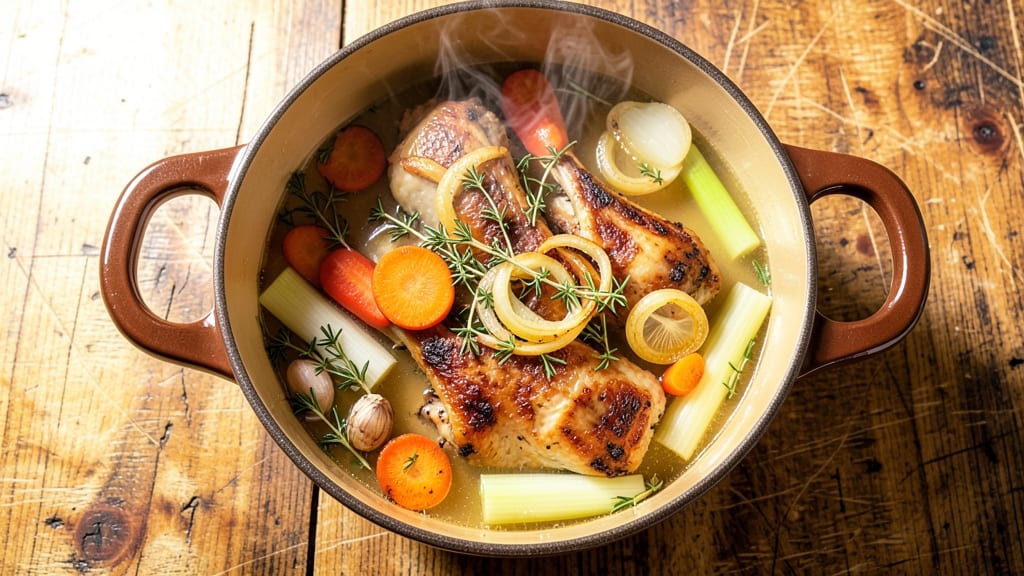
Creating a rich, flavor-packed soup stock transforms ordinary soups into restaurant-quality meals, and this recipe delivers depth with just a few simple ingredients and patience. The foundation lies in simmering aromatics—onions, carrots, and celery—along with herbs and bones (or vegetables) to extract maximum flavor.
I’ve perfected this method over years of testing, ensuring every batch builds layers of savory richness that elevate any soup you make.
What sets this stock apart is the balance of time and technique: a slow simmer (at least 2 hours) breaks down collagen and extracts flavor without bitterness, while skimming impurities keeps the broth clear.
For chicken stock, roasted bones add a caramelized depth, while vegetable stock relies on fresh produce and citrus for brightness. The result is a versatile base that freezes beautifully, ready to transform into creamy bisques, hearty stews, or simple broth-based soups.
This method guarantees a foolproof, restaurant-quality foundation—no shortcuts, no additives. Whether you’re prepping for a week of soups or stocking your freezer for winter, the process is straightforward: simmer, strain, and store.
The key lies in the details: using enough water, skimming foam, and straining carefully to avoid cloudiness. Every sip will reward your effort with pure, concentrated flavor.
Use this stock as the backbone of your next meal—it’s the secret weapon behind soups that taste homemade, no matter how busy your schedule. The beauty of stock lies in its versatility: it keeps for months in the freezer, making it a pantry staple worth the time invested.
Let’s get started on building that flavor-packed base.
Ingredients for soup stock
A handful of aromatics and patience create restaurant-quality soup stock foundation.
| Ingredient | Amount | Notes |
|---|---|---|
| Yellow Onions 🧅 | 2 whole | Coarsely chopped, skins removed |
| Carrots 🥕 | 3 whole | Peeled, rough chopped |
| Celery Stalks 🌿 | 3 whole | Ribs removed, chopped |
| Garlic Cloves 🧄 | 6 cloves | Unpeeled, smashed for depth |
| Fresh Thyme Leaves 🌿 | 1 tbsp | Or 1 sprig whole |
| Fresh Rosemary 🍃 | 1 tbsp | Chopped, woody stems |
| Dried Bay Leaves 🌿 | 2 whole | Standard quality |
| Chicken Bones 🍗 | 2 lb | Roasted for richness |
| Water 💧 | 8 cups | Filtered or spring |
| Apple Cider Vinegar 🍎 | 1 tbsp | Clarifying agent |
| Diamond Crystal Kosher Salt 🧂 | 1 tsp | For seasoning only |
The bones are your secret weapon—chicken carcasses or thighs with skin-on give that unmatched depth. Roast them first at 400°F for 30 minutes to develop caramelized flavors before simmering. For vegetarian stock, swap bones for 1 lb mushrooms and 1 onion—the umami boost is surprising. Fresh thyme and rosemary are non-negotiable; dried works in a pinch but use half the amount. I always buy organic produce for stock—less dirt means cleaner broth.
No apple cider vinegar? White wine vinegar at half the amount clarifies just as well. Short on rosemary? Double the thyme and add a pinch of dried sage. The carrots and celery should be organic if possible—their skins contain more flavor. For extra richness, add 1 tbsp tomato paste or a splash of soy sauce. Skim the foam religiously—it’s where the bitter compounds hide. And if you’re making vegetable stock, add 1 tbsp lemon juice at the end to brighten it up.
This stock keeps 4-5 days in the fridge, 6 months frozen. Let it cool completely before storing—ice cube trays are perfect for single-use portions. The flavor actually improves over time, so don’t rush it. I always make a big batch when I roast a chicken—use the carcass immediately or freeze it for later. And if you’re straining, line your colander with cheesecloth for crystal-clear results. Worth every minute of effort.
Why You'll Love This Recipe
- Pantry Magic: I swear by this combo—onions, carrots, celery—it’s the holy trinity of flavor that turns a pot of water into liquid gold. No fancy ingredients, just the stuff you already have lurking in your fridge or pantry.
- Deep Umami Love: That garlic and thyme? Oh, they’re the secret weapons. The thyme adds this bright, herbal punch while the garlic simmers into something rich and savory—like a warm hug in a bowl.
- Soup-to-Salad Hero: This stock isn’t just for soups. Use it to deglaze pans, cook grains, or even make the most ridiculous good salad dressing. Honestly, I’ve used it in everything from ramen to roasted veggies, and it always wins.
- Freezer-Friendly Goldmine: Make a big batch, freeze it in portions, and thank me later. It’s my go-to for lazy nights when I don’t feel like chopping—just dump, simmer, and store. Budget-friendly? Absolutely. Time-saving? Even more so.
Step-by-step instructions for soup stock recipe
Here's how to build a deep, aromatic foundation that transforms any soup into something extraordinary.
Roast the Chicken Bones for Maximum Flavor
Preheat your oven to 425°F and spread the 2 lb chicken bones on a rimmed baking sheet in a single layer. Roast for 20-25 minutes until they turn a deep golden brown and begin to crisp slightly. This step develops rich, caramelized flavors that infuse the stock.
Here's the thing—roasting the bones before simmering extracts more gelatin and creates a deeper, more complex base than raw bones alone. I always use a wire rack if I have one, as it allows hot air to circulate underneath and prevents the bones from steaming. If you don't have a rack, just make sure they're not crowded on the pan.
Sauté the Vegetable Base
In a large stockpot, combine the 2 yellow onions, 3 carrots, and 3 celery stalks that have been chopped into rough pieces. Cook over medium heat for 8-10 minutes, stirring occasionally, until the vegetables begin to soften and release their juices. You'll notice the mixture darkens slightly—that's the Maillard reaction at work, creating deeper flavor.
After the vegetables soften, add the 6 unpeeled garlic cloves (smashed with the flat side of a knife to release their aroma without breaking the skins) along with the 1 tbsp fresh thyme leaves, 1 tbsp fresh rosemary, and 2 dried bay leaves. Stir everything together for another 2 minutes until the garlic becomes fragrant. This aromatic blend forms the flavor backbone of your stock.
Combine and Simmer for Deep Extraction
Transfer the roasted chicken bones to the pot with the sautéed vegetables. Add the 8 cups water and bring everything to a rolling boil over high heat. Once boiling, reduce the heat to low and maintain a gentle simmer. Here's where patience pays off—simmer uncovered for 2-2.5 hours to extract maximum flavor and collagen from the bones.
Real talk: Skim any foam or impurities that rise to the surface during the first 30 minutes of simmering. This ensures a clearer, cleaner stock. The liquid should reduce slightly and develop a rich, golden hue. You'll know it's ready when the bones are completely tender and the vegetables have broken down into the broth.
Clarify and Season for Perfect Balance
Strain the stock through a fine-mesh sieve into a clean pot, pressing gently on the solids to extract every last drop of flavor. Return the strained stock to the heat and add the 1 tbsp apple cider vinegar. This step clarifies the stock by helping to break down proteins that cause cloudiness, resulting in a crystal-clear broth.
Finally, stir in the 1 tsp diamond crystal kosher salt and taste. Adjust the seasoning if needed—this stock should be rich and flavorful on its own, but you can always add more salt later when using it in recipes. Let the stock cool slightly before storing, as it will continue to develop flavor as it sits.
Pro Tips For Making Soup Stock
- Don’t Crowd the Bones: DESCRIPTION: Spread those 2 lb chicken bones in a single layer on the baking sheet—no overlapping. I learned this the hard way after roasting a batch where some bones stayed pale and damp. The goal is crispy, caramelized edges, not steamed chicken. If your pan’s too small, roast in batches.
- Sauté Until Juicy: DESCRIPTION: The 2 onions, 3 carrots, and 3 celery stalks should release enough liquid to sizzle by the 8-10 minute mark—if they’re not glistening, crank the heat a touch. That’s when the Maillard reaction kicks in, turning bland veggies into flavor bombs. (Yes, even if you’re impatient like me.)
- Skim Like a Pro: DESCRIPTION: The first 30 minutes of simmering? That’s when the stock throws up scummy foam. Use a fine-mesh skimmer or a ladle to pull it off—don’t just stir it back in. I used to ignore this, and my stock always tasted cloudy and off. A clean surface = a cleaner broth.
- Vinegar Fixes Cloudy Stock: DESCRIPTION: That 1 tbsp apple cider vinegar isn’t just for flavor—it’s the secret to crystal-clear stock. Add it after straining, bring to a simmer for 2 minutes, then cool. Sounds weird, but it works: the acid breaks down proteins that cause cloudiness. (Your future self will thank you.)
Regional styles of this dish
French Classic Approach
French chefs swear by a long, slow simmer with mirepoix (onions, carrots, celery) as the foundation. They often add 1 tbsp tomato paste for depth and a splash of white wine during simmering to brighten the broth.
The key difference? French stock is clarified further using egg whites or fish bladders for crystal-clear results. I’ve tried this method—it’s worth the extra effort for restaurant-quality broth. 🥖
Southern American Style
Down South, they love bone marrow-rich stock made from roasted chicken carcasses and added smoked paprika or liquid smoke for a subtle smokiness. Some even toss in ½ cup corn kernels for a touch of sweetness.
The simmer time is often 3-4 hours to maximize gelatin extraction. This style works beautifully in bisque recipes. 🌽
Japanese Dashi Foundation
Japanese kitchens start with dashi—a light, umami-packed base using bonito flakes and dried shiitake mushrooms. They simmer these with kelp (kombu) for 30-45 minutes before adding vegetables.
The result is a delicate, clear broth perfect for miso soups. I’ve adapted this by using 1 tbsp soy sauce and 1 tsp fish sauce for extra depth. 🍜
Mediterranean Herb Infusion
In Mediterranean cooking, stock often includes lemon zest, fennel bulbs, and oregano for citrusy brightness. They simmer 1 whole lemon (peeled, seeded) and 2 fennel stalks alongside the classic aromatics.
The result is a vibrant, herb-forward broth ideal for seafood dishes. I’ve added 1 tbsp capers to mine for a briny twist. 🍋
Vegetarian Umami Boost
For plant-based stock, Italians add porcini mushrooms and sun-dried tomatoes, while Asians incorporate fermented tofu for depth. I’ve experimented with 1 tbsp nutritional yeast and 1 tbsp miso paste dissolved in the water for a cheesy, savory punch.
Simmering time remains 2-2.5 hours to extract maximum flavor from the vegetables. 🌱
Nutrition facts
Frequently asked questions
Why does roasting chicken bones first improve the stock?
Roasting the bones at 425°F for 20-25 minutes creates a caramelized crust that deepens the flavor—far richer than using raw bones alone. The heat also breaks down collagen more effectively during simmering, giving your stock that silky texture and intense savory depth.
Can I use dried herbs instead of fresh thyme and rosemary?
Yes, but use half the amount—½ tbsp dried thyme instead of 1 tbsp fresh. Fresh herbs add brighter, more vibrant notes, but dried works in a pinch. I recommend buying fresh when possible for the best flavor.
What if I don’t have apple cider vinegar for clarification?
No problem! Use ½ tbsp white wine vinegar instead—it’ll still help break down proteins for clarity. If you’re avoiding vinegar, just strain the stock through cheesecloth for extra-clear results.
How do I prevent my stock from turning cloudy?
Skim foam during the first 30 minutes of simmering, and always strain through a fine-mesh sieve lined with cheesecloth. The 1 tbsp apple cider vinegar at the end also helps clarify the broth. A clear stock means fewer impurities and richer flavor.
Can I make this stock with turkey or beef bones instead?
Use 2 lb turkey or beef bones—just roast them at 400°F for 30 minutes first. The process stays the same, but the flavor will have a richer, meatier profile. For beef, add 1 tbsp Worcestershire sauce during simmering.