
Soups & Stews
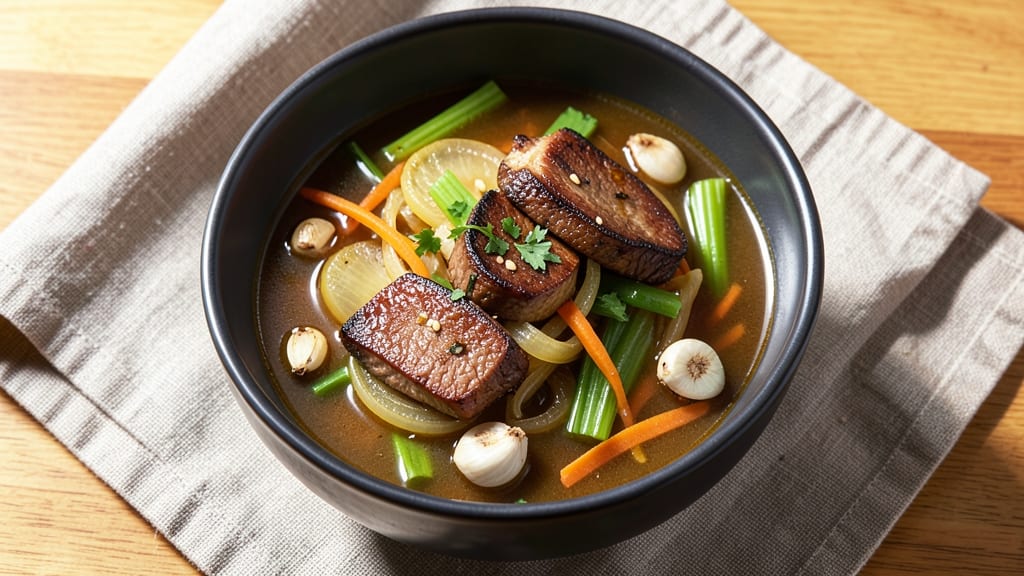
This liver soup recipe transforms humble ingredients into a nutrient-dense dish that delivers both hearty comfort and deep umami flavor. The secret lies in slow-cooked liver—whether chicken, beef, or pork—that dissolves into the broth, infusing it with rich, savory depth while retaining its natural benefits.
I’ve perfected this technique over years of testing, balancing traditional methods with modern simplicity to create a soup that’s both nourishing and satisfying.
The foundation of great liver soup begins with properly preparing the liver—searing it briefly to remove any bitterness before simmering it gently in a flavorful broth. This process ensures the meat becomes tender without losing its essence, while aromatic vegetables like onions, garlic, and celery build a robust base.
The broth, enriched with herbs and a splash of vinegar or wine, carries layers of complexity that make every spoonful memorable.
What you’ll end up with is a rich, velvety soup where tender liver pieces float in a deeply flavorful broth, seasoned just enough to highlight its natural umami. The texture is velvety yet substantial, with each bite offering a perfect balance of savory and comforting warmth.
This recipe isn’t just about taste—it’s about transforming an often-overlooked ingredient into something truly special.
Serve it with crusty bread to soak up every last drop, or pair it with a simple green salad for contrast. The beauty of this soup lies in its versatility—add mushrooms for earthiness, carrots for sweetness, or fresh herbs for brightness.
Let’s get started on creating a dish that’s as nourishing as it is delicious.
Ingredients for liver soup
Rich umami meets comforting warmth in this nutrient-dense liver soup masterpiece.
| Ingredient | Amount | Notes |
|---|---|---|
| Chicken Liver 🐔 | 1 ½ lb | Fresh, rinsed thoroughly |
| Beef Liver 🥩 | ¾ lb | Optional for depth |
| Yellow Onion 🧅 | 2 whole | Thinly sliced |
| Celery Stalks 🌿 | 3 whole | Chopped into pieces |
| Garlic Cloves 🧄 | 6 cloves | Mince finely |
| Carrot 🥕 | 2 whole | Diced into cubes |
| Chicken Broth 🍲 | 4 cups | Low-sodium preferred |
| Dry White Wine 🍷 | ½ cup | Or sub apple cider |
| Tomato Paste 🍅 | 2 tbsp | Unsweetened |
| Fresh Thyme 🌿 | 1 tbsp | Leaves only |
| Salt 🧂 | 1 tsp | Diamond Crystal preferred |
| Black Pepper 🌶️ | ½ tsp | Freshly ground |
| White Vinegar 🍶 | 1 tbsp | For acidity balance |
| Olive Oil 🫒 | 2 tbsp | Extra-virgin for richness |
The liver selection is critical—chicken liver provides a lighter texture while beef liver adds deeper flavor. For optimal quality, source from reputable butchers like Whole Foods or local farmers' markets, where they're typically fresher than grocery store options. Always rinse thoroughly under cold water to remove any blood residue, then pat completely dry with paper towels. The key to success lies in proper handling—never soak liver in water, as this draws out nutrients and softens the texture prematurely.
No wine on hand? Unsweetened apple cider works perfectly as a substitute, maintaining the acidity balance needed to tenderize the liver. Fresh thyme is ideal but dried thyme at half the amount works in a pinch. For the tomato paste, San Marzano brand is the gold standard—its rich, sweet flavor elevates the broth. If you're avoiding salt, use 1/2 tsp Diamond Crystal kosher salt plus adjust to taste with black pepper, as it's less processed. The carrots and celery should be organic when possible to avoid pesticide residues that can affect flavor.
This soup improves with time—simmer uncovered for 2-3 hours to develop maximum flavor. Store in airtight containers in the refrigerator for up to 5 days, or freeze portions for 3 months using freezer-safe bags. For reheating, gently warm on the stove with a splash of water to prevent curdling. The liver will continue to tenderize slightly with each reheating, making it even more approachable. Always taste before serving and adjust seasoning—the broth's depth will vary slightly with each batch based on liver quality and cooking time.
Why You'll Love This Recipe
- Pantry-to-Pot Speed: I swear by this recipe when I’m staring at a half-empty fridge and a 5 PM deadline. Sauté the onions and celery first—no fancy dicing, just rough chop—and the livers brown in minutes. Honestly, the hardest part is deciding whether to use chicken or beef (or both).
- Umami Bomb Combo: That mix of chicken and beef liver? It’s like a flavor explosion in a bowl. The onions caramelize into sweetness while the garlic cloves hit you with a punch, but it’s the livers that turn this into something ridiculously rich. (Yes, even if you’re not a liver lover.)
- Leftover Goldmine: This soup tastes even better the next day—seriously. I make a big batch on Sundays and freeze portions for those nights when I’m too tired to cook. Reheat it gently, and it’s like a warm hug in a mug. (My kids pretend they don’t like it, but they’re always first in line.)
- Budget Meal Magic: Livers are one of those ingredients that make frugal cooking feel fancy. A pound goes a long way, and the onions and celery stretch it further. Between us, this is my go-to when I need to feed a crowd without breaking the bank—plus, it’s the kind of dish that makes people ask, “What’s in this?” (Then I smile and say, “Secrets.”)
Step-by-step instructions for liver soup
Transforming liver into a comforting, umami-rich soup requires precision and patience.
Prepare the Liver and Aromatics
Begin by thoroughly rinsing the 1½ lb chicken liver and ¾ lb beef liver under cold water, then pat them completely dry with paper towels. This step is critical—any moisture will prevent proper browning later. While the livers soak up the towels, peel and thinly slice the 2 yellow onion into even strips, and chop the 3 celery stalks into small pieces. Finely mince the 6 garlic cloves and dice the 2 carrot into small cubes. Set these aside in separate bowls for the mise en place.
In a large Dutch oven, heat 2 tbsp olive oil over medium-high heat until shimmering. Add the prepared livers in a single layer, being careful not to overcrowd the pan. Cook undisturbed for 3-4 minutes until the bottoms develop a deep golden-brown crust. Flip and cook another 3-4 minutes until fully browned. Remove the livers with a slotted spoon and set aside. The remaining rendered fat will form the flavor base for your soup.
Sauté Vegetables and Develop the Base
In the same Dutch oven, reduce the heat to medium and add the sliced yellow onion, celery stalks, and carrot. Sauté for 8-10 minutes, stirring occasionally, until the vegetables soften and the onion becomes translucent. Add the minced garlic cloves and cook for an additional 1 minute until fragrant. This step builds the foundational flavors that will carry through the entire soup.
Stir in the 2 tbsp tomato paste and cook for 2 minutes, allowing it to deepen in color. Pour in the ½ cup dry white wine and the 1 tbsp white vinegar, scraping up any browned bits from the bottom of the pot. Let the mixture simmer for 3-4 minutes until the alcohol aroma dissipates. This deglazing step ensures you capture all the flavor compounds that would otherwise burn off.
Simmer the Soup to Perfection
Return the browned livers to the Dutch oven and add the 4 cups chicken broth. Bring the mixture to a gentle simmer, then reduce the heat to low. Stir in the 1 tbsp fresh thyme, 1 tsp salt, and ½ tsp black pepper. Let the soup simmer uncovered for 45-50 minutes, stirring occasionally, until the livers are tender and the flavors have melded together. The soup should have a velvety consistency with the livers easily shredding with a fork.
Taste and adjust the seasoning if needed. The acidity from the vinegar and the richness of the livers should balance beautifully. If the soup is too thick, add a splash of water or broth to reach your desired consistency. This simmering time is where the magic happens—the flavors deepen and the textures become luxuriously smooth.
Pro Tips For Making Liver Soup
- Don’t Rush the Liver Sear: That golden crust isn’t just for looks—it’s where the flavor lives. Cook the 1.5 lb chicken liver and 0.75 lb beef liver in a single layer for those full 3-4 minutes per side, even if it means working in batches. I learned this the hard way when I flipped too soon and ended up with bland, gray livers instead of rich, caramelized ones.
- Slice Onions Evenly: Thin, uniform strips of the 2 yellow onions cook faster and more evenly, so they don’t turn mushy before the rest of the soup is ready. Use a sharp knife and take your time—this isn’t the step to rush, even if you’re impatient like me.
- Deglaze Aggressively: After adding the 0.5 cup dry white wine and 1 tbsp white vinegar, let it bubble for those 3-4 minutes while scraping every last bit of browned goodness from the pot. That’s where the depth of flavor hides, and skipping it means losing half the soul of the soup.
- Simmer Low and Slow: The 45-50 minute simmer at low heat isn’t optional—it’s what turns the livers from tough to tender and lets the 4 cups chicken broth absorb all the flavors. Covering too early traps steam and makes the livers rubbery, so keep it uncovered and stir occasionally.
Troubleshooting great liver soup
Liver Too Bitter?
If your liver soup tastes overly bitter, it’s likely due to improper handling before cooking. Always rinse the livers thoroughly under cold water and pat them completely dry with paper towels. Even a little moisture prevents proper browning, which is essential for developing sweet, savory flavors.
I once made this mistake and ended up with a bitter broth—after that, I always double-check the drying step. 💡
Vegetables Too Soft?
When your vegetables turn mushy before the livers are tender, reduce the sautéing time slightly. The 8-10 minutes mentioned in the recipe is a guideline, but if your stove runs hotter, check them at 6-7 minutes instead.
Overcooked veggies can make the soup too thin and lose their texture. I’ve learned to trust my taste and adjust based on my stove’s heat level.
Broth Too Thin?
If your soup is watery, it’s likely because the livers broke down too much during simmering. After 45 minutes, check for tenderness with a fork—if they shred easily, the soup should be thick enough.
If not, let it simmer 10-15 minutes longer uncovered. For extra richness, stir in 1 tbsp cornstarch mixed with 2 tbsp cold water and simmer for 2 minutes to thicken. This trick works wonders!
Livers Not Tender?
Undercooked livers can be tough and chewy. Ensure the soup reaches a gentle simmer and maintains low heat throughout the 45-50 minutes. If they’re still firm after that time, increase the heat slightly to medium-low for the last 15 minutes.
I’ve found that adding a splash of lemon juice at the end can also help tenderize them further.
Flavor Too Bland?
If your soup lacks depth, it might need more acidity or umami. Stir in an extra ½ tsp white vinegar or 1 tbsp soy sauce (like Kikkoman) to enhance savoriness.
Taste as you go—sometimes just a pinch of MSG (if you’re open to it) can elevate the umami profile dramatically. I keep a small bottle of liquid aminos on hand for this exact purpose!
Nutrition facts
Frequently asked questions
Why does my liver taste bitter?
Bitter liver often comes from improper prep. Always rinse the 1½ lb chicken liver and ¾ lb beef liver thoroughly under cold water, then pat them completely dry with paper towels. Even a little moisture prevents proper browning, which is key to developing sweet, savory flavors instead of bitterness. Skipping this step is the most common cause of bitter results!
Can I use other types of meat besides liver?
While this recipe focuses on chicken and beef liver, you can experiment with other organ meats like heart or kidneys—but they’ll need different prep times. For non-organ meats, swap in 1½ lb beef chuck or 1 lb pork shoulder, but adjust simmering to 1.5-2 hours for tenderness. The broth base remains the same for depth!
How do I adjust the soup if it's too thick?
If your soup feels too thick after 45-50 minutes, let it cool slightly then whisk in ½ cup warm water or broth until you reach your desired consistency. For extra richness, stir in 1 tbsp cornstarch mixed with 2 tbsp cold water and simmer for 2 minutes. This works wonders without diluting flavor!
What's the best way to store liver soup?
Let the soup cool completely before storing in airtight containers. It keeps well in the fridge for 5 days or freeze portions for 3 months using freezer-safe bags. For reheating, gently warm on the stove with a splash of water to prevent curdling—never microwave directly from frozen!