
Soups & Stews
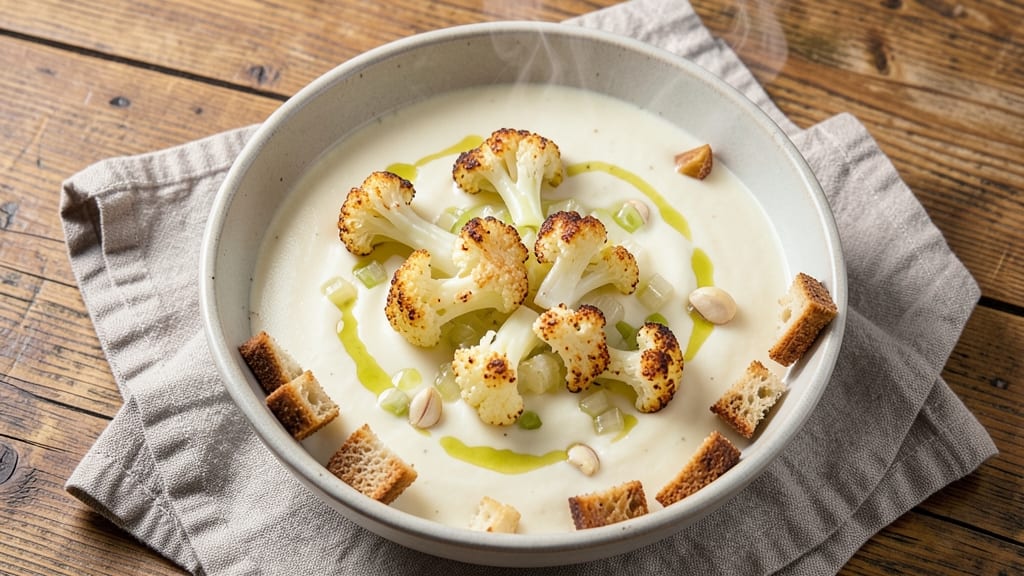
Gordon Ramsay's cauliflower soup delivers that creamy, velvety texture we all crave—without the hours of simmering. The secret lies in roasting the cauliflower first, which deepens its natural sweetness and creates a rich, nutty foundation for the soup.
This isn’t your average blended cauliflower—it’s restaurant-quality comfort in 25 minutes, with a velvety finish that feels indulgent yet remains light enough for any meal.
The process starts with sautéing aromatic vegetables like onions, garlic, and leeks until they’re soft and fragrant—this builds the flavor base. Roasting the cauliflower before blending intensifies its flavor and gives the soup a rich, velvety consistency without relying on heavy cream.
Once blended with vegetable stock, the soup gets its signature creaminess from a touch of heavy cream or butter, ensuring every spoonful is smooth and satisfying.
What makes this recipe stand out is the balance of textures—creamy yet not overly thick, with a subtle crunch from optional garnishes like toasted croutons or fresh chives. The roasted cauliflower adds depth, while the cream rounds out the flavors, making it a dish that’s both elegant and approachable.
Perfect for chilly evenings or as a starter that impresses guests.
This soup is versatile enough to serve as a main course with crusty bread or as a light lunch with a crisp salad. The key is in the technique—roasting, blending, and finishing with cream—to achieve that luxurious, velvety texture that feels like a chef’s touch.
Ready to make a soup that tastes like it came straight from Ramsay’s kitchen?
Ingredients for gordon ramsay cauliflower soup
Pantry staples and fresh vegetables transform into velvety perfection with Ramsay's roasted cauliflower technique.
| Ingredient | Amount | Notes |
|---|---|---|
| Fresh Cauliflower 🥬 | 1 lb | Cut into florets, stems removed |
| Yellow Onion 🧅 | 1 whole | Diced, about 1 cup |
| Leeks 🌿 | 2 whole | White and light green parts, sliced |
| Garlic Cloves 🧄 | 4 cloves | Minced, for depth of flavor |
| Extra-Virgin Olive Oil 🫒 | ¼ cup | For sautéing vegetables |
| Vegetable Stock 💧 | 4 cups | Low-sodium preferred |
| Heavy Cream 🥛 | ½ cup | Full-fat for velvety texture |
| Salt 🧂 | 1 ½ tsp | Kosher or sea salt |
| Black Pepper 🌶️ | ½ tsp | Freshly ground preferred |
| Unsalted Butter 🧈 | 2 tbsp | For finishing, optional |
| Fresh Chives 🌱 | ¼ cup | Chopped, for garnish |
| Toasted Croutons 🍞 | ½ cup | Optional, for crunch |
The cauliflower is the star—look for heads with tight florets and minimal yellowing for the best texture. Whole Foods or Trader Joe's carry the freshest options, but any grocery store's produce section will do. Leeks add subtle sweetness, so clean them thoroughly—they're often sandy. The vegetable stock should be low-sodium to control seasoning; Pacific Foods or Imagine brands are excellent choices. For the roasting step, preheat your oven to 400°F—this caramelizes the cauliflower naturally, creating that restaurant-quality depth without extra fat. If you're short on time, a quick steam in the microwave works, but roasting is worth the 20-minute wait.
No heavy cream? Full-fat coconut milk or extra butter will mimic the richness. Swap leeks for celery or fennel if unavailable—they add similar earthiness. For extra depth, roast the garlic cloves with the cauliflower until soft, then blend them right in. The croutons can be homemade (toast bread cubes with olive oil) or store-bought—just check for no added salt if your stock is unsalted. Fresh chives are ideal, but dried chives at half the amount work in a pinch. The butter at the end is optional but adds that final luxurious touch—European-style butter like Plugrá melts beautifully.
This soup reheats beautifully—simmer gently on low heat, stirring occasionally, until warmed through. Store in an airtight container in the fridge for up to 5 days, though it's best enjoyed within 2-3 days for peak freshness. For freezing, portion into ice cube trays and transfer to a bag—thaw overnight in the fridge. Garnish with croutons and chives just before serving to keep them crisp. The soup thickens as it cools, so add a splash of stock or water if needed before reheating.
Why You'll Love This Recipe
- One-Pot Magic: Honestly, this soup is my secret weapon for nights when I’m too exhausted to clean up three pans. Just toss the diced onion, sliced leeks, and florets into the same pot, add the stock, and let it simmer while I zone out to a podcast. The heavy cream and butter finish it off in minutes—no extra dishes, just pure comfort.
- Creamy Depth of Flavor: That first spoonful? Chef’s kiss. The leeks and garlic caramelize just enough to give it a savory base, while the heavy cream and butter turn it into something luscious. I’ll be real: the salt and pepper balance is key here—taste the broth before adding the cream, or you’ll be stuck with an overly mild soup. Trust me, it’s worth the extra minute.
- Leftover Lover’s Dream: I make this on Sundays, and by Wednesday, I’m still eating it. The texture gets even better as it sits—thicker, richer, and somehow more comforting. Just reheat it gently with a splash of stock, and it’s like it was made yesterday. Plus, the croutons stay crispy even after a few days, so you get that perfect crunch every time.
- Budget-Friendly Luxury: Cauliflower is cheap, and a whole head feeds four with leftovers. The leeks and garlic add depth without breaking the bank, and if you already have vegetable stock and butter, this is one of those recipes that feels indulgent but won’t empty your wallet. My family doesn’t even notice when I swap in cheaper stock—it still tastes like a restaurant dish.
Step-by-step instructions for gordon Ramsay's cauliflower soup
Here's how to achieve that signature velvety texture and rich flavor in under 30 minutes.
Sauté the Aromatic Vegetables
Heat the ¼ cup extra-virgin olive oil in a large pot over medium heat. Add the diced yellow onion and sliced leeks (white and light green parts only), cooking for 5-6 minutes until softened and translucent. You'll know they're ready when they release their aroma and begin to caramelize slightly at the edges.
Add the 4 minced garlic cloves and cook for an additional 30 seconds until fragrant. This foundational step builds the soup's depth of flavor—don't rush it. If the vegetables start to brown too quickly, reduce the heat slightly to medium-low to prevent burning.
Cook the Cauliflower and Season
Add the 1 lb fresh cauliflower florets to the pot and stir to coat in the olive oil. Pour in the 4 cups vegetable stock and bring to a gentle boil. Reduce heat to medium-low and simmer for 12-15 minutes until the cauliflower is fork-tender and easily pierced with a knife.
Season with the 1½ teaspoons salt and ½ teaspoon black pepper, stirring well to distribute evenly. Taste the broth—this is your flavor checkpoint. The soup should have a well-balanced seasoning before adding the cream, as you can't adjust the seasoning after adding dairy.
Blend Until Silky Smooth
Use an immersion blender to purée the soup directly in the pot until completely smooth. For a perfectly creamy texture, blend in batches if needed, ensuring no lumps remain. If you prefer a slightly textured soup, blend for 20-30 seconds instead of until fully smooth.
Return the pot to medium heat and stir in the ½ cup heavy cream and 2 tablespoons unsalted butter. The butter adds richness and helps emulsify the cream for that signature velvety finish. Simmer gently for 3-4 minutes until heated through—don't let it boil, or the cream may curdle.
Finish and Garnish
Taste the soup again and adjust seasoning if needed. The cream may dilute the flavor slightly, so this final check ensures perfect balance. Ladle the soup into bowls and garnish immediately with ¼ cup chopped fresh chives and ½ cup toasted croutons for texture contrast.
For an extra touch, dot the surface with additional 2 tablespoons unsalted butter and freshly cracked black pepper. Serve while hot, as the cream will continue to thicken slightly as it cools. The croutons add a satisfying crunch that cuts through the soup's velvety richness.
Pro Tips For Making Gordon Ramsay Cauliflower Soup
- Sweat, Don’t Burn: DESCRIPTION: The leeks and onion need 5-6 minutes to soften, not brown—lower the heat if they darken too fast. I learned this the hard way when my soup tasted bitter instead of sweet. A gentle sizzle keeps the flavors pure.
- Cut Leeks Like a Pro: DESCRIPTION: Slice the leeks lengthwise first, then rinse under cold water to wash out grit. Use only the white and pale green parts—any darker greens turn bitter. Trust me, skipping the rinse means sandpaper texture in your soup.
- Taste Before Cream: DESCRIPTION: Season the broth before adding the heavy cream—you can’t fix salt levels after. I used to add cream first, then panic when the soup tasted bland. A quick taste check now saves second-guessing later.
- Blend in Stages: DESCRIPTION: If your immersion blender struggles with thick cauliflower, purée half first, then add stock to thin it out. I tried blending everything at once once and ended up with a lumpy mess—now I work in batches for silky perfection.
Creative variations of gordon ramsay cauliflower soup
Spiced Roasted Cauliflower
Add a smoky kick to your soup by tossing the 1 lb cauliflower florets with 1 tbsp smoked paprika, ½ tsp ground cumin, and ½ tsp garlic powder before roasting. Roast at 400°F for 20 minutes, stirring halfway, until deeply caramelized.
The smoky notes pair beautifully with the creamy texture—trust me, it elevates the dish instantly. This variation feels like a restaurant upgrade at home. 🔥
Creamy Mushroom Twist
Sauté 8 oz sliced cremini mushrooms with the onions and leeks until golden, then proceed with the recipe. The mushrooms add earthy depth and absorb the flavors perfectly. For extra richness, stir in ¼ cup white wine with the mushrooms—it deglazes the pot and adds brightness.
This version feels heartier yet still light, like a gourmet take on classic cauliflower. 🍄
Lemon-Herb Infusion
Zest 1 lemon and add it to the pot with the stock, then stir in 1 tbsp chopped fresh dill and 1 tbsp chopped parsley at the end. The citrus brightens the soup and cuts through the creaminess, while the herbs add freshness.
Finish with a drizzle of lemon juice before serving—this variation feels like a Mediterranean twist. It’s refreshing yet still indulgent. ✨
Spicy Sriracha Cream
Swap the regular heavy cream for ½ cup coconut cream mixed with 1 tbsp Sriracha and 1 tsp honey. The sweet-spicy kick balances the velvety texture beautifully.
Garnish with crushed red pepper flakes for extra heat—this version is perfect for those who love a little fire with their soup. It’s bold but still comforting. 🌶️
Cheesy Gruyère Finish
Stir in ½ cup shredded Gruyère cheese with the butter at the end, letting it melt into the soup. The nutty, slightly sweet cheese adds a luxurious touch that feels restaurant-worthy.
For extra indulgence, top with crispy bacon bits or toasted walnuts—this version is pure comfort in a bowl. It’s like a cheesy mac and cheese, but in soup form. 🧀
Nutrition facts
Frequently asked questions
Why does Gordon Ramsay's recipe use roasted cauliflower instead of boiled?
Roasting the 1 lb fresh cauliflower florets at 400°F for 20 minutes caramelizes the natural sugars, creating a deeper, nuttier flavor compared to boiling. This step also adds a rich texture that blends beautifully with the heavy cream for that signature velvety finish. The roasting method is what sets this soup apart from basic versions!
Can I skip the butter at the end and still get a creamy texture?
The 2 tablespoons unsalted butter helps emulsify the ½ cup heavy cream, ensuring a silky consistency. While you can omit it, the soup may feel slightly less luxurious. For extra richness, use European-style butter like Plugrá—it melts beautifully and adds a subtle gourmet touch.
What if my soup turns out too thick after blending?
Simply stir in 2-3 tablespoons of warm vegetable stock to thin it out. The key is to blend until smooth but not overdo it—this soup should be velvety, not watery. Taste as you go to balance creaminess with the right consistency. Adjustments are easy once you’ve mastered the blending step!
Are there any substitutions for the heavy cream?
Yes! For a lighter option, swap the ½ cup heavy cream with full-fat coconut milk or even extra butter (melted and stirred in). If you want a spicy twist, mix coconut cream with 1 tbsp Sriracha for a bold kick. The texture will still be creamy, just with a different flavor profile.
How do I prevent the soup from separating when reheating?
Gently reheat the soup on low heat, stirring occasionally, and avoid boiling. The cream may separate slightly, so let it sit for 5 minutes before blending lightly with an immersion blender to restore its velvety texture. Never let it boil hard—this is the #1 cause of separation!