
Soups & Stews
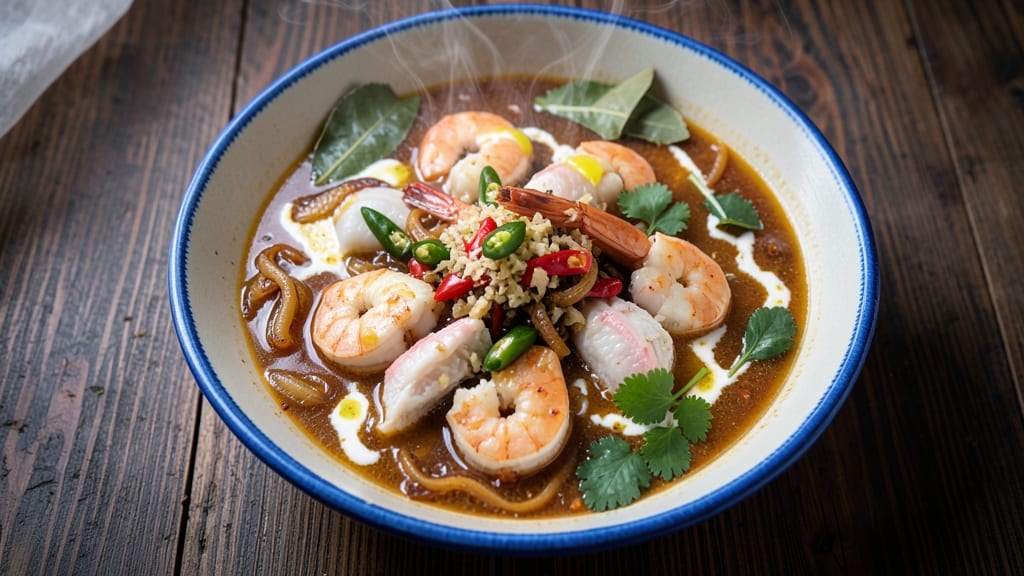
This Filipino-style bouillabaisse soup recipe transforms a classic French dish into something boldly familiar, where smoky chili-lime broth meets crispy garlic chips and tender seafood.
The secret lies in balancing traditional bouillabaisse techniques with Filipino flavors—think siling labuyo heat, kalamansi brightness, and aromatic bay leaves—while keeping the dish light yet deeply satisfying. Unlike its French counterpart, this version skips heavy roux and embraces a quick, one-pot method that delivers restaurant-quality results in under an hour.
The broth starts with a fragrant base of shallots, garlic, and ginger, then builds complexity with a blend of tomatoes, fish stock, and a splash of coconut milk for richness.
What sets this apart is the crispy garlic chips—thinly sliced garlic fried until golden and crunchy—that add a textural contrast no traditional bouillabaisse offers. The seafood selection is flexible: shrimp, white fish fillets, and mussels work beautifully, but the broth’s depth ensures even budget-friendly options shine.
By the time you finish, you’ll have a steaming bowl of soup where every spoonful delivers layers of flavor—smoky from the chili, bright from the citrus, and umami-rich from the seafood. The crispy garlic chips provide a satisfying crunch, while the broth’s balance of heat and acidity keeps it lively.
This isn’t just a fusion dish; it’s a modern take on a classic that proves Filipino cuisine can elevate even the most beloved French recipes.
Perfect for pescatarians or seafood lovers, this soup scales effortlessly for gatherings or leftovers. The broth freezes well, and the garlic chips can be made ahead—meaning dinner prep is streamlined without sacrificing flavor. Let’s dive into the recipe, where tradition meets innovation in every bite.
Ingredients for bouillabaisse soup recipe filipino style
Balancing French tradition with Filipino boldness—this soup transforms classic bouillabaisse into a vibrant, aromatic masterpiece.
| Ingredient | Amount | Notes |
|---|---|---|
| Yellow Onion 🧅 | 1 whole | Diced finely for aromatic base |
| Garlic Cloves 🧄 | 8 cloves | Peeled, 4 for broth, 4 for chips |
| Fresh Ginger 🌿 | 1 ½ tbsp | Minced, peeled, aromatic |
| Siling Labuyo (Bird's Eye Chili) 🌶️ | 4 whole | Seeds removed for milder heat |
| Kalamansi or Lime Juice 🍋 | ¼ cup | Freshly squeezed for brightness |
| Bay Leaves 🌿 | 2 whole | Dried, for aromatic depth |
| Canned Crushed Tomatoes 🍅 | 14 ½ oz | High-quality, no added salt |
| Vegetable Oil 🫒 | ½ cup | For frying garlic chips |
| Fish Stock 🦞 | 4 cups | Homemade or quality store-bought |
| Coconut Milk 🥥 | ½ cup | Full-fat for richness |
| White Wine 🍷 | ½ cup | Dry, for acid balance |
| Seafood Mix 🦐 | 1 ½ lb | Shrimp, fish fillets, mussels |
| Salt 🧂 | 1 ½ tsp | Diamond Crystal kosher |
| Black Pepper 🌶️ | ½ tsp | Freshly ground for finish |
| Fresh Cilantro 🌿 | ¼ cup | Chopped, for garnish |
The siling labuyo and kalamansi are non-negotiable for authentic Filipino heat and brightness. Siling labuyo can be found at Asian markets or substituted with Thai bird's eye chilies—just remove seeds for milder heat. Kalamansi is ideal, but lime juice works in a pinch. For fish stock, Pacific Foods or homemade versions elevate the broth's depth. Fresh ginger should be vibrant yellow inside, not green or fibrous. The bay leaves add subtle complexity—don't skip them. If using pre-made fish stock, opt for brands without added MSG for cleaner flavor.
No white wine? Dry vermouth or extra lime juice maintains acidity. For seafood, shrimp and mussels are budget-friendly staples, while halibut or cod fillets add luxury. The coconut milk provides richness without overpowering—stick to full-fat for best texture. For garlic chips, thinly slice cloves (almost translucent) for even frying. If your oil smokes excessively, reduce heat immediately. The crushed tomatoes should be San Marzano if possible—their sweetness balances the broth's acidity.
Broth freezes beautifully for up to 3 months—portion into airtight containers before freezing. Garlic chips stay crisp for 2 days at room temperature in an airtight container, but best used immediately. Fresh cilantro wilts fast; store stems-down in water for 5 days. Reheat soup gently on low—never boil—to preserve delicate seafood textures. For gatherings, double the garlic chips and broth; they reheat better than most soups.
Why You'll Love This Recipe
- Pantry-Friendly Base: I swear by this recipe because it uses ingredients I always have—yellow onion, garlic, and ginger—plus a few pantry staples. No fancy fish market trips or hard-to-find herbs here, just the kind of bold, familiar flavors that make a quick weeknight dinner feel special.
- Zesty, Tangy Kick: That siling labuyo and kalamansi (or lime) juice? Oh, it’s chef’s kiss. The heat from the chili cuts through the richness of the broth, while the citrus brightens everything up—like a little sunshine in a bowl. Honestly, the first time I tasted it, I made a second batch just to have leftovers.
- Weeknight to Party Ready: This soup starts simple but becomes something impressive with zero extra effort. Serve it with crusty bread for a laid-back dinner, or add a splash of coconut milk and some shrimp for a restaurant-worthy dish. My sister even brought a pot to a potluck—it disappeared faster than the rice dish.
- Leftovers That Don’t Suffer: Between us, most soups turn sad the next day. Not this one. The flavors actually deepened—the ginger and garlic mellow into something warm, while the siling labuyo lingers just enough to keep it exciting. I’ve reheated mine three times, and it’s still the star of the meal.
Step-by-step instructions for Filipino-style bouillabaisse soup
Master this aromatic broth with crispy garlic chips and tender seafood in just 45 minutes.
Build the Aromatic Base
Heat the 0.5 cup vegetable oil in a large pot over medium heat until shimmering. Add the 1 whole yellow onion and cook for 5 minutes until softened and translucent. Stir in the 1.5 tbsp fresh ginger and 4 whole siling labuyo (seeds removed)—this creates the signature smoky-chili foundation.
Add the 8 cloves garlic cloves (reserve 4 for later) and cook for 1 minute until fragrant. Immediately pour in the 0.5 cup white wine and scrape up any browned bits from the bottom—this deglazes the pot and captures deep flavor. Let the wine reduce by half before adding the 14.5 oz canned crushed tomatoes and 2 whole bay leaves.
Develop the Broth
Pour in the 4 cups fish stock and bring to a gentle boil. Reduce heat to medium-low and simmer uncovered for 15 minutes until the mixture thickens slightly and flavors meld. The broth should smell rich with notes of garlic, chili, and tomatoes—this is your flavor anchor.
Stir in the 0.25 cup kalamansi or lime juice and 1.5 tsp salt. Taste and adjust seasoning—you want bright acidity balanced by saltiness. Here's the thing: Filipino bouillabaisse relies on this citrus note to cut through the richness of the coconut milk we'll add later.
Create Crispy Garlic Chips
While the broth simmers, heat 2 tablespoons vegetable oil in a small skillet over medium-high heat until hot. Add the reserved 4 cloves garlic cloves (cut lengthwise into thin slices) and fry for 30-45 seconds until golden and crispy. Remove with tongs and drain on paper towels—these chips add irresistible crunch.
Don't walk away during this step. Garlic burns quickly, so watch closely for golden brown edges. If they darken too much, remove them immediately—they should be crisp, not charred. Set aside for garnish.
Cook the Seafood
Add the 1.5 lb seafood mix to the simmering broth. Cook for 3-4 minutes until shrimp turn opaque and fish fillets flake easily with a fork. Mussels should open completely—discard any that remain closed. Remove seafood with a slotted spoon and set aside.
Stir in the 0.5 cup coconut milk and 0.5 tsp black pepper. The coconut milk should create a velvety sheen on the broth. If the soup seems too thick, add 1/4 cup hot water to reach your desired consistency. Return the seafood to the pot and heat through for 1 minute.
Finish and Serve
Remove the 2 whole bay leaves and ladle the soup into bowls. Garnish each serving with crispy garlic chips and 0.25 cup fresh cilantro. The contrast of crispy garlic against the creamy broth creates the perfect textural balance—this is the moment that matters.
Serve immediately with crusty bread to soak up every last drop of that aromatic broth. The soup should deliver layers of flavor: smoky from the chili, bright from the citrus, rich from the coconut, and crisp from the garlic chips. Each bite should be a perfect harmony of textures and tastes.
Pro Tips For Making Bouillabaisse Soup Recipe Filipino Style
- Sweat the Aromatics Slow: Filipino-style bouillabaisse starts with onions, garlic, ginger, and siling labuyo—don’t rush this. Cook them on medium-low heat for 8-10 minutes until the onions turn deep gold and the garlic just starts to color (not burn). I learned this the hard way—charred aromatics make the whole soup taste bitter, and no amount of kalamansi can fix that.
- Mince the Ginger Fine: Skip the grating—filipino-style bouillabaisse needs minced ginger for even distribution. Use a sharp knife and chop it into tiny, almost paste-like pieces so it dissolves completely into the broth. My grandmother swore by this, and she was right: lumpy ginger just sits there like a textural mistake.
- Balance the Heat Early: Add the siling labuyo after the onions and garlic have softened, then taste the broth before serving. Adjust with more chili or a splash of kalamansi/lime juice as needed—Filipino-style bouillabaisse should tingle, not burn. I was skeptical until I tried it: the acidity from the citrus cuts through the heat without overpowering the fish.
- Simmer, Don’t Boil: Once the fish and other ingredients are in, keep the heat at a gentle simmer—not a rolling boil. Overheating turns the broth cloudy and makes the fish rubbery. A steady, barely-bubbling simmer keeps everything tender and the flavors melded. Sounds weird, but it works: your future self will thank you.
Regional styles of this bouillabaisse soup recipe filipino style
Filipino Coastal Influence
This adaptation draws from the Philippines' vibrant coastal cuisine, where seafood takes center stage alongside bold flavors. The siling labuyo and kalamansi are staples in Filipino kitchens, providing the signature heat and citrusy brightness that elevate the broth.
Unlike traditional bouillabaisse, which relies on saffron and fennel, this version swaps those for ginger and bay leaves—common in Filipino soups like sinigang—while keeping the French technique of building flavor through slow simmering. 🌶️
Crispy Garlic Innovation
The crispy garlic chips are a Filipino-inspired twist that adds a textural contrast no classic bouillabaisse offers. In the Philippines, fried garlic (garlic chips) is a popular snack and garnish, often served with adobo or sinigang.
Here, they’re made from thinly sliced garlic cloves fried until golden—similar to garlic croutons but with a more delicate crunch. This technique transforms a simple garnish into a flavorful focal point that balances the soup’s richness. 🧄
Coconut Milk Fusion
While traditional bouillabaisse avoids dairy, this Filipino version incorporates coconut milk for a creamy, velvety finish. Coconut is a cornerstone of Filipino cuisine, used in everything from curries to soups.
The addition here softens the broth’s acidity while adding a subtle sweetness that complements the seafood. For authenticity, use full-fat coconut milk—it blends seamlessly without overpowering the other flavors. 🥥
Seafood Flexibility
Filipino coastal communities rely on whatever seafood is freshest, making this recipe adaptable to local catches. Shrimp, mussels, and white fish fillets are classic choices, but you could also use tuna, squid, or even tanigue (smoked fish) for a deeper smoky note.
The broth’s bold flavors ensure even budget-friendly seafood shines—just adjust cooking times based on size. This flexibility mirrors Filipino paella-style soups, where ingredients are often improvised. 🦐
Quick One-Pot Method
Unlike traditional bouillabaisse, which requires hours of simmering, this Filipino version comes together in under 45 minutes. The technique mirrors Filipino one-pot meals, where efficiency meets flavor.
The broth builds quickly thanks to the aromatic base of shallots, garlic, and ginger, while the citrus and coconut milk add brightness and richness in minutes. Perfect for busy weeknights or last-minute gatherings! ⏰
Serving Traditions
In the Philippines, soups are often served with steamed rice and crusty bread to soak up every drop of broth. For this dish, I recommend garlic fried rice or tortang talong (eggplant fritters) on the side.
The crispy garlic chips can also be served separately as a snack or garnish for other dishes. This approach keeps the meal balanced and true to Filipino dining customs. 🍚
Nutrition facts
Frequently asked questions
Can I substitute kalamansi if I can't find it?
Use lime juice (preferably Mexican or Persian limes) as a 1:1 substitute—it provides similar acidity. For extra Filipino flavor, add 1/4 teaspoon fish sauce to mimic kalamansi's umami depth. Avoid lemon, as it's less tangy and can overpower the broth.
How do I adjust the heat level for picky eaters?
Remove the seeds from all siling labuyo chilies before cooking to reduce heat by 50%. For milder heat, use 1/2 the amount (2 chilies) or swap for 1/4 teaspoon ground white pepper—it adds warmth without spiciness. Always taste the broth after adding coconut milk to gauge the final heat level.
What seafood works best for this Filipino-style bouillabaisse?
Shrimp, mussels, and white fish fillets (like cod or halibut) are ideal for their quick cooking time. For a budget-friendly option, try tilapia or milkfish. Avoid fatty fish like salmon—they can overpower the broth's delicate balance. Cook seafood in batches to prevent overcooking, especially mussels, which should open within 3-4 minutes.
Can I make this soup ahead of time?
Yes! Prepare the broth up to 2 days ahead and store it in an airtight container in the fridge. Reheat gently on low heat until steaming, then add the seafood and crispy garlic chips just before serving. The garlic chips should be made fresh for maximum crunch—reheat them in a dry skillet for 30 seconds if needed.
Why does my broth taste flat compared to the recipe?
Flat broth often results from skipping the deglazing step (scraping browned bits) or using low-quality fish stock. Boost flavor by adding 1/2 teaspoon fish sauce or a pinch of MSG (if vegetarian) to the broth. For depth, simmer the broth 5 extra minutes uncovered to concentrate flavors. Fresh herbs like cilantro should always be added at the end.