
Soups & Stews
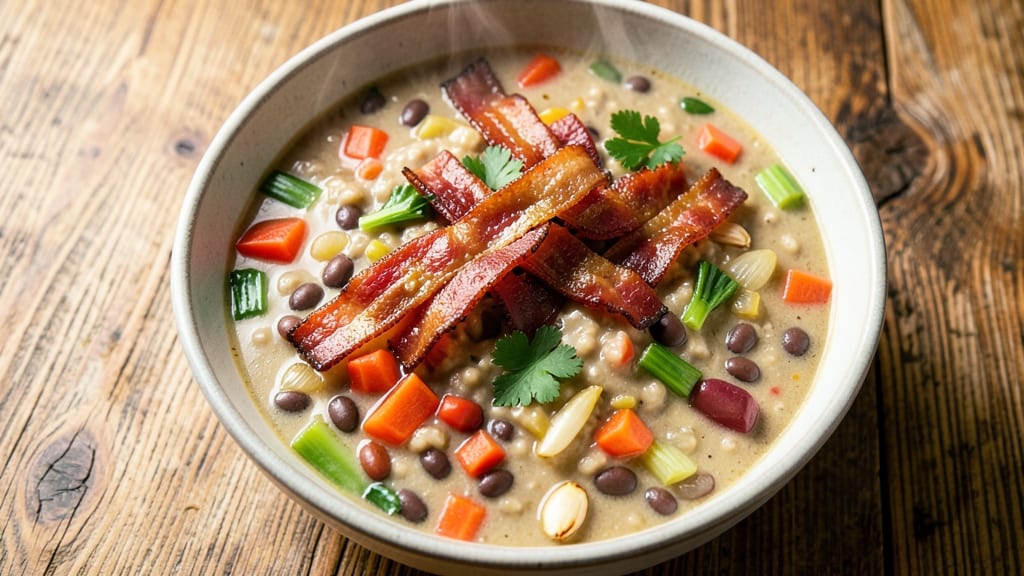
Boston bean soup has been warming New England kitchens since colonial times, and this slow-simmered version delivers all the smoky, savory depth you'd expect from a traditional New England baked bean dish—just in soup form.
The secret lies in long, gentle cooking that transforms dried navy beans into tender, flavorful bites infused with bacon, molasses, and aromatic spices. This isn't just comfort food; it's a one-pot meal that builds flavor with every passing hour, making it perfect for chilly evenings or meal prep.
What sets this recipe apart is the balance of sweet and smoky elements—bacon adds rich, salty crunch while molasses brings a subtle caramel note that rounds out the earthy beans. The slow simmer (at least 2 hours) develops complex flavors that canned soups simply can't match.
Unlike quicker versions, this method ensures the beans are perfectly tender without losing their shape, creating a hearty soup that's both satisfying and restaurant-quality at home.
The result is a deeply flavorful soup with a velvety texture from the beans and a rich, slightly sweet broth that coats every spoonful. The bacon pieces stay crispy, adding a satisfying crunch that contrasts beautifully with the soft beans.
This is the kind of soup that tastes even better the next day as the flavors meld further—ideal for leftovers or bringing to gatherings where it disappears quickly.
Serve it with crusty bread for dipping or alongside cornbread to soak up every last drop of that smoky, molasses-kissed broth. The recipe scales easily, so you can make a big batch for the week or double it for a crowd.
Here's how to create this New England classic in your own kitchen.
Ingredients for boston bean soup
Six core ingredients build the foundation of this classic New England comfort dish.
| Ingredient | Amount | Notes |
|---|---|---|
| Dried Navy Beans 🌱 | 2 cups | Unsoaked, quality dried beans |
| Thick-Cut Bacon 🥓 | 12 oz | Smoked or regular, cut into 1/2-inch pieces |
| Yellow Onion 🧅 | 1 whole | Medium size, chopped |
| Carrots 🥕 | 3 medium | Peeled, sliced into 1/4-inch rounds |
| Celery Stalk 🥬 | 2 whole | Medium size, chopped |
| Garlic Cloves 🧄 | 4 cloves | Peeled, minced |
| Molasses 🍯 | ½ cup | Unsulphured for best flavor |
| Tomato Paste 🍅 | 2 tbsp | Smooth, not chunky |
| Beef Broth 💧 | 6 cups | Low-sodium preferred |
| Bay Leaves 🌿 | 2 whole | Dried, standard size |
| Ground Black Pepper 🌶️ | 1 tsp | Freshly ground preferred |
| Ground Allspice 🌶️ | ½ tsp | For authentic New England flavor |
| Salt 🧂 | 1 ½ tsp | Kosher or sea salt |
| Crusty Bread 🍞 | 1 loaf | For serving, optional |
The navy beans are the heart of this soup, so pick quality dried beans—none of that canned mushy stuff. Bob's Red Mill or Whole Foods bulk section are great sources. For the bacon, thick-cut smoked bacon gives the best texture and flavor, but regular bacon works too. The molasses is non-negotiable—unsulphured makes all the difference in that deep, caramel-rich flavor. If you can't find it, Barbados molasses from specialty stores is worth seeking out. The vegetables should be fresh but don't stress about perfect sizes—just chop them evenly so they cook at the same rate.
No molasses? Maple syrup at half the amount works in a pinch, though it won't have that deep, smoky undertone. Out of bacon? Smoked turkey bacon is a decent swap, though it'll be slightly sweeter. The tomato paste can be omitted entirely if you prefer a more traditional baked bean flavor, but I find it adds a nice depth. For the broth, homemade beef broth is ideal, but even the good quality low-sodium store-bought stuff will work. The allspice is what gives this soup its classic New England character—don't skip it unless you're making a modern variation.
This soup tastes even better the next day as the flavors meld. Store leftovers in the fridge for up to 5 days or freeze for 3 months. I always make a double batch—one for dinner and one to freeze for lazy weeknights. The crusty bread is purely for serving; you won't need it for the soup itself. If you're prepping ahead, you can cook the beans and bacon separately and assemble the soup when you're ready to serve—just add the fresh vegetables and broth at the end.
Why You'll Love This Recipe
- Here’s what sold me: crispy bacon bits floating in a broth that’s rich but not heavy, with carrots and celery that stay just firm enough to bite into. The onions caramelize at the bottom, adding this deep, almost candy-like sweetness that balances the salt. It’s the kind of flavor that makes you pause mid-spoonful.
- One-Pot Magic: I swear by this recipe because it’s literally one pot. Toss in the bacon, onions, celery, carrots, and dried beans—no pre-soaking required—and let it simmer. By the time the beans are tender, the house smells like a New England diner, and cleanup is just a wipe-down of one pot. That’s my kind of cooking.
- Smoky-Sweet Crunch: Here’s what sold me: crispy bacon bits floating in a broth that’s rich but not heavy, with carrots and celery that stay just firm enough to bite into. The onions caramelize at the bottom, adding this deep, almost candy-like sweetness that balances the salt. It’s the kind of flavor that makes you pause mid-spoonful.
- Lunchbox Hero: Between us, this soup is my go-to for meal prep. The flavors actually improve the next day—yes, really. Pack it in thermoses for work, or serve it cold in jars for a picnic. My college-aged kids take it to games, and honestly? It’s the only thing they’ll eat when they’re starving and short on time.
Step-by-Step instructions for slow-simmered Boston bean soup
This method delivers rich, smoky depth with perfectly tender beans and caramelized vegetables.
Render the Bacon and Sauté Vegetables
Cut the 12 oz thick-cut bacon into ½-inch pieces and place in a large Dutch oven over medium heat. Cook undisturbed for 8-10 minutes until the bacon becomes deep golden brown and crispy. Real talk: this is where the soup gets its signature smoky crunch, so don't rush it. Once crisp, remove the bacon with a slotted spoon and set aside, leaving the rendered fat in the pot.
In the same Dutch oven, add the chopped 1 whole yellow onion, 3 medium carrots (sliced into ¼-inch rounds), and 2 whole celery stalks (chopped). Cook for 8-10 minutes, stirring occasionally, until the vegetables soften and the onion becomes translucent. You'll notice the vegetables release moisture—this is normal and adds flavor to the broth. Here's the thing: the vegetables should caramelize slightly at the edges, but not burn. If they start to brown too quickly, reduce the heat to medium-low.
Add Aromatics and Tomato Paste
Stir in the 4 cloves minced garlic and cook for 30 seconds until fragrant. The garlic should sizzle gently but not burn—burnt garlic will make the soup bitter. Next, add the 2 tbsp tomato paste and cook for 1 minute, stirring constantly. This step deepens the soup's color and adds a subtle sweetness that balances the smokiness of the bacon.
Pour in the 6 cups beef broth, scraping up any browned bits from the bottom of the pot with a wooden spoon. Add the 2 whole bay leaves, 1 tsp ground black pepper, 0.5 tsp ground allspice, and 1.5 tsp salt. Bring the mixture to a boil, then reduce the heat to low and let it simmer gently for 5 minutes to allow the flavors to meld. This simmering step ensures the broth absorbs all the aromatics and spices evenly.
Cook the Beans Until Tender
Add the 2 cups dried navy beans to the pot. The beans should be fully submerged in the broth—if not, add a little water to cover them. Return the mixture to a gentle simmer and cook for 1.5 to 2 hours, stirring occasionally. You'll know the beans are tender when they easily mash between your fingers with a light squeeze. Don't skip this step—undercooked beans will be tough, and overcooked beans will turn mushy.
About 30 minutes before the beans are done, stir in the 0.5 cup molasses and the reserved crispy bacon. The molasses adds a deep, caramel-like sweetness that's characteristic of Boston bean soup. Stir well to distribute the molasses evenly throughout the soup. The bacon will soften slightly but retain its crispy texture, adding a satisfying crunch to every spoonful.
Adjust Seasoning and Serve
Taste the soup and adjust the seasoning if needed. You might need a little more salt or pepper to balance the flavors—remember, the beans absorb some of the seasoning as they cook. Remove the 2 whole bay leaves before serving, as they can be tough to chew. The soup should be thick but not pasty—if it's too thick, add a little water or broth to reach your desired consistency.
Ladle the soup into bowls and serve immediately with 1 loaf crusty bread on the side. The bread helps soak up the rich, smoky broth, making every bite even more satisfying. This soup tastes even better the next day as the flavors continue to develop, but it's worth eating fresh while the bacon is still crispy and the broth is steaming hot.
Pro Tips For Making Boston Bean Soup
- CRISP THE BACON LOW: I used to rush the bacon and end up with grease splatter everywhere and barely any flavor. For Boston bean soup, cook it at 275°F (135°C)—yes, that’s low—until the fat renders and the edges turn deep mahogany. That slow render pulls more flavor into the beans later, and the grease won’t burn when you add the veggies.
- SOAK BEANS TWICE: Skip the overnight soak and do this instead: Boil the dried navy beans for 2 minutes, then let them sit off heat in hot water for 1 hour. Drain, rinse, then boil again for 2 minutes before simmering. This cuts down on the cooking time and keeps the beans from turning mushy—trust me, your soup will thank you.
- CHOP VEGGIES UNIFORM: I learned this the hard way—unevenly chopped carrots and celery mean some pieces stay crunchy while others dissolve into mush. Cut them into ¼-inch dice (same size as the onion) so they all cook at the same pace. No one wants a soup where half the veggies are still raw.
- SKIP THE BAY LEAF: This isn’t a classic New England trick, but I swear by it: Leave out the bay leaf unless you’re serving it to someone who insists on it. The soup’s natural flavors—smoky bacon, sweet carrots, earthy beans—get muddled by that herbal note. Taste the broth before adding it; if it’s bland, a pinch of salt or a splash of apple cider vinegar works better.
Pro cooking tips for great boston bean soup
Slow Cooker Shortcut
For busy weeknights, transfer everything to a 6-quart slow cooker after Step 2. Set it to low for 6-7 hours or high for 4-5 hours. The slow cooker maintains gentle heat, ensuring tender beans without constant monitoring.
I add the molasses and bacon during the last 30 minutes to preserve their crispiness. This method works especially well if you're prepping ahead—just dump everything in before work and come home to a ready meal. 🌡️
Pressure Cooker Speed
Cut cooking time dramatically by using a 6-quart electric pressure cooker. After Step 2, add the beans and broth, then cook on high pressure for 25 minutes. Quick-release the pressure, stir in the molasses and bacon, and let sit covered for 10 minutes before serving.
The beans will be perfectly tender without losing their shape. I find this method saves 2 hours of simmering while delivering the same rich flavor. Just be careful with the quick-release—steam burns are no joke! ⚡
Smoke Infusion
For an extra layer of depth, smoke the bacon in a smoker set to 225°F for 15-20 minutes before cooking. This adds a campfire-like quality that elevates the soup. Alternatively, add 1 tsp smoked paprika to the vegetables in Step 1 for a similar effect.
I also like adding ½ tsp liquid smoke during the final 10 minutes of cooking—just a drop or two makes a world of difference. 🔥
Bean Texture Control
To keep beans firm but tender, add 1 tsp baking soda to the broth when you add the beans. This raises the pH slightly, which helps break down the skins without over-softening. For creamier soup, mash ¼ cup beans with a fork before serving.
I also recommend skimming any foam that rises to the surface during the first 30 minutes of cooking—it can make the soup taste bitter. 💡
Molasses Substitutes
If you're out of molasses, try ¼ cup honey or maple syrup mixed with 1 tsp apple cider vinegar for tang. For a savory alternative, add 1 tbsp balsamic vinegar and 1 tsp brown sugar.
I've also used ½ cup cranberry sauce (no sugar added) for a tart twist that works surprisingly well. The key is balancing sweetness with acidity to mimic molasses' depth. 🍯
Broth Boost
Elevate your broth by adding 1 cup beef stock and ½ cup tomato juice instead of plain broth. For umami depth, stir in 1 tsp Worcestershire sauce during the final 10 minutes of cooking.
I also like adding 1 diced potato to the vegetables in Step 1—it thickens the broth naturally as it cooks. The potato will disappear completely, leaving behind a creamier texture. 💛
Nutrition facts
Frequently asked questions
Why does traditional Boston bean soup need such a long cooking time?
The 2-hour simmer is key to developing the deep, complex flavors that make this soup special. Dried navy beans need time to soften fully while absorbing the smoky bacon, molasses, and aromatic spices. This slow process also allows the vegetables to break down and infuse the broth with their natural sweetness. The result is a rich, velvety texture and layers of flavor you won't get with quick cooking methods.
Can I make this soup without molasses?
Yes! Try substituting ¼ cup honey or maple syrup mixed with 1 tsp apple cider vinegar for tang. For a savory alternative, use 1 tbsp balsamic vinegar + 1 tsp brown sugar. The molasses adds that signature caramel depth, but these swaps work surprisingly well while keeping the soup balanced. Just taste as you go—you may need to adjust other seasonings.
How do I know when the beans are perfectly tender?
Test them by gently squeezing a few beans between your fingers. They should be soft but still hold their shape—think al dente pasta. If they mash easily, they're overcooked. The soup should have a thick, hearty consistency, not a mushy one. For extra control, add 1 tsp baking soda to the broth when you add the beans to help break down skins without over-softening.
Can I use canned beans instead of dried?
While possible, I don't recommend it for this recipe. Canned beans are pre-cooked and often mushy, which changes the soup's texture. If you must use them, drain and rinse 2 (15 oz) cans navy beans, add them during the last 30 minutes of cooking, and reduce the broth slightly to maintain thickness. The flavor won't be as rich, but it's a decent shortcut for busy nights.
What's the best way to reheat leftovers?
Reheat gently on the stove over low heat with a splash of water or broth to prevent drying out. Avoid microwaving—it can make the beans gummy. For best results, warm the soup until steaming hot (165°F), then stir in a pat of butter or a splash of cream to restore richness. This soup actually tastes better the next day as flavors meld further!