
Soups & Stews
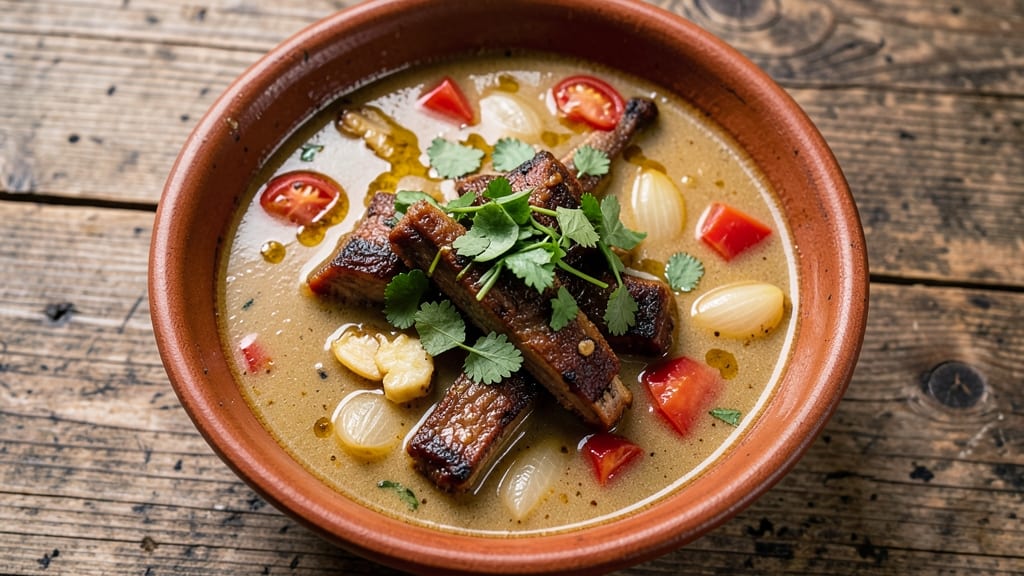
This Indian bone soup recipe transforms humble ingredients into a deeply aromatic, slow-simmered masterpiece that carries the essence of Indian kitchens. 🌿 The secret lies in layering spices—cumin, coriander, and garam masala—with tender bones and aromatic vegetables, creating a broth so rich it becomes the heart of any meal.
Unlike quick broths, this requires patience: bones simmered for hours until the collagen dissolves into velvety perfection, while spices infuse their warmth into every sip.
What sets this apart is the balance of earthy and bright flavors. Fenugreek leaves add a subtle bitterness, tomatoes lend acidity, and fresh herbs like cilantro and mint brighten the finish. The slow cooking process develops depth, turning simple ingredients into something restaurant-worthy.
Whether you're preparing it for a special occasion or a comforting weeknight dinner, this soup delivers both nourishment and complexity in every spoonful.
The result is a soup that pairs beautifully with roti, rice, or even as a standalone dish with a side of crisp pickles or cooling raita. The broth is versatile—use it as a base for dals, or sip it straight with a squeeze of lemon for a tangy contrast.
The spices mellow as they simmer, creating a harmonious blend that’s comforting yet sophisticated.
For those new to Indian cooking, this recipe is your gateway—it teaches the art of slow simmering while introducing you to the magic of Indian spice blends. The key is letting the flavors meld naturally, without rushing.
Trust the process, and you’ll end up with a bone soup that tastes like home, no matter where you are.
Ingredients for bone soup recipe indian
Six pounds of bones and fifteen aromatic ingredients for a soup that tastes like home.
| Ingredient | Amount | Notes |
|---|---|---|
| Beef Bones 🦴 | 4 lb | Marrow bones and knuckle bones preferred |
| Yellow Onions 🧅 | 3 whole | Chopped into even pieces |
| Fresh Ginger 🌿 | ½ cup | Peeled and roughly chopped |
| Garlic Cloves 🧄 | 8 cloves | Peeled and smashed |
| Fresh Fenugreek Leaves 🌱 | ½ cup | Chopped, stems removed |
| Fresh Tomatoes 🍅 | 4 whole | Medium-sized, chopped |
| Fresh Cilantro 🌿 | ¼ cup | Chopped for garnish |
| Fresh Mint Leaves 🌿 | ¼ cup | Chopped for garnish |
| Ground Cumin 🌶️ | 2 tsp | Toasted for deeper flavor |
| Ground Coriander 🌿 | 1 ½ tsp | Freshly ground preferred |
| Garam Masala 🌶️ | 1 ½ tsp | Store-bought or homemade blend |
| Turmeric Powder 🧂 | ½ tsp | Bright yellow color |
| Black Peppercorns 🌶️ | ½ tsp | Crushed lightly |
| Bay Leaves 🌿 | 2 whole | Dried, for depth |
| Salt 🧂 | 1 ½ tsp | Kosher or sea salt |
Start with the bones—they’re the soul of this soup. Ask your butcher for marrow and knuckle bones—they’ve got the best flavor and collagen. If you’re buying pre-cut, check for a vibrant red color and avoid anything with a strong odor. The ginger and garlic? Fresh is non-negotiable—dried just won’t cut it here. I grab mine at Whole Foods or my local Indian market, where they keep it extra fresh. Fenugreek leaves might be tricky to find, but some Asian markets carry them dried—just soak them first if using dried. The tomatoes should be ripe but firm; Roma tomatoes work best for their meaty texture.
No fresh ginger? Dried ginger at half the amount works in a pinch, but trust me, fresh is better. Running low on fenugreek? Spinach leaves can stretch it, though the flavor won’t be identical. The garam masala blend is key—MDH or Everest are solid store-bought options, but if you’re feeling fancy, toast whole spices (cumin, coriander, cardamom, cinnamon) and grind them yourself. The bay leaves? Don’t skip them—they add that deep, earthy backbone. And if you’re using pre-chopped onions from a bag, rinse them first—they’re often coated in anti-caking agents that can dull the flavor.
This soup tastes even better the next day—plan ahead. Store it in the fridge for up to 5 days, or freeze portions for 3 months. I like to portion it into glass jars so I can grab just what I need. The broth thickens as it cools, so add a splash of water when reheating. And save those bones—roast them first for 30 minutes at 400°F to deepen the flavor before simmering. The longer they cook, the richer the broth gets—don’t rush it
Why You'll Love This Recipe
- Minimal Chopping Required: I swear by this—just dice those onions and ginger once, then let the bones do the rest. No fancy techniques, no stress. The garlic and fenugreek leaves? Toss them in whole if you’re lazy (I often do), and the soup still tastes like it simmered for hours.
- Deep Umami Magic: That first sip? Chef’s kiss. The beef bones melt into the broth, while the ginger and garlic build layers of warmth. Between us, adding fresh fenugreek leaves at the end gives it this earthy, slightly bitter punch that makes it unforgettable—like a hug in a bowl.
- Weeknight to Potluck Hero: Make a big batch on Sunday, and you’ve got dinner covered for days. Too rich for a weekday? Serve it chilled with crusty bread for a summer potluck. Honestly, it’s the one dish that feels fancy without trying—just adjust the spice and you’re golden.
- Budget-Friendly Goldmine: Beef bones are dirt cheap at the butcher, and this recipe stretches them into meals for a crowd. Freeze leftovers in jars—no waste, just flavor. I’ll be real: my wallet thanks me every time I make this instead of takeout.
Step-by-step instructions for slow-simmered Indian bone broth
This rich, aromatic broth builds flavor layer by layer—let's get started.
🔥 Step 1: Char the Bones for Deep Flavor
Preheat your oven to 450°F. Place the 4 lb beef bones on a baking sheet and roast for 20-25 minutes until they develop a deep golden-brown crust. This caramelization unlocks incredible depth of flavor in your broth.
Flip the bones halfway through for even browning. You'll know they're ready when they smell nutty and aromatic—this is your signal to move to the next step. Don't wash off the browned bits; they're packed with flavor that will infuse your broth.
🍳 Step 2: Sauté Aromatics Until Fragrant
Heat a large Dutch oven or heavy pot over medium heat. Add the chopped 3 whole yellow onions and cook for 8-10 minutes until soft and golden. You want them to caramelize slightly—this sweetens the broth and adds complexity.
Add the 0.5 cup fresh ginger and 8 cloves garlic cloves (smashed), cooking for another 2 minutes until the garlic becomes fragrant. Here's where it gets good—stir in the 2 tsp ground cumin, 1.5 tsp ground coriander, and 0.5 tsp turmeric powder. The spices should sizzle and release their oils—this is your aromatic foundation.
🥘 Step 3: Build the Spice Base
Add 1.5 tsp salt, 0.5 tsp black peppercorns, and 2 whole bay leaves to the pot. Pour in enough cold water to cover the bones by about 2 inches—you'll need roughly 12 cups total. Bring to a rolling boil over high heat.
Once boiling, reduce to a gentle simmer. Skim off any foam or impurities that rise to the surface with a ladle—this keeps your broth clear. The reason we simmer gently is to extract collagen from the bones without breaking them down too quickly. This step takes patience, but it's worth it for that silky texture.
⏰ Step 4: Simmer the Broth for Maximum Richness
Cover the pot and maintain a gentle simmer for 4-5 hours. Here's the thing—you'll know it's working when the broth turns a deep amber color and smells impossibly rich. I like to check it periodically and add water if needed to keep the bones covered.
After 3 hours, add the chopped 0.5 cup fresh fenugreek leaves and 4 whole fresh tomatoes. These ingredients add a subtle bitterness and freshness that balances the richness. The fenugreek is key—it gives that authentic Indian depth that sets this broth apart.
🍽️ Step 5: Finish and Strain for Clarity
After the full 4-5 hours, remove the pot from heat. Let the broth sit covered for 15 minutes to allow any settled particles to sink to the bottom. Then carefully strain it through a fine-mesh sieve or cheesecloth into a clean pot.
Discard the bones and aromatics. Taste the broth and adjust seasoning if needed—you might want to add a pinch more salt or a splash of water to reach your desired consistency. Let it cool slightly, then transfer to airtight containers. This broth keeps beautifully in the refrigerator for up to 5 days or can be frozen for 3 months.
Pro Tips For Making Bone Soup Recipe Indian
- Char Bones First: I learned this the hard way—skip the slow simmer until the bones are blackened in spots. Sear them hard over direct heat (even if it looks like you’re burning them) for 10-15 minutes. That crust unlocks the collagen and deepens the flavor—no shortcut here.
- Slice Onions Thinly: Yes, even if you’re impatient like me, resist the urge to chop onions roughly. Thin, even slices caramelize faster and dissolve into the broth without leaving chunks. Use a sharp knife and work in one direction—no need for fancy techniques, just precision.
- Crush Ginger Coarsely: My grandmother swore by this, and she was right: don’t mince ginger into paste. Roughly crush it with the flat side of your knife (or a mortar if you’re fancy) to release oils without turning it into mush. It infuses the broth better and stays intact longer.
- Add Fenugreek Late: Sounds weird, but it works: toss the fresh fenugreek leaves into the broth only in the last 10 minutes. The bitterness fades fast, and you’ll get that signature aroma without overpowering the rest. (Pro move: rinse the leaves first if they’re dusty—trust me, you’ll taste the difference.)
Creative variations of bone soup recipe indian
North Indian Style
For a richer, creamier broth, add ½ cup heavy cream or yogurt during the final 30 minutes of simmering. This variation, popular in Punjab, balances the earthy spices with cool, tangy notes.
I like to finish with a squeeze of lemon juice and a sprinkle of kasuri methi (dried fenugreek leaves)—this adds a signature aroma that’s hard to resist. 🌿
South Indian Twist
In Kerala and Tamil Nadu, they use coconut milk instead of cream for a lighter, tropical flavor. Replace the heavy cream with 1 cup coconut milk> and add 1 tsp grated coconut to the broth during the last hour.
Garnish with curry leaves and mustard seeds> for an authentic touch. The coconut milk adds a subtle sweetness that pairs beautifully with the spicy undertones.
Spicy Andhra Fusion
For those who love heat, the Andhra region takes bone soup to another level by adding 1-2 dried red chilies>, 1-inch ginger,> and 1 tsp black pepper> to the initial spice blend.
After simmering, blend ½ cup tamarind pulp> into the broth for a tangy kick. Serve with mirchi ka salan (chili curry)> on the side—this combo is a flavor explosion. 🌶️
Vegetarian Adaptation
Skip the bones entirely and use 2 lbs mushrooms (shiitake or oyster)> and 1 lb sweet potatoes> for body. Sauté the mushrooms first to deepen their umami, then proceed with the same spice blend.
Add 1 tsp asafoetida (hing)> when simmering for that signature Indian aroma. This version is just as rich and works perfectly as a base for dal or veggie curries>.
Slow-Cooker Shortcut
If you're short on time, use a 6-quart slow cooker> instead of a Dutch oven. After charring the bones and sautéing the aromatics, transfer everything to the slow cooker, add 12 cups water,> and cook on low for 8-10 hours>. The slow cooker does most of the work while keeping flavors concentrated. Just
Fresh herbs and finishing touches make all the difference. I always garnish with ¼ cup chopped cilantro>, ¼ cup mint,> and a drizzle of lemon juice>. For extra richness, add a dollop of yogurt> or a swirl of ghee> before serving. In some regions, they even top it with crispy fried onions> for crunch. The key is balancing textures and temperatures—hot soup with cool garnishes creates harmony. 💫Garnish Like a Pro
Nutrition facts
Frequently asked questions
Can I use chicken or fish bones instead of beef?
While beef bones are traditional for maximum collagen, you can absolutely use chicken or fish bones! For chicken, use 6-8 pounds of backs and necks for a lighter broth. Fish bones (like salmon or trout) work beautifully but require only 2-3 pounds—simmer for 1.5-2 hours instead of 4-5. The flavor profile will be different but still rich and aromatic.
How do I know when the broth is done?
The broth is ready when it reaches a deep amber color and smells intensely rich. After 4-5 hours of simmering, the bones should be tender and the broth should coat the back of a spoon thickly. Another test: press a bone with tongs—if it crumbles easily, it's done. The longer it simmers, the more gelatinous it becomes.
What if I don't have fresh fenugreek leaves?
No worries! You can substitute with ½ cup spinach leaves or 1 tsp dried fenugreek seeds (soaked in warm water for 10 minutes first). While not identical, these will add a similar earthy depth. For a stronger flavor, add ½ tsp asafoetida (hing) when sautéing the spices. The dish will still taste authentic.
Can I make this soup in an Instant Pot?
Yes! After charring the bones and sautéing the aromatics, add everything to your Instant Pot with 12 cups water. Cook on high pressure for 90 minutes, then do a natural release. The pressure cooker cuts time dramatically while still extracting rich flavors. For extra depth, add 1 tsp apple cider vinegar during cooking.
Why does my broth taste bitter?
Bitterness usually comes from overcooking the bones or using too many fenugreek leaves. To fix it, add 1 tsp sugar or ½ cup coconut milk during the last 30 minutes of simmering. For prevention, never boil vigorously—keep it at a gentle simmer. Also, reduce fenugreek to ¼ cup if you're sensitive to its flavor.