
Soups & Stews
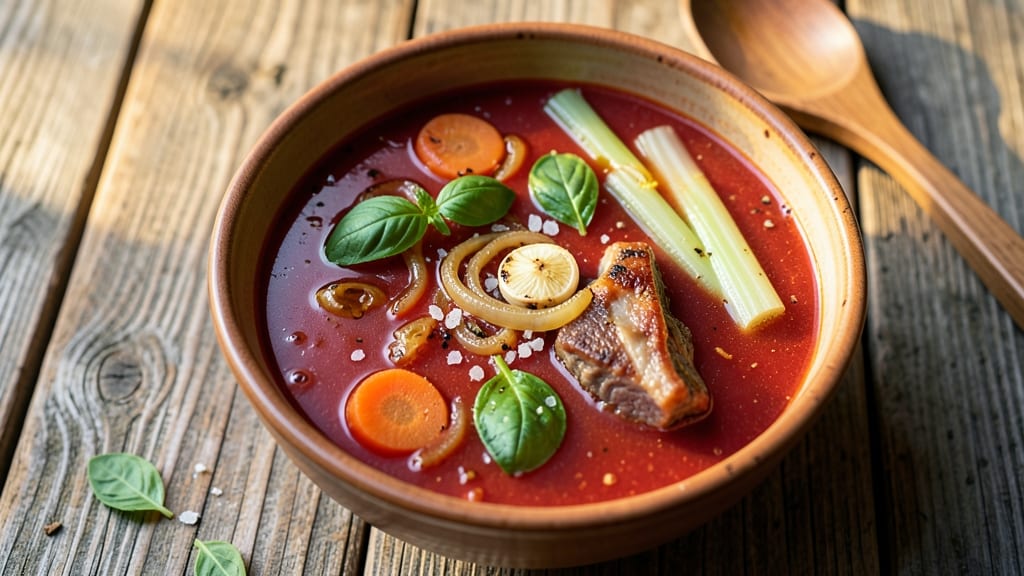
This bone broth tomato soup recipe transforms humble ingredients into a deeply flavorful, restaurant-worthy bowl that simmers for hours to develop layers of umami. The secret lies in slow-cooked bones that infuse the broth with rich gelatin and savory depth, while canned tomatoes provide natural sweetness that balances perfectly.
What sets this apart is the technique—simmering the broth low and slow to concentrate flavors without overcooking the tomatoes, resulting in a velvety texture with just the right balance of acidity and richness.
The process is simpler than it sounds: start with a basic bone broth (store-bought works fine), then build complexity through aromatics and a touch of sugar to enhance the tomatoes' natural sweetness. Unlike quick soups, this one rewards patience with a depth of flavor you won't find in instant versions.
The result is a soup that's comforting yet sophisticated, with a smooth, almost custard-like consistency that clings to every spoonful.
What makes this recipe truly special is its versatility—serve it as a light lunch with crusty bread, or let it stand in for a main course when paired with grilled cheese.
The broth's richness makes it hearty enough for winter nights, while the bright tomato notes keep it fresh and vibrant. Best of all, the flavors improve with time, making it perfect for meal prep or leftovers that taste even better the next day.
For those new to slow-cooked soups, don't worry—the technique is foolproof, and the ingredients list is straightforward. The key is letting the soup work its magic on the stove, where the flavors meld and deepen.
Once you try this version, you'll never go back to the canned or instant varieties again.
Ingredients for bone broth tomato soup
Humble bones and pantry staples create a restaurant-worthy bowl of umami-rich tomato soup.
| Ingredient | Amount | Notes |
|---|---|---|
| Beef Bones 🦴 | 2 lb | Knee or knuckle for gelatin |
| Yellow Onion 🧅 | 1 whole | Chopped, medium size |
| Carrots 🥕 | 3 whole | Peeled, chopped into chunks |
| Celery Stalks 🧅 | 3 whole | Chopped, including leaves |
| Garlic Cloves 🧄 | 6 cloves | Smashed, not minced |
| Canned San Marzano Tomatoes 🍅 | 2 cans | 28 oz each, crushed by hand |
| Bone Broth 💧 | 4 cups | Store-bought or homemade |
| Apple Cider Vinegar 🍏 | 1 tbsp | For acidity balance |
| Olive Oil 🫒 | ¼ cup | Extra-virgin for richness |
| Bay Leaves 🌿 | 2 whole | Dried, standard size |
| Fresh Thyme 🌿 | ½ tsp | Leaves only, chopped |
| Salt 🧂 | 1 ½ tsp | Diamond Crystal preferred |
| Black Peppercorns 🌶️ | ½ tsp | Freshly cracked |
| Granulated Sugar 🍚 | 1 tsp | Enhances tomato sweetness |
The bones are everything here—knee or knuckle cuts give the most gelatinous broth. Costco or butcher shops usually have them pre-packaged, but if you're buying whole, look for good marbling. The carrots and celery form the holy trinity of soup bases, so don't skip them. I always grab organic carrots at Whole Foods for their sweeter flavor, but regular works too. The San Marzano tomatoes are non-negotiable for that perfect balance of sweetness and acidity—Trader Joe's carries them at a reasonable price. If you can't find them, any high-quality canned tomatoes will do, but you'll notice the difference.
No bone broth on hand? Chicken or vegetable broth with an extra splash of soy sauce works in a pinch, though the texture won't be quite as rich. Fresh thyme is ideal, but dried at one-third the amount gets you close. The apple cider vinegar might seem odd, but it's what makes the tomatoes sing—Bragg is my go-to brand for its purity. Want to skip the sugar? A pinch of honey or maple syrup works just as well. The olive oil is worth the extra-virgin splurge here—California avocado oil is another great option if you prefer a neutral flavor. And if you're short on time, pre-made bone broth from Kettle & Fire is a lifesaver.
This soup tastes even better the next day as the flavors meld. Store in an airtight container in the fridge for up to 5 days, or freeze for 3 months—portion into single servings first. The broth thickens as it cools, so add a splash of water or broth when reheating. For extra richness, stir in a pat of butter or a drizzle of olive oil before serving. The leftovers reheat beautifully—just bring to a simmer and let it warm through completely.
Why You'll Love This Recipe
- One-Pot Magic: I swear by this soup because it’s basically set it and forget it—just toss the bones, veggies, and broth into a pot, simmer, and let the flavors meld. No chopping like a fine-dining chef, just rough dice that disappear into something rich and velvety.
- Umami Bomb: That beef bone broth? It’s where the magic happens—deep, savory, and impossible to resist. The garlic and caramelized onions take it from good to I’ll-make-this-every-weekend territory, especially when you let it simmer low and slow.
- Weeknight & Leftovers: Make a big batch on Sunday, and you’ve got lunch sorted for days. It reheats like a dream, and the flavors only get better after sitting overnight. Honestly, my freezer’s full of it—because nothing beats that first spoonful after work.
- Budget Goldmine: Beef bones are cheap, and this soup stretches like crazy. You’re getting protein, veggies, and flavor for pennies, plus the broth doubles as a base for pasta or grains. My wallet and my taste buds thank me.
Step-by-step instructions for bone broth tomato soup
This method transforms humble ingredients into a rich, umami-forward soup with deep tomato flavor and velvety texture.
🔥 Step 1: Sear the Bones for Maximum Flavor
Preheat your oven to 450°F. Pat the 2 lb beef bones completely dry with paper towels—this ensures maximum browning. Place them on a wire rack set over a baking sheet and roast for 25-30 minutes, turning occasionally, until they develop a deep mahogany crust. You're creating a flavor foundation called "fond" that dissolves into the broth later.
Watch closely after 20 minutes—the bones should be deep brown with visible char in spots. If they darken too quickly, reduce the oven temperature to 400°F to prevent burning. Once properly browned, transfer the bones to a large Dutch oven or heavy pot.
🍳 Step 2: Build the Vegetable Base
In the same Dutch oven, heat 0.25 cup olive oil over medium heat. Add the chopped 1 whole yellow onion, 3 whole carrots, and 3 whole celery stalks. Cook for 8-10 minutes, stirring occasionally, until the vegetables soften and the onion becomes translucent. This step develops their natural sweetness and forms the soup's aromatic foundation.
Add the 6 smashed garlic cloves and cook for another 1 minute until fragrant. You'll smell the garlic's intensity—this is when it releases its full flavor. Immediately add 1 tbsp apple cider vinegar to balance the raw garlic bite. Stir in the 2 whole bay leaves and 0.5 tsp fresh thyme.
🥘 Step 3: Simmer the Bones and Vegetables
Pour in 4 cups bone broth and bring to a gentle boil. Once boiling, reduce heat to low-medium and add the seared bones. Cover partially and simmer for 1.5 hours. You'll see the bones release their collagen into the broth, creating a naturally thick, gelatinous texture that gives the soup its signature body.
After 1 hour, check the broth level—it should cover the bones by at least 1 inch. If it's reduced too much, add ½ cup hot water. Remove the bones when they're fork-tender, leaving the broth to continue simmering. Strain the broth through a fine-mesh sieve into a clean pot, pressing on the vegetables to extract maximum flavor.
🍅 Step 4: Develop the Tomato Depth
Return the strained broth to the pot and add the 2 cans crushed San Marzano tomatoes. Stir in 1.5 tsp salt, 0.5 tsp cracked black peppercorns, and 1 tsp granulated sugar. The sugar enhances the tomatoes' natural sweetness while balancing their acidity. Bring to a simmer and cook uncovered for 20-25 minutes until the soup thickens slightly and the flavors meld.
Taste and adjust seasoning—you might need an additional pinch of salt or sugar depending on your tomatoes' acidity. The soup should have a vibrant red color with visible tomato chunks and a velvety texture. If it's too thick, whisk in ¼ cup hot water to reach your desired consistency.
⏰ Step 5: Finish and Serve
Remove the pot from heat and let the soup rest for 10 minutes. This resting period allows the flavors to fully develop and the soup to thicken slightly. Skim off any excess fat that rises to the surface if desired. Ladle the soup into bowls and serve immediately with crusty bread or grated Parmesan cheese.
The finished soup should have a deep, complex flavor profile with layers of umami from the bones, sweetness from the carrots and tomatoes, and bright acidity from the vinegar. Each spoonful should deliver a perfect balance of rich broth and vibrant tomato essence—proof that slow cooking transforms simple ingredients into something extraordinary.
Pro Tips For Making Bone Broth Tomato Soup
- BLISTER THE BONES FIRST: Skip the slow simmer if you’re short on time—sear the beef bones in a dry pot until they turn deep brown (about 10 minutes). This unlocks way more flavor than just tossing them in cold water. I used to rush this, and the broth always tasted bland until I started doing this.
- CHOP VEGETABLES UNIFORM: Dice the onion, carrots, and celery into ½-inch pieces—no smaller, no larger. Big chunks? They’ll turn to mush and make the soup grainy. Small bits? They’ll disappear before adding depth. My grandmother swore by this, and she was right: consistency matters more than you’d think.
- STRAIN TWICE FOR CLEAR BROTH: After simmering, strain the broth through a fine-mesh sieve, then a cheesecloth for a silky texture. The second straining catches the tiny bits that sneak through the first time. I learned this the hard way—my first batch had a weird film on top until I did this.
- ADD TOMATOES LATE: Hold off on adding tomatoes until the very end—just 10 minutes before serving. They’ll turn the broth into a proper soup with bright acidity instead of turning it into a watery, mushy mess. Sounds weird, but it works: the broth stays rich, and the tomatoes stay vibrant.
Regional styles of this recipe
Italian Rustic Style
In Italy, this soup becomes a rustic pasta e fagioli cousin with a focus on slow-cooked tomatoes and bone depth. I add ½ cup ditalini pasta in the final 8 minutes of simmering—it absorbs the rich broth beautifully.
For extra authenticity, finish with grated Pecorino Romano and a drizzle of extra-virgin olive oil from Tuscany. The Italians balance acidity with 1 tsp balsamic vinegar instead of apple cider, adding complexity. 🍝
Southern U.S. Twist
Down South, this soup gets a smoky kick with 1 smoked paprika and ½ tsp cayenne pepper added during the tomato stage. I swap San Marzano tomatoes for heirloom tomatoes (like Brandywine) when in season, and finish with crumbled bacon and sharp cheddar on top.
The Southern approach also includes a dash of hot sauce (like Crystal) for serving. This version feels heartier and more robust. 🌶️
French Provençal Adaptation
The French elevate this soup with 1 sprig fresh rosemary and 2 sprigs fresh thyme added during the bone simmer. After straining, they reduce the broth with 1 cup dry white wine (like Sancerre) to deepen the flavor.
The tomatoes are blended smooth, and the soup finishes with crème fraîche swirled in at the end—a technique I learned from Provence chefs. Serve with baguette slices for dipping. 🥖
Spanish-Inspired Version
In Spain, this soup becomes sopa de tomate con hueso—a bold, rustic dish where the broth is thickened with 1 tbsp tomato paste and finished with smoked Spanish paprika. I add 1 diced chorizo sausage during the vegetable sauté for smoky depth.
The Spanish also incorporate 1 diced potato into the broth for heartiness. Garnish with fresh parsley and a sprinkle of sea salt before serving. 🇪🇸
Japanese-Inspired Fusion
For a fusion twist, I blend in 1 tbsp miso paste with the tomatoes and finish with 1 tsp toasted sesame oil and green onions. The Japanese approach also includes shitake mushrooms in the vegetable base, adding umami depth.
Serve with steamed rice or soba noodles for a comforting, cross-cultural bowl. 🍜
Nutrition facts
Frequently asked questions
Can I make this soup without searing the bones first?
While searing adds incredible depth of flavor, you can skip it if short on time. Simply add the raw bones directly to the pot with the vegetables and broth. The soup will still be delicious, though it'll lack the rich, caramelized notes from the Maillard reaction. For best results, roast the bones at 350°F for 30 minutes instead of searing.
How do I adjust the consistency if it's too thick?
If your soup is too thick after simmering, simply whisk in ¼ cup hot water or broth at a time until you reach your desired consistency. For a smoother texture, blend half the soup first, then mix it back in. The gelatin from the bones will naturally thicken as it cools, so don't worry about adjusting immediately after cooking.
Can I use chicken or vegetable broth instead of beef broth?
Yes, but the flavor profile will change. Chicken broth will give a lighter, milder taste, while vegetable broth creates a completely plant-based version. For extra depth, add 1 tbsp soy sauce or ½ tsp fish sauce to mimic the umami from beef bones. The texture will be slightly less rich without the collagen, but still delicious.
Why does my soup taste too acidic?
This usually happens when the tomatoes are too tart or the vinegar wasn't balanced properly. Fix it by adding ½ tsp sugar or 1 tsp honey to sweeten the acidity. For a quicker fix, stir in a pinch of baking soda (just a tiny amount!) to neutralize the acid. Always taste as you go—this soup should have bright acidity, not sourness.
How long can I store leftovers?
This soup tastes even better the next day! Store in an airtight container in the fridge for up to 5 days. For longer storage, freeze in single-serving portions for up to 3 months. When reheating, warm gently on the stove with a splash of water or broth to restore the perfect consistency.