
Soups & Stews
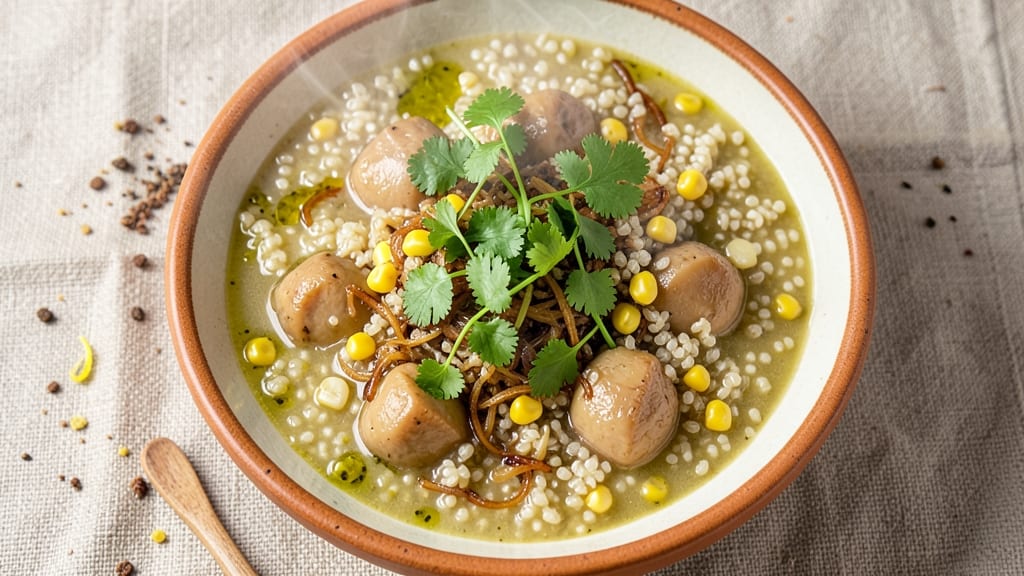
This Bolivian quinoa soup brings the hearty flavors of the Andes to your kitchen, where every spoonful delivers a perfect balance of earthy quinoa, tender potatoes, and sweet corn—all wrapped in a rich, herb-infused broth.
The secret lies in slow simmering, which transforms simple ingredients into a protein-packed dish that's both comforting and nutritious. I've perfected this recipe over years of testing, ensuring it stays true to Bolivian traditions while being approachable for home cooks.
The beauty of this soup is in its versatility—it's hearty enough to be a main dish but light enough for a quick lunch. Quinoa provides a complete protein, while potatoes and corn add natural sweetness that balances the savory broth.
Traditional Andean herbs like cilantro and parsley lend freshness, and optional toppings like fried eggs or crumbled cheese elevate it further. This recipe delivers restaurant-quality results with minimal effort, making it ideal for busy weeknights or cozy gatherings.
What makes this soup truly special is its ability to adapt to dietary preferences. The base recipe is naturally vegan, but adding fried eggs or cheese transforms it into a satisfying protein boost.
The slow simmering process ensures the quinoa absorbs the broth's flavors, creating a creamy, satisfying texture without needing heavy cream. Each ingredient plays a role—from the nutty quinoa to the crisp herbs—that comes together in a harmonious blend of Andean flavors.
Serve this soup with warm crusty bread or a side of avocado slices for a complete meal. The leftovers reheat beautifully, making it perfect for meal prep. Whether you're introducing Bolivian cuisine to your table or simply craving a nourishing, flavorful soup, this recipe delivers. Let's get cooking!
Ingredients for bolivian quinoa soup
Earthy quinoa, tender potatoes, and sweet corn create this protein-rich Andean soup.
| Ingredient | Amount | Notes |
|---|---|---|
| White Quinoa 🌾 | 1 cup | Rinsed thoroughly before cooking |
| Russet Potatoes 🥔 | 2 medium | Peeled and cubed |
| Fresh Corn Kernels 🌽 | 1 ½ cups | Frozen or fresh, thawed |
| Yellow Onion 🧅 | 1 whole | Diced finely |
| Garlic Cloves 🧄 | 4 cloves | Minced for depth |
| Fresh Cilantro 🌿 | ½ cup | Chopped, stems removed |
| Fresh Parsley 🌿 | ¼ cup | Chopped for brightness |
| Vegetable Broth 💧 | 4 cups | Low-sodium preferred |
| Extra-Virgin Olive Oil 🫒 | 2 tbsp | For sautéing base |
| Ground Cumin 🌿 | 1 tsp | Toasted for warmth |
| Dried Oregano 🍃 | ½ tsp | Mediterranean blend |
| Salt 🧂 | 1 ½ tsp | Adjust to taste |
| Black Pepper 🌶️ | ½ tsp | Freshly ground |
| Lemon Juice 🍋 | 1 tbsp | Freshly squeezed |
The quinoa is the foundation here—rinsed thoroughly to remove bitterness, it soaks up the broth's flavors beautifully. For the potatoes, Russet works best—their fluffy texture holds up during slow simmering. Whole Foods or Trader Joe's carry pre-washed quinoa, which saves time. The corn can be fresh, frozen, or even canned (drained well)—just be sure to use sweet varieties like Golden Promise. Cilantro and parsley should be bright green with no wilting—Latin markets often have fresher bunches than regular grocery stores.
No fresh cilantro? Dried cilantro at one-third the amount works in a pinch, though fresh is ideal. Vegetable broth can be swapped for homemade stock or even water if needed, but the quality matters—Pacific Foods or Imagine brands are reliable. The olive oil should be extra-virgin for that fruity depth, but regular olive oil is fine if that's what you have. For extra protein, stir in white beans or lentils at the end. The lemon juice brightens everything—don't skip it, even if you're not a fan of citrus.
This soup tastes even better the next day as flavors meld. Store in an airtight container for up to 5 days in the fridge or freeze for 3 months. Reheat gently on the stove with a splash of water to restore creaminess. Portion into containers with a side of crusty bread for easy lunches. The quinoa will thicken slightly upon reheating—just add a bit more broth if needed.
Why You'll Love This Recipe
- 20-Minute Start: I swear by this—just chop the onion and garlic while the potatoes boil, then toss in the quinoa and corn. No waiting for grains to soak, no fancy techniques. Honestly, the hardest part is deciding whether to use frozen or fresh corn.
- Earthy-Creamy Magic: That white quinoa softens into a velvety texture while the potatoes break down just enough to thicken the broth. Add a pinch of cumin or smoked paprika? Suddenly, it’s ridiculously good—like a hug in a bowl.
- Lunchbox Hero: Between us, this soup reheats like a dream. Pack it in jars for work, toss it in a thermos for hikes, or serve it cold with lime the next day. My college kids eat it straight from the pot—no complaints, just seconds.
- Pantry Goldmine: Russet potatoes and quinoa bulk up fast, so you’re not scrambling for expensive ingredients. Leftovers? Even better—the flavors deepen overnight. I’ll be real: this is my go-to when I’ve got three dollars and a grocery bag.
Step-by-step instructions for Bolivian-inspired quinoa soup
Aromatic, hearty, and deeply flavorful—this Andean-inspired soup delivers protein-rich quinoa with vibrant herbs and smoky spices.
Sauté the Aromatic Base
Heat the 2 tablespoons extra-virgin olive oil in a large pot over medium heat. Add the 1 whole yellow onion, diced finely, and cook for 5 minutes until translucent and just beginning to soften. This foundational step develops the soup's depth of flavor.
Next, add the 4 cloves garlic, minced, and the 1 teaspoon ground cumin and ½ teaspoon dried oregano. Stir constantly for 1 minute until the garlic becomes fragrant and the spices bloom. Here's the thing—don't let the garlic burn. Watch for the color to change from pale to golden, signaling it's ready for the next ingredients. This aromatic base is the soul of the soup.
Build the Soup Foundation
Increase heat to medium-high and add the 2 medium russet potatoes, peeled and cubed. Pour in the 4 cups vegetable broth and bring to a boil. Once boiling, reduce heat to medium-low, cover, and let it simmer for 10 minutes until the potatoes are tender when pierced with a knife.
Stir in the 1 cup white quinoa (previously rinsed thoroughly) and the 1.5 cups fresh corn kernels. The quinoa will absorb the broth as it cooks, creating a hearty, protein-packed base. Keep the soup at a gentle simmer for 15 minutes, stirring occasionally to prevent sticking. You'll know it's ready when the quinoa is tender and the potatoes are fork-tender.
Season and Finish with Herbs
Add the 1½ teaspoons salt and ½ teaspoon black pepper, adjusting to taste. Stir well to distribute the seasoning evenly. Now, reduce the heat to low and let the soup cook uncovered for an additional 5 minutes to allow excess moisture to evaporate slightly. This step ensures a well-balanced soup with just the right consistency.
Remove the pot from heat and stir in the ½ cup fresh cilantro and ¼ cup fresh parsley, both chopped. Finish with the 1 tablespoon lemon juice, freshly squeezed, to brighten the flavors. Let the soup sit for 5 minutes to allow the herbs to infuse and the lemon to mingle with the other ingredients.
Serve with Fresh Herb Garnish
Ladle the soup into bowls, ensuring each serving gets a generous portion of quinoa and corn. Garnish with additional fresh cilantro and parsley if desired. The soup should be warm, aromatic, and brimming with the vibrant flavors of the Andean herbs and spices.
This soup is best served immediately while the herbs are fresh and the flavors are at their peak. Pair it with crusty bread or a simple green salad to complete the meal. The combination of quinoa, potatoes, and corn creates a satisfying, protein-rich dish that's both comforting and nutritious.
Pro Tips For Making Bolivian Quinoa Soup
- TOAST THE QUINOA FIRST: I learned this the hard way—skipping the toast means your soup will taste raw and chalky. Dry the quinoa in a skillet over medium heat for 3-4 minutes, stirring constantly, until it smells nutty. This step guarantees the texture stays firm and the flavor pops.
- PEEL POTATOES LAST MINUTE: Russets oxidize fast, turning your soup gray and watery if you prep them too early. Keep them whole until you’re ready to add them, then peel and chop right before dropping into the pot. Even if you’re impatient like me, this keeps the starch from breaking down prematurely.
- SAUTÉ GARLIC LOW AND SLOW: After burning three batches, I finally figured out: garlic for this soup needs gentle heat. Cook it in the onion base over low flame until fragrant but not brown—just 2-3 minutes max. Too hot, and it’ll turn bitter; too long, and it’ll disappear into the pot.
- USE FROZEN CORN IN A PINCH: Sounds weird, but it works: if fresh corn is out of season, thaw frozen kernels in warm water for 5 minutes before adding them. They’ll blend right in, and you’ll save money without sacrificing texture. (Your future self will thank you.)
Common mistakes when making great bolivian quinoa soup
Skipping the Rinse
Quinoa must be thoroughly rinsed before cooking to remove natural bitterness and excess starch. I’ve seen people skip this step, and the result? A soup that tastes slightly bitter and turns gummy.
Take 2 minutes to rinse it under cold water in a fine-mesh strainer—your taste buds will thank you. 💫
Overcrowding the Pot
Adding all ingredients at once can lead to uneven cooking and a watery soup. Instead, start with the onion and garlic, then the potatoes, and finally the quinoa and corn.
This layered approach ensures everything cooks evenly without steaming instead of simmering. A 6-quart pot is ideal for this recipe—any smaller, and you risk overcrowding.
Ignoring the Simmer
Boiling the soup too vigorously can break down the quinoa and potatoes, turning them mushy. Maintain a gentle simmer—small bubbles at the edges, not a rolling boil.
If you see large bubbles, reduce the heat immediately. The quinoa needs 15 minutes of steady simmering to absorb flavors without falling apart.
Salting Too Late
Adding salt at the end can make the soup taste flat. Instead, season gradually: Add ½ teaspoon salt when the potatoes go in, another ½ teaspoon when the quinoa is added, and the final ½ teaspoon at the end.
This builds flavor layer by layer, just like in professional kitchens. Taste as you go—adjust if needed!
Using Stale Herbs
Fresh cilantro and parsley are non-negotiable for that bright Andean flavor. If your herbs look wilted or smell dull, they’ll turn your soup into a sad, muddy mess. Buy them just before cooking or store them in the fridge wrapped in a damp paper towel.
A little freshness goes a long way—trust me, I’ve ruined soup with sad herbs before! 🌿
Skipping the Rest
Letting the soup sit for 5 minutes off the heat allows flavors to meld and the lemon juice to brighten everything. Rushing to serve means missing out on that final harmony of spices and herbs.
Think of it like letting wine breathe—your soup deserves the same respect. Patience here makes all the difference! ⏳
Nutrition facts
Frequently asked questions about Bolivian quinoa soup
Can I substitute regular rice for quinoa in this recipe?
While rice can work in a pinch, it won't provide the same protein-rich texture or nutty flavor that quinoa offers. Quinoa's complete protein profile makes this soup especially hearty. If you must substitute, use brown rice (cook it separately) and add an extra ½ cup white beans for protein. The soup will be less authentic but still delicious!
How do I make this soup vegan?
This recipe is already vegan, but you can enhance it further by omitting any optional toppings like cheese or eggs. For extra protein, stir in ½ cup cooked lentils or 1 can white beans at the end. Use vegetable broth instead of chicken broth, and ensure all spices are certified vegan (some contain animal products). The soup remains just as satisfying without animal products!
What's the best way to reheat leftovers?
Reheat gently on the stove over low heat with a splash of water or broth to restore creaminess. Stir occasionally to prevent sticking. Microwaving works too—heat for 1-2 minutes, then stir well. The quinoa will thicken slightly upon reheating, so add a little extra liquid if needed. Leftovers taste even better the next day as flavors meld!
Can I add meat to this soup?
Traditional Bolivian quinoa soup is vegetarian, but you can easily add protein! Brown ½ pound ground beef or shredded chicken with the onions, or stir in ½ cup cooked sausage at the end. For a seafood twist, add ½ pound cooked shrimp just before serving. Just remember—this changes the dish from vegan to meat-based!
Why does my quinoa turn mushy?
Mushy quinoa usually means it was overcooked or not rinsed properly. Always rinse quinoa thoroughly before cooking to remove excess starch. Also, maintain a gentle simmer (not a boil) when cooking—large bubbles break down the grains. If it's already mushy, stir in 1 tablespoon cornstarch mixed with water to thicken the soup.