
Soups & Stews
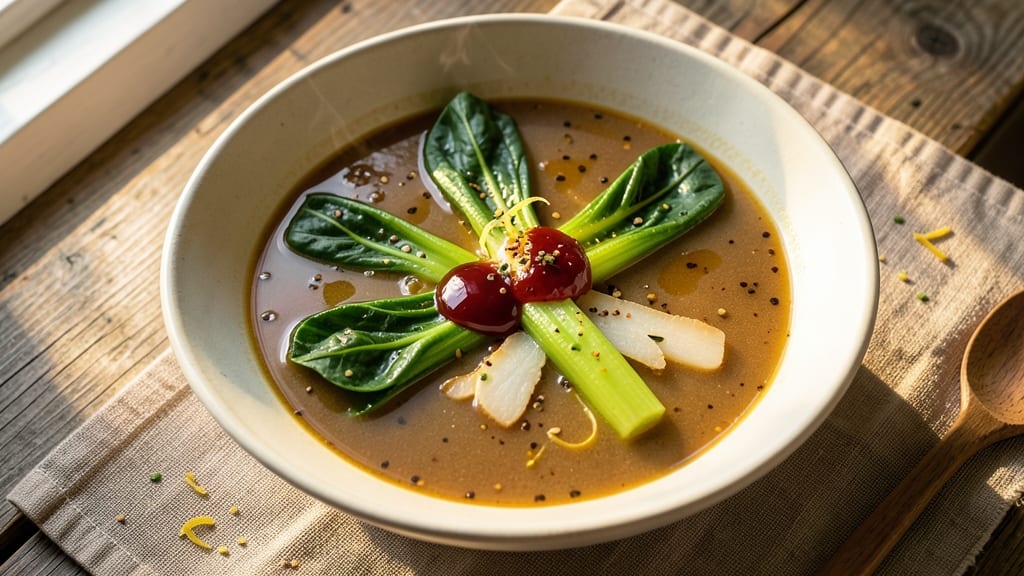
This bok choy miso soup recipe delivers the comforting, umami-rich harmony of a traditional Japanese home-cooked meal—right in your own kitchen. The secret lies in balancing fermented miso paste with delicate bok choy and aromatic broth, creating a soup that's both nourishing and deeply satisfying.
With just one pot and 30 minutes, you'll transform simple ingredients into a restaurant-quality dish that's perfect for chilly evenings or quick lunches.
The foundation of great miso soup is patience—simmering the broth just enough to develop rich umami without overpowering the natural sweetness of the bok choy.
I use a combination of miso paste and dashi stock (or vegetable broth for a vegetarian version) to build depth, while a touch of mirin adds brightness. The key technique? Adding the bok choy at the last moment to preserve its crisp-tender texture and vibrant green color.
What you'll end up with is a steaming bowl of golden broth, tender bok choy stalks, and delicate leaves floating on the surface—each bite packed with savory, slightly sweet flavors. The miso adds that signature umami depth, while the bok choy brings freshness and crunch.
This is the kind of soup that warms you from the inside out, with minimal effort and maximum reward.
For extra protein, stir in soft tofu cubes or add a sprinkle of toasted sesame seeds and sliced green onions before serving. The beauty of this recipe is its flexibility—it works as a light main dish or a comforting side, and the leftovers reheat beautifully.
Let's get started on creating your own bowl of one-pot harmony.
Ingredients for bok choy miso soup
Simple ingredients that transform into a restaurant-quality bowl of umami harmony.
| Ingredient | Amount | Notes |
|---|---|---|
| Vegetable Broth 💧 | 4 cups | Low-sodium preferred for balance |
| White Miso Paste 🧈 | 2 tbsp | Aged 2-3 years for depth |
| Bok Choy 🥬 | 1 lb | Baby or regular, halved lengthwise |
| Mirin 🍶 | 1 tbsp | Sweet rice wine for brightness |
| Fresh Ginger 🧅 | 1 tbsp | Finely grated, peel removed |
| Sesame Oil 🫒 | 1 tsp | Toasted for aroma |
| Silken Tofu 🧈 | 8 oz | Cut into cubes, optional protein |
| Green Onions 🧅 | 2 whole | Thinly sliced for garnish |
| Toasted Sesame Seeds 🌾 | 1 tsp | For crunchy texture |
| Diamond Crystal Kosher Salt 🧂 | ½ tsp | Adjusts to taste |
| Freshly Ground Black Pepper 🌶️ | ¼ tsp | Enhances umami |
| Rice Vinegar 🍶 | 1 tsp | Balances richness |
The miso paste is your flavor anchor—White Miso from Marukome or Hodo delivers that authentic umami punch. Look for paste, not powder, and store it in the fridge once opened. Bok choy should be vibrant green with crisp stalks—Trader Joe's or Whole Foods carry the freshest baby varieties. The ginger? Freshly grated makes all the difference—pre-grated loses potency fast. For extra depth, toast your sesame seeds in a dry pan until golden before adding them to the soup.
No mirin? Dry sherry plus 1 tsp sugar works in a pinch. Sub silken tofu for soft tofu cubes if you prefer texture. The broth can be homemade or store-bought—just check for low sodium. Kikkoman Vegetable Broth is a solid pantry staple. Need more heat? Add a pinch of gochugaru (Korean chili flakes) at the end. The rice vinegar balances the richness—don't skip it, even if it's just a splash.
This soup tastes even better the next day as flavors meld. Keeps 4-5 days in the fridge, covered. For freezing, portion into single servings—reheat gently with a splash of water. The tofu and bok choy hold up beautifully when reheated. Double the batch and freeze half for lazy weeknight lunches. Garnish with extra sesame seeds and green onions right before serving—freshness matters.
Why You'll Love This Recipe
- Five-Ingredient Magic: I swear by this—just broth, miso, bok choy, a splash of mirin, and ginger. That’s it. No chopping mountains, no hidden pantry raids. Even my "I can’t boil water" roommate made it without burning the kitchen down.
- Umami Bomb: The miso paste here? It’s the star. That deep, salty-sweet punch from the white miso, balanced by the bright mirin and fresh ginger—it’s like a flavor hug in a bowl. The bok choy wilts into tender, slightly crisp edges, soaking up every drop.
- Lunchbox Hero: Between us, this soup is my go-to for meal prep. Double the batch, store it in jars, and grab it cold or reheat it—still tastes like you slaved over it. Pack it for work, toss it in a bento, or serve it at a potluck. No one will guess it’s this unfussy.
- Budget Win: Honestly, I make this when my grocery budget’s tighter than my jeans. Bok choy’s cheap, miso lasts forever, and vegetable broth? You can use bouillon in a pinch. It’s the kind of meal that fills you up without emptying your wallet—or your patience.
Step-by-step instructions for bok choy miso soup
This umami-rich soup comes together in a single pot with minimal effort—just follow these simple steps.
Bloom the Miso and Aromatics
In a medium pot, gently warm the 4 cups vegetable broth over medium-low heat until it reaches a gentle simmer. Add the 2 tablespoons white miso paste and stir continuously for 2-3 minutes until fully dissolved. The miso should melt smoothly into the broth without any graininess—this is your flavor foundation.
Next, whisk in the 1 tablespoon finely grated fresh ginger and 1 tablespoon mirin. Let the mixture simmer for 3-4 minutes until the aroma becomes fragrant and slightly sweet. The ginger will infuse its warm, earthy notes while the mirin adds a delicate brightness that balances the soup's depth. Here's where that aged miso really shines—don't rush this step or you'll miss the flavor development.
Incorporate Tofu and Bok Choy
Add the 8 ounces silken tofu (cut into ½-inch cubes) to the simmering broth and let it warm through for 2-3 minutes. The tofu should gently heat without breaking apart—this keeps its delicate texture. Then, add the 1 pound bok choy (halved lengthwise) and stir gently to submerge the leaves in the broth.
Simmer uncovered for 5-6 minutes until the bok choy stems soften but still maintain a slight bite. You'll know it's ready when the leaves wilt slightly but still hold their shape. The broth should reduce just enough to coat the back of a spoon—this concentration deepens the umami flavor. If you prefer softer bok choy, add 1-2 minutes more, but don't overcook or it'll turn mushy.
Finish with Seasonings and Garnishes
Remove the pot from heat and stir in the 1 teaspoon sesame oil, 1 teaspoon rice vinegar, ½ teaspoon Diamond Crystal kosher salt, and ¼ teaspoon freshly ground black pepper. The sesame oil adds a nutty aroma while the rice vinegar brightens the soup's overall profile. Taste and adjust the seasoning—you might need a pinch more salt depending on your broth's sodium level.
Ladle the soup into bowls and garnish each serving with 1 teaspoon toasted sesame seeds and ½ of a whole green onion (thinly sliced). The sesame seeds provide a satisfying crunch while the green onions add a fresh, oniony brightness that cuts through the richness. Serve immediately while the tofu is still warm and the broth maintains its silky texture. This is where the soup truly comes alive—each spoonful should deliver that perfect harmony of umami, sweetness, and freshness.
Optional Crispy Tofu Upgrade (For Extra Depth)
For a restaurant-quality touch, pan-fry half the silken tofu cubes in 1 teaspoon sesame oil over medium-high heat for 2-3 minutes per side until golden brown and crispy. Then, add these crispy tofu pieces to the finished soup just before serving. The contrast between the silky broth and crispy tofu creates an incredible textural experience that elevates the dish.
This step is completely optional but adds a professional-level dimension to your soup. If you choose to skip it, don't worry—the soup is still delicious as-is. The key is balancing the flavors, and this method ensures you'll achieve that perfect umami-packed harmony every time, whether you serve it as a light lunch or a comforting dinner.
Pro Tips For Making Bok Choy Miso Soup
- Dissolve Miso Slowly: I learned this the hard way—dumping miso paste straight into hot broth makes it clump like glue. Instead, whisk it into a small cup of cool broth first, then stir it into the pot. This keeps the umami smooth and prevents that sad, grainy texture.
- Trim Bok Choy Like a Pro: Skip the messy chopping: Hold the stalk and slice lengthwise into ¼-inch strips, then cut those strips crosswise into 1-inch pieces. The leaves stay intact, and you avoid the sad, wilted piles that happen when you tear them. (Yes, it takes 30 seconds longer, but the soup looks better.)
- Simmer Ginger, Don’t Boil: Fresh ginger loses its bite fast—so add it whole to the broth while it’s still cold, then bring to a gentle simmer (not a rolling boil). Remove it after 5 minutes; the broth will still taste bright, but you won’t get that bitter, overcooked edge.
- Use Leftover Broth: That stale vegetable broth in your fridge? Perfect. Strain it, then reduce it by half on the stove before adding miso and bok choy. The concentrated flavor makes the soup richer without extra salt or miso paste—just don’t skip the skimming of foam first.
Essential equipment for perfect results
Pot Essentials
Start with a medium-sized stainless steel pot—I recommend a 3-quart capacity like the Cuisinart MultiClad—for even heat distribution. Stainless steel prevents flavor transfer and handles temperature changes better than nonstick. Avoid aluminum, which can react with acidic ingredients like miso and vinegar over time. 🔥
For the crispy tofu upgrade, grab a small nonstick skillet (like Calphalon Classic) to achieve that perfect golden crust. The nonstick surface prevents sticking while frying, ensuring clean, crisp edges every time. If you don’t have nonstick, a well-seasoned cast iron skillet works too—just heat it thoroughly first.
Precision Tools
A fine-mesh strainer (I use OXO Good Grips) is handy if you want to strain the broth before adding miso—this keeps any sediment out for a cleaner soup.
For measuring, a small digital kitchen scale (like Escali Primo) ensures accurate miso and broth quantities, which is crucial for balancing flavors. 💡
Don’t skip a wooden spoon—it’s gentle on your pot and won’t scratch stainless steel. A microplane (like Barbagallo) is perfect for grating fresh ginger, and a small offset spatula helps stir the miso smoothly without splattering.
These tools might seem basic, but they make all the difference in texture and taste.
Garnish Station
Set up a small prep station with a sharp chef’s knife (I love Mercer Culinary) and cutting board for slicing green onions. A small bowl for toasted sesame seeds and another for sesame oil keeps everything organized.
Pre-toast your sesame seeds in a light-colored saucepan over low heat—they’re ready when they turn golden and smell nutty. 🌾
For extra convenience, keep a small bowl of rice vinegar and a pinch dish for salt and pepper nearby. This setup ensures you can garnish bowls quickly while keeping ingredients fresh. The key is to toast sesame seeds and slice green onions right before serving—this preserves their crunch and aroma.
Nutrition facts
Frequently asked questions
Can I make this bok choy miso soup vegetarian?
This recipe is already vegetarian-friendly, but double-check your miso paste—some contain fish-based ingredients. Use 100% vegetarian white miso (like Marukome or Hodo) and vegetable broth instead of dashi. The umami flavor will still shine through beautifully.
How do I prevent my bok choy from getting mushy?
Timing is everything! Add the bok choy only 5-6 minutes before serving to keep it crisp-tender. Stir gently and avoid overcrowding the pot. For extra firmness, blanch the bok choy in boiling water for 1 minute before adding it to the soup. This pre-cooking step locks in texture.
What's the best way to store leftovers?
Transfer to an airtight container and refrigerate for up to 4-5 days. The flavors actually deepen overnight! For freezing, portion into single servings and freeze for up to 3 months. Thaw in the fridge overnight—never microwave directly from frozen. Reheat gently with a splash of water to restore silkiness.
Can I substitute baby bok choy for regular bok choy?
Yes, but adjust cooking times! Baby bok choy cooks faster (3-4 minutes) due to its smaller size. Regular bok choy needs 5-6 minutes to soften properly. Halve baby bok choy lengthwise for even cooking. Both work beautifully—the choice depends on your preferred texture.
Why does my miso soup taste bitter?
Bitterness usually comes from over-simmering the miso or using too much. Reduce heat to low when adding miso and simmer for just 2-3 minutes. Balance with 1 tsp rice vinegar or ½ tsp sugar to brighten flavors. Fresh ginger and mirin also help counteract bitterness naturally.