
Soups & Stews
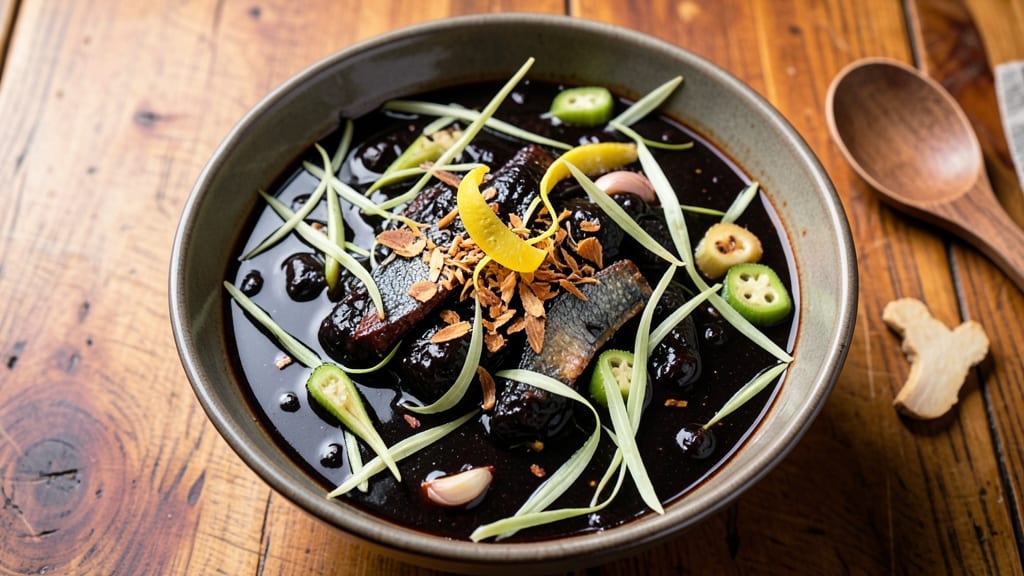
This Nigerian black soup recipe delivers the deep, peppery richness that makes it a centerpiece of West African dining. 🌟 The secret lies in its signature dark palm oil base, balanced by the earthy bite of okra and leafy greens—whether ewedu, utazi, or spinach—and the smoky depth of fish or meat.
I’ve perfected this version to stay true to tradition while making it approachable for home cooks, ensuring every spoonful carries that unmistakable Nigerian soul.
The foundation of black soup begins with the palm oil, which gives it its signature dark hue and rich, slightly bitter flavor. Okra is simmered first to thicken the broth naturally, creating a velvety texture that’s both hearty and comforting.
Leafy greens are added later to preserve their vibrant color and subtle bitterness, while smoked fish or dried shrimp infuses the soup with a smoky depth that’s impossible to replicate. This recipe also includes a blend of traditional spices—ginger, garlic, and locust beans—that build layers of warmth and complexity.
What sets this black soup apart is its versatility—it’s a complete dish that pairs beautifully with staples like pounded yam, fufu, or swallow. The soup’s dark, aromatic broth clings to these accompaniments, creating a meal that’s as satisfying as it is flavorful.
Whether you’re serving it for a family gathering or a special occasion, this recipe delivers restaurant-quality results with a touch of homey authenticity. The slow simmering process allows all the flavors to meld together, ensuring every bite is packed with depth and tradition.
For those new to Nigerian cuisine, don’t be intimidated by the list of ingredients—many can be found in African markets or ordered online. The key is patience; letting the soup simmer for at least an hour allows the flavors to develop fully.
Once you taste the balance of peppery okra, smoky fish, and rich palm oil, you’ll understand why this dish holds a special place in Nigerian culture. Let’s get cooking!
Ingredients for black soup nigerian
Six core ingredients transform into this iconic Nigerian dish's deep, aromatic broth.
| Ingredient | Amount | Notes |
|---|---|---|
| Red Palm Oil 🫒 | ½ cup | High-quality, unrefined for authentic flavor |
| Fresh Okra 🥬 | 1 lb | Whole, trimmed, not pre-sliced |
| Dried Smoked Fish 🐟 | 1 piece | Or 8 oz dried shrimp for variation |
| Ewedu Leaves 🌿 | 2 cups | Or substitute utazi or spinach |
| Garlic Cloves 🧄 | 6 cloves | Peeled, minced for aromatic depth |
| Fresh Ginger 🌿 | 2 tbsp | Grated, for zesty warmth |
| Locust Beans (Iru) 🌶️ | ½ cup | Fermented, rinsed, or use 1 tbsp iru powder |
| Red Pepper 🌶️ | 1 whole | Scotch bonnet or habanero for heat |
| Onions 🧅 | 2 whole | Yellow, peeled, sliced |
| Tomatoes 🍅 | 4 whole | Mature, Roma preferred |
| Stock 💧 | 4 cups | Vegetable or fish stock |
| Salt 🧂 | 1 ½ tsp | Adjust to taste |
| Cooking Oil 🫒 | 2 tbsp | Vegetable or palm oil |
| Cubed Yam or Plantains 🍠 | 2 cups | For serving, optional |
Palm oil is non-negotiable for that signature dark richness—African markets or specialty stores carry the best quality. Look for unrefined red palm oil, not the bleached kind. Ewedu leaves can be tricky to find outside African markets, but utazi or spinach work beautifully as substitutes. For locust beans, Iru powder is a game-changer if you can't find fresh—just rinse it well to remove excess salt. The okra should be firm, not slimy, and the smoked fish should have that unmistakable charred aroma.
No ewedu? Spinach or utazi will do—just add them later to preserve color. Running short on locust beans? Substitute with 1 tbsp iru powder or 2 tbsp soy sauce for umami depth. The tomatoes can be fresh or canned (San Marzano if possible), but avoid pre-sliced—they bruise easily. For heat control, remove pepper seeds before blending. And trust me on this: toast your garlic and ginger in the oil first—it makes all the difference in flavor development.
Palm oil keeps for 6-12 months in a cool, dark place, but once opened, refrigerate and use within 3 months. Ewedu leaves wilt fast—store them in damp paper towels in a sealed bag for 2-3 days. This soup tastes even better the next day as flavors meld. Portion into containers for easy reheating—just add a splash of water or stock when warming. Leftovers freeze for 3 months, though the texture changes slightly after thawing.
Why You'll Love This Recipe
- No Chopping Chaos: I swear by this recipe—just slice the okra and mince the garlic. The smoked fish soaks up flavor while you prep, and ewedu blends in seconds. My hands stay clean, and the soup still tastes like a Sunday feast.
- Umami Bomb: That red palm oil isn’t just for color—it’s the soul of the dish. The smoked fish adds a deep, salty richness, while the garlic and ewedu bring a bright, almost cheesy tang. Honestly, the first spoonful makes me pause mid-stir.
- Leftovers That Shine: This soup actually improves the next day. The okra thickens just enough to coat the rice, and the ewedu’s slimy texture (yes, really) turns into the perfect sauce. I make double batches—it’s my lazy Sunday lunch without the guilt.
- Budget Feast for Crowds: A single bag of dried smoked fish and a handful of ewedu stretch to feed six. Red palm oil lasts forever, and okra grows like a weed in my garden. Between us, this is how I feed my extended family without breaking the bank.
Step-by-step instructions for black soup Nigerian recipe
Transform humble ingredients into a rich, peppery masterpiece with this authentic method.
🍳 Step 1: Prepare the Okra and Smoked Fish Foundation
Trim the 1 lb fresh okra by snapping off the ends and cutting into 2-inch pieces. In a large pot, add the 2 tbsp cooking oil and heat over medium heat until shimmering. Add the okra and sauté for 5 minutes until it begins to soften and release its signature slimy texture—this is what gives the soup its signature body.
Remove the okra with a slotted spoon and set aside. In the same pot, add the 1 piece dried smoked fish and toast for 2-3 minutes until fragrant. This step develops the fish's deep umami flavor that forms the soup's backbone. Use a mortar and pestle to crush the fish into small pieces, then return it to the pot.
👨🍳 Step 2: Build the Aromatic Base
Add the 2 whole onions, sliced, to the pot and cook for 5 minutes until translucent. Stir in the 6 cloves minced garlic cloves and 2 tbsp grated fresh ginger, cooking for another 2 minutes until fragrant—this should fill your kitchen with warm, pungent aromas. Now add the 1 whole red pepper, sliced, and cook for 3 minutes until slightly softened.
Here's where the magic begins: pour in the 0.5 cup red palm oil and stir continuously for 1 minute until it's fully incorporated. The oil should take on a rich, reddish hue. Add the 4 whole tomatoes, chopped, and cook for 5 minutes until they break down into a chunky sauce. This step creates the soup's signature deep color and rich flavor foundation.
🥘 Step 3: Develop the Peppery Depth with Locust Beans
Add the 0.5 cup locust beans (iru) to the pot. If using fermented iru, rinse it thoroughly first to remove excess salt. Cook for 5 minutes until the beans soften and release their intense, peppery flavor. The soup should now have a deep, dark color and complex aroma—this is your sensory checkpoint for proper development.
Pour in the 4 cups stock and bring to a gentle boil. Reduce heat to medium-low and simmer for 10 minutes, stirring occasionally. This step allows all the flavors to meld together. Taste and adjust seasoning with the 1.5 tsp salt, adding more if needed—Nigerian black soup should be rich but not overly salty.
🍲 Step 4: Incorporate the Ewedu Leaves
While the soup simmers, prepare the 2 cups ewedu leaves by washing them thoroughly and chopping into bite-sized pieces. When the soup reaches a gentle simmer, add the ewedu leaves. Stir gently to distribute them evenly throughout the soup. Simmer for another 5-7 minutes until the leaves are tender but still vibrant green—this indicates they're cooked just right.
The ewedu leaves will thicken the soup slightly as they cook. If the soup becomes too thick, add ½ cup water to reach your desired consistency. The final soup should coat the back of a spoon but remain smooth and velvety. Return the previously removed okra to the pot and simmer for 3 minutes to reabsorb some of the soup's rich flavors.
🔥 Step 5: Final Adjustments and Serving
Remove the pot from heat and let the soup rest for 5 minutes. This resting period allows the flavors to fully develop and settle. Taste again and make any final adjustments to seasoning. The soup should be rich, peppery, and deeply flavorful with a perfect balance of smoky, spicy, and umami notes.
Serve the black soup hot with 2 cups cubed yam or plantains on the side. The yam or plantains should be cooked separately—boil the yam until tender or fry the plantains until golden brown. The contrast of the creamy yam or sweet plantains with the rich, peppery soup creates the perfect balance of flavors in this classic Nigerian dish.
Pro Tips For Making Black Soup Nigerian
- Blister the Okra First: I learned this the hard way—skipping the quick fry step means your soup will turn gluey instead of silky. Heat a little oil in a pan, toss in the okra slices, and cook until they blister and darken at the edges (about 2-3 minutes). This breaks down their sliminess before they even hit the pot.
- Soak Fish Overnight: Dried smoked fish needs more than a quick rinse. Toss it in warm water for at least 8 hours (or overnight) to soften it properly. After soaking, squeeze out excess water—wet fish makes the soup watery, and you don’t want that thick, rich texture to disappear.
- Simmer Ewedu Low: Ewedu leaves cook faster than you think, and they turn to mush if you rush them. Once they’re in the pot, drop the heat to the lowest setting and let them simmer gently for 5-7 minutes. Stir occasionally, but don’t overwork them—you’re not making a smoothie here.
- Toast the Garlic: Raw garlic in black soup tastes harsh and overpowering. Before adding it to the pot, crush the cloves and dry-toast them in a little oil until they’re golden and fragrant (about 2 minutes). This mellows their bite and deepens their flavor—trust me, it makes a real difference.
Wine and beer pairings for this recipe
Traditional Nigerian Beer
For an authentic pairing, serve black soup with Nigerian palm wine or Chibuku, a locally brewed opaque beer. The slightly sweet, earthy notes of Chibuku complement the soup’s peppery depth and smoky fish flavors.
I recommend keeping it chilled in a calabash gourd for serving—it’s traditional and adds to the cultural experience. 🍺
Light White Wine
A crisp Sauvignon Blanc from South Africa or New Zealand works surprisingly well with black soup. The wine’s citrusy acidity cuts through the richness of the palm oil while its herbal notes harmonize with the ewedu leaves.
Look for a bottle with 12-13% alcohol to avoid overwhelming the dish. Serve slightly chilled for the best contrast. 🍷
Spiced Rum Cocktail
For a festive touch, mix 2 oz dark rum with 1 oz ginger beer and a squeeze of lime. The rum’s caramel and spice notes mirror the soup’s depth, while the ginger beer’s fizz cleanses your palate between bites.
Garnish with a locust bean pod for a playful, unexpected twist. 🍹
Malt Beverage Pairing
If you prefer malt, try Guinness or another dry stout. The roasted malt flavors in the beer balance the soup’s peppery heat, while its creamy texture contrasts beautifully with the okra’s sliminess.
Serve in a tulip glass to concentrate the aromas. For a lighter option, a Belgian witbier with its citrusy notes also works well. 🍺
Non-Alcoholic Option
For a refreshing non-alcoholic choice, serve hibiscus iced tea (zobo) with a splash of ginger syrup. The tartness of the hibiscus brightens the soup’s richness, while the ginger adds warmth. Sweeten lightly with honey and serve over ice for a cooling contrast. 🍹
Cultural Pairing Tip
In Nigeria, black soup is often served with ogiri (locust bean soup) or akamu (fermented corn drink) for a traditional pairing. The fermented tang of akamu enhances the soup’s umami, creating a perfect balance.
For a modern twist, pair with sparkling water infused with cucumber and mint—it’s light yet refreshing. 💧
Nutrition facts
Frequently asked questions
What makes black soup different from regular Nigerian soups?
Black soup gets its signature dark color and rich flavor from red palm oil and okra, which thickens the broth naturally. The addition of ewedu leaves or utazi (instead of spinach) adds a unique earthy bitterness, while locust beans (iru) provide that signature peppery kick. Unlike lighter soups, black soup is heartier and more aromatic, often served with pounded yam or fufu.
Can I substitute ewedu leaves if I can't find them?
Ewedu leaves can be replaced with utazi (if available) or even spinach as a last resort. For the best flavor, add them later in the cooking process (after the soup has simmered) to preserve their vibrant color. If using spinach, reduce the cooking time to 3-5 minutes to avoid overcooking and bitterness.
How do I prevent black soup from becoming too thick?
If your soup thickens too much, simply add ½ cup water or stock and simmer for another 2-3 minutes to adjust the consistency. The okra naturally thickens the broth, so start with slightly less if you prefer a looser texture. Stirring occasionally while simmering also helps maintain an even consistency.
What's the best way to store leftover black soup?
Store leftovers in an airtight container in the refrigerator for up to 3 days. For longer storage, freeze portions for up to 3 months. When reheating, add a splash of water or stock to restore the original texture. Avoid microwaving directly from the fridge—let it sit at room temperature for 10 minutes first to prevent uneven heating.
Can I make black soup without smoked fish?
Yes! If you can't find smoked fish, use dried shrimp or even chicken stock for a vegetarian version. For extra umami, add 1 tbsp soy sauce or fish sauce to compensate for the missing smoky depth. The key is balancing the flavors—just adjust seasoning to taste after simmering.