
Soups & Stews
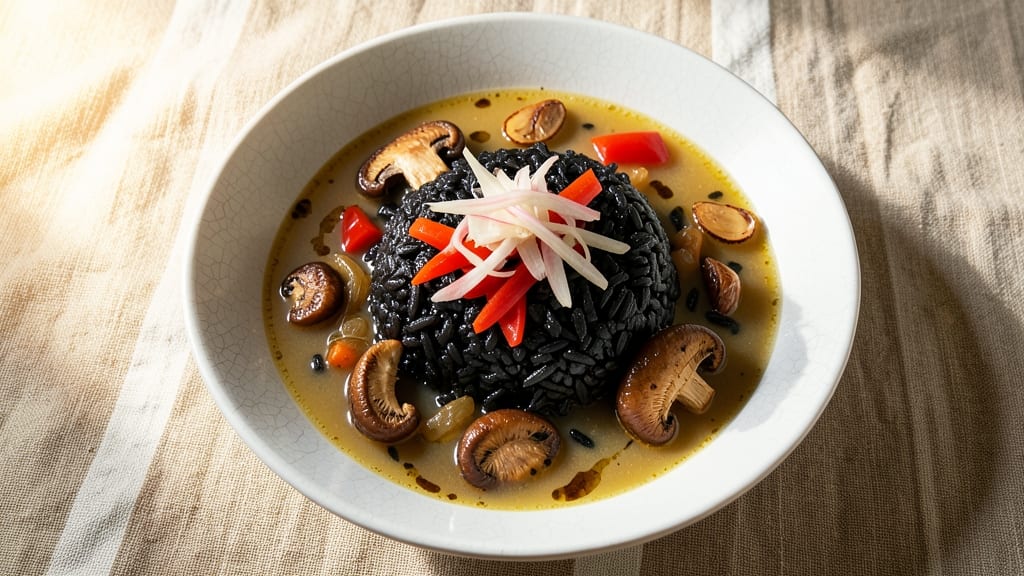
This black rice soup recipe transforms simple ingredients into a deeply satisfying bowl of earthy umami perfection. The secret lies in slow-cooking black rice—its deep purple hue and nutty flavor infuse the broth with rich complexity that elevates every spoonful.
What starts as a humble pot of grains and broth becomes a restaurant-worthy dish with layers of savory depth and subtle sweetness.
Perfectly balanced with ginger, garlic, and mushrooms, this soup delivers both comfort and sophistication. The black rice softens into tender, chewy grains while absorbing the aromatic broth, creating a dish that's as nourishing as it is elegant.
Whether you're preparing a weeknight meal or a special occasion dish, this recipe promises a bowl that's impossible to resist.
Ingredients for black rice soup
Earthy black rice meets aromatic broth and umami-rich mushrooms for a deeply satisfying bowl.
| Ingredient | Amount | Notes |
|---|---|---|
| Black Rice 🌾 | 1 cup | Uncooked, rinsed thoroughly |
| Chicken Broth 💧 | 4 cups | Low-sodium preferred |
| Shiitake Mushrooms 🍄 | 8 oz | Fresh, sliced thin |
| Fresh Ginger 🧄 | 1 inch | Peeled, thinly sliced |
| Garlic Cloves 🧄 | 4 cloves | Minced finely |
| Red Bell Pepper 🍅 | 1 whole | Deseeded, sliced |
| Carrot 🥕 | 1 medium | Peeled, sliced into rounds |
| Onion 🧅 | 1 medium | Yellow or white, diced |
| Sesame Oil 🫒 | 1 tbsp | Toasted for aroma |
| Soy Sauce 🍶 | 2 tbsp | Low-sodium preferred |
| Rice Vinegar 🍶 | 1 tbsp | White or seasoned |
| Sesame Seeds 🌱 | 1 tsp | Toasted for garnish |
| Green Onions 🧅 | 2 whole | Thinly sliced, for garnish |
| Salt 🧂 | 1 tsp | Diamond Crystal preferred |
| Black Pepper 🌶️ | ½ tsp | Freshly ground |
The black rice is the star—look for well-rinsed grains to avoid excess starch. Whole Foods or Asian markets carry the best quality, often in vacuum-sealed bags. Fresh shiitake mushrooms add depth; substitute dried at one-third the amount if needed. Ginger should be vibrant and firm—no wrinkled or moldy roots. Toast your sesame seeds in a dry pan for 30 seconds before using—they’ll add incredible crunch and aroma.
No shiitake mushrooms? Oyster mushrooms or cremini work well, though flavor will differ slightly. Substitute white wine instead of rice vinegar for a more complex acidity. For extra umami, add 1 tsp fish sauce (ensure it’s vegetarian if needed). The broth is critical—homemade or high-quality store-bought makes a world of difference. If using a pre-made broth, opt for one with minimal sodium to avoid over-salting the dish.
Rice keeps best in the fridge for 3-4 days once cooked, but the soup’s flavor improves over time. Store in an airtight container with a layer of oil on top to preserve freshness. Freeze for up to 3 months in portioned containers—thaw overnight in the fridge. Garnishes like sesame seeds and green onions can be added fresh when reheating, so don’t worry about prepping them until serving.
Why You'll Love This Recipe
- Fewer Ingredients, Bigger Impact: I swear by this recipe because it’s ridiculously simple—just five core ingredients, no fancy techniques. The black rice handles all the heavy lifting, soaking up the broth’s depth while the mushrooms and ginger add layers without extra effort. Honestly, I’ve made it after a long day when I just wanted something warm and didn’t feel like chopping much.
- Umami Bomb in Every Spoon: That combo of shiitake mushrooms and garlic in the broth? Chef’s kiss. The mushrooms melt into an earthy richness, while the garlic lingers just enough to wake up your taste buds. Between us, the first bite makes me pause—I always forget how good this soup can be until I taste it again.
- Leftover Hero Mode: This soup tastes better the next day—yes, really. The flavors meld overnight, and reheating it is a breeze. I’ll be real: I make a big batch on Sundays and eat it for lunch all week. It’s my go-to for when I’m too tired to cook but still crave something hearty.
- Budget Meal, Luxe Feel: Black rice might sound fancy, but it’s actually affordable and packs a punch. A single bag lasts me ages, and shiitake mushrooms stretch further than you’d think. It’s the kind of dish that feels special without breaking the bank—perfect for when you want to impress but don’t want to overspend.
Step-by-step instructions for black rice soup
Transform simple ingredients into a deeply flavorful soup where nutty black rice meets umami-rich broth.
Sauté Aromatics Until Fragrant
Heat the 1 tablespoon sesame oil in a large pot over medium heat. Add the 1 medium onion and 1 medium carrot, sliced into ¼-inch rounds, cooking for 5 minutes until the onion softens and begins to caramelize at the edges. This foundational step builds flavor through the Maillard reaction.
Add the 8 oz shiitake mushrooms, sliced thin, and cook for another 4 minutes until they release their moisture and begin to brown. Stir in the 1 inch fresh ginger and 4 cloves garlic cloves, mincing them directly into the pot. Cook for 30 seconds until the garlic becomes fragrant but doesn't brown. This aromatic base ensures your soup develops complex depth.
Build the Umami Foundation
Pour in the 4 cups chicken broth and bring to a gentle simmer. Add the 1 whole red bell pepper, sliced, and the 1 cup black rice. Stir well to distribute the rice evenly throughout the broth. The black rice will absorb the broth gradually, releasing its distinctive nutty flavor as it cooks.
Season with the 1 teaspoon salt, ½ teaspoon black pepper, 2 tablespoons soy sauce, and 1 tablespoon rice vinegar. These ingredients work together to balance the soup's earthy tones with bright acidity and savory depth. Let the mixture simmer uncovered for 20 minutes, stirring occasionally to prevent sticking.
Cook Until Rice is Tender
After 20 minutes, check the rice for doneness. It should be tender but still have a slight bite—black rice benefits from a longer cook to develop its full nutty flavor. If needed, add ½ cup water and continue simmering for another 10-15 minutes until the rice is fully tender and the soup has thickened slightly.
Here's the thing—black rice releases starch differently than white rice. You'll notice the soup becomes slightly creamy as it cooks, which is perfect. If the soup reduces too much, add more broth or water 1 tablespoon at a time to maintain the desired consistency. The goal is a thick, velvety texture with visible rice grains.
Finish with Garnishes
Remove the pot from heat and stir in the 1 teaspoon toasted sesame seeds and 2 whole green onions, sliced thin. These final touches add texture and visual contrast to the deep color of the black rice. Let the soup sit for 5 minutes off the heat to allow the flavors to meld completely.
Serve immediately in warm bowls, garnished with an additional sprinkle of sesame seeds and green onions. The contrast between the dark, nutty rice and the bright garnishes makes this soup visually striking while the balanced flavors satisfy on every spoonful. This is where the magic happens—the combination of slow-cooked grains and aromatic vegetables creates a soup that's both comforting and sophisticated.
Pro Tips For Making Black Rice Soup
- SOAK THE RICE OVERNIGHT: Black rice is stubborn—it refuses to soften properly if you just rinse it. I learned this the hard way after serving a soup with chewy, undercooked grains. Soak it in cold water for at least 8 hours (or overnight if you’re forgetful like me), then drain before cooking. The longer it soaks, the creamier the texture later.
- SIMMER LOW AND SLOW: Black rice soup isn’t a race. After adding the soaked rice to the broth, keep the heat at a gentle simmer—just enough to see tiny bubbles breaking the surface, not a rolling boil. I used to rush it, and the rice either turned mushy or stayed hard. Low heat for 40-50 minutes is the sweet spot for tender, flavorful grains.
- TOAST THE SHIITAKES: Skip the raw shiitakes—they’ll just turn to mush and disappear into the soup. Instead, slice them and dry-toast in a hot pan for 2-3 minutes until the edges darken slightly. This step adds depth of flavor and keeps them from dissolving into the broth. (Yes, even if you’re impatient like me, don’t skip this.)
- BLOOM THE GINGER FIRST: Tossing fresh ginger into the broth last minute? You’re missing out. Mince it finely and cook it in the broth for 5 minutes before adding the rice—this unlocks its warmth and aroma without bitterness. I was skeptical until I tried it; now I swear by the difference. (Pro move: Add a splash of rice wine or soy sauce here for extra umami.)
Perfect pairings for black rice soup
Vegetable Side Pairings
Steamed bok choy with a sprinkle of toasted sesame seeds complements the soup’s earthy notes beautifully. The crisp-tender texture contrasts perfectly with the creamy black rice. For extra depth, try blistered green beans sautéed with garlic and chili flakes—the heat balances the soup’s umami richness. 🥦
Roasted sweet potatoes add natural sweetness that harmonizes with the soup’s savory profile. Toss cubes with olive oil, smoked paprika, and a pinch of salt, then roast at 400°F for 25 minutes until caramelized. The contrast of warm, spiced sweet potatoes against cool soup makes every bite exciting.
Protein Additions
Grilled chicken breast slices enhance the soup’s heartiness without overpowering it. Marinate in soy sauce, ginger, and a touch of honey for 30 minutes before grilling. The sweet-savory glaze mirrors the soup’s flavor profile. For a vegetarian option, pan-seared tofu with a sesame-ginger glaze adds protein and texture.
Shredded rotisserie chicken is my go-to shortcut—just warm it in the soup’s broth for 5 minutes to infuse flavors. Alternatively, shrimp sautéed with garlic and white wine adds a luxurious touch. Both options elevate the dish while keeping prep simple.
Beverage Pairings
A jasmine green tea with a hint of honey cools the palate between spoonfuls. The floral notes complement the soup’s earthy depth without competing. For something stronger, try a dry Riesling—its crisp acidity cuts through the richness. I love La Crema’s Sonoma Coast Riesling for its balance. 🍷
For a non-alcoholic option, sparkling yuzu soda (mix yuzu juice with club soda) adds a bright citrus contrast. The effervescence cleanses the palate, making each bite of soup taste fresh. If you prefer tea, genmaicha (green tea with roasted rice) enhances the nutty flavors of the black rice.
Garnish Upgrades
Fresh cilantro leaves add a bright, herbaceous note that lifts the dish. Tear them by hand and scatter generously—just 2 tablespoons per bowl. For heat lovers, chili crisp (available at Asian markets) adds a smoky, spicy kick. Drizzle 1 teaspoon per bowl for extra dimension. 🌶️
Crumbled fried shallots provide a crispy, golden contrast. Toast 1 tablespoon shallots in 1 teaspoon oil over medium heat for 3-4 minutes until deep golden. Their nutty aroma ties into the black rice’s flavor while adding textural excitement.
Nutrition facts
Frequently asked questions
Why does black rice turn the broth purple?
The deep purple hue comes from anthocyanins—natural pigments in black rice that release as it cooks. These antioxidants give the soup its striking color and contribute to its earthy, nutty flavor. The longer you simmer the rice, the more vibrant (and flavorful) the broth becomes.
Can I substitute black rice with another variety?
While black rice is ideal for its unique flavor, you can use forbidden rice (another name for black rice) or even wild rice in a pinch. Just note that wild rice has a different texture and less intense color. For best results, stick with black rice—its chewy texture and deep flavor are unmatched in this dish.
How do I prevent the soup from getting mushy?
Black rice needs gentle handling—never overcook it! Start checking for doneness after 20 minutes of simmering. If the broth reduces too quickly, add ½ cup water instead of letting it sit too long. The rice should be tender but still hold its shape, not fall apart.
Is this soup gluten-free?
Yes, this recipe is naturally gluten-free! Just ensure your soy sauce and chicken broth are certified gluten-free. The black rice, vegetables, and seasonings are all gluten-free by default, making this a safe option for gluten-sensitive diets.
Can I make this soup ahead of time?
Absolutely—it tastes even better the next day! Store in an airtight container in the fridge for up to 3 days. Reheat gently on the stove, stirring occasionally, and add a splash of water if it thickens too much. The flavors meld beautifully overnight for deeper umami.