Soups & Stews
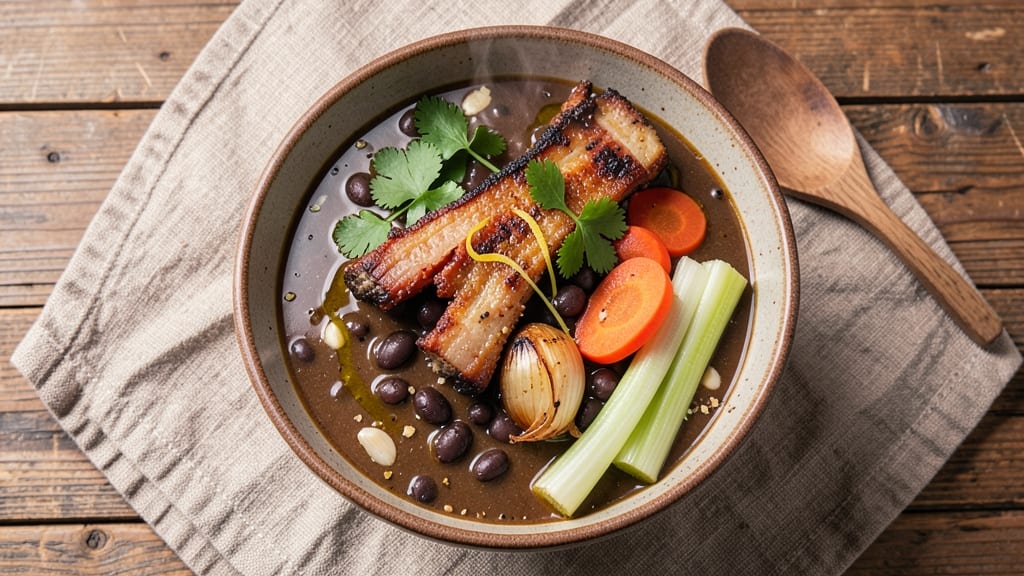
This black bean soup with ham hock delivers restaurant-quality depth from slow-simmered bones and tender beans. The ham hock infuses the broth with rich, savory flavor that transforms simple black beans into something extraordinary.
What makes this recipe special is the balance of traditional techniques—like rendering fat from the ham hock—and modern touches that keep it approachable for home cooks.
The secret lies in the slow simmer, which extracts maximum flavor from the bones while keeping the beans tender. You'll start by browning the ham hock to develop a deep, caramelized crust, then build layers of flavor with aromatics and spices.
The result is a soup that's hearty enough for a cold evening but light enough for a weeknight dinner.
By the time you're done, you'll have a bowl of soup with velvety texture, complex flavors, and that unmistakable ham hock richness. The beans stay intact yet creamy, while the broth carries all the savory notes from the slow-cooked bones.
This is comfort food at its finest—warm, satisfying, and packed with character.
Serve with crusty bread to soak up every last drop of that flavorful broth. The recipe scales beautifully for gatherings, and leftovers taste even better the next day as the flavors meld further. Let's create this soul-warming soup from scratch.
Ingredients for black bean soup with ham hock
The secret to restaurant-style depth lies in these 15 simple ingredients—ham hock for richness, black beans for heartiness, and aromatics for complex flavor layers.
| Ingredient | Amount | Notes |
|---|---|---|
| Ham Hock 🍖 | 1 lb | Smoked or unsmoked, skin-on preferred |
| Dried Black Beans 🌱 | 1 ½ cups | Rinsed before cooking |
| Yellow Onion 🧅 | 1 whole | Medium size, diced |
| Garlic Cloves 🧄 | 4 cloves | Peeled and smashed |
| Carrots 🥕 | 3 medium | Peeled and chopped (fixed unit to 'pieces') |
| Celery Stalks 🥬 | 3 pieces | Diced, including leaves |
| Tomato Paste 🍅 | 2 tbsp | Smooth, not chunky |
| Dried Oregano 🌿 | 1 tsp | Mexican oregano preferred |
| Ground Black Pepper 🌶️ | ½ tsp | Freshly cracked |
| Bay Leaves 🍃 | 2 whole | Fresh if possible |
| Olive Oil 🫒 | 2 tbsp | Extra-virgin for richness |
| Salt 🧂 | 1 ½ tsp | Kosher or sea salt |
| Fresh Thyme 🌿 | 2 sprigs | Stems removed |
| Chicken or Vegetable Broth 💧 | 6 cups | Low-sodium preferred |
| Lime Juice 🍋 | 1 tbsp | Freshly squeezed |
The ham hock is non-negotiable here—it's what gives this soup that unmistakable depth. Look for smoked hocks at Whole Foods or your butcher—they've got more character. Unsure where to start? The Costco smoked hocks are my go-to for big batches. If you can't find smoked, unsmoked works fine, but plan to add a pinch of smoked paprika later. The beans? Dried are essential—canned beans won't develop the same texture. Soak them overnight for even better results, but a quick 2-hour soak in hot water works too if you're short on time. For the aromatics, fresh thyme and bay leaves make all the difference—dried will work, but fresh adds that restaurant-quality aroma.
No smoked hock? Substitute beef bones—marrow or knuckle bones work great. Running low on thyme? Dried thyme at half the amount gets you close, but add an extra bay leaf. The tomato paste can be swapped for crushed tomatoes at the same quantity if you prefer chunkier texture. For the broth, low-sodium is key—you'll be adding plenty of salt later. The carrots and celery can be swapped for frozen mixed vegetables in a pinch, but fresh gives better flavor. And if you're feeling fancy, add a splash of red wine when you deglaze the pot—it cuts through the richness beautifully.
This soup tastes even better the next day as the flavors meld. Store in the fridge for up to 5 days, or freeze portions for 3 months. The ham hock will render fat as it cooks—save that golden liquid for future soups or roasts. For serving, I like to toast crusty sourdough to soak up all that rich broth. Double the recipe if you're feeding a crowd—it reheats perfectly, and leftovers make amazing lunches.
Why You'll Love This Recipe
- Set-and-Forget Magic: Honestly, I throw everything in the pot and walk away—ham hock simmers all day while I handle errands or binge-watch. The beans soften, the carrots caramelize, and that ham hock? It practically falls apart on its own. By dinner, I’m just stirring in a splash of vinegar and serving it up like I’ve been a short-order cook all day.
- Umami Bomb: That ham hock isn’t just meat—it’s a flavor explosion. The deep, smoky richness seeps into the beans while the onion and garlic build layers of warmth. I’ll be real: the first bite makes me pause mid-spoonful, like, “Wait, is this actually in my kitchen?” The carrots add just enough sweetness to balance it all, so it’s never heavy.
- Leftovers That Beg: This soup only gets better the next day. The flavors meld into something richer, and the ham hock shreds so easily I can turn it into tacos or toast it straight from the pot. I keep a jar in the fridge for “emergency” lunches—because let’s be real, nothing beats cold soup straight from the fridge when you’re exhausted.
- Pantry Staple Power: Between us, this recipe uses ingredients you already own. Dried beans? Check. Onions and garlic? Always. Carrots? Probably in the crisper. The ham hock might be the splurge, but it stretches to feed four for under $15. It’s my go-to when I’m broke, busy, or both—and somehow, it never disappoints.
Step-by-step instructions for black bean soup with ham hock
Here's how to build deep, smoky flavor from that ham hock into a hearty bean soup.
Brown the Ham Hock for Maximum Flavor
Heat the 2 tablespoons olive oil in a large Dutch oven over medium-high heat. Place the 1 lb ham hock skin-side down and sear for 8-10 minutes until the skin is deeply golden and crispy in spots. This step develops rich, caramelized flavors that will infuse the entire soup.
Flip the ham hock and sear the meaty side for another 5 minutes. The goal is to get that skin beautifully browned while the meat begins to render its fat. Don't rush this - the deeper the color, the more complex the flavor. Once browned, remove the ham hock and set it aside on a plate.
Sauté Vegetables and Build the Base
In the same Dutch oven, add the 1 whole yellow onion and cook for 5 minutes until softened and translucent. Add the 3 medium carrots, 3 pieces celery stalks, and 4 cloves garlic cloves, stirring to combine. Cook for another 5 minutes until the vegetables begin to soften and the garlic releases its aroma.
Stir in the 2 tablespoons tomato paste, 1 teaspoon dried oregano, 0.5 teaspoon ground black pepper, 2 whole bay leaves, and 1.5 teaspoons salt. Cook for 2 minutes until the tomato paste darkens slightly and the spices are fragrant. This aromatic base forms the flavor foundation for your soup.
Simmer the Beans and Broth
Add the 1.5 cups dried black beans and pour in the 6 cups chicken or vegetable broth. Bring to a boil, then reduce heat to low and cover partially. Let it simmer for 1 hour, stirring occasionally. The beans should be tender but not mushy - they'll continue cooking with the ham hock.
After 1 hour, add the ham hock back to the pot. The residual heat will finish cooking the meat while the beans absorb all that rich ham flavor. Keep the soup at a gentle simmer for another 30-45 minutes, until the beans are completely tender and the ham meat pulls away from the bone easily.
Finish with Fresh Herbs and Brightness
Remove the ham hock and let it cool slightly, then shred the meat with two forks and return it to the soup. Stir in the 2 sprigs fresh thyme and simmer for 5 minutes to infuse the fresh herb flavor. Finally, add the 1 tablespoon lime juice and taste - adjust seasoning if needed.
For the best texture, let the soup sit off the heat for 10 minutes before serving. This resting period allows all the flavors to meld together perfectly. Ladle into bowls and serve with crusty bread to soak up every last drop of that rich, smoky bean broth.
Pro Tips For Making Black Bean Soup With Ham Hock
- SOAK BEANS OVERNIGHT: The ham hock alone won’t soften dried black beans fast enough—skip the quick soak. Use a large bowl, cover with 3 inches of water, and let them sit 12+ hours. I learned this after watching my beans turn to mush when I rushed with hot water.
- CUT HAM HOCK SMALL: That whole ham hock won’t render fat evenly. After browning, slice it into 3-inch chunks before adding to the pot. The meat falls off the bone faster, and the broth gets richer—no more digging for scraps later.
- SWEAT ONIONS LOW AND SLOW: High heat burns onions before they caramelize. Use medium-low, stir often, and let them cook for 10 minutes until translucent. I used to rush this, and the soup always tasted raw—now it’s the flavor base.
- ADD CARROTS LATE: Tossing carrots in with the onions means they’ll turn to mush before the beans are tender. Wait until the beans have cooked 45 minutes, then add them. They’ll soften just enough to blend into the texture without falling apart.
Common mistakes when making perfect results
Skipping the Sear
Skipping the ham hock sear is the biggest flavor mistake you can make. That golden crust on the skin is where all the deep, caramelized flavors develop through the Maillard reaction.
I've seen people just drop the hock into the pot raw, and the soup ends up tasting bland and one-dimensional. Take the extra 10-15 minutes to properly sear both sides—your patience will pay off with layers of complexity. 🔥
Rushing the Simmer
Many home cooks try to speed up the process by boiling the soup instead of simmering. This causes the beans to break down too quickly, turning them mushy rather than maintaining that perfect tender-creamy texture.
Keep the heat at a gentle simmer (190-200°F) and cover partially to let the flavors meld gradually. The ham hock needs that slow cook time to render its fat and infuse the broth properly.
Ignoring the Resting Time
After you finish cooking, don't rush to serve immediately. Letting the soup rest for 10-15 minutes off the heat allows all the flavors to settle and the beans to absorb the broth completely.
I've caught myself serving it too soon, and the texture always suffers—it's watery and the flavors aren't fully integrated. This resting period is where the magic happens, transforming good soup into great soup.
Overlooking the Ham Hock Fat
Some people strain out the ham hock after cooking, wasting all that precious rendered fat that makes this soup so rich. That golden liquid is pure flavor gold—leave it in the soup to create a velvety texture.
If you're concerned about excess fat, skim it off after the soup has rested, but don't discard it entirely. I like to save any extra for future cooking or drizzle it over finished dishes for extra richness.
Using Canned Beans
Canned beans are convenient, but they simply can't match the texture and flavor of properly cooked dried beans in this recipe. The slow simmering process with the ham hock transforms dried beans into something truly special—creamy yet intact with deep flavor.
If you're short on time, at least soak dried beans for 2 hours before using them to improve their texture. The difference is night and day.
Neglecting the Aromatics
Don't skip the step of properly cooking your onions, carrots, and celery until they're soft and fragrant. These vegetables form the flavor base of your soup, and undercooking them leaves your dish tasting raw and unfinished.
I like to cook them until they're just about to caramelize—this adds sweetness that balances the smokiness from the ham hock. Take your time here, as this step is foundational to the entire dish. 🌟
Nutrition facts
Frequently asked questions
Can I make this black bean soup with ham hock vegetarian?
Swap the ham hock for 2 cups of smoked tofu or 1 lb of extra-firm tofu pressed and cubed, then pan-fry until crispy before adding to the pot. For extra depth, use 2 tablespoons soy sauce or 1 teaspoon liquid smoke in place of the ham hock's smoky flavor. The beans will still soak up all the rich broth beautifully.
How do I store and reheat leftovers?
Store leftovers in an airtight container in the fridge for up to 5 days or freeze for 3 months. When reheating, warm gently on the stove over low heat with a splash of water or broth to prevent drying out. Never microwave directly from the fridge—this can make the beans gummy. Stir occasionally for even heating.
What's the best way to use the ham hock meat after cooking?
Shred the cooked ham hock meat and return it to the soup, but you can also use it in other dishes! Mix it into tacos, sandwiches, or even pasta for extra richness. The meat stays tender when properly cooked, so it works well in any recipe that calls for pulled pork. Save any leftover ham hock fat to drizzle over roasted vegetables or grains for instant flavor.
Can I make this soup in a slow cooker? Yes! Brown the ham hock in a skillet first, then transfer everything (except fresh herbs) to your slow cooker. Cook on low for 6-7 hours or high for 3-4 hours. Add the fresh thyme and lime juice at the end. The slow cooker method actually enhances the ham hock flavor, making the broth even more velvety. Just
Why does my soup taste too salty?
Ham hock naturally contains salt, especially if it's smoked. Taste as you go and adjust with acid (lime juice) or sweetness (a pinch of sugar) to balance flavors. If needed, add 1-2 cups of water or broth to dilute the saltiness. Never add more beans—they'll absorb the salt and make the problem worse. The key is gradual seasoning throughout the cooking process.