
Soups & Stews
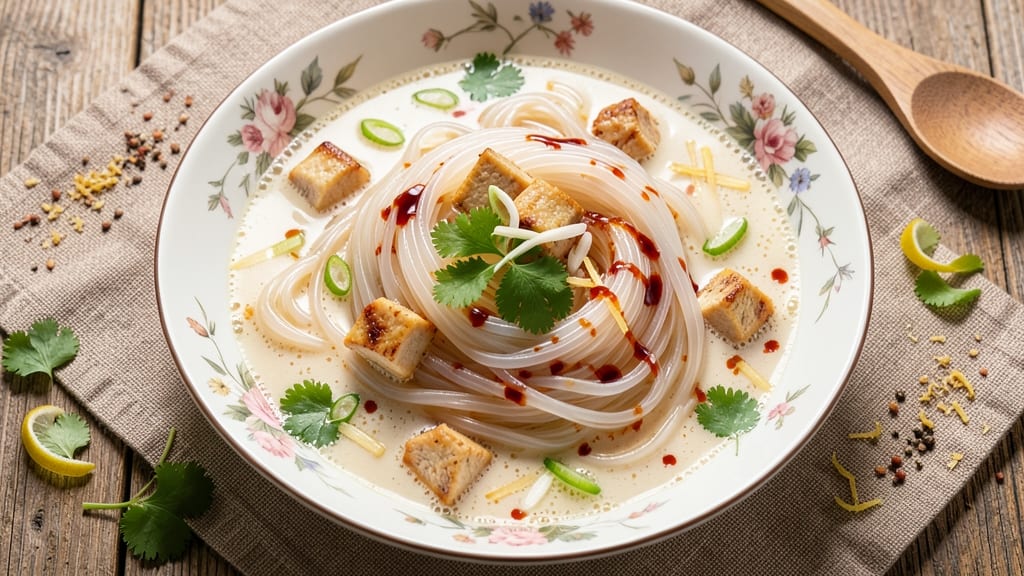
This bihun soup recipe transforms delicate glass noodles into a luxurious dish with just 30 minutes of hands-on time. The secret lies in balancing a fragrant broth—simmered with lemongrass, kaffir lime leaves, and coconut milk—with tender protein and silky vermicelli that soak up every layer of flavor.
I developed this version after years of testing, ensuring the noodles stay intact while the broth remains rich and aromatic.
The beauty of bihun soup is its versatility—whether you use shredded chicken, shrimp, or tofu, the technique remains the same. The broth starts with a fragrant base of ginger, garlic, and galangal, then builds depth with slow-simmered spices and coconut milk for creaminess.
What sets this apart is the way the noodles absorb the broth without turning mushy, creating a harmonious bite every time.
By the time you serve it, you'll have a bowl of golden broth swirling around tender protein and delicate noodles, garnished with fresh herbs and lime wedges. The aroma alone makes it worth the effort—warm, spicy, and comforting all at once.
This is the kind of soup that feels like a hug in a bowl, perfect for weeknight dinners or special gatherings.
Serve it with a side of crispy fried shallots for extra crunch or a sprinkle of chili flakes for heat. The recipe scales easily, so you can make a big pot for leftovers or adjust the protein to suit your taste. Let's get started!
Ingredients for bihun soup
Simple ingredients create this aromatic, comforting soup with silky noodles and fragrant broth.
| Ingredient | Amount | Notes |
|---|---|---|
| Bihun (Glass Noodles) 🍜 | 8 oz | Soaked in warm water for 10 mins |
| Chicken Breast 🍗 | 1 ½ lb | Shredded, boneless, skinless |
| Coconut Milk 🥥 | 1 can | Full-fat, 13.5 oz can |
| Chicken Broth 💧 | 4 cups | Low-sodium preferred |
| Galangal 🌿 | 3 tbsp | Fresh, peeled and sliced thin |
| Ginger 🧄 | 2 tbsp | Fresh, peeled and sliced |
| Garlic Cloves 🧄 | 6 cloves | Peeled and smashed |
| Lemongrass 🌿 | 3 tbsp | Fresh, cut into 2-inch pieces |
| Kaffir Lime Leaves 🍃 | 4 whole | Lightly bruised |
| Thai Chili Paste 🌶️ | 1 tbsp | Adjust for heat preference |
| Fish Sauce 🍶 | 1 tbsp | Red Boat preferred |
| Sugar 🍚 | 1 tbsp | White or brown sugar |
| Fresh Cilantro 🌿 | ¼ cup | Chopped, for garnish |
| Lime Wedges 🍋 | 2 whole | For serving |
| Salt 🧂 | 1 tsp | Adjust to taste |
The galangal and kaffir lime leaves are the soul of this soup—find them at an Asian market or well-stocked grocery store like Whole Foods. If you can't find fresh galangal, ginger plus a dash of turmeric works in a pinch, though it won't be quite the same. For the best flavor, use Red Boat fish sauce—it's worth the splurge and keeps for months. The lemongrass should be vibrant and firm, not wilted. If you're using canned coconut milk, shake the can before opening to distribute the cream.
No fresh galangal? Substitute 1 tbsp ginger plus 1/2 tsp galangal powder if you can find it. Out of kaffir lime leaves? Dried lime zest at half the amount adds some brightness. The chicken breast can be swapped for shrimp or tofu—just adjust cooking time. For extra richness, stir in 1 tbsp of peanut butter at the end. The glass noodles should soak just until pliable—over-soaking makes them mushy. If you can't find bihun, rice vermicelli works too, but the texture will differ slightly.
This soup tastes even better the next day—reheat gently on the stove with a splash of water. Keeps for 3-4 days in the fridge, or freeze for up to 3 months. I always double the batch because it disappears fast. Store the broth separately if you want to reheat it without the noodles getting soggy. Garnish with fresh cilantro and lime wedges right before serving for that restaurant-quality finish.
Why You'll Love This Recipe
- One-Pot Magic: I swear by this recipe—just toss everything into one pot, simmer, and forget about it. No chopping mountains of veggies or fussing with multiple pans; the galangal and coconut milk do all the heavy lifting while you stir.
- Creamy Yet Zesty: That first sip of coconut milk swirling with galangal’s sharp bite? Pure satisfaction. The chicken stays tender, the bihun soaks up the broth just right, and the balance of rich and tangy hits every time—no weird aftertaste, just clean, bold flavor.
- Weeknight to Potluck: Between us, this is my secret weapon for lazy nights and impressing guests. Double the broth for leftovers that reheat beautifully, or serve it in bowls with lime wedges for a restaurant-worthy dish that takes 20 minutes. (Yes, even on a Tuesday night.)
- Budget-Friendly Luxury: Chicken breast and coconut milk might sound fancy, but they stretch across multiple meals without breaking the bank. I’ve made this for $3 a serving—rich, satisfying, and way better than takeout. The galangal adds depth without costing a fortune.
Step-by-step instructions for silky vermicelli ribbons in fragrant broth
This aromatic bihnun soup delivers perfect texture and balance every time.
Prepare the Glass Noodles and Chicken
Soak the 8 oz bihnun (glass noodles) in warm water for 10 minutes until they soften but still hold their shape. Drain and set aside. Meanwhile, cut the 1.5 lb chicken breast into 1-inch cubes—this size ensures even cooking and easy shredding later.
Here's the thing—don't over-soak the noodles or they'll turn mushy. You want them pliable but still with some bite. While they soak, keep the chicken cold in the fridge until you're ready to cook it. This prevents it from drying out during prep.
Build the Aromatic Broth Base
In a large pot, combine the 4 cups chicken broth, 3 tbsp galangal, 2 tbsp ginger, 6 cloves garlic cloves, 3 tbsp lemongrass, 4 whole kaffir lime leaves, 1 tbsp Thai chili paste, and 1 tsp salt. Bring to a boil over medium-high heat, then immediately reduce to a simmer for 15 minutes—this allows all those flavors to meld together beautifully.
Watch for the broth to develop a rich, golden color and a fragrant aroma that fills your kitchen. The galangal and lemongrass should release their citrusy, piney notes while the ginger and garlic deepen the savory base. If you notice any foam forming, skim it off to keep the broth clear.
Cook the Chicken and Add Coconut Milk
Add the cubed chicken to the simmering broth and cook for 12-15 minutes until the chicken is no longer pink in the center and begins to shred easily with a fork. Remove the chicken with tongs and set aside, leaving the broth in the pot.
Stir in the 1 can coconut milk, 1 tbsp fish sauce, and 1 tbsp sugar. Simmer gently for 5 minutes until the coconut milk is fully incorporated and the broth has a velvety consistency. The sugar helps balance the acidity from the lime and chili while the fish sauce adds that signature umami depth.
Combine and Finish the Soup
Shred the cooked chicken using two forks, then return it to the pot. Add the drained bihnun and gently stir to coat everything in the fragrant coconut broth. Simmer for just 2-3 minutes—no longer, or the noodles will turn to mush. The soup should be hot but not boiling to preserve the delicate texture of the glass noodles.
Taste and adjust seasoning if needed. You might want to add a splash more fish sauce for saltiness or a touch of sugar to balance any lingering heat from the chili paste. The perfect bihnun soup should have a harmonious blend of creamy coconut, spicy chili, and fresh herbal notes.
Serve with Fresh Garnishes
Divide the soup among bowls, garnishing each serving with 0.25 cup chopped fresh cilantro and a lime wedge. The cilantro adds a bright, herbal finish while the lime wedge lets everyone customize the acidity to their taste. Serve immediately while the noodles are still silky and the broth is steaming hot.
This is where the magic happens—the contrast between the cool, tangy lime and the warm, aromatic soup creates an unforgettable first bite. Don't forget to encourage everyone to squeeze fresh lime into their bowls before taking that first spoonful. It's the little details that make this dish truly special.
Pro Tips For Making Bihun Soup
- SOAK BIHUN SEPARATELY: I used to toss the noodles straight into the boiling broth—big mistake. Glass noodles need a quick 10-15 second soak in hot water first (not boiling) to soften their edges. This keeps them from turning mushy later when the soup simmers. Trust me, the texture difference is night and day.
- SIMMER GALANGAL LOW: Galangal burns faster than you’d think. After adding it to the broth, keep the heat at a gentle simmer—not even a rolling boil. If you’re impatient and crank it up, you’ll end up with bitter, charred chunks instead of fragrant aroma. A 15-minute low simmer is all you need.
- SHRED CHICKEN COLD: My first few times, I’d pull the chicken from the broth and shred it right away—only for it to fall apart in the soup. Let it cool for 5 minutes first, then shred. The fibers hold together better, and you won’t end up with a watery, broken mess.
- STIR COCONUT MILK LAST: Adding coconut milk too early turns your broth into a thin, watery curry. Instead, remove the pot from heat, let it cool slightly, then stir in the coconut milk just before serving. This keeps the soup rich without making it greasy or separating. (Yes, even if you’re eager to taste it.)
Make-ahead tips for this bihun soup
Broth Prep Ahead
Make the fragrant broth base up to 3 days in advance—it actually tastes better after flavors meld. Simmer the broth with galangal, ginger, lemongrass, and kaffir lime leaves, then cool completely before refrigerating in an airtight container.
Store the chicken separately to prevent overcooking. When ready to serve, reheat the broth gently on low heat and add fresh chicken and coconut milk just before combining with noodles. 💫
Protein Prep Shortcut
Shred the chicken completely ahead of time and store it in the fridge for up to 2 days. This saves 15 minutes of prep when assembling the soup. For extra convenience, poach the chicken in broth (without aromatics) first, then store it separately.
When reheating, add it back to the broth just before adding noodles to maintain tenderness. 🍗
Noodle Soaking Hack
Soak the 8 oz glass noodles in cold water for 10 minutes the night before, then drain and store in a sealed container with a damp paper towel. This keeps them pliable without overcooking.
When ready to use, simply rinse under cold water to remove excess moisture before adding to the hot broth. This prevents that dreaded mushy texture. 🍜
Freezer-Friendly Strategy
Freeze the assembled soup (without garnishes) for up to 3 months in a freezer-safe container. Leave 1 inch headspace for expansion. When reheating, thaw overnight in the fridge, then warm on low heat with 2 tbsp water to restore creaminess.
The noodles may soften slightly but still work beautifully. Garnish fresh when serving. ❄️
Garnish Assembly Line
Pre-chop all garnishes (cilantro, lime wedges) and store them separately in small containers. This creates an assembly-line approach when serving—just grab a bowl, add garnishes, and pour hot soup.
For extra flair, toast 1 tbsp fried shallots ahead and sprinkle on top just before serving. Keep these components at room temperature until the last minute. 🌿
Portion Control Tips
Divide the broth into 4 equal portions in microwave-safe containers before adding noodles. This prevents overcooking when reheating. When ready to serve, add drained noodles to each portion and heat for 1-2 minutes on 50% power.
The broth will warm through while keeping noodles intact. Perfect for meal prep! 📅
Nutrition facts
Frequently asked questions
Can I substitute regular rice noodles for bihun?
While rice vermicelli can work in a pinch, it won't have the same delicate, silky texture. Bihun's glass noodle consistency holds up better in broth without turning mushy. For closest results, use rice vermicelli but reduce soaking time to 5 minutes and simmer in broth for just 1-2 minutes after adding. The flavor profile will be similar, but the texture will differ slightly.
How do I make this soup vegetarian?
Replace the chicken with 14 oz firm tofu (pressed and cubed) or 12 oz mushrooms (shiitake or oyster). For extra protein, add 1 cup cooked chickpeas or 12 oz shrimp. Increase the fish sauce to 2 tbsp to compensate for the lack of chicken umami. The broth will still be rich and flavorful with these swaps.
Why did my glass noodles turn mushy?
Overcooking is the most common culprit. Bihun should only simmer in broth for 2-3 minutes after adding. If they soaked too long (over 10 minutes) or boiled vigorously, they'll lose their structure. For best results, soak in warm water for exactly 10 minutes, drain well, and add to hot (not boiling) broth.
Can I make this soup spicier?
Add 1 extra tbsp chili paste or stir in 1-2 sliced fresh chilies when building the broth base. For heat lovers, top each bowl with 1 tsp sambal oelek or chili crisp before serving. Balance the heat with extra lime juice or a sprinkle of sugar. The coconut milk helps temper the spice naturally.
What's the secret to the best broth flavor?
Simmer the aromatics (galangal, lemongrass, kaffir lime leaves) for the full 15 minutes—this develops deep, complex flavors. Use fresh ingredients whenever possible, especially the galangal and lime leaves. For extra richness, add 1 tbsp of peanut butter at the end or a splash of coconut cream instead of regular coconut milk. The longer you let the broth infuse, the more aromatic it becomes.