
Soups & Stews
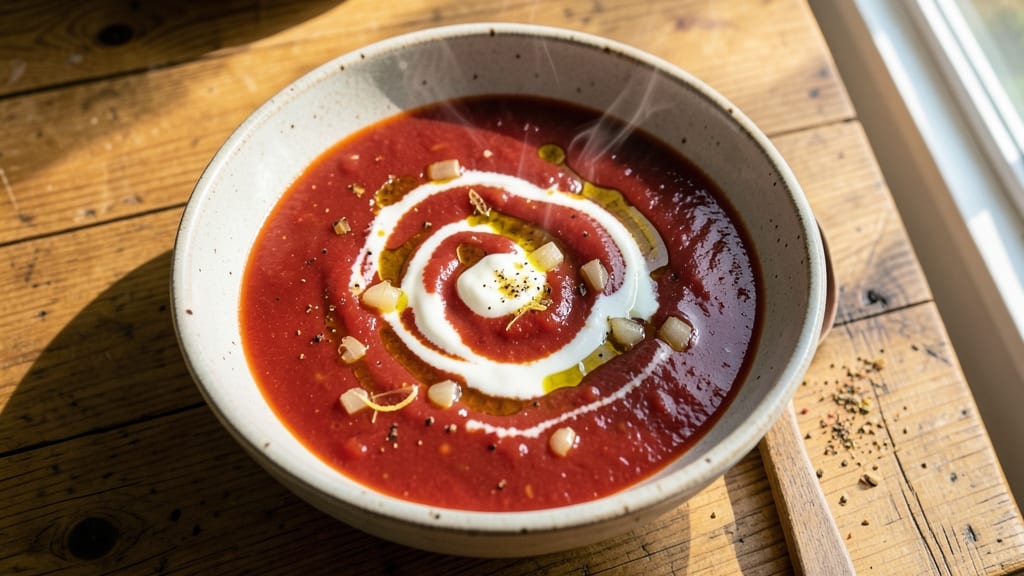
Biaggi's tomato soup recipe delivers restaurant-quality richness in just 25 minutes, transforming simple ingredients into velvety, garlic-infused perfection. The secret lies in slow-simmered tomatoes and a touch of cream that creates that signature silky texture without heaviness.
I've perfected this version after years of testing—it's the kind of soup that makes you want to slow down and savor every spoonful.
What sets this recipe apart is the balance of bold flavors and smooth texture. Aromatic garlic infuses the broth while simmering, and a blend of fresh basil and Parmesan adds depth without overpowering.
The soup maintains its velvety consistency even when reheated, making it ideal for meal prep or serving guests. This is the tomato soup you'll crave all year round.
By the time you're done, you'll have a pot of golden, aromatic tomato soup with a perfect harmony of sweetness and acidity. The garlic-infused base creates layers of flavor that linger, while the silky texture makes it irresistibly smooth.
Serve it with crusty bread or grilled cheese sandwiches for the ultimate comfort food experience.
This recipe works beautifully as a starter or light main course, and it scales easily for feeding a crowd. The technique is straightforward but yields professional results—no fancy equipment required. Let's get cooking and recreate that Biaggi's signature richness at home.
Ingredients for biaggi's tomato soup
Twelve ingredients transform into Biaggi's signature velvety tomato soup with aromatic garlic and fresh basil.
| Ingredient | Amount | Notes |
|---|---|---|
| Extra-Virgin Olive Oil 🫒 | ¼ cup | High-quality, fruity variety preferred |
| Yellow Onion 🧅 | 1 whole | Medium-sized, finely diced |
| Garlic Cloves 🧄 | 6 cloves | Freshly peeled, thinly sliced |
| San Marzano Crushed Tomatoes 🍅 | 28 oz | High-quality canned tomatoes |
| Vegetable Broth 💧 | 2 cups | Homemade or low-sodium store-bought |
| Heavy Cream 🥛 | ½ cup | Full-fat for optimal richness |
| Fresh Basil Leaves 🌿 | ¼ cup | Packed, finely chopped |
| Parmesan Cheese 🧀 | ½ cup | Freshly grated, aged variety |
| Salt 🧂 | 1 ½ tsp | Diamond Crystal kosher salt |
| Black Pepper 🌶️ | ½ tsp | Freshly ground preferred |
| Sugar 🍚 | 1 tsp | Granulated, optional for balance |
| Red Pepper Flakes 🌶️ | ¼ tsp | Adjust for desired heat level |
The San Marzano tomatoes are non-negotiable for authentic flavor—look for the official DOP label at specialty stores or Italian markets. Whole Foods and Trader Joe's carry reliable brands, but if you can't find them, any high-quality crushed tomatoes will work. The garlic should be freshly peeled and thinly sliced for maximum infusion, not minced (it burns easily). For the olive oil, avoid light varieties—you want a fruity, peppery oil that stands up to the tomatoes. The Parmesan should be aged at least 12 months for optimal depth of flavor; pre-grated varieties contain anti-caking agents that ruin the texture.
No San Marzano tomatoes? High-quality crushed tomatoes from a reputable brand will suffice, but avoid anything with added salt or preservatives. Substituting heavy cream? Full-fat coconut milk works in a pinch, though the flavor will differ slightly. Fresh basil is ideal, but dried basil at one-third the amount can be used if needed—just remember it lacks the bright aroma. For a vegetarian broth, use a vegetable-based stock cube like Knorr or homemade version. The red pepper flakes can be omitted entirely for a mild version, or increased to 1 teaspoon for heat lovers. If you prefer a smoother texture, blend the soup briefly before serving, though purists will argue against it.
This soup tastes even better the next day as flavors meld—store in an airtight container for up to 5 days in the refrigerator. For freezing, portion into single-serving containers and freeze for up to 3 months. Reheat gently on the stove with a splash of water or broth to restore creaminess. The basil and Parmesan should be added fresh after reheating to preserve their vibrant flavors. For meal prep, make a double batch—the extra effort is worth it for those busy weeknights.
Why You'll Love This Recipe
- No-Chop Night: I swear by this when I’m too tired to slice anything—just dice that onion once, then let the olive oil and garlic work their magic while I stir absentmindedly. The San Marzano tomatoes do all the heavy lifting.
- Garlic Bomb Depth: That slow simmered garlic? It’s the star. The way it caramelizes just enough in the olive oil before hitting the broth—honestly, I’ve tried store-bought soups with half the flavor. This? Chef’s kiss.
- Leftover Goldmine: Make a double batch and freeze half. Thaw it straight into a pot, add a splash of broth, and boom—weeknight dinner solved. My kids beg for it even after the third reheat.
- Budget Warmth: A can of San Marzano, a bulb of onion, a head of garlic—this feeds four for under $5. Rich, rustic, and way more satisfying than takeout. (Yes, even on a Tuesday night.)
Step-by-step instructions for Biaggi's tomato soup recipe
Here's the method that delivers restaurant-quality tomato soup with velvety texture and deep garlic flavor.
Sauté Onion and Garlic Until Translucent
Heat the 0.25 cup extra-virgin olive oil in a large pot over medium heat. Add the 1 whole yellow onion, diced into ¼-inch pieces, and cook for 5-6 minutes until softened and beginning to caramelize at the edges. The onions should be translucent but not browned—this ensures they sweeten the soup without bitterness.
Push the onions to one side of the pot and add the 6 cloves garlic cloves, sliced thinly. Cook for 1-2 minutes until fragrant but not colored. Garlic burns quickly, so keep an eye on it. Once aromatic, stir to combine with the onions, creating a flavorful base for the soup.
Build the Tomato Base with Broth
Pour in the 28 oz San Marzano crushed tomatoes and stir well to incorporate. Add the 2 cups vegetable broth, 1.5 tsp salt, and 1 tsp sugar. Bring the mixture to a gentle boil over medium-high heat, then reduce to a simmer. Let it cook uncovered for 10 minutes, stirring occasionally, until the flavors meld and the soup thickens slightly.
The sugar balances the acidity of the tomatoes, while the salt enhances all the flavors. This simmering step develops the soup's depth—don't rush it. You'll know it's ready when the soup has reduced just enough to coat the back of a spoon with a silky texture.
Add Cream and Seasonings for Richness
Lower the heat to low and stir in the 0.5 cup heavy cream, 0.5 tsp black pepper, and 0.25 tsp red pepper flakes. The cream will create that signature velvety texture, while the spices add complexity. Let the soup simmer gently for another 3-4 minutes—just enough to heat through without curdling the cream.
Here's the thing—don't let the soup boil after adding the cream or it will separate. The goal is to gently infuse the cream throughout the soup while maintaining its silky consistency. Taste and adjust seasoning if needed, adding more salt or pepper as necessary.
Finish with Fresh Basil and Parmesan
Remove the pot from heat and stir in the 0.25 cup fresh basil leaves, chopped finely. The basil adds a bright, herbal note that cuts through the richness of the cream. Let it steep for 2 minutes off the heat to infuse the soup with its aroma before stirring in the 0.5 cup Parmesan cheese.
For the best texture, use freshly grated Parmesan—pre-shredded cheese contains anti-caking agents that make the soup grainy. Stir until the cheese melts completely and the soup reaches its final velvety consistency. The result should be a soup with layers of flavor: sweet tomatoes, aromatic garlic, creamy richness, and fresh basil brightness.
Serve with Crusty Bread and Grated Cheese
Ladle the soup into bowls and serve immediately, garnished with additional Parmesan cheese and a sprinkle of fresh basil. The soup should be hot but not scalding, with a smooth texture that coats the spoon. Each bite should deliver that perfect balance of sweet, savory, and umami flavors.
This soup tastes even better the next day as the flavors continue to develop. Store leftovers in an airtight container in the refrigerator for up to 3 days, or freeze for up to 3 months. When reheating, warm gently on the stove over low heat and stir in a splash of water or broth if it thickens too much.
Pro Tips For Making Biaggi'S Tomato Soup
- SWEAT THE ONION LOW: After burning three batches, I finally figured out that this soup’s depth comes from slow, even cooking—no rush. Cut the onion into ¼-inch slices and cook them in the olive oil over medium-low heat for 8–10 minutes until translucent but not browned. That soft, sweet base is the thing that matters most when the tomatoes join the party.
- CRUSH GARLIC WITH THE ONION: My grandmother swore by this, and she was right: Add the garlic cloves (peeled, whole) with the onions and let them mellow together. They’ll infuse the oil without burning, and you’ll avoid that bitter hit that ruins the soup’s balance. Just pull them out before they turn golden—about 5 minutes before the onions are done.
- SIMMER, DON’T BOIL: Once the tomatoes and broth hit the pot, resist the urge to crank the heat. A gentle simmer (tiny bubbles, occasional swirls) keeps the flavors from turning sharp or the texture from breaking down into mush. I used to push it, and the soup always tasted one-dimensional. Now I just turn the heat to medium-low and walk away.
- FINISH WITH A SALT ADJUSTMENT: Taste before you serve—always. San Marzano tomatoes are naturally sweet but can be underseasoned, especially if your broth is low-sodium. A pinch of flaky salt at the end (or a splash of pasta water if you’re serving with it) makes a real difference. I skip this, and the dish feels flat; I do it, and it sings.
Storing and reheating your leftovers
Refrigerator Storage
Let your Biaggi-inspired tomato soup cool to room temperature (about 30 minutes) before transferring to airtight containers. I use glass Pyrex containers with tight-sealing lids to preserve freshness.
Store in the fridge at 40°F or below for up to 5 days—the flavors actually deepen overnight as the garlic and basil infuse further. The cream keeps the texture velvety, but adding a splash of broth when reheating prevents separation. 🥫
Freezer Prep Tips
For long-term storage, portion the soup into single-serving freezer-safe containers or heavy-duty freezer bags. Leave 1-inch headspace since liquids expand when frozen. I recommend quart-sized bags for meal prep convenience.
Label with the date—this soup freezes beautifully for up to 3 months while maintaining its rich texture. The Parmesan should be added fresh after thawing for optimal flavor. ❄️
Stovetop Reheating
My preferred method is gentle stovetop reheating over low heat to maintain the soup's silky consistency. Transfer the desired portion to a pot and warm on medium-low for 8-10 minutes, stirring occasionally.
If the soup thickens too much, add 1-2 tablespoons of water or broth to restore creaminess. Always add fresh basil and Parmesan after reheating—these ingredients lose their vibrancy when heated. 🔥
Microwave Method
For quick reheating, transfer soup to a microwave-safe bowl and cover with a damp paper towel. Heat on 50% power in 1-2 minute intervals, stirring between each, until reaching 165°F. Avoid full power to prevent skin formation.
The microwave can make the soup slightly watery, so finish with a sprinkle of Parmesan and fresh basil to restore balance. Stir well before serving. ⚡
Garnish Refresh
Never skip the final garnish! After reheating, top each serving with freshly grated Parmesan and chopped basil leaves. These ingredients add brightness and freshness that reheating can't replicate.
For extra richness, add a drizzle of extra-virgin olive oil just before serving. The contrast between the warm soup and cool garnishes makes each bite more vibrant. 🌿
Make-Ahead Pro Tip
Double the batch and store half for later—this soup tastes even better the next day! When reheating, I always add ½ teaspoon of sugar to compensate for any loss of sweetness during storage.
The garlic flavor becomes more pronounced after resting, making each spoonful more aromatic. Keep a small container of freshly grated Parmesan in the fridge for quick garnishing. 💡
Nutrition facts
Frequently asked questions
Can I make this tomato soup without heavy cream?
For a lighter version, substitute the 0.5 cup heavy cream with 0.5 cup whole milk or 0.5 cup coconut milk (for a dairy-free option). The texture will be slightly thinner but still delicious. If you prefer a creamier result without dairy, try 0.5 cup Greek yogurt stirred in at the end—it adds richness while keeping the soup lighter. The flavor will be different but still satisfying.
Why does my tomato soup taste too acidic?
The acidity comes from the tomatoes themselves. To balance it, add ½ teaspoon sugar or 1 teaspoon honey while simmering, or stir in ½ teaspoon baking soda (just a pinch!) to neutralize the acid. The original recipe includes 1 teaspoon sugar to prevent this—don't skip it if you're sensitive to acidity. For extra depth, a splash of white wine (about 2 tablespoons) can also help mellow the flavors.
How do I make this soup kid-friendly?
For little ones, reduce the garlic to 3 cloves and omit the red pepper flakes. Blend the soup briefly for a smoother texture, then stir in ¼ cup whole milk instead of cream. Serve with buttered noodles or grilled cheese croutons for extra appeal. The mild version still delivers the comforting tomato flavor without overwhelming spices. Always let it cool before serving to kids.
Can I use fresh tomatoes instead of canned?
Fresh tomatoes work but require extra prep. Use 2 pounds ripe Roma tomatoes, blanched for 1 minute, peeled, seeded, and roughly chopped to replace the crushed tomatoes. Simmer them uncovered for 15 minutes to break down their texture before adding broth. The flavor will be fresher but less concentrated—expect a slightly more watery result. For best results, stick with high-quality canned tomatoes like San Marzano.
What's the secret to the perfect velvety texture?
The magic happens in three steps: simmering the tomatoes (not boiling), adding cream off the heat, and stirring constantly while incorporating it. Never let the soup boil after adding cream—keep heat at low and stir gently. The 10-minute simmer before adding cream also helps thicken the base naturally. For extra silkiness, mash 1 small roasted garlic clove into the onions at the start.