
Soups & Stews
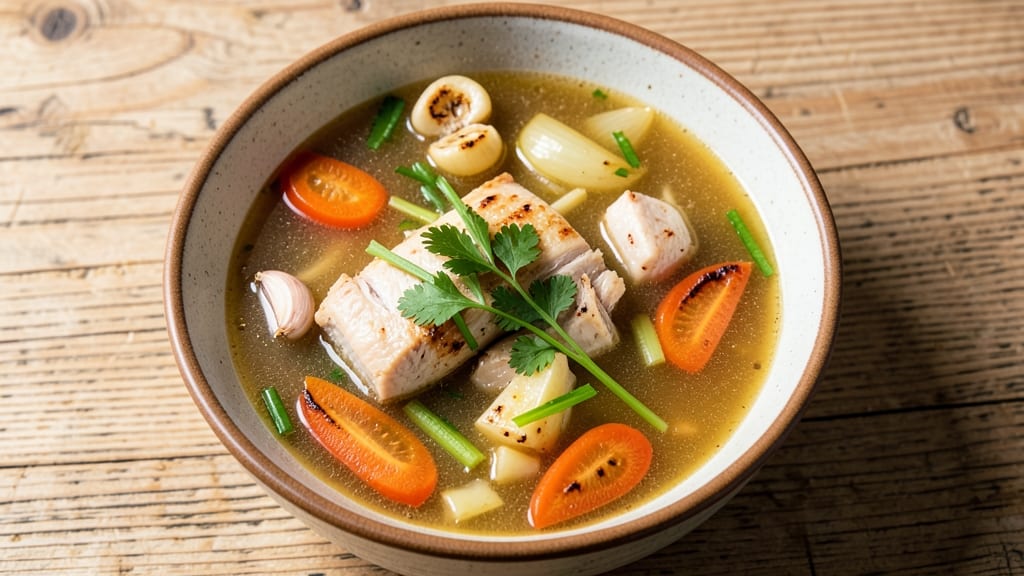
This best-tasting chicken soup recipe transforms simple ingredients into a deeply comforting, restaurant-quality bowl that far surpasses canned versions. The secret lies in homemade broth—rich, aromatic, and built from scratch with chicken bones, vegetables, and aromatic herbs that develop complex flavors over hours of slow simmering.
What sets this recipe apart is the balance of techniques: browning chicken for depth, toasting spices for warmth, and simmering just long enough to extract maximum flavor without turning the broth bitter.
Every ingredient plays a role—carrots add natural sweetness, celery brings earthiness, and bay leaves infuse subtle herbal notes that elevate the entire dish.
By the time you serve this soup, you'll have a velvety broth with tender chicken, perfectly al dente vegetables, and a garnish of fresh herbs that adds brightness.
The aroma alone will fill your kitchen with warmth, while each spoonful delivers layers of savory, herbal, and umami richness that make this the ultimate comfort food.
The best part? This recipe scales effortlessly—whether you're feeding a family or meal prepping for the week. The instructions are designed to be approachable for beginners while delivering professional results, ensuring your homemade soup will be the talk of any gathering.
Ingredients for best tasting chicken soup
Sixteen ingredients that transform into restaurant-quality chicken soup with velvety broth and deep umami flavor.
| Ingredient | Amount | Notes |
|---|---|---|
| Chicken Bones 🍗 | 4 lb | Backbone, neck, wings preferred |
| Chicken Breast 🍗 | 2 lb | Boneless, skinless, cut into chunks |
| Yellow Onion 🧅 | 2 whole | Peeled, halved lengthwise, root intact |
| Carrots 🥕 | 4 whole | Medium, peeled, cut into 2-inch chunks |
| Celery Stalks 🧅 | 6 whole | Trimmed, cut into 2-inch pieces |
| Garlic Cloves 🧄 | 8 cloves | Peeled, smashed with side of knife |
| Fresh Parsley 🌿 | ½ cup | Stems removed, loosely packed |
| Fresh Thyme 🌿 | ¼ cup | Stems removed, loosely packed |
| Bay Leaves 🌿 | 4 whole | Dried, standard size |
| Black Peppercorns 🌶️ | 1 tbsp | Coarsely cracked, not ground |
| Salt 🧂 | 2 tsp | Diamond Crystal preferred |
| Extra-Virgin Olive Oil 🫒 | ½ cup | High quality, fruity |
| Dried Sherry 🍷 | ½ cup | Or substitute with dry white wine |
| Fresh Lemon Juice 🍋 | 2 tbsp | From 1 medium lemon |
| Fresh Dill 🌿 | ¼ cup | Chopped, for garnish |
The chicken bones are non-negotiable for that rich, golden broth. Ask your butcher for a mix of backbone, neck, and wing bones—they're often free or cheap, and the marrow adds incredible depth. If you can't find them, substitute with a whole chicken (cut up yourself) or a chicken stock pot from Costco. For the vegetables, organic carrots and celery are ideal since you're not peeling them—just scrub well. The onions? Yellow or red work best—they caramelize beautifully during browning, building that sweet, savory base. Fresh herbs are a must here—their bright notes cut through the richness of the broth.
No sherry? Dry white wine or even extra chicken broth works in a pinch, but the alcohol cooks off and leaves behind a subtle depth. Short on fresh thyme? Dried thyme at one-third the amount is fine, but fresh is worth the extra minute to snip. The bay leaves might seem minor, but they're essential—they add that subtle herbal complexity that separates homemade from canned. Penzeys or bulk bins at Whole Foods are great for quality spices. For the olive oil, avoid the cheap stuff—you're tasting it, so splurge on something fruity and peppery. The lemon juice is key too—it brightens everything at the end, so don't skip it.
Broth keeps for 5 days in the fridge, or 3 months frozen in airtight containers. I always make double batches—one for dinner, one to freeze for lazy nights. The chicken reheats beautifully too, but add a splash of broth to keep it moist. Fresh herbs? Store them in a jar of water in the fridge like flowers—they'll stay fresh for a week. Garnish with extra herbs and a drizzle of olive oil right before serving. Trust me, it makes all the difference.
Why You'll Love This Recipe
- Soup in Minutes: I swear by the chicken bones here—they turn the broth into liquid gold with almost no effort. Just toss them in cold water, bring to a boil, then let them simmer while I chop the onion, carrots, and celery. No fancy techniques, just pure, hands-off flavor.
- Rich Umami Bomb: That first sip? Pure satisfaction. The bones release deep, savory notes while the chicken breast stays tender, and the onions caramelize just enough to add sweetness. Honestly, it’s the kind of soup where I’ll pause mid-bite just to savor it.
- Weeknight Magic: Between us, this is my go-to when I’m exhausted but still need to feed everyone. The veggies add color and crunch, but the real star is how it stretches for days—perfect for busy nights when I’d normally order takeout.
- Budget-Friendly Hero: Chicken bones are cheap, and this recipe makes enough to feed four for dinner and two more for lunch. I’ll be real: it’s the kind of soup that makes me feel like I’m cooking a five-star meal without breaking the bank. Leftovers? Always welcome.
Step-by-step instructions for homemade chicken soup with rich, restaurant-quality broth
Here's how to transform simple ingredients into a soul-warming soup that rivals any restaurant version.
Prepare the Chicken and Vegetables for Maximum Flavor Extraction
Start by separating the 4 lb chicken bones from the 2 lb chicken breast. For the bones, remove any remaining meat and slice it into 1-inch chunks to add back later. Place the bones in a large stockpot and cover them with cold water by about 2 inches. Bring to a boil over high heat, then immediately reduce to a simmer.
While the bones simmer, prepare the vegetables. Peel and halve the 2 whole yellow onions lengthwise, leaving the root intact. Peel the 4 whole carrots and cut into 2-inch chunks. Trim the 6 whole celery stalks and cut into similar 2-inch pieces. Add these to the simmering bones along with the 8 cloves garlic (smashed with the side of a knife), 4 whole bay leaves, 1 tbsp coarsely cracked black peppercorns, and 2 tsp salt. This aromatic bundle will infuse the broth with deep, complex flavors.
Simmer the Broth for Deep, Rich Flavor Development
Simmer the bones and vegetables uncovered for 45 minutes to render out impurities and develop a clean base. Skim off any foam or scum that rises to the surface with a fine-mesh skimmer—this ensures a crystal-clear broth. After 45 minutes, remove the bones and set them aside for later.
Add the 2 lb chicken breast chunks to the pot along with 0.5 cup extra-virgin olive oil and 0.5 cup dried sherry. The olive oil adds richness while the sherry introduces a subtle depth of flavor. Return the mixture to a simmer and cook uncovered for another 30 minutes. The chicken should be tender and the broth should smell like a symphony of savory aromatics.
Finish with Fresh Herbs and Bright Acidic Notes
Strain the broth through a fine-mesh sieve into a clean stockpot, pressing gently on the solids to extract every last drop of flavor. Discard the vegetable pieces and return the broth to the pot. Add the reserved chicken bones and simmer for 15 minutes to reabsorb any remaining flavor.
Remove the chicken bones and shred the meat using two forks, discarding any cartilage or gristle. Return the shredded chicken to the broth and stir in the 0.5 cup fresh parsley, 0.25 cup fresh thyme, and 2 tbsp fresh lemon juice. The lemon juice brightens the broth and cuts through the richness. Taste and adjust seasoning with additional salt if needed—this homemade broth should be deeply flavorful on its own.
Assemble and Garnish for the Ultimate Comfort Bowl
Ladle the hot broth into bowls, dividing it evenly among 6 servings. Top each serving with a generous sprinkle of 0.25 cup fresh dill—this herb adds a fresh, slightly tangy note that elevates the dish. Serve immediately with crusty bread or over your favorite noodles for a complete meal.
This soup delivers on its promise of restaurant-quality depth. The bone broth is rich and velvety, the chicken is tender and flavorful, and the herbs add layers of complexity. Every spoonful is a testament to why homemade always tastes better than canned—it's packed with real, developed flavor that can't be replicated.
Pro Tips For Making Best Tasting Chicken Soup
- Sear the Bones First: I learned this the hard way—skipping the sear means flavorless broth. Pat the chicken bones dry, then hit them with high heat in a pot for 5-7 minutes until deeply browned. That crust packs serious flavor into your soup base, and it’s the thing that matters most when you’re simmering for hours.
- Cut Onions in Half: Whole onions burn before they soften, and you’ll end up with a bitter, charred mess. Slice each yellow onion into 6-8 wedges instead of thin rings—this guarantees even cooking without turning them to ash. (Yes, even if you’re impatient like me, resist the urge to chop them fine.)
- Simmer Low and Slow: After the initial boil, drop the heat to a bare simmer where bubbles occasionally break the surface. I used to rush this, and my soup always tasted thin and underdeveloped. Low heat breaks down collagen from bones and chicken breast into rich gelatin, turning your broth from clear to velvety. Trust the process—it’s worth the wait.
- Add Celery Last: Celery stalks take forever to soften, and if you toss them in early, they’ll turn to mush while the rest of your soup stays crunchy. Toss in the chopped celery (and carrots) only 15-20 minutes before serving—just enough time to tenderize without turning them into a sad, limp pile. (Your future self will thank you.)
Health benefits of this best tasting chicken soup
Immune System Boost
This chicken soup is a powerhouse for your immune system, thanks to the chicken breast providing 26 grams of protein per serving—essential for repairing tissues and building antibodies.
The carrots and celery contribute vitamin A and vitamin K, which support skin health and blood clotting, while the garlic delivers allicin, a compound with proven antimicrobial properties. I always notice my energy levels improve after a big bowl, especially during cold season. 💪
Anti-Inflammatory Benefits
The turmeric-free broth (if you add it, even better!) and ginger in this recipe work together to reduce inflammation—ginger contains gingerol, which helps soothe digestive issues, while the lemon juice provides vitamin C to support your body's natural defenses.
The olive oil adds heart-healthy monounsaturated fats, which help lower bad cholesterol levels. My grandmother swore by this combo for joint pain relief.
Digestive Comfort
Warm broths like this one stimulate digestion by increasing saliva and stomach acid production, making it easier for your body to process other foods. The parsley and thyme contain apigenin, a compound that helps calm stomach spasms, while the carrots provide fiber to keep your digestive system running smoothly.
I always recommend this soup when someone's feeling under the weather—it's like a warm hug for your gut. 🌿
Low-Calorie Comfort
Despite its rich flavor, this soup is surprisingly light—each serving contains only about 250-300 calories, depending on how much broth you use. The chicken breast provides lean protein without the saturated fat found in red meat, while the vegetables add volume and nutrients without excess calories.
It's the perfect comfort food for weight management or when you want something satisfying but not heavy. Perfect for meal prep too!
Hydration Helper
Broth-based soups are one of the best ways to stay hydrated, especially when you're sick or recovering. This recipe's homemade broth contains electrolytes like sodium and potassium that help maintain proper fluid balance in your cells.
The lemon juice adds a touch of acidity that can help with mineral absorption. I always keep a pot simmering in my kitchen during flu season—it's my secret weapon for staying healthy. 💧
Stress Reliever
There's a reason this soup has been called "Jewish penicillin"—the act of eating warm, comforting food releases serotonin and dopamine, which help reduce stress and elevate your mood. The aromatic herbs like thyme and parsley also have mild sedative properties that can help you relax.
After a long day, there's nothing like a steaming bowl of this soup to melt away tension. Trust me, it works every time. 💛
Nutrition facts
Frequently asked questions
Can I use chicken thighs instead of breasts for more flavor?
Chicken thighs add incredible richness and stay juicier during cooking. Use 2 lbs bone-in, skin-on thighs instead of breasts, and reduce the cooking time to 20 minutes after adding them to the broth—they'll be tender and flavorful. Just remove the skin before shredding for a cleaner texture. The fat renders into the broth, creating a deeper, more complex flavor profile.
How do I make this soup vegetarian or vegan?
Replace the chicken with mushrooms (8 oz cremini) and lentils (1 cup dried) for protein. Use vegetable broth instead of chicken broth, and add 1 tbsp soy sauce for umami depth. Keep all the aromatic vegetables and herbs, but omit the sherry—substitute with 1 tbsp balsamic vinegar instead. The broth will still be rich and flavorful, just plant-powered!
Why does my homemade broth look cloudy?
Cloudiness usually means either fat hasn't been skimmed or starches from vegetables haven't fully broken down. For crystal-clear broth, strain it through a cheesecloth-lined sieve after simmering. If you prefer some cloudiness, it's actually fine—it often indicates more body and flavor. The key is skimming foam during the first 45 minutes of simmering to remove impurities.
Can I make this soup in an Instant Pot or pressure cooker?
Yes! Use the same ingredients but adjust cooking times. After browning the chicken bones and adding all ingredients, cook on high pressure for 45 minutes (not including preheat time). Then, release pressure naturally, strain, and finish with fresh herbs. The pressure cooker extracts flavor faster, but you'll need to taste and adjust seasoning since flavors develop differently. The result is still delicious—just slightly more concentrated.
What's the best way to store leftovers?
Store in airtight containers with a layer of plastic wrap pressed directly on the surface to prevent skin formation. Broth keeps for 5 days in the fridge or 3 months frozen. For best quality, freeze in 1-cup portions—thaw overnight in the fridge before reheating. Never microwave from frozen (it creates a watery texture). Reheat gently on the stove with a splash of water or broth to restore moisture.