
Soups & Stews
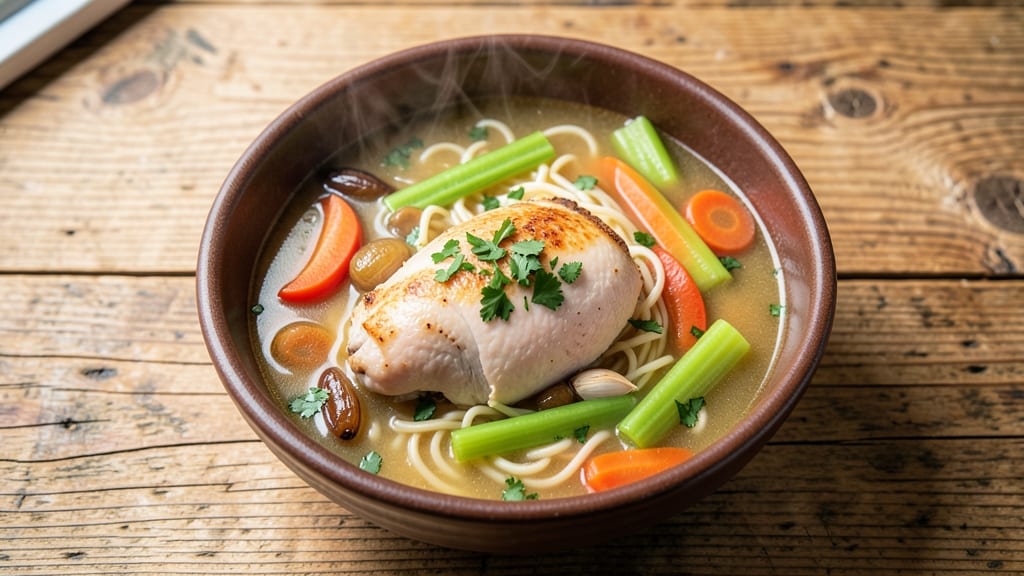
This best-rated homemade chicken noodle soup recipe delivers the comforting, grandma-approved flavor that turns a simple bowl into a healing experience. The secret lies in slow-simmered broth infused with aromatic vegetables and herbs, where tender chicken and egg noodles absorb every layer of flavor.
I've refined this recipe over years—balancing rich, savory broth with just the right amount of herbs and vegetables for that perfect first spoonful.
The foundation starts with a deeply flavorful broth, built by simmering chicken bones and vegetables until the flavors meld into something truly nourishing. Pressure cookers or Dutch ovens both work beautifully—this recipe adapts to your kitchen tools while keeping the traditional soul intact.
The result? A broth so rich it coats every noodle in velvety perfection, with chicken that falls apart at the touch of a spoon.
What sets this apart is the attention to texture—al dente egg noodles that hold their shape without turning mushy, paired with chicken so tender it melts in your mouth. The herbs, added at just the right moment, release their bright, fresh notes without overpowering the broth.
Every ingredient plays a role, creating a soup that's both restaurant-quality and deeply personal.
Serve it steaming in deep bowls, garnished with fresh parsley, and watch as it transforms any meal into a moment of comfort. Whether you're recovering from a cold or simply craving a taste of home, this is the chicken noodle soup that delivers on every promise.
Let's get started with the step-by-step guide that ensures perfect results every time.
Ingredients for best rated homemade chicken noodle soup
Six aromatic vegetables, tender chicken, and egg noodles—this is the grandma-approved lineup that turns a simple pot into healing magic.
| Ingredient | Amount | Notes |
|---|---|---|
| Chicken Bones 🍗 | 2 lb | Backbone or necks for rich broth |
| Yellow Onion 🧅 | 1 whole | Quartered, skin on for color |
| Carrots 🥕 | 4 medium | Peeled and cut into chunks |
| Celery Stalk 🧄 | 3 whole | Trimmed, cut into 2-inch pieces |
| Garlic Cloves 🧄 | 6 cloves | Smash lightly for deeper flavor |
| Fresh Parsley 🌿 | ½ cup | Chopped, for garnish and flavor |
| Fresh Thyme 🌿 | 2 sprigs | Or 1 tsp dried thyme |
| Fresh Bay Leaves 🌿 | 2 whole | Remove before serving |
| Egg Noodles 🍝 | ½ lb | Al dente texture preferred |
| Chicken Breast 🍗 | 1 ½ lb | Boneless, skinless, cut into pieces |
| Salt 🧂 | 2 tsp | Kosher or sea salt |
| Black Peppercorns 🌶️ | ½ tsp | Freshly cracked |
| Olive Oil 🫒 | 2 tbsp | For sautéing vegetables |
The chicken bones are non-negotiable here—they build that rich, velvety broth that makes this soup restaurant-quality. Ask your butcher for chicken backs or necks—they're often cheaper than breast meat and packed with flavor. If you can't find them, substitute with 2 lbs chicken thighs, but the broth won't be as deep. The carrots, celery, and onion form the 'holy trinity' of soup vegetables—Trader Joe's sells pre-cut mirepoix mixes if you're short on time. Fresh herbs are ideal, but dried thyme and bay leaves work in a pinch—just remember dried is more potent.
No fresh parsley? Fresh cilantro or basil works for garnish, though parsley's clean flavor is classic. Running low on bay leaves? Two dried thyme sprigs will carry you. The egg noodles should be fresh if possible—they hold their shape better than dried, but any egg noodles work. For the chicken, skinless thighs stay juicier than breasts during long simmering, but breasts are leaner. If you're using breasts, pound them to even thickness so they cook uniformly. The olive oil is just for sautéing—don't skimp, but don't go overboard either.
This soup tastes even better the next day as flavors meld. Store leftovers in the fridge for 4-5 days or freeze for up to 3 months. I always make a double batch—one for dinner, one to freeze for sick days. The broth freezes beautifully, so you can save it in a separate container and add fresh noodles and chicken when reheating. Garnish with extra parsley right before serving—it brightens up every bowl.
Why You'll Love This Recipe
- Soup in a Flash: I swear, the chicken bones and onion base build flavor while you chop carrots—no simmering for hours. Toss in celery and garlic, let it bubble 20 minutes, and boom: restaurant-quality broth without the fuss.
- Rich Umami Magic: That crispy chicken skin on the bones? Pure flavor gold. The garlic and celery mellow into a deep, savory base that makes store-bought broth taste like sad tea water. Honestly, my picky husband stops complaining mid-bowl.
- Leftovers That Beg for More: The broth thickens beautifully overnight, so lunch is just reheat-and-eat. I freeze portions too—perfect for sick days or lazy Mondays. (Yes, even on a Tuesday night.)
- Budget Stretch: Chicken bones are cheap, and veggies last forever. One batch feeds my family for days, and the leftovers turn into sandwiches or another pot of soup. My wallet and I both win.
Step-by-step instructions for grandma-approved chicken noodle soup
Here's how to craft the ultimate healing bowl—rich, aromatic, and packed with comfort.
Build the Flavor-Packed Broth
Heat a large Dutch oven over medium-high heat and add the 2 tablespoons olive oil. Add the quartered yellow onion, peeled and chunked carrots, and trimmed celery stalks. Sauté for 8-10 minutes until the vegetables soften and the onion becomes translucent. This step develops deep, sweet flavors that form the broth's foundation.
Add the 6 cloves garlic (lightly smashed), 2 sprigs fresh thyme, and 2 whole fresh bay leaves. Stir for 30 seconds until fragrant—you should smell that aromatic punch of garlic and herbs. Then add the 2 pounds chicken bones and pour in 12 cups cold water. Bring to a boil, then reduce heat to medium-low and simmer uncovered for 45 minutes, skimming any foam that rises to the surface. This skimming ensures a crystal-clear broth.
Add Chicken and Season
After 45 minutes, remove the bones with tongs and set aside. Strain the broth through a fine-mesh sieve into a clean pot, pressing gently on the vegetables to extract maximum flavor. Discard the solids. Return the broth to the pot and add the 1.5 pounds chicken breast, cut into bite-sized pieces. Season with 2 teaspoons salt and ½ teaspoon freshly cracked black peppercorns.
Bring the broth back to a gentle simmer over medium heat and cook for 15-20 minutes, until the chicken is cooked through and flakes easily with a fork. The broth should now be infused with rich, savory depth from the bones and vegetables. Taste and adjust seasoning if needed—this is your flavor checkpoint.
Cook the Noodles and Finish
While the chicken simmers, prepare the ½ pound egg noodles according to package instructions for al dente texture. Drain and set aside, reserving ½ cup pasta water. The starchy water helps create a silky soup consistency.
Return the cooked chicken to the broth and stir gently to combine. Add the cooked noodles and simmer for 3-4 minutes until heated through. If the soup seems too thick, add reserved pasta water 1 tablespoon at a time until it reaches your desired consistency. The soup should coat the back of a spoon but still be light enough to sip easily.
Garnish and Serve with Love
Remove the 2 whole fresh bay leaves and discard. Ladle the soup into bowls and garnish each serving with 2 tablespoons chopped fresh parsley. The bright green parsley adds a fresh contrast to the rich broth and complements the savory flavors. Serve immediately with crusty bread on the side for dipping.
This is the moment you'll hear "This tastes just like Grandma's!"—the secret lies in the slow-cooked bones and fresh herbs. Each spoonful delivers comfort in every bite, perfectly balanced between hearty and light. Enjoy your homemade masterpiece!
Pro Tips For Making Best Rated Homemade Chicken Noodle Soup
- Brown the Bones First: I learned this the hard way—skipping the browning step means flavorless broth. Sear the chicken bones in batches over medium-high heat until deep golden, about 8-10 minutes total. That caramelization unlocks richer depth than just simmering raw bones.
- Dice Veggies Uniformly: No one wants mushy carrots or celery stalks that stay crunchy forever. Cut all veggies into ¼-inch dice—same size for onions, carrots, and celery—so they cook evenly. (Yes, even if it takes 5 extra minutes.)
- Simmer, Don’t Boil: After adding broth and bones, keep the heat low enough that you see tiny bubbles at the edges, not violent rolling. Boiling clouds the broth and makes it taste flat. I used to rush this and wondered why my soup never tasted restaurant-quality.
- Strain Before Noodles: Sounds weird, but it works: strain the broth through a fine-mesh sieve after 2 hours of simmering. Remove the bones and veggies, then return the broth to the pot for the noodles. Clearer broth means the noodles absorb flavor better—no gummy texture here.
Creative variations of these flavors
Global Comfort Twists
Turn this classic into a Japanese-inspired ramen by swapping egg noodles for 12 ounces ramen noodles and adding 4 cups dashi broth (or substitute with extra chicken broth). Stir in 2 tablespoons miso paste and top with 2 soft-boiled eggs and ¼ cup sliced green onions.
The umami depth from miso elevates the soup to a whole new level. 🍜
Vegetarian Swap
For a meat-free version, replace the chicken with 1 lb extra-firm tofu (pressed and cubed) and use mushroom stems or vegetable broth instead of chicken bones. Add 1 cup chopped mushrooms to the broth for an earthy depth. The tofu absorbs flavors beautifully and keeps the soup hearty. 🌱
Spicy Kick
Add a Cajun-inspired heat by stirring in 1 tablespoon Cajun seasoning (like Tony Chachere's) during the final simmer. For extra depth, add ½ teaspoon smoked paprika and a pinch of cayenne. Serve with hot sauce on the side for those who love a fiery bowl. 🌶️
Creamy Luxury
Transform this into a creamy version by stirring in ½ cup coconut milk (full-fat for richness) at the end. For extra decadence, add ¼ cup grated Parmesan cheese and a splash of heavy cream. The texture becomes velvety smooth while keeping the classic flavors intact. 🥛
Herb-Forward Freshness
Brighten the soup with a herb-forward twist by adding 1 tablespoon fresh dill and 1 tablespoon fresh basil along with the parsley. The combination adds a fresh, bright note that cuts through the richness. For extra freshness, garnish with a few basil leaves before serving. 🌿
Slow-Cooker Shortcut
Make this a hands-off masterpiece by using a slow cooker. After sautéing the vegetables, add everything to the slow cooker with 10 cups water instead of 12. Cook on low for 8 hours or high for 4 hours, then proceed with the remaining steps.
The slow cooker deepens the flavors without extra effort. ⏳
Nutrition facts
Frequently asked questions
Can I use chicken thighs instead of breasts?
Chicken thighs stay juicier during long simmering and add even more flavor to the broth. Use 1.5 pounds boneless thighs instead of breasts, and reduce the cooking time to 12-15 minutes—they cook faster. The skin-on version adds extra richness, but remove it before adding to the soup.
How do I make this soup in a pressure cooker?
Sauté the vegetables as directed, then add bones, garlic, thyme, and bay leaves. Pour in 10 cups water (less liquid works in pressure cookers) and pressure cook for 30 minutes. Release pressure naturally, strain, and proceed with the chicken and noodles. The broth will be even more concentrated and flavorful!
Why does my broth look cloudy?
Cloudy broth usually means unskimmed fat or unstrained solids. Always skim foam during simmering and strain through a fine-mesh sieve. For extra clarity, chill the broth overnight—the fat solidifies on top and can be easily removed. A clear broth signals a clean, flavorful base for your soup.
Can I make this soup ahead of time?
This soup tastes even better the next day! Store it in the fridge for 4-5 days or freeze for up to 3 months. Reheat gently on the stove—never microwave, as it can make the noodles mushy. Add a splash of water or broth if it thickens too much when reheating.
What if I don't have chicken bones?
No problem! Use 2 lbs chicken thighs with skin or 1 lb chicken thighs + 1 lb chicken feet (for extra gelatin). For a vegetarian version, swap with mushroom stems or kombu seaweed to build umami depth. The broth will still be delicious, just with a slightly different profile.