
Soups & Stews
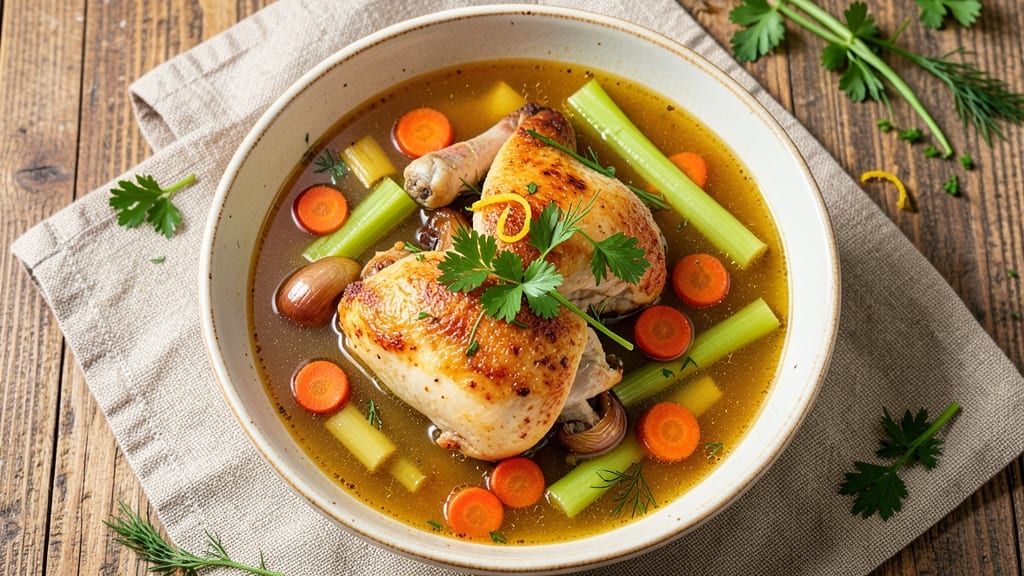
This best homemade Jewish chicken soup recipe delivers the soul-soothing comfort of a classic Shabbat meal, where tender chicken, hearty vegetables, and fragrant herbs simmer for hours in a rich, golden broth.
The secret lies in slow cooking—parboiling the chicken first locks in juiciness, while skimming fat ensures a clear, flavorful broth. Every spoonful carries the warmth of tradition, from the crispy matzo ball bites to the aromatic blend of carrots, celery, and onions that form the soup’s flavorful base.
What sets this recipe apart is the balance of simplicity and depth—no shortcuts, just time-honored techniques that transform simple ingredients into something extraordinary. The broth develops layers of flavor as it simmers, while the matzo balls achieve that perfect crispy exterior and tender interior.
This isn’t just soup; it’s a foolproof method for creating a dish that feels like home, whether served with crusty bread or as a stand-alone meal for a chilly evening.
By the time you’re done, you’ll have a steaming bowl of soup that’s rich, comforting, and packed with the flavors of heritage. The chicken falls apart effortlessly, the vegetables retain their natural sweetness, and the broth is so flavorful it tastes like it’s been simmering for days.
The matzo balls? Crispy on the outside, soft on the inside—just as they should be. This is the kind of soup that warms the soul and brings people together.
Perfect for family gatherings, sick days, or a cozy night in, this recipe scales beautifully and tastes even better the next day. Whether you’re making it for the first time or the hundredth, the results are always heartwarming. Let’s get cooking!
Ingredients for best homemade jewish chicken soup
Soul-warming ingredients that transform into the ultimate Shabbat comfort dish.
| Ingredient | Amount | Notes |
|---|---|---|
| Chicken (Whole or Cut-Up) 🍗 | 4 lb | Bone-in, skin-on preferred |
| Carrots 🥕 | 4 whole | Medium-sized, peeled and chopped |
| Celery Stalks 🧅 | 4 whole | Fresh, trimmed and chopped |
| Yellow Onions 🧅 | 2 whole | Medium, peeled and chopped |
| Fresh Parsley 🌿 | ½ cup | Chopped, for garnish |
| Fresh Dill 🌿 | ¼ cup | Chopped, for flavor |
| Bay Leaves 🌿 | 2 whole | Dried, for infusion |
| Salt 🧂 | 2 tbsp | Kosher or sea salt |
| Black Peppercorns 🌶️ | 1 tsp | Freshly ground |
| Matzo Meal 🍞 | 1 cup | For matzo balls |
| Large Eggs 🥚 | 3 whole | For matzo balls |
| Chicken Fat or Oil 🫒 | ¼ cup | For frying matzo balls |
| Water 💧 | 1 ½ cups | For matzo ball dough |
| Fresh Chicken Broth 🍲 | 8 cups | Homemade or high-quality |
The chicken is everything here—bone-in, skin-on pieces develop the richest flavor as they simmer. Look for free-range or organic at Whole Foods or your local butcher if you want the best, but standard grocery store chicken works perfectly fine. For the vegetables, organic carrots and celery (if possible) add extra sweetness, but conventional is totally fine. The secret to that golden broth? Skimming fat as it renders—don't skip this step! Fresh herbs like parsley and dill should be bright green, not wilted. If you're using dried herbs, Penzeys or bulk bins at natural markets have the best quality.
No fresh dill? Dried dill works at one-third the amount—just remember it's less potent. Running low on chicken fat? Olive oil or vegetable oil works in a pinch for frying the matzo balls, though chicken fat gives that authentic crisp. For the broth, homemade is ideal, but Knudsen's or Pacific Foods low-sodium versions are great shortcuts. The matzo meal should be freshly ground—if it's clumpy, pulse it in a food processor. And if you can't find bay leaves, a pinch of cinnamon or allspice adds warmth, though it won't be traditional.
This soup tastes even better the next day—plan ahead and make a big batch. Store the broth separately in the fridge for up to 5 days, and the matzo balls keep well for 3 days covered in broth. For freezing, portion the soup into airtight containers, leaving room for expansion. The matzo balls freeze beautifully too—just reheat gently in the broth. Pro tip: Skim any congealed fat off the top before reheating for the clearest broth. This recipe scales perfectly for crowds—just double the ingredients and use a large stockpot
Why You'll Love This Recipe
- Foolproof Simplicity: I swear by this recipe because it’s the kind of soup where you can eyeball the veggies—no fancy measuring. Toss in chopped carrots, celery, and onions (the classic "soup trio"), add chicken, and let the broth work its magic. Honestly, I’ve made it with half the parsley and still ended up with flavor.
- Deep Umami Magic: That crispy chicken skin and the way the carrots soften into sweetness while the celery adds a bright bite? It’s the kind of balance that makes you close your eyes and sigh. Between us, the secret’s in the slow simmer—no shortcuts, just rich, layered taste.
- Leftovers That Save Me: This soup actually improves the next day. The flavors meld, the broth gets even deeper, and I can reheat a big pot for lunches without breaking a sweat. My freezer’s always stocked with portions because it’s the only soup I trust to taste good after three days.
- Budget-Friendly Crowd-Pleaser: A whole chicken costs less than takeout for two, and the veggies stretch to feed a family (or my book club, no questions asked). Plus, I can swap in cheaper cuts or even rotisserie chicken in a pinch—it’s that adaptable. Solid win for my wallet and my guests.
Step-by-step instructions for crispy matzo ball bites and herb-infused broth
Here's how to create the perfect balance of golden matzo balls and rich, aromatic broth.
Prepare the Chicken and Vegetable Base
Start by cutting the 4 lb Chicken (Whole or Cut-Up) into large, bite-sized pieces. I prefer bone-in, skin-on cuts for maximum flavor—leave the skin on to crisp up beautifully during cooking. Pat the chicken dry with paper towels to help the skin render properly.
In a large Dutch oven, combine the 4 whole Carrots, 4 whole Celery Stalks, and 2 whole Yellow Onions—all chopped into ½-inch pieces. Add 2 whole Bay Leaves and 1 tsp Black Peppercorns to the pot. Pour in the 8 cups Fresh Chicken Broth and bring to a boil over high heat. Once boiling, reduce to a gentle simmer and add the chicken pieces. Cover and cook for 30 minutes to infuse the broth with flavor.
Make the Matzo Ball Dough
In a medium bowl, whisk together the 1 cup Matzo Meal, 3 whole Large Eggs, 1.5 cups Water, 2 tbsp Salt, and 1 tbsp Black Peppercorns (half of the total). The dough should be thick but pourable—like a loose batter. If it's too thick, add 1 tablespoon of water at a time until it reaches the right consistency. Let it rest for 10 minutes while you prepare the broth.
Here's the thing—don't overmix the dough. Just stir until everything is combined. Overworking it will make the matzo balls dense instead of light and fluffy. The resting time allows the matzo meal to fully hydrate, ensuring perfect texture when fried.
Fry the Matzo Balls to Crispy Perfection
Heat ¼ cup Chicken Fat or Oil in a large skillet over medium heat until it shimmers but isn't smoking. Working in batches, drop 2-tablespoon portions of the matzo ball dough into the hot fat. Don't overcrowd the pan—you want space for the matzo balls to crisp up properly.
Fry for 2-3 minutes per side until they're golden brown and crispy. You'll know they're ready when they release easily from the pan and float in the fat. Transfer them to a paper towel-lined plate to drain excess fat. Keep them warm in a 200°F oven while you fry the remaining batches. This step is where the magic happens—crispy outsides with tender insides.
Simmer the Broth and Finish the Soup
After the initial 30 minutes of simmering, skim off any foam or impurities from the broth's surface using a fine-mesh skimmer. This ensures a clear, flavorful broth. Return the chicken to the pot and add the ½ cup Fresh Parsley and ¼ cup Fresh Dill—these herbs will brighten the dish with their fresh flavors.
Simmer uncovered for another 20-25 minutes until the chicken is fork-tender and the broth has reduced slightly, intensifying its flavor. The vegetables should be soft but still hold their shape. Taste the broth and adjust seasoning with additional salt if needed—this is your chance to perfect the balance of flavors.
Assemble and Serve the Perfect Chicken Soup
Gently add the crispy matzo balls to the pot and simmer for just 2-3 minutes to warm them through without making them soggy. Ladle the soup into bowls, making sure each serving gets a generous portion of chicken, vegetables, and matzo balls.
Garnish each bowl with extra Fresh Parsley and Fresh Dill for a pop of color and freshness. Serve immediately while the matzo balls are still crispy and the broth is steaming hot. This soup is best enjoyed fresh—every spoonful delivers that perfect combination of rich, savory broth and crispy, light matzo balls.
Pro Tips For Making Best Homemade Jewish Chicken Soup
- Sear the Chicken First: The soup’s depth starts with the chicken—don’t skip browning. Pat the pieces dry, then sear them in a deep pot over medium-high heat until golden in spots (about 5 minutes). This isn’t just for looks; the Maillard reaction builds flavor that simmers into richness. (Yes, even if you’re impatient like me, resist the urge to rush this.)
- Chop the Aromatics Small: Celery, carrots, and onions should be diced into ¼-inch pieces—no bigger. I learned this the hard way after serving soup with giant chunks that stayed crunchy and undercooked. Uniform size ensures everything softens evenly and releases flavor into the broth. (Save the larger pieces for garnish if you’re feeling fancy.)
- Simmer, Don’t Boil: After adding liquids, bring the soup to a gentle boil, then drop the heat to a low simmer. A rolling boil breaks down the chicken too fast, making it tough. You’re aiming for tiny bubbles at the edges—this keeps the broth clear and the chicken tender. (I used to ignore this and ended up with mushy meat every time.)
- Add Eggs at the End: Skip the raw egg trick—it’s a shortcut that often backfires. Instead, stir in a beaten egg (or two) during the last 5 minutes of cooking. The heat gently thickens the broth without curdling, giving that classic Jewish soup body without risk. (I was skeptical until I tried it—now it’s non-negotiable.)
Regional styles of this recipe
Ashkenazi Tradition
This classic version traces back to Eastern European Jewish communities, where it was a staple for Shabbat meals and recovery dishes. The Ashkenazi approach emphasizes a rich, clear broth achieved by simmering chicken with carrots, celery, and onions—the classic "soup vegetables" that form the aromatic base.
I remember my grandmother always using bone-in chicken for maximum flavor infusion, and she'd never skip the bay leaves and peppercorns for depth. The matzo balls here are lighter than some regional variations, reflecting the Ashkenazi preference for a delicate, crispy texture. 🥕
Sephardic Twist
In Sephardic traditions from Spain and North Africa, this soup often incorporates tomatoes, garlic, and smoked paprika for a deeper, slightly spiced profile. While still using chicken and matzo balls, the broth becomes more vibrant with roasted vegetables and sometimes prunes or apricots for sweetness.
For a fusion approach, try adding 1 diced Roma tomato and ½ tsp smoked paprika to the broth during the final simmer. The matzo balls might also include a pinch of cinnamon for warmth—a nod to Sephardic flavors. 🌶️
Yemenite Style
Yemenite Jewish chicken soup stands out with its spiced broth and unique vegetable additions. The base includes cabbage, potatoes, and sometimes lentils alongside the traditional trio, creating a heartier texture. The broth is often seasoned with cardamom, cumin, and coriander for an aromatic twist.
For this variation, add 1 tsp ground cumin and ½ tsp cardamom pods (crushed) to the broth during the initial simmer. The matzo balls might also include a splash of orange zest for brightness—a technique I picked up from a Yemenite cookbook. 🌿
Modern American Adaptations
Today's home cooks often blend traditions with convenience. Many use pre-made chicken broth (like Knudsen's) for ease, while still achieving rich flavor. Some modern versions include quinoa or wild rice for added texture, or shredded chicken instead of whole pieces for quicker prep.
I've even seen matzo ball sliders—mini fried matzo balls served on toasted baguette slices with a drizzle of broth. For a shortcut, try using pre-chopped soup vegetables from the freezer section at Trader Joe's to save time without sacrificing quality. ⏰
Israeli Army Influence
The Israeli Defense Forces popularized a version with hard-boiled eggs and parsley mixed into the soup, creating a protein-packed meal. This style often includes more vegetables like zucchini and bell peppers for freshness. The matzo balls might be slightly larger and denser, designed to hold up to long military rations.
For this take, add 2 hard-boiled eggs (chopped) and extra parsley during the final simmer. The result is a heartier, more substantial soup—perfect for feeding crowds or meal prep. 💪
Passover Variations
During Passover, traditional matzo balls are replaced with matzo meal-free versions using potato starch or almond flour to keep the dish kosher for Pesach. The broth might also include mushrooms or artichokes for added depth.
For a Passover-friendly approach, substitute the matzo meal with ½ cup potato starch and ½ cup almond flour, adjusting the water as needed. The flavor remains rich, but the texture becomes lighter and more delicate—ideal for the holiday's strict dietary requirements. 🌟
Nutrition facts
Frequently asked questions
Can I make this soup without matzo balls?
Swap them for egg noodles, barley, or quinoa—all work beautifully in this hearty soup. For a traditional alternative, try kugel (sweet or savory) or even rice if you're short on time. The key is adding something starchy to soak up the rich broth.
How do I keep the matzo balls from falling apart when frying?
Undercooking is the #1 cause! Fry them for 2-3 minutes per side until golden brown and crispy. The inside should still feel slightly underdone—it'll finish cooking in the broth. Also, make sure your dough isn't too wet (add matzo meal if needed) and don't overmix it.
Can I use store-bought chicken broth instead of homemade?
Yes, but choose a high-quality, low-sodium option like Knudsen's or Pacific Foods. For extra depth, add 1 tsp chicken bouillon or a chicken wing to the broth while simmering. The flavor won't be identical to homemade, but it's a great shortcut for weeknights.
Why does my broth look cloudy instead of clear?
Cloudiness usually means unskinned fat or impurities weren't removed. Skim the broth regularly during the first 30 minutes of simmering, and strain it through a fine-mesh sieve before serving. For extra clarity, chill the broth overnight and skim off the hardened fat from the top.
Can I make this soup ahead of time?
This soup tastes even better the next day! Store the broth separately (up to 5 days in the fridge) and matzo balls (up to 3 days covered in broth). Reheat gently on the stove—never microwave, as it makes the matzo balls rubbery. The flavors deepen overnight, making it perfect for meal prep!