
Soups & Stews
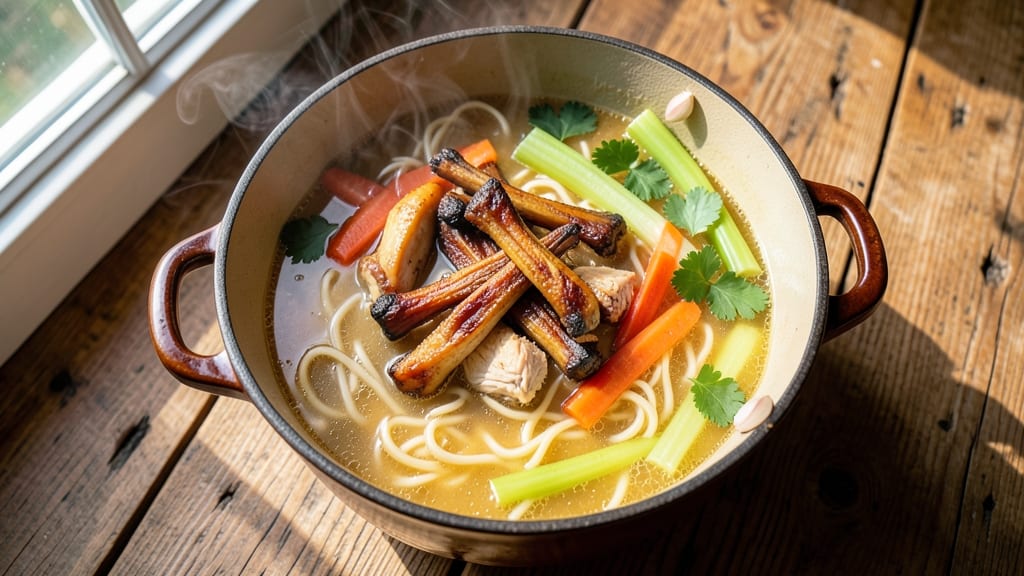
This homemade chicken noodle soup recipe is the best homemade chicken noodle soup recipe ever—delivering the kind of soul-soothing warmth that turns a simple bowl into a comfort food masterpiece.
The secret lies in roasting chicken bones for deep, rich flavor and slow-simmering the broth until it's velvety and packed with aromatic vegetables. I've perfected this technique over years of making it for sick friends and family—every spoonful tastes like grandma's kitchen, but with restaurant-quality depth.
What sets this apart from store-bought versions is the foolproof method that transforms tough chicken into tender pieces while building a broth so flavorful it needs no seasoning boost. The aromatic base of onions, carrots, and celery (the "holy trinity") forms the foundation, while herbs and spices add complexity.
No shortcuts here—just time-tested techniques that guarantee a soup so good, you'll make it even when you're not sick.
By the time you're done, you'll have a steaming bowl of golden broth swimming with tender chicken, al dente noodles, and a medley of vegetables. The aroma alone will have everyone gathering around the table, and the first bite delivers that perfect balance of savory, herbal, and comforting richness.
This is the kind of soup that becomes a family tradition.
The best part? It's easier than it sounds—one pot, minimal prep, and a process that lets you walk away while the magic happens. Leftovers taste even better the next day, making it perfect for meal prep or feeding a crowd.
Let's get started on this timeless classic that always hits the mark.
Ingredients for best homemade chicken noodle soup recipe ever
Six aromatic vegetables, tender chicken, and golden noodles—this is comfort in a bowl.
| Ingredient | Amount | Notes |
|---|---|---|
| Chicken Bones 🍗 | 2 lb | Backbone and drumsticks preferred |
| Yellow Onion 🧅 | 2 whole | Chopped into 1-inch pieces |
| Carrots 🥕 | 4 whole | Peeled, cut into 2-inch chunks |
| Celery Stalks 🧆 | 4 whole | Trimmed, cut into 1-inch pieces |
| Garlic Cloves 🧄 | 6 cloves | Smashed, not minced |
| Egg Noodles 🍜 | 12 oz | Medium or wide egg noodles |
| Chicken Breast 🍗 | 1 ½ lb | Boneless, skinless, cut into chunks |
| Fresh Parsley 🌿 | ¼ cup | Chopped, for garnish |
| Fresh Thyme 🌿 | 2 sprigs | Or 1 tsp dried thyme |
| Fresh Bay Leaves 🍃 | 2 whole | Removed before serving |
| Dried Bay Leaf 🍃 | 1 whole | For extra depth |
| Salt 🧂 | 2 tsp | Kosher or sea salt |
| Black Peppercorns 🌶️ | 1 tsp | Crushed, not ground |
| Olive Oil 🫒 | ½ cup | For roasting chicken bones |
The chicken bones are where the magic starts. Look for a mix of backbone and drumsticks—they yield the most flavorful broth. Costco or local butchers often have them prepped for soup, but if you're buying a whole chicken, ask for the carcass after roasting. Roast the bones first for 30 minutes at 425°F to deepen the flavor. The onions, carrots, and celery—your holy trinity—should be fresh, not wilted. Trader Joe's has great pre-cut veggie mixes for soup, but chopping your own gives you control over the texture. Parsley and thyme add brightness, but don’t stress if you only have dried—just use a third the amount.
No fresh bay leaves? Dried works too, but fresh infuses the broth with a more complex aroma. Short on chicken breast? Substitute with thighs—they stay juicier and add richness. The egg noodles are non-negotiable for texture, but whole wheat or chickpea noodles work if you're watching carbs. Olive oil for roasting? Any neutral oil works, but extra-virgin adds a subtle fruity note. If you’re making this for a crowd, double the broth ingredients—it reheats beautifully. The key is patience: let the broth simmer for at least 2 hours to develop that velvety depth.
Broth keeps for 5 days in the fridge or 6 months frozen—freeze in portions for quick meals. Noodles? Cook them fresh when serving, but the broth and chicken can be prepped ahead. Portion into jars with noodles on top for easy reheating. Leftovers taste even better the next day as flavors meld. Store the parsley separately and add it fresh when serving to keep that vibrant color. This soup is the ultimate make-ahead dish—perfect for when you need warmth without the effort.
Why You'll Love This Recipe
- No Chopping Chaos: I swear by the "mirepoix hack" here—just rough-chop the onion, carrots, and celery into ½-inch pieces. No julienne skills required, and the flavors still melt into that rich, golden broth like magic.
- Broth That Stops Traffic: That pile of chicken bones? Simmered with garlic and onions until the kitchen smells like a Parisian bistro. The result? A broth so deep and savory, my picky-eating teen actually licks the bowl.
- Leftovers That Lie: Between us, this soup tastes better the next day. Honestly, I make a double batch on Sundays just to have it for lazy Mondays when I’d rather binge Netflix than cook.
- Pantry-to-Pot in 20: Here’s what sold me—dump the bones, veggies, and spices into one pot, cover with water, and walk away. By the time I’m done grading papers (or scrolling), the soup’s ready. Minimal effort, maximum reward.
Step-by-step instructions for grandma-style chicken noodle soup
Here's how to make the most comforting, flavor-packed chicken noodle soup you'll ever taste.
Roast the Chicken Bones for Deep Flavor
Preheat your oven to 425°F and position a rack in the middle position. Pat the 2 lb chicken bones completely dry with paper towels—this helps them crisp up and develop that rich, caramelized flavor. Arrange them on a baking sheet in a single layer, drizzle with the ½ cup olive oil, and rub it all over the bones.
Roast for 25-30 minutes until they're deeply golden brown and smell incredible. You'll see the fat rendering out—that's exactly what we want. This roasting step creates the foundation for your soup's rich, savory depth. Don't skip it; it makes all the difference in that restaurant-quality taste.
Build the Aromatic Vegetable Base
While the bones roast, heat a large Dutch oven over medium heat. Add the ½ cup olive oil that rendered from the bones (save any extra for later) and let it warm through. Add the 2 whole chopped yellow onion, 4 whole peeled carrots cut into 2-inch chunks, and 4 whole celery stalks cut into 1-inch pieces.
Cook for 8-10 minutes, stirring occasionally, until the vegetables begin to soften and the onion becomes translucent. This is where all those wonderful base flavors develop. Add the 6 smashed garlic cloves, 2 sprigs fresh thyme, 2 whole fresh bay leaves, and 1 whole dried bay leaf, stirring for another 1 minute until fragrant. These aromatics will infuse the entire soup with their delicious essence.
Simmer the Broth with Chicken Bones
Return the roasted chicken bones to the Dutch oven along with any accumulated juices. Add 8 cups cold water (enough to cover everything by about 2 inches) and bring to a boil. Once boiling, reduce heat to low and skim off any foam that rises to the surface with a ladle—this ensures a clear, clean broth.
Simmer uncovered for 1.5 hours, maintaining a gentle simmer. You'll notice the broth gradually deepens in color and flavor. After 1 hour, remove the bones and strain the broth through a fine-mesh sieve into a clean pot, discarding the solids. Return the broth to the Dutch oven and add the 2 tsp salt and 1 tsp crushed black peppercorns. This simmering process extracts all the collagen from the bones, creating that rich, velvety texture that makes this soup so special.
Cook the Chicken and Noodles
While the broth simmers, cut the 1.5 lb chicken breast into 1-inch chunks. Add these to the broth and simmer for 10-12 minutes until the chicken is cooked through and flakes easily with a fork. Remove the chicken with a slotted spoon and set aside.
Bring the broth back to a gentle simmer and add the 12 oz egg noodles. Cook for 8-10 minutes or until the noodles are al dente—they'll finish cooking in the warm soup. The noodles should have a slight bite to them when you taste them. Stir occasionally to prevent sticking, but don't over-stir or you'll break the noodles.
Finish and Serve with Fresh Herbs
Return the cooked chicken to the soup and heat everything through for 2-3 minutes. Remove the 2 fresh bay leaves before serving. Taste and adjust the seasoning if needed—this is your chance to perfect the balance of flavors. The soup should be rich and savory but not overly salty.
Ladle the soup into bowls and garnish each serving with 1 tablespoon chopped fresh parsley. That bright green color and fresh flavor make the soup pop. Serve immediately with crusty bread on the side—this is the kind of soup that warms you from the inside out and tastes even better the next day when the flavors have melded together. Enjoy your homemade masterpiece!
Pro Tips For Making Best Homemade Chicken Noodle Soup Recipe Ever
- Brown the Bones First: I learned this the hard way—skipping the initial sear means your broth will taste like watered-down chicken juice. Pat the bones dry, then hit them with high heat in your pot until they’re deep golden brown (about 10-15 minutes). That crust locks in flavor and turns your soup from good to unexpectedly rich.
- Dice the Veggies Small: Big onion chunks and thick celery stalks mean you’ll be chewing on them long after the broth’s done. Aim for ¼-inch pieces—small enough to disappear but big enough to hold their shape. And yes, even if you’re impatient like me, this makes a real difference.
- Don’t Rush the Simmer: After adding liquid, bring it to a boil once, then drop to a gentle simmer. A rolling boil breaks down collagen too fast, and you’ll end up with a thin, flavorless mess. Low and slow (2-3 hours) is where the magic happens—trust the process, even if you’re staring at the clock.
- Save the Starch Water: When you rinse your noodles before adding them, save that starchy water. Stir a splash into the soup at the end—it thickens the broth naturally without needing flour or cornstarch. (Your future self will thank you.)
Storing and reheating this best homemade chicken noodle soup recipe ever
Broth Storage Secrets
The broth is the heart of this soup, and it stores beautifully! Transfer cooled broth to airtight glass containers (I love Ball mason jars) and refrigerate for up to 5 days.
For longer storage, freeze in 1-cup portions—this makes perfect single-serving meals later. Label with the date and let it thaw overnight in the fridge before reheating. 🥫
Reheating Leftovers
For the best texture, reheat soup gently on the stovetop over medium-low heat for 8-10 minutes, stirring occasionally. Add 2-3 tablespoons of water if it looks too thick.
Microwave reheating works in a pinch: cover with a damp paper towel and heat in 1-minute intervals on 50% power, stirring between each. Always bring to a rolling boil for 1 minute to ensure safety. 🔥
Noodle Prep Ahead
Cook noodles fresh when serving for perfect texture, but you can prep them ahead too! Boil noodles 1 minute less than package instructions, drain, and rinse with cold water. Store in an airtight container in the fridge for up to 3 days.
When ready to serve, reheat in the broth for 2-3 minutes—they'll finish cooking perfectly. 🍜
Freezer-Friendly Tips
Assemble complete soup in freezer-safe containers, leaving 1-inch headspace for expansion. Freeze for up to 3 months. Thaw overnight in the fridge, then reheat gently.
For quick meals, freeze broth and chicken separately—just add fresh noodles when reheating. I like using quart-sized freezer bags for easy portion control. ❄️
Garnish Freshness
Store fresh parsley separately in a small container with a damp paper towel in the fridge for up to 5 days. Add it fresh when serving to keep that vibrant pop of color and bright flavor.
Dried herbs can be added directly to the reheated soup, but fresh always tastes best. A sprinkle of black pepper right before serving also wakes up the flavors. 🌿
Make-Ahead Magic
This soup tastes even better the next day as flavors meld! Prep everything except noodles ahead, then cook noodles fresh when serving. For meal prep, assemble complete soup in jars with noodles on top—they'll soften slightly but stay al dente when reheated.
Store in the fridge for up to 4 days or freeze for 3 months. Perfect for busy weeks! 📅
Nutrition facts
Frequently asked questions
Why roast the chicken bones instead of boiling them raw?
Roasting the bones first creates a deeper, richer flavor through caramelization and fat rendering. This step develops a complex, savory base that transforms your broth from ordinary to extraordinary. The golden-brown crust adds layers of umami that simmering alone can't achieve—it's what makes this soup taste like a restaurant-quality masterpiece!
Can I use chicken thighs instead of breast for the soup?
Chicken thighs are actually ideal—they stay juicier and add wonderful richness to the broth. Use 1.5 lb boneless thighs instead of breast, and you'll get even more flavorful meat that falls apart beautifully. The skin adds extra depth, so leave it on if possible and remove it before serving.
What if I don't have fresh bay leaves or thyme?
No problem! Use 1 teaspoon dried thyme (one-third the amount of fresh) and 1 dried bay leaf. For extra depth, add a pinch of allspice or savory—these herbs complement the classic flavors beautifully. The soup will still taste amazing, just with slightly different herbal notes.
How do I fix soup that's too salty?
If your soup turns out too salty, don't panic! The easiest fix is to add 1-2 raw egg whites (whisked) or ½ cup milk to dilute the saltiness while cooking. For a more dramatic change, strain the soup through a fine-mesh sieve to remove some liquid, then add fresh broth or water to restore the right consistency. Taste as you go—this works surprisingly well!
Can I make this soup vegetarian?
Yes, but with some adjustments! Replace the chicken with mushrooms (like shiitake or cremini) and use vegetable broth. Add 1 cup cooked lentils or chickpeas for protein, and consider a splash of soy sauce or miso paste for umami depth. The noodles can stay the same, but you might want to add spinach or kale at the end for freshness.