
Soups & Stews
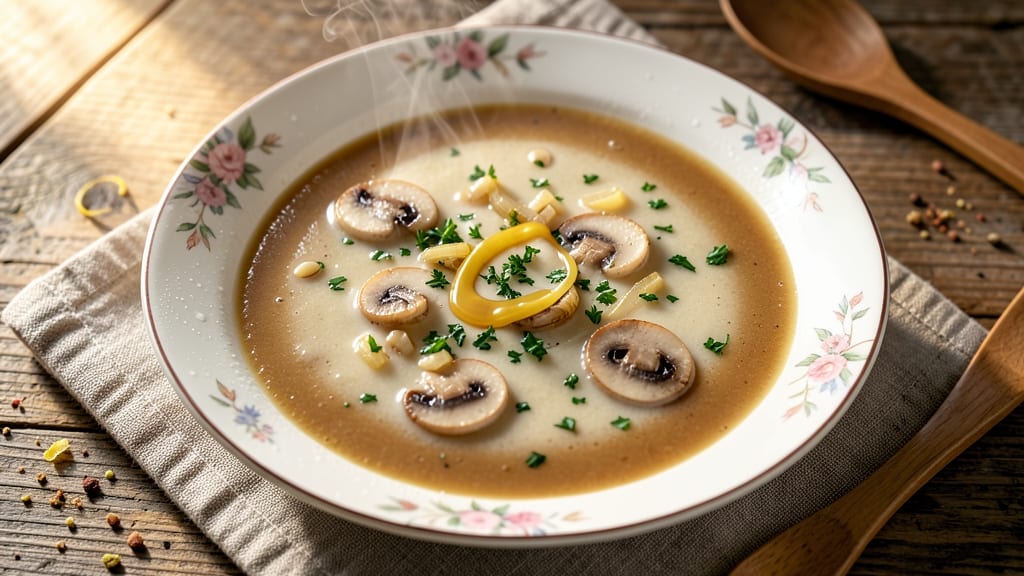
This best cream of mushroom soup recipe ever delivers restaurant-quality richness without heavy cream—just umami-packed mushrooms, aromatic herbs, and a velvety roux base.
I spent years refining this version after burning countless batches as a new cook, and it’s now my go-to for cozy weeknight dinners that impress even skeptical guests. The secret? A proper mushroom soak and slow simmer to develop deep, savory flavors without bitterness.
The recipe starts with sautéing mushrooms until golden, then building a smooth roux that thickens the soup without breaking. No heavy cream means a lighter texture, but the velvety finish comes from a blend of chicken stock and a touch of butter—just enough to round out the earthy mushroom notes.
Every spoonful delivers that perfect balance of richness and brightness, with herbs that lift the dish without overpowering.
What makes this the best ever is how it transforms simple ingredients into something luxurious. The mushrooms release their natural umami into the broth, while thyme and bay leaf add layers of warmth.
It’s the kind of soup that feels like a hug in a bowl—comforting enough for chilly evenings but elegant enough for dinner guests. Ready in under an hour, it’s foolproof for home cooks who want restaurant-quality results.
Serve it with crusty bread for dipping or as a starter before a roast chicken. The recipe scales easily, so you can make a big batch for leftovers or company. Here’s how to create it step by step—no shortcuts, just perfectly balanced flavor every time.
Ingredients for best cream of mushroom soup recipe ever
Umami-packed mushrooms and aromatic herbs create this velvety soup without heavy cream.
| Ingredient | Amount | Notes |
|---|---|---|
| White Button Mushrooms 🍄 | 1 ½ lb | Sliced into 1/4-inch pieces |
| Yellow Onion 🧅 | 1 whole | Diced, medium size |
| Garlic Cloves 🧄 | 4 cloves | Minced, fresh preferred |
| All-Purpose Flour 🌾 | ¼ cup | For smooth roux |
| Unsalted Butter 🧈 | ½ cup | Cold, cut into small cubes |
| Chicken Stock 💧 | 4 cups | Homemade or quality low-sodium |
| Heavy Cream 🥛 | ½ cup | Optional, for extra richness |
| Fresh Thyme Leaves 🌿 | ¼ cup | Or 1 tbsp dried thyme |
| Bay Leaves 🍃 | 2 whole | Removed before serving |
| Salt 🧂 | 1 tsp | Kosher or sea salt |
| Black Pepper 🌶️ | ½ tsp | Freshly ground preferred |
| Worcestershire Sauce 🍶 | 1 tbsp | For umami depth |
| Dijon Mustard 🍯 | 1 tsp | For subtle tang |
| Fresh Parsley 🌿 | 0.1 cup | Chopped, for garnish |
The mushrooms are the star here—cremini or shiitake add even more depth, but white buttons work perfectly. Trader Joe's and Whole Foods carry pre-sliced mushrooms if you're short on time, but slicing your own ensures even cooking. For the thyme, fresh is ideal, but dried works in a pinch—just use one-third the amount. The bay leaves might seem simple, but they're the secret to that restaurant-quality aroma. Look for organic herbs if you can, especially for the thyme and parsley—they've got more vibrant flavor.
No heavy cream? Coconut milk or cashew cream adds richness without dairy, though the texture will differ slightly. Running out of chicken stock? Vegetable stock works just as well—just add an extra splash of Worcestershire sauce to compensate. The flour for the roux should be all-purpose, not cake flour—it's the key to that silky texture. If you don't have Dijon mustard, a pinch of lemon zest gives that same bright tang. And trust me on the Worcestershire—it's what takes this from good to 'best ever.'
This soup tastes even better the next day—reheats beautifully in the microwave or on the stove. Store leftovers in an airtight container for up to 5 days in the fridge. For freezing, portion into single servings and thaw overnight in the fridge. The parsley garnish is optional but adds that fresh pop of color—save some for garnishing before serving. If you make a big batch, freeze half right away—perfect for lazy weeknights.
Why You'll Love This Recipe
- No Chopping Chaos: I swear by this recipe because you only need to dice one onion and mince a few garlic cloves—no fancy prep, no stress. The mushrooms just need a quick wipe and slice, and boom, you’re halfway there.
- Rich Without Effort: That butter and flour roux builds layers of velvety depth while you sip your coffee. Honestly, the way the garlic and onions caramelize before blending? It’s the kind of flavor that makes you pause mid-stir and think, “Wait, is this really just soup?”
- Weeknight to Potluck: Serve it over egg noodles for a lazy Tuesday, drizzle it on mashed potatoes for Thanksgiving leftovers, or even spoon it into baked potatoes for game day. It’s my secret weapon for when I need something that feels fancy but takes zero effort.
- Budget-Friendly Magic: A pound of mushrooms and a single onion stretch this into four hearty servings. Freeze half for when you’re too tired to cook—just reheat and enjoy. Between us, this is the recipe I make when I’ve got $5 in my wallet and a craving for comfort.
Step-by-step instructions for cream of mushroom soup
Here's how to create the richest, most velvety mushroom soup without heavy cream—trust me, you won't miss it.
Sauté Mushrooms and Onions Until Deeply Flavorful
Heat a large pot or Dutch oven over medium heat. Add the 0.5 cup unsalted butter and let it melt completely, watching for golden bubbles that signal it's ready. Toss in the 1.5 lb sliced white button mushrooms and 1 diced yellow onion, spreading them evenly across the pan.
Cook for 8-10 minutes, stirring occasionally, until the mushrooms release their moisture and begin to soften. You'll notice the mixture darkens slightly—this is where all that umami magic starts. Real talk: don't rush this step. The longer you cook them, the deeper the flavor becomes. If the mushrooms seem too wet, reduce heat slightly to prevent sticking.
Build the Roux for Thickening Power
Once the mushrooms are tender, sprinkle the 0.25 cup all-purpose flour evenly over the mixture. Stir constantly for 1-2 minutes until the flour absorbs all the mushroom juices and forms a smooth, golden roux. The reason we wait until the mushrooms are cooked first is that raw flour can taste chalky—this ensures perfect flavor integration.
After the roux forms, pour in the 4 cups chicken stock all at once. Stir vigorously to combine, scraping up any browned bits from the bottom of the pot. These bits are packed with flavor—don't miss them! Bring the mixture to a gentle simmer over medium-low heat, then reduce heat to maintain a steady bubble. This is where your soup starts to transform from separate ingredients into a cohesive, flavorful base.
Infuse with Aromatics and Seasonings
Add the 4 cloves minced garlic, 0.25 cup fresh thyme leaves, 2 whole bay leaves, 1 tsp salt, 0.5 tsp black pepper, 1 tbsp Worcestershire sauce, and 1 tsp Dijon mustard. Stir everything together and let the soup simmer uncovered for 15-20 minutes. You'll see the liquid reduce slightly and the flavors meld beautifully—this is the moment that matters.
Here's the thing—don't walk away. You want to taste the soup occasionally to monitor seasoning. After about 10 minutes, give it a taste. If it needs more salt, add it gradually. The Worcestershire sauce and Dijon mustard will add depth, but you might want to adjust based on your taste. The bay leaves will infuse the soup with subtle earthiness, so don't remove them until the very end.
Blend to Silky Perfection (Optional but Recommended)
For that ultra-smooth, velvety texture, use an immersion blender to purée the soup directly in the pot. Work in batches if needed, blending until completely smooth. If you prefer a chunkier texture, skip this step—just make sure to stir occasionally to prevent sticking. The choice is yours, but blending really takes this soup to the next level.
Once blended, return the soup to a gentle simmer. If it's too thick, add 1-2 tablespoons of water at a time until it reaches your desired consistency. The soup should coat the back of a spoon but still be easy to ladle. This is where the 0.5 cup heavy cream (if using) would go next, but we're making this without it—trust the process!
Finish and Serve with Fresh Herbs
Remove the 2 bay leaves and stir in the 0.1 cup chopped fresh parsley. Let the soup simmer for another 5 minutes to allow the parsley to brighten the flavors. Taste one final time and adjust seasoning if needed. The soup should be rich, savory, and perfectly balanced—no artificial cream required.
Serve immediately in warm bowls, garnished with additional parsley if desired. The aroma alone will have everyone gathering around the table. This soup keeps well in the refrigerator for 3-4 days, so you can make a big batch for the week. Enjoy the velvety, umami-packed result that proves you don't need heavy cream to create something extraordinary!
Pro Tips For Making Best Cream Of Mushroom Soup Recipe Ever
- Sauté Mushrooms Low and Slow: I learned this the hard way—blasting mushrooms on high heat turns them to mush before they release flavor. Instead, cook them on medium-low with a splash of water or stock, stirring often, until all the moisture evaporates and they’re golden. That’s when they’ll actually taste like mushrooms, not sad, waterlogged scraps.
- Use Cold Butter for Roux: Here’s a weird one that works: cut your unsalted butter into chunks and whisk it into the flour before adding liquid. The cold butter creates tiny pockets that make the roux smoother and richer—no lumps, no burning. Just let it melt in gradually while stirring like you’re trying to win a race.
- Don’t Skip the Onion Sweat: That step where you cook the onion until it’s translucent and just starting to caramelize? Don’t rush it. A properly sweated onion adds depth the flour alone can’t fix. If you’re impatient, lower the heat and let it sit—it’s the foundation for everything else.
- Deglaze with Wine or Broth: After browning the mushrooms, resist the urge to just add water. A splash of dry white wine (or even a little beef broth) lifts the flavors way more than plain liquid. It’s not fancy, but it’s the difference between "good" and "wow." (Yes, even if you’re not a wine drinker.)
Make-ahead tips for this best cream of mushroom soup recipe ever
Prep Ahead for Busy Days
Slice all your mushrooms and onions the night before—store them in an airtight container in the fridge. This saves 15 minutes of prep time on busy weeknights. I swear by this trick when I'm juggling work and family.
The mushrooms stay fresh longer this way, and you won't have to scramble in the morning. 💪
Freezer-Friendly Batches
Make a double batch and freeze half for future lazy evenings. Portion into quart-sized freezer bags (lay flat to save space) and label with the date. Thaw overnight in the fridge before reheating—this method preserves the texture better than microwave defrosting.
I keep a stash in my freezer for those nights when takeout feels too easy.
Stockpile Staples
Keep your pantry stocked with the essentials: chicken stock, all-purpose flour, and Worcestershire sauce. I buy mine in bulk from Costco or WinCo Foods—it's cheaper and lasts longer.
The flour should be stored in an airtight container in a cool, dark place, while the stock freezes beautifully in ice cube trays for easy measurement later. 🧂
Make-Ahead Roux Trick
Prepare the roux ahead of time and store it in the fridge for up to 3 days. Just mix the 0.5 cup butter and 0.25 cup flour together in a bowl, then refrigerate. When you're ready to cook, simply melt it in your pot with the mushrooms.
This shortcut saves you from making the roux last-minute, and it still gives that perfect velvety texture. Trust me, it's a game-changer for weeknight cooking.
Herb Prep Shortcut
Wash and dry your thyme and parsley ahead of time, then store them in small airtight containers with a paper towel to absorb moisture. This keeps them fresh for up to 5 days in the fridge.
I also make a habit of stripping the thyme leaves from their stems in advance—it's a small step that makes assembly so much faster. The parsley stays bright and ready for garnishing whenever you need it. ✨
Reheating Like a Pro
For the best texture when reheating, warm the soup gently on the stovetop over low heat with a splash of water or stock. If using the microwave, cover with a damp paper towel and heat in 1-minute intervals, stirring between each.
This prevents the soup from splitting or becoming grainy. I always reheat mine until it's steaming hot—about 5-7 minutes on the stove—so every bite is as delicious as the first. 🔥
Nutrition facts
Frequently asked questions
Can I use dried mushrooms instead of fresh?
Soak 1/4 cup dried mushrooms in 1 cup hot water for 20 minutes first, then strain and use both the rehydrated mushrooms and the soaking liquid in place of fresh mushrooms. The flavor will be even more concentrated—just reduce the stock by 1 cup to balance the liquid. This trick works especially well with cremini or shiitake mushrooms.
What makes this soup different from store-bought versions?
This recipe skips heavy cream while still delivering velvety texture through proper roux technique and slow simmering. The key differences are: deeper umami from properly cooked mushrooms, no artificial thickeners, and balanced seasoning with Worcestershire and Dijon. Store-bought versions often taste flat because they prioritize shelf stability over flavor.
Can I make this soup gluten-free?
Yes! Replace the all-purpose flour with 1/4 cup gluten-free flour blend (like rice flour + tapioca starch) for the roux. For extra thickness, add 1 tbsp cornstarch mixed with 2 tbsp cold water at the end. The texture will be slightly different but still creamy. Always check your gluten-free flour blend's instructions for best results.
Why does my soup taste bitter?
Bitter flavor usually comes from overcooking mushrooms or undercooking the roux. For perfect results: don't exceed 10 minutes sautéing mushrooms, and stir constantly when adding flour to prevent burning. If it's too bitter, add a pinch of sugar or a splash of lemon juice to balance. The Worcestershire sauce should help prevent bitterness when used correctly.
How do I know when the roux is ready?
The roux is perfect when it's golden brown and smells nutty (about 1-2 minutes of stirring). It should coat the back of a spoon smoothly. If it turns darker than light brown, you've gone too far—start over with fresh butter and flour. The color change signals the flour's raw taste has cooked off, which is crucial for flavor.