
Soups & Stews
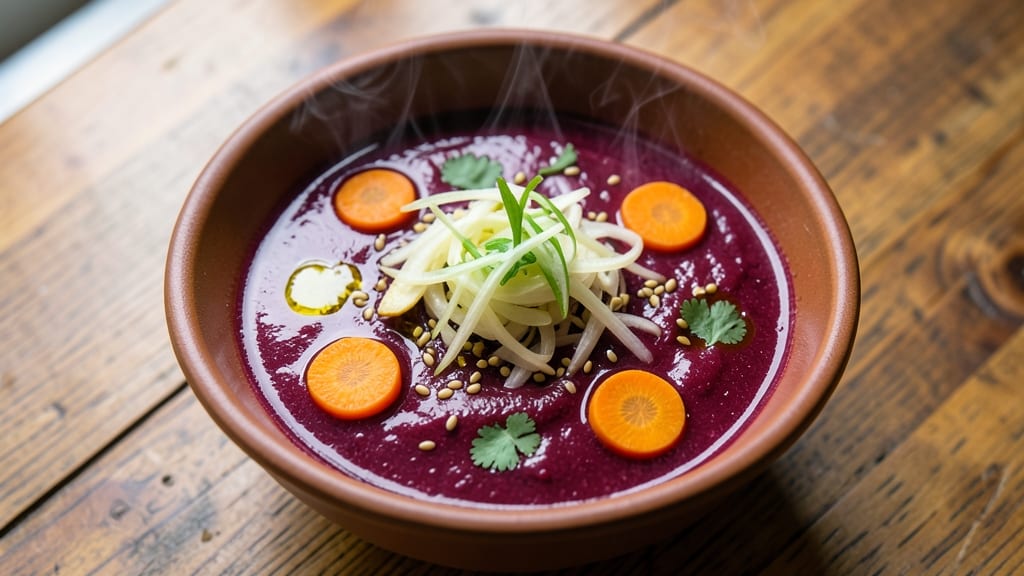
This beetroot carrot Indian soup transforms humble vegetables into a vibrant, spice-infused bowl of warmth that feels like a hug in every spoonful. The secret lies in tempering whole spices—cumin, turmeric, and mustard seeds—that bloom into aromatic layers while caramelizing the natural sweetness of the vegetables.
I developed this recipe after discovering how Ayurvedic principles could elevate simple ingredients into something deeply nourishing and satisfying.
The foundation of this soup is a slow-cooked base where beets and carrots soften into a velvety texture, absorbing the earthy warmth of cumin and the golden brightness of turmeric.
Unlike creamy soups that rely on dairy, this version gets its richness from coconut milk and a touch of ginger, creating a balance that’s both comforting and light. The key technique is tempering the spices in hot oil before adding them to the broth—this unlocks their full flavor potential.
By the time you finish blending, you’ll have a deeply colored, fragrant soup with a smooth yet textured consistency—thanks to the natural sweetness of the vegetables and the subtle heat of black pepper.
Garnished with fresh cilantro and a squeeze of lemon, it becomes a complete meal that’s equally at home on a chilly afternoon or as a light lunch. This is the kind of soup that tastes even better the next day, as the flavors meld and deepen.
Perfect for meal prepping or serving at gatherings, this recipe scales easily while maintaining its authentic Indian soul. The spices can be adjusted to suit your heat preference, and you can add a dollop of yogurt for extra creaminess if desired. Let’s create something truly nourishing together.
Ingredients for beetroot carrot soup indian
Humble roots and aromatic spices create this deeply comforting Indian-inspired soup.
| Ingredient | Amount | Notes |
|---|---|---|
| Medium Beets 🍠 | 4 whole | Peeled, cubed, about 1 lb |
| Carrots 🥕 | 4 whole | Peeled, chopped, about 1 lb |
| Yellow Onion 🧅 | 1 whole | Chopped, medium size |
| Fresh Ginger Root 🌿 | 1 inch | Peeled, sliced thinly |
| Cumin Seeds 🌶️ | 1 tbsp | Whole seeds, toasted |
| Turmeric Powder 🧂 | 1 tsp | Freshly ground preferred |
| Mustard Seeds 🌶️ | 1 tsp | Whole seeds, yellow |
| Black Peppercorns 🌶️ | ½ tsp | Crushed, freshly ground |
| Vegetable Oil 🫒 | ¼ cup | For tempering spices |
| Coconut Milk 🥥 | 1 cup | Full-fat, canned preferred |
| Fresh Cilantro 🌿 | ¼ cup | Chopped, for garnish |
| Lemon Juice 🍋 | 1 tbsp | Freshly squeezed |
| Vegetable Broth 💧 | 4 cups | Low-sodium preferred |
| Salt 🧂 | 1 tsp | Adjust to taste |
| Plain Yogurt 🥛 | ¼ cup | Optional, for creaminess |
The beets and carrots are the heart of this dish—look for vibrant, firm vegetables at the grocery store. Whole Foods or your local Indian market will have the best selection, but regular supermarkets work too. For the ginger, grab a fresh root rather than powdered—the flavor is far more potent. If you can’t find whole cumin or mustard seeds, ground versions work in a pinch, but toasting them first makes all the difference. The coconut milk should be full-fat for the richest texture, and Thai Kitchen brand is my go-to for consistency.
No fresh ginger? Powdered works at half the amount, though it lacks that bright zing. Running low on cumin seeds? Ground cumin at the same quantity won’t bloom as beautifully, but it’ll still deliver. The vegetable broth can be homemade or store-bought—Pacific Foods or Imagine brands are low-sodium and flavorful. For extra depth, add a pinch of asafoetida (hing) if you have it—it’s a classic Indian spice that enhances umami. The yogurt is optional but adds a lovely tang; Fage or Siggi’s brands work perfectly for garnishing.
This soup tastes even better the next day as flavors meld. Store in an airtight container for 4-5 days in the fridge or freeze for 3 months. I often make a double batch and portion it into containers for easy lunches. For reheating, warm gently on the stove—microwaving can make the coconut milk separate. Garnish with fresh cilantro and a squeeze of lemon just before serving to brighten the flavors.
Why You'll Love This Recipe
- No Chopping Chaos: I swear by this recipe because you can literally toss in whole beets and carrots—peeled, yes, but no dice needed. The pressure cooker or pot handles the rest while you stir in the cumin seeds, and that’s when the magic starts.
- Earthy Warmth Explosion: That first spoonful of ginger and cumin-infused broth? It’s like a hug in a bowl. The beets bring deep sweetness, the carrots add brightness, and the onion-ginger base ties it all together—no single ingredient overpowers, just perfect balance.
- Leftover Goldmine: Make a double batch on Sundays, and you’ve got lunch sorted for the week. It reheats beautifully, and honestly? The flavors deepen overnight. I’ve even frozen portions—just thaw and warm, and it’s like you made it fresh.
- Pantry Staple Power: Between us, this soup costs pennies to make. Beets and carrots are cheap, cumin seeds last forever, and you’re probably already using ginger and onions for other meals. It’s the kind of recipe that makes you feel like you’re feeding a crowd without breaking the bank.
Step-by-step instructions for beetroot carrot Indian soup
This aromatic soup builds flavor layer by layer—start with toasted spices, then simmer until vibrant and velvety.
Temper the Spices in Oil
Heat the 0.25 cup vegetable oil in a heavy-bottomed pot over medium heat. Add the 1 tbsp cumin seeds and 1 tsp mustard seeds—they'll dance and pop within 30 seconds. Immediately add the 0.5 tsp crushed black peppercorns and 1 tsp turmeric powder, stirring constantly for 1 minute until the spices release their deep golden aroma.
Watch closely—the cumin should sizzle and turn fragrant before darkening. If it smells burnt, you've gone too far. This spice tempering forms the soul of the soup, so don't rush it. The oil should shimmer with tiny spice particles suspended throughout.
Sauté Onion and Ginger
Add the chopped yellow onion and 1 inch sliced fresh ginger root to the spiced oil. Cook over medium heat for 5-6 minutes, stirring occasionally, until the onion softens and turns translucent. The ginger should mellow into the mixture, losing its sharp bite.
Here's where the magic happens—the onions should caramelize slightly at the edges, adding natural sweetness. If they brown too quickly, reduce the heat to medium-low. The mixture should smell like a spice market when properly cooked.
Add Root Vegetables and Broth
Toss in the 4 whole cubed medium beets and 4 whole chopped carrots. Pour in the 4 cups vegetable broth and bring to a gentle boil. Reduce heat to low and let it simmer uncovered for 25-30 minutes, stirring occasionally, until the vegetables are fork-tender.
You'll know it's done when the beets and carrots collapse easily under gentle pressure. The soup should reduce slightly, concentrating the flavors. If it gets too thick, add 2-3 tablespoons water to maintain a smooth consistency.
Blend Until Silky
Use an immersion blender to purée the soup directly in the pot until completely smooth. For a completely silky texture, strain through a fine-mesh sieve if you prefer no visible bits. Return the puréed soup to the pot and stir in the 1 cup coconut milk and 1 tbsp lemon juice. Season with the 1 tsp salt, tasting as you go.
The coconut milk adds richness while balancing the earthy beets. The lemon juice brightens the entire dish, cutting through the natural sweetness of the vegetables. Stir well to combine—this is where the soup transforms from hearty to luxurious.
Finish with Garnish and Yogurt
Ladle the soup into bowls and let each serving cool slightly for 2 minutes. Top with 0.25 cup plain yogurt swirled on top and finish with 0.25 cup chopped fresh cilantro. The yogurt adds a cooling contrast while the cilantro brings freshness to every spoonful.
Serve immediately while warm. The soup should coat your spoon with a velvety texture, where each bite delivers the warm spices, creamy coconut, and bright acidity in perfect harmony. The yogurt will create a beautiful marbled effect on top, making it as visually appealing as it is delicious.
Pro Tips For Making Beetroot Carrot Soup Indian
- Char the Onions Properly: Don’t just soften the onions—get them deep golden brown before adding ginger. I used to rush this step, but 8-10 minutes on medium heat until they’re almost caramelized builds a richer base for the soup. (Yes, even if you’re impatient like me.)
- Peel Beets After Cooking: Raw beets stain like crazy and are harder to peel. Roast or boil them whole first, then slip off the skins under cold water—no knife required. This keeps your hands clean and makes peeling effortless.
- Toast Cumin Until Fragrant: Don’t just toss cumin seeds in—dry-toast them in the pot for 30 seconds until they smell warm and nutty. This releases their flavor and prevents a bitter aftertaste. (Your future self will notice the difference.)
- Blend in Stages: Pulse the soup in batches if your blender’s small—overfilling leads to splatter and uneven texture. Start with half the liquid, blend smooth, then add the rest. This avoids clogs and ensures a silky finish.
Common mistakes when making this dish
Burning the Spices
Watch those spices like a hawk! Cumin and mustard seeds burn faster than you think—just 30 seconds over medium heat is all they need to release their magic aroma. I’ve seen beginners let them darken into bitter oblivion.
Keep the heat at medium and stir constantly until they sizzle and pop. If they smell burnt, start over—there’s no saving over-toasted spices. 🌶️
Undercooked Vegetables
Don’t rush the 25-30 minute simmer—this is where the beets and carrots transform from tough to tender. I’ve made this mistake twice, and trust me, you’ll taste every unsoftened bite.
Test with a fork—they should collapse easily. If they’re still firm, add 2-3 tablespoons water and simmer another 10 minutes. Patience here makes all the difference.
Skipping the Tempering Step
This is the soul of the soup! Skipping the spice tempering means missing out on the deep, nutty aroma that cumin and mustard seeds develop when toasted in oil. I’ve tried making this soup without tempering, and while it’s still good, it lacks that authentic Indian soul.
Take the extra 2 minutes—your taste buds will thank you. 💡
Overblending the Soup
While you want a smooth soup, overblending can turn it gluey. Use an immersion blender and pulse in short bursts, scraping the sides as you go. If it gets too thick after blending, stir in 1-2 tablespoons water or coconut milk.
I’ve seen people struggle with this—just work in stages and taste as you go. The texture should be velvety, not pasty.
Ignoring the Yogurt Garnish
Yes, the yogurt is optional, but it’s also the secret weapon that takes this soup from good to restaurant-quality. The cool, creamy swirl contrasts the warm spices and adds a tangy brightness.
I’ve had people skip it, and while the soup is still delicious, it’s missing that final layer of complexity. Trust me, a dollop of Fage yogurt makes all the difference. 🥛
Using Powdered Spices Instead
Freshly toasted whole spices give a depth that ground powders can’t match. If you’re using ground cumin or mustard, toast them in a dry pan for 30 seconds before adding to the oil.
I’ve tested both methods, and the toasted whole spices create a more aromatic, layered flavor. It’s worth the extra step for that authentic taste. 🌿
Nutrition facts
Frequently asked questions
Can I make this soup without coconut milk?
Yes! For a lighter version, replace the coconut milk with 1 cup vegetable broth or ½ cup Greek yogurt to maintain creaminess. If you prefer a richer texture, try ½ cup cashew cream (blended soaked cashews + water) for a nutty depth. The soup will still be delicious—just adjust seasoning slightly since coconut milk adds natural sweetness.
How do I store and reheat leftovers?
Store in an airtight container for 4-5 days in the fridge or freeze for 3 months. Reheat gently on the stove over low heat—microwaving can make the coconut milk separate. Stir occasionally and add 1-2 tablespoons water if it thickens too much. The flavors actually improve overnight!
What if I can't find fresh ginger?
Use ½ teaspoon powdered ginger as a substitute, but reduce the amount by half since dried ginger is more concentrated. For extra zing, add ¼ teaspoon ground black pepper to compensate for the missing freshness. The soup will still taste great, though the flavor profile will be slightly different.
Can I add protein to this soup?
For a heartier meal, stir in 1 cup cooked chickpeas or ½ cup crumbled tofu during the final 10 minutes of simmering. Or top with poached eggs or grilled paneer just before serving. The soup's flavors complement these proteins beautifully while keeping it vegetarian-friendly.
Why does my soup taste bitter?
Bitterness usually comes from over-toasted spices or undercooked vegetables. Double-check that your cumin and mustard seeds only toasted for 30 seconds—burnt spices turn bitter. Also ensure your beets and carrots softened completely (25-30 minutes). A squeeze of lemon juice or pinch of sugar can help balance the flavor if needed.