
Soups & Stews
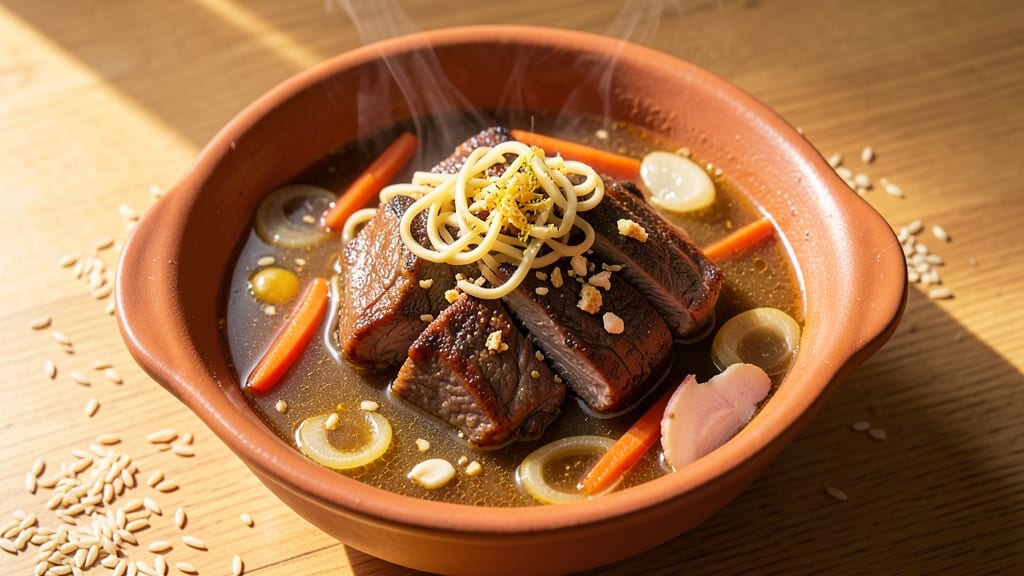
This Filipino-style beef soup recipe brings the comforting flavors of home to your kitchen table. 💛 I remember my grandmother's kitchen, filled with the rich aroma of simmering beef and vegetables, a scent that instantly transported us to family gatherings.
The secret lies in the perfect balance of soy sauce, garlic, and ginger, creating a broth that's both savory and deeply satisfying.
What makes this recipe special is the combination of tender beef, hearty vegetables, and chewy noodles—all simmered together in a rich, aromatic broth. The soy-braised flavor profile is distinctively Filipino, with a touch of tanginess from traditional seasonings.
This dish is not only delicious but also incredibly comforting, perfect for those chilly evenings or when you need a warm hug in a bowl.
The result is a bowl of soup that's packed with flavor and texture—tender beef chunks, al dente vegetables, and noodles that soak up every bit of the savory broth. The aroma alone will have everyone gathering around the table, and the taste will remind you why home-cooked meals are irreplaceable.
It's the kind of dish that feels like a warm embrace, bringing a taste of home to every spoonful.
This recipe is versatile enough to be a weeknight dinner or a centerpiece for a family gathering. The beauty of Filipino beef soup lies in its simplicity and the way it brings people together. Let's dive into the ingredients and instructions to create this comforting masterpiece in your own kitchen.
Ingredients for beef soup recipe filipino style
These 15 ingredients bring Filipino comfort to your pot—rich, savory, and full of homey flavors.
| Ingredient | Amount | Notes |
|---|---|---|
| Beef Chuck Roast 🥩 | 1 ½ lb | Cut into 1-inch cubes, marbled for tenderness |
| Wheat Goto Noodles 🍜 | 8 oz | Dried, chewy variety preferred |
| Yellow Onion 🧅 | 1 whole | Medium size, sliced into half-moons |
| Garlic Cloves 🧄 | 6 cloves | Minced, fresh preferred |
| Fresh Ginger 🌿 | 1 inch | Thinly sliced, peeled |
| Carrots 🥕 | 2 medium | Peeled, cut into thick rounds |
| Potatoes 🥔 | 2 medium | Russet, cut into 1-inch chunks |
| Soy Sauce 🍶 | ½ cup | Dark soy for rich color |
| Fish Sauce 🐟 | 1 tbsp | Red Boat preferred |
| Calamansi Juice 🍋 | ¼ cup | Or substitute lime juice |
| Vegetable Oil 🫒 | 2 tbsp | For searing beef |
| Salt 🧂 | 1 tsp | Diamond Crystal kosher |
| Black Pepper 🌶️ | ½ tsp | Freshly ground |
| Bay Leaves 🌿 | 2 whole | Dried, for aroma |
| Green Onions 🧅 | 3 whole | Sliced, for garnish |
The beef is everything here. Chuck roast gives that melt-in-your-mouth texture—sirloin stays tough. Look for well-marbled cuts at Costco or your local butcher. If you can't find chuck, brisket works too. The noodles? Goto or bami from an Asian market—those chewy strands are non-negotiable. Fresh ginger and garlic? Buy extra—you'll want them for other dishes too. At Trader Joe's, they sell pre-peeled ginger slices that save time.
No calamansi? Lime juice works in a pinch—just add a pinch more salt. Soy sauce brands vary—Lee Kum Kee is reliable, but any dark soy will do. Fish sauce? Red Boat is the gold standard, but Thai Kitchen works too. The potatoes should be firm, not waxy—Russets hold up best. Carrots can be baby carrots if you're short on time. For the oil, vegetable or canola works fine—no need for expensive olive oil here. And if you're missing bay leaves, dried thyme at half the amount gives a similar earthy note.
This soup tastes even better the next day—make extra. Store in the fridge for 4-5 days or freeze portions for 3 months. The noodles soften when reheated, so add fresh ones when serving leftovers. For a shortcut, parboil the noodles separately and add them at the end. The broth reduces beautifully—reduce it longer for deeper flavor. Garnish with those green onions right before serving, or they'll wilt into oblivion.
Why You'll Love This Recipe
- One-Pot Magic: I swear by this—just toss everything in one pot and walk away. The beef chuck roast practically melts into tender perfection while the onions and garlic caramelize right there, no extra bowls needed.
- Ginger-Garlic Bomb: That fresh ginger and garlic combo? It’s the secret weapon. The ginger adds a warm, zesty kick while the garlic softens into sweet, aromatic layers—every spoonful tastes like a hug.
- Lunchbox Hero: Between us, this soup is my weeknight lifesaver. Pack it in a thermos the night before, and you’ve got a filling, budget-friendly meal that still feels special—no sad desk lunches here.
- Leftovers Love: Honestly, I make it twice as much on purpose. The flavors only get richer overnight, and reheating it is a breeze. Perfect for lazy mornings or when you’re too tired to cook.
Step-by-step instructions for Filipino beef soup with goto noodles
Here's how to craft this comforting Filipino classic with deep umami flavors and chewy noodles.
🔥 Step 1: Sear the Beef for Maximum Flavor
Heat a heavy pot or Dutch oven over medium-high heat until a drop of water sizzles instantly. Add the 2 tablespoons vegetable oil and swirl to coat the bottom. Working in batches if needed, add the 1.5 lb beef chuck roast cut into 1-inch cubes, leaving space between pieces.
Sear the beef undisturbed for 3-4 minutes per side until deeply browned with a crust forming. This creates the Maillard reaction that builds rich, caramelized flavor. Don't crowd the pan or the temperature will drop. Once all beef is browned, transfer it to a plate and set aside.
🍳 Step 2: Build the Aromatic Base
In the same pot, reduce heat to medium and add the 1 whole yellow onion sliced into half-moons. Cook for 5 minutes until softened and beginning to caramelize at the edges. Add the 6 cloves minced garlic and 1 inch thinly sliced ginger, cooking for 1 minute until fragrant—this releases their essential oils.
Add the 2 medium carrots cut into thick rounds and 2 medium russet potatoes cut into 1-inch chunks. Stir to combine with the onions. Here's the thing—these vegetables should just barely touch the bottom to avoid burning while the broth develops. Pour in 6 cups water (enough to cover everything by 1 inch) and add the 2 whole bay leaves.
🥘 Step 3: Simmer the Broth and Infuse Flavors
Return the seared beef to the pot along with any accumulated juices. Bring to a gentle boil, then immediately reduce heat to low-medium to maintain a simmer. The broth should bubble gently with occasional small bubbles breaking the surface—this prevents a hard crust from forming on top.
Partially cover the pot and simmer for 1 hour to 1 hour 15 minutes until the beef is fork-tender and pulls away from the bone easily. You'll know it's ready when the meat shreds slightly at the edges. If the broth reduces too much before the beef is tender, add ½ cup hot water at a time to maintain coverage.
🍳 Step 4: Finish with Soy-Braised Depth
Once the beef is tender, remove it from the broth with a slotted spoon and set aside. Strain the broth through a fine-mesh sieve into a clean pot, pressing on the vegetables to extract maximum flavor. Return the broth to the heat and add the 0.5 cup soy sauce and 1 tablespoon fish sauce. Simmer for 5 minutes to meld the flavors.
Add the 0.25 cup calamansi juice (or lime juice) and the reserved beef. Taste and adjust seasoning with the 1 teaspoon salt and 0.5 teaspoon black pepper—Filipino flavors should balance salty, sweet, and umami. The broth should coat the back of a spoon with a glossy finish.
🥘 Step 5: Cook the Noodles and Assemble
In a separate pot, bring 4 cups fresh water to a rolling boil. Add the 8 oz wheat goto noodles and cook for 8-10 minutes until al dente—chewy but still with a slight bite. Drain and rinse briefly under cold water to stop cooking, then drain well.
Divide the noodles among bowls, ladle the rich beef broth over the top, and garnish with the 3 whole green onions sliced diagonally. Serve immediately while steaming hot—each spoonful should deliver tender beef, hearty vegetables, and that signature savory-sweet broth that makes Filipino comfort food so special.
Pro Tips For Making Beef Soup Recipe Filipino Style
- Sear the Beef First: I learned this the hard way—skipping the sear means flavorless broth. Pat the chuck roast dry, then hit it with high heat in oil until it’s deep brown on all sides. That crust locks in juices and builds the soup’s base flavor, especially when you later add the onions and garlic.
- Slice Ginger Thinly: Thin slices (almost translucent) release flavor without bitterness. I used to chop it roughly, and it’d turn to mush, making the broth taste harsh. Use a mandoline or sharp knife—about 1/8-inch thick—and add it early to mellow the heat.
- Don’t Overcrowd the Pot: After searing, resist the urge to dump everything in at once. Let the onions and garlic sizzle for 2-3 minutes in the beef’s rendered fat before adding broth. Crowding steams instead of caramelizes, and that’s when the soup starts to sing.
- Use Cold Noodles: Tossing in cooked, hot gota noodles straight from the pot makes them turn to mush. Keep the noodles cold until the very end—just boil them separately for 2-3 minutes, then plunge into ice water. Add them last, and they’ll stay chewy and distinct.
Common mistakes when making perfect results
Overcooking the Beef
Filipino beef soup relies on tender, melt-in-your-mouth beef—not dry, stringy chunks. I’ve seen many home cooks let the soup simmer too long after the beef reaches fork-tenderness. The magic window is 1 hour to 1 hour 15 minutes total simmering time.
Once the beef shreds easily, remove it immediately and finish the broth separately. Overcooking turns the meat into shoe leather, and trust me, you don’t want that. 🥩
Skipping the Sear
This is a rookie mistake that kills depth of flavor. Searing the beef creates the Maillard reaction, which builds caramelized richness that infuses the broth. If you skip this step, your soup will taste flat and one-dimensional.
Work in batches if needed—crowding the pan lowers the temperature and prevents proper browning. A heavy pot or Dutch oven is key here for even heat distribution. 🔥
Ignoring Broth Reduction
Filipino beef soup should have a glossy, concentrated broth—not watery. Many cooks add too much water upfront or don’t let it reduce enough. Aim for a broth that coats the back of a spoon with a slight sheen.
If it looks thin, simmer uncovered for 10-15 extra minutes or reduce it on medium-high heat. The longer you let it reduce, the deeper the umami flavor becomes. This is where the magic happens! 💫
Using the Wrong Noodles
Goto noodles are non-negotiable for authentic texture. Substituting with spaghetti or ramen changes the entire experience—those noodles turn mushy and lose their signature chew. If you can’t find goto, look for bami noodles or egg noodles from an Asian market.
Cook them separately in boiling water for 8-10 minutes until al dente, then rinse briefly to stop cooking. Adding them directly to the soup will turn them into a sad, limp mess. 🍜
Over-Salting the Broth
Filipino flavors balance salty, sweet, and umami, but it’s easy to overdo the soy sauce or fish sauce. Start with the ½ cup soy sauce and 1 tbsp fish sauce as written, then taste before adding more. The broth should be seasoned but not overwhelmingly salty.
Remember, you can always add more acidity (like calamansi juice) to balance, but you can’t take out excess salt. I’ve ruined a few batches this way—learn from my mistakes! 🧂
Not Adjusting Seasoning at the End
Tasting and adjusting seasoning is crucial, but many cooks forget this step. After adding the soy sauce, fish sauce, and calamansi juice, give it a final taste. Filipino broths should be savory, slightly sweet, and tangy.
If it’s bland, add a pinch more fish sauce or a splash of soy sauce. If it’s too salty, stir in a little more calamansi juice or water. This final adjustment makes all the difference between good and extraordinary. 💡
Nutrition facts
Frequently asked questions
Can I substitute regular beef for chuck roast?
While you can use sirloin or ribeye, they won't be as tender. Chuck roast has more connective tissue that breaks down beautifully during simmering. If you must substitute, cut the meat into smaller ½-inch cubes and simmer for 15-20 minutes less to avoid toughness. For best results, stick with chuck or brisket—they're made for slow cooking!
What if I can't find calamansi juice?
No problem! Use lime juice as a 1:1 substitute, but add an extra ½ teaspoon salt to compensate for the milder acidity. For extra tang, squeeze in a little more lime. If you're feeling adventurous, try green apple juice—it adds a subtle sweetness that works surprisingly well. Just remember, calamansi gives that signature Filipino brightness!
How can I make this soup spicier?
Add 1 teaspoon chili flakes or ½ teaspoon ground black pepper to the broth while simmering. For heat lovers, stir in 1-2 tablespoons sriracha or 1 sliced fresh chili pepper (like siling labuyo) when serving. Garnish with extra chili flakes on top for a visual pop. Start with small amounts—Filipino flavors are already bold!
Can I make this soup in an Instant Pot?
Sear the beef first, then add all ingredients except noodles. Cook on high pressure for 30 minutes, then quick-release. Finish by adding soy sauce, fish sauce, and calamansi juice, then cook noodles separately. The Instant Pot version cooks faster but may need extra seasoning since pressure cooking can mute flavors. Taste and adjust before serving!
Why does my broth look cloudy?
Cloudy broth often means the vegetables weren't strained properly or the broth reduced too quickly. For a clearer look, strain through a fine-mesh sieve after simmering. If it's still cloudy, simmer uncovered for 10 extra minutes to help clarify. Remember, Filipino soups are meant to be hearty—not crystal clear like consommé! The flavor is what matters most.