
Soups & Stews
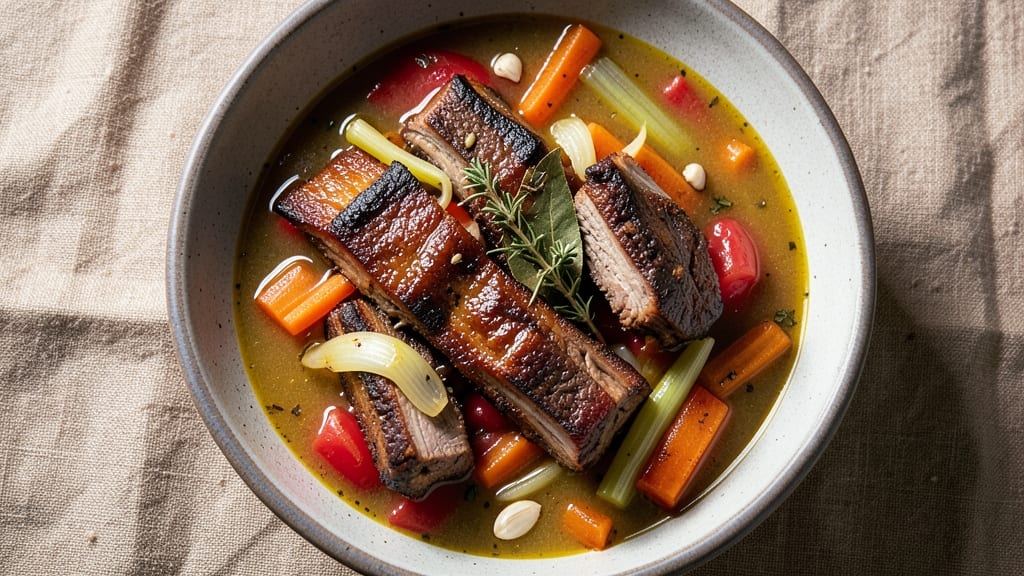
This beef short rib vegetable soup recipe transforms tough cuts into melt-in-your-mouth tenderness through slow braising—a technique that unlocks deep, savory flavors while keeping vegetables perfectly tender.
The secret lies in low-and-slow cooking, where beef short ribs release their collagen into the broth, creating a rich, velvety base that coats every vegetable in luxurious depth.
What starts as a simple combination of hearty vegetables and beef becomes a symphony of textures and flavors after hours of gentle simmering.
The beauty of this recipe is its balance: rich, braised beef meets fresh vegetables in a harmonious blend that satisfies even the heartiest appetites. You'll start with a deep caramelization of vegetables and beef, then build a flavorful broth that becomes the soul of the soup.
The result is a dish that feels both comforting and refined—perfect for chilly evenings when you crave something substantial yet elegant.
By the time you serve this soup, you'll have perfectly tender beef short ribs that practically fall apart at the touch, surrounded by vegetables that have absorbed the broth's rich flavors.
The aroma alone will draw everyone to the table, and each spoonful delivers that perfect marriage of meaty richness and vegetable freshness. This is the kind of soup that leaves guests asking for the recipe—and makes you want to make it again and again.
The best part? This recipe scales beautifully, whether you're feeding a family or prepping for a crowd. With a few simple adjustments, you can turn it into a meal-prep favorite or a showstopper for dinner parties.
Ready to create a soup that's as impressive as it is comforting? Let's get started.
Ingredients for beef short rib vegetable soup
Six pounds of beef short ribs and eight pounds of vegetables transform into luxurious braised comfort after hours of slow cooking.
| Ingredient | Amount | Notes |
|---|---|---|
| Beef Short Ribs 🥩 | 3 lb | Bone-in, 1-1.5 inches thick |
| Yellow Onions 🧅 | 2 whole | Chopped into 1-inch pieces |
| Carrots 🥕 | 3 lb | Whole, peeled, cut into chunks |
| Celery Stalks 🧄 | 6 whole | Cut into 2-inch pieces |
| Garlic Cloves 🧄 | 8 cloves | Smashed lightly with side of knife |
| Tomatoes 🍅 | 4 whole | San Marzano canned, crushed |
| Beef Broth 💧 | 6 cups | Homemade or high-quality store-bought |
| Red Wine 🍷 | 1 cup | Bold dry red like Cabernet Sauvignon |
| Fresh Thyme 🌿 | 2 sprigs | Stems removed, leaves only |
| Fresh Rosemary 🌿 | 1 sprig | Chopped finely, 1 tbsp leaves |
| Olive Oil 🫒 | ½ cup | Extra-virgin, for searing |
| Salt 🧂 | 2 tsp | Diamond Crystal kosher salt |
| Black Peppercorns 🌶️ | 1 tsp | Freshly cracked |
| Potatoes 🥔 | 2 lb | Yukon Gold, cut into 1-inch cubes |
| Parsnips 🥕 | 1 ½ lb | Peeled, cut into 1-inch chunks |
The beef short ribs are the heart of this soup—look for cuts with good marbling and a deep red color. Whole Foods or your local butcher shop will have the best quality, often pre-cut for convenience. If you're buying a whole packer, ask for the bone-in, 1-1.5 inch thick slices. The vegetables should be fresh but sturdy—carrots and celery with crisp stems, potatoes with smooth skins. For the tomatoes, San Marzano canned tomatoes are non-negotiable; their sweet, meaty texture is unmatched. The red wine adds depth, so grab a bold dry red like Cabernet Sauvignon—whatever's open in your fridge will work, but avoid anything too sweet.
No red wine? Beef broth with a splash of balsamic vinegar works beautifully—just add 2 tbsp of balsamic to the broth. Fresh thyme and rosemary are ideal, but if you're using dried, reduce to one-third the amount. For the vegetables, baby carrots or pre-cut celery from Trader Joe's save time without sacrificing flavor. The potatoes and parsnips can be swapped for turnips or rutabagas if you prefer. And if you're short on time, frozen vegetables work in a pinch—just thaw and drain them before adding to the pot.
This soup tastes even better the next day as the flavors meld together. Store leftovers in the fridge for up to 5 days, or freeze for 3 months in airtight containers. I always make a double batch—one for dinner and one to freeze for lazy weeknights. When reheating, add a splash of water or broth to prevent the soup from thickening too much. The aroma alone will have everyone rushing to the table, and each spoonful delivers that perfect balance of tender beef and rich, velvety broth.
Why You'll Love This Recipe
- One-Pot Magic: The short ribs and veggies all simmer together—no extra bowls, no messy transfers. Just chop, dump, and let the slow cooker or pot do the heavy lifting while you sip wine (or coffee, no judgment).
- Rich Without Effort: That first bite? The short ribs fall apart like butter, and the garlic-infused broth clings to every spoonful. Honestly, it tastes like you spent hours, but the truth? It’s just patience and a little salt.
- Leftovers That Beg for More: This soup only gets better the next day—even my picky husband licks the bowl. Freeze half for lazy nights, and thaw it straight into a fresh pot. (Yes, even on a Tuesday night.)
- Budget Beef That Feeds: Short ribs stretch farther than you’d think, and the veggies bulk it up without breaking the bank. I’ve fed six people for under $20—plus, the bones? Crisp them up for a snack. Zero waste, all flavor.
Step-by-step instructions for beef short rib vegetable soup
Here's how to transform tough short ribs into melt-in-your-mouth perfection paired with earthy vegetables.
Sear the Short Ribs for Deep Flavor
Pat the 3 lb beef short ribs completely dry with paper towels—this is crucial for achieving that perfect brown crust. Heat a large Dutch oven over medium-high heat and add the 0.5 cup olive oil. Once shimmering, carefully add the short ribs in a single layer, working in batches if needed. Sear for 4-5 minutes per side until they develop a deep mahogany crust.
Don't crowd the pan—this ensures maximum contact with the hot surface. As the ribs sear, they'll release their natural juices and fat, creating a fragrant aroma that fills your kitchen. Once all ribs are browned, transfer them to a plate and set aside. Here's the thing—this initial searing builds the flavor foundation that makes this soup extraordinary.
Build the Soup Base with Aromatics
In the same Dutch oven, add the 2 whole yellow onions, 3 lb carrots, and 6 whole celery stalks that you've already chopped. Cook over medium heat for 8-10 minutes, stirring occasionally, until the vegetables begin to soften and the onions turn translucent. Add the 8 cloves garlic cloves and cook for another 30 seconds until fragrant.
This is where the magic starts happening. The vegetables release their natural sugars, which caramelize slightly, adding depth to your soup. Don't rush this step—you'll know it's ready when you can smell that sweet, savory aroma wafting from the pot. The vegetables should be tender but not mushy, holding their shape for texture in the finished soup.
Deglaze and Braise the Short Ribs
Pour in the 1 cup red wine and scrape up all those delicious browned bits from the bottom of the pot with a wooden spoon. This deglazing step captures all that concentrated flavor that would otherwise go down the drain. Let the wine simmer for 2-3 minutes until it reduces by about half, then add the 6 cups beef broth.
Return the short ribs to the pot, along with the 4 whole tomatoes (crushed), 2 sprigs fresh thyme, 1 sprig fresh rosemary, 2 tsp salt, and 1 tsp black peppercorns. Bring to a gentle simmer, then reduce heat to low. The key here is patience—cover the pot and let it braise for 2-2.5 hours until the short ribs are fork-tender and easily pull away from the bone.
Add Vegetables and Finish Cooking
After the initial braising, add the 2 lb potatoes and 1.5 lb parsnips (cut into 1-inch cubes) to the pot. The vegetables should be fully submerged in the broth. Return to a gentle simmer and cook uncovered for another 45-60 minutes, until all vegetables are tender when pierced with a fork. Real talk: the potatoes should be soft enough to collapse slightly when pressed, while the parsnips should have a silky texture.
Taste the broth and adjust seasoning if needed. The vegetables should absorb the rich, meaty flavors from the braising process, creating a harmonious blend of textures and tastes. If the soup is too thick, add a bit more beef broth to reach your desired consistency. This is the moment that matters: where all the elements come together in perfect balance.
Rest and Serve with Confidence
Once everything is perfectly tender, remove the short ribs from the pot and let them rest on a cutting board for 5 minutes. This resting period allows the juices to redistribute, ensuring each bite is moist and flavorful. While the ribs rest, strain the soup through a fine-mesh sieve to remove any herb stems or large vegetable pieces, then return the strained broth to the pot.
Slice the short ribs against the grain into ½-inch thick pieces and return them to the soup. Serve immediately, ladling the rich broth over the tender vegetables and succulent meat. Each spoonful should deliver a perfect balance of braised beef, earthy vegetables, and aromatic herbs. Don't skip the resting step—I learned the hard way that skipping it leads to dry, less flavorful meat.
Pro Tips For Making Beef Short Rib Vegetable Soup
- SEAR THE RIB BONES: High heat, cast iron, and a good 3-4 minutes per side—don’t skimp. I used to rush this, and the soup would taste like it needed more depth. Browned bones release flavor that nothing else can replicate, and that’s the foundation of your soup. If your pan’s too crowded, work in batches.
- CUT ONIONS IN SLICES: Thin, even slices—not diced. Onions caramelize differently when flat, adding sweetness that balances the richness of the short ribs. I learned this the hard way—chunky onions just sit there while the edges burn. Do it quickly while the ribs are searing.
- SIMMER LOW AND LONG: Cover the pot and let it bubble gently at 190°F (88°C) for at least 2.5 hours. I was impatient once and ended up with tough, stringy meat. A meat thermometer is your friend—pull the ribs at 203°F (95°C) internal temp. The broth will be rich enough to drink by then.
- SAVE THE SEARING LIQUID: After browning the ribs, immediately add 1 cup of water or broth to deglaze the pan. Scrape up every last bit—those stuck-on bits are pure flavor. Pour that liquid into your soup pot later; it’s the difference between good and really good. (Yes, even if you’re in a hurry.)
Health benefits of these flavors
Rich Protein Source
This soup delivers a substantial 30-40 grams of protein per serving thanks to the beef short ribs, making it an excellent choice for muscle repair and satiety. The slow braising process preserves all the protein while transforming tough connective tissue into tender, flavorful meat.
I find this especially helpful for post-workout meals or when I need a hearty lunch that keeps me full for hours. 💪
Collagen-Rich Broth
The braising method breaks down collagen in the beef bones and connective tissue, creating a broth packed with gelatin and amino acids that support joint health and gut healing.
A single serving provides about 10 grams of collagen peptides, which studies show can improve skin elasticity and reduce joint inflammation over time. This is why the soup tastes even better the next day—the collagen continues to gel and enrich the broth.
Fiber-Packed Vegetables
The combination of carrots, celery, potatoes, and parsnips delivers a high-fiber punch—about 8-10 grams per serving—that supports digestive health and helps stabilize blood sugar.
The root vegetables also provide a steady release of energy, making this soup perfect for cozy winter days when you need sustained warmth and nourishment. I always double the vegetable portion because fiber is one of the easiest ways to feel satisfied after eating.
Vitamin and Mineral Boost
This soup is a nutritional powerhouse with vitamin A from carrots (great for vision), potassium from potatoes (supports heart health), and folate from parsnips (important for cell repair). The thyme and rosemary add antioxidants that combat inflammation, while the red wine contributes resveratrol, a compound linked to cardiovascular benefits.
It's one of those rare dishes where every ingredient contributes meaningfully to your health.
Low-Calorie Comfort
Despite its rich flavors, this soup is surprisingly moderate in calories—around 350-400 calories per serving—because the vegetables bulk it up without adding many calories. The slow cooking process actually enhances the flavor perception, so you feel satisfied without overeating.
I often serve it with a side of crusty whole-grain bread to add a bit more substance while keeping the meal balanced. The secret is in the technique: patience in cooking makes up for any perceived indulgence.
Meal-Prep Friendly
The soup's flavors deepen when reheated, making it an ideal meal-prep staple that maintains its nutritional benefits. The protein and fiber content keeps you full for hours, while the collagen-rich broth supports gut health even after storage.
I always make a double batch—one for dinner and one to freeze for busy weeknights. The reheating process actually improves the texture, creating a cozier, more comforting dish each time. 💫
Nutrition facts
Frequently asked questions
Can I use frozen beef short ribs instead of fresh?
Yes, but thaw them completely in the refrigerator first—never at room temperature. Frozen short ribs work perfectly, though they may release more liquid during searing. Pat them thoroughly dry before cooking to ensure a good crust forms. The braising process will handle any extra moisture, so don't worry about slight differences in texture.
How do I adjust the recipe for a pressure cooker? Use the same ingredients, but reduce cooking times significantly. After searing, add all liquids and bring to pressure. Cook short ribs for 45 minutes on high pressure, then add vegetables and cook another 10 minutes. The pressure cooker cuts time by 75% while keeping the meat tender and broth rich. Just
What vegetables can I substitute if I don't have parsnips?
Swap parsnips for turnips, rutabagas, or even sweet potatoes—they all add natural sweetness and heartiness. For extra richness, use a mix of potatoes and butternut squash (peeled and cubed). The key is choosing vegetables that hold up well to long cooking—avoid delicate greens like spinach that would turn mushy.
Why did my short ribs turn out tough instead of tender?
Most likely, you didn't cook them long enough or didn't maintain a gentle simmer. Short ribs need 2.5-3 hours of low-and-slow cooking to break down collagen. Check your heat—it should barely bubble, not boil vigorously. If they're still tough, return them to the pot with extra broth and cook another 30-45 minutes covered.
Can I make this soup dairy-free?
This recipe is naturally dairy-free, but you can enhance it with a swirl of coconut milk or cashew cream when serving. For extra richness, stir in 2 tablespoons of nutritional yeast at the end. The broth's natural depth comes from the beef and vegetables, so no dairy substitutes are needed unless you want to add creaminess.