
Soups & Stews
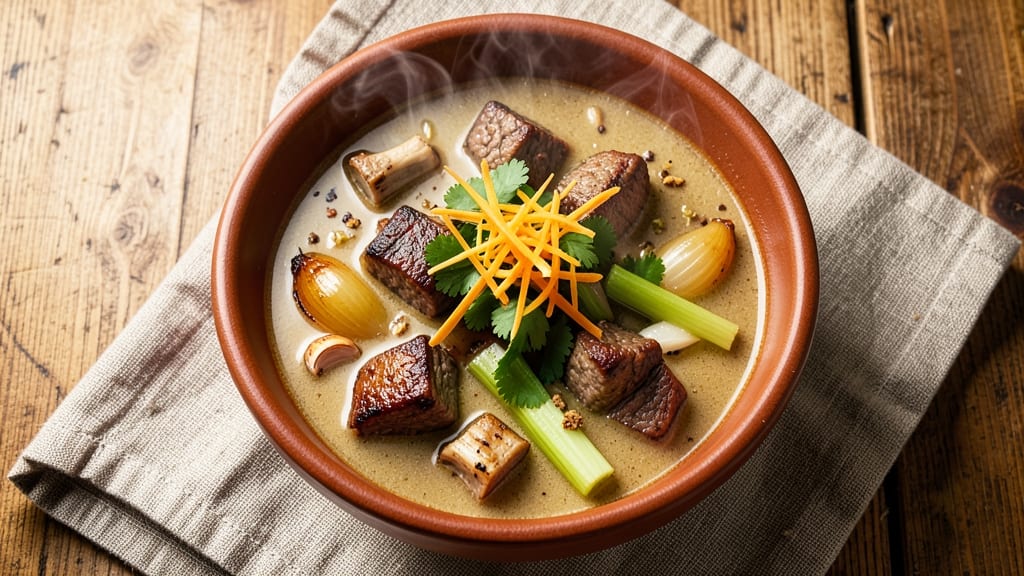
This beef nilaga soup recipe delivers the heartwarming essence of Filipino comfort food—tender beef, fragrant broth, and celery's signature crunch. The secret lies in slow-simmering beef until it becomes fork-tender, while aromatic vegetables infuse the broth with deep, savory flavors.
What makes this dish special is the balance of ginger, onions, and bay leaves, creating a harmonious blend that's both nostalgic and deeply satisfying.
The beauty of nilaga is its simplicity—just a few key ingredients transformed through patience. We start with a rich broth built from beef bones and vegetables, then simmer beef until it practically melts in your mouth.
The celery adds a refreshing crunch that cuts through the richness, while the ginger and garlic bring warmth and depth. This isn't just soup; it's a meal that warms the soul and brings families together.
By the time you're done, you'll have a steaming bowl of silky beef swimming in a fragrant, flavorful broth, topped with crisp celery and tender vegetables.
The aroma alone will have everyone gathering around the table, while the first spoonful delivers that perfect balance of savory, slightly sweet, and herbaceous notes. It's the kind of dish that feels like a hug in a bowl.
Perfect for family dinners, potlucks, or when you need a comforting meal after a long day. The slow-simmering process ensures maximum flavor, and the leftovers taste even better the next day. Let's get started on this timeless Filipino classic!
Ingredients for beef nilaga soup
Six ingredients make this Filipino classic—tender beef, fragrant broth, and celery's signature crunch.
| Ingredient | Amount | Notes |
|---|---|---|
| Beef Chuck Roast 🥩 | 2 lb | Cut into 2-inch cubes |
| Beef Bones 🦴 | 2 lb | Marrow bones preferred |
| Yellow Onions 🧅 | 3 whole | Quartered, skins on |
| Garlic Cloves 🧄 | 6 cloves | Smashed, not minced |
| Fresh Ginger 🌿 | 2 inches | Thinly sliced, peeled |
| Celery Stalk 🥬 | 4 whole | Cut into 2-inch pieces |
| Bay Leaves 🍃 | 2 whole | Dried, standard size |
| Potatoes 🥔 | 3 medium | Russet, peeled, cubed |
| Carrots 🥕 | 3 whole | Peeled, cut into chunks |
| Salt 🧂 | 2 tsp | Kosher or sea salt |
| Black Peppercorns 🌶️ | 1 tsp | Crushed, not ground |
| Water 💧 | 8 cups | Filtered preferred |
The beef is the star, so chuck roast is your best bet—it's cheaper than ribeye but just as flavorful when slow-cooked. Grab the marrow bones too; they add rich, gelatinous depth to the broth. Filipino markets often have pre-cut beef for nilaga, but if you're at a regular grocery store, look for chuck roast in the meat case. For the ginger, fresh is non-negotiable—dried won't give that bright, zesty punch. The bay leaves? Don't skip them; they're what gives nilaga its signature aroma. If you can't find them, a pinch of dried oregano in a pinch works, but it's not the same.
No chuck roast? Brisket or short ribs hold up well, though they might need a bit more time. Running low on bay leaves? One teaspoon of dried thyme mimics the earthy notes, but reduce it to half if you're using fresh. The potatoes and carrots can be swapped for sweet potatoes or parsnips if you're feeling adventurous. For the celery, leeks or fennel add a different but equally lovely crunch. And if you're worried about the broth being too bland, a splash of soy sauce or fish sauce (just half a teaspoon) will deepen the umami—just don't tell the purists I said that.
This soup tastes even better the next day, so make extra. Store the broth and beef separately in the fridge for up to 3 days, then reheat gently on the stove. The potatoes and carrots can be prepped ahead and kept in cold water in the fridge for 24 hours—just drain and add them to the pot when you're ready to simmer. For a quick meal, freeze the broth in 1-cup portions—it's perfect for instant noodle upgrades or as a base for other dishes. And if you've got leftovers, turn them into nilaga fried rice the next day—trust me, it's a game-changer.
Why You'll Love This Recipe
- One-Pot Magic: I swear by this recipe when I’m too tired to scrub pots—just toss the beef chuck, bones, onions, and ginger into one deep pot, cover with water, and let it simmer. The bones melt into the broth while I prep dinner, and cleanup? A single pot to rinse. Honestly, it’s the kind of meal that makes me want to cook more often.
- Rich Without Effort: That beef chuck and marrow bones? They turn into a broth so deep and savory, you’ll forget you didn’t spend hours simmering. The ginger and garlic caramelize into the base, giving it this warm, earthy punch that hits just right—like a hug in a bowl. (Yes, even on a Tuesday night.)
- Leftovers That Beg for More: This soup only gets better the next day. The flavors meld into something even more complex, and the beef stays tender enough to shred right off the bone. I freeze portions for lazy days, and my kids fight over the leftovers—no complaints, just empty bowls.
- Budget-Friendly Feast: Beef chuck and bones stretch into a massive pot of soup, feeding a crowd without breaking the bank. Between us, I’ve made this for potlucks, sick friends, and my own family dinners—always a hit, always filling. It’s the kind of recipe that proves home cooking doesn’t have to cost a fortune.
Step-by-step instructions for beef nilaga soup
This slow-simmered masterpiece delivers deep, savory comfort with tender beef and aromatic vegetables.
Prepare the Beef and Bones for Maximum Flavor
Cut the 2 lb beef chuck roast into 2-inch cubes and set aside. For the 2 lb beef bones, choose marrow bones if possible—their rich marrow will infuse the broth with incredible depth. Pat both the beef and bones dry with paper towels to remove any surface moisture, which prevents cloudy broth later.
In a large Dutch oven, arrange the beef cubes and bones in a single layer. This creates space for the vegetables to nestle later. I like to place the bones marrow-side up so they release their flavor as they cook. Add the 3 whole yellow onions (quartered with skins on) and 4 whole celery stalks (cut into 2-inch pieces) around the beef. This arrangement ensures even cooking and maximum flavor extraction.
Build the Aromatic Base
Add the 6 smashed garlic cloves, 2 inches fresh ginger (thinly sliced and peeled), and 2 whole bay leaves to the Dutch oven. The skins-on onions and celery will add earthy depth, while the garlic and ginger provide that signature aromatic punch. Pour in the 8 cups water—enough to cover everything by about 1 inch. Bring to a boil over medium-high heat until the water reaches a rolling simmer.
Once boiling, reduce heat to low and skim off any foam or impurities that rise to the surface with a ladle. This step is crucial for a clear, clean broth. Let the soup simmer uncovered for 15 minutes to allow the initial flavors to meld. You'll notice the onions softening and the liquid turning slightly cloudy—this is normal and indicates the broth is developing its base.
Add Potatoes and Carrots for Hearty Texture
Peel and cube the 3 medium potatoes and cut the 3 whole carrots into chunks. Add these to the Dutch oven along with the 2 tsp salt and 1 tsp crushed black peppercorns. Stir gently to combine, ensuring the vegetables are submerged in the broth. The potatoes and carrots will absorb the rich flavors of the beef and bones as they cook.
Return the heat to low and let the soup simmer uncovered for 1 hour. This slow cooking is what transforms tough beef into fork-tender morsels and develops a deeply flavorful broth. Check occasionally to ensure the liquid doesn't reduce too much—add a splash of hot water if needed. You'll know it's ready when the beef easily pulls apart with a fork and the vegetables are tender but still hold their shape.
Finish with Celery Crunch and Perfect Seasoning
Remove the 2 whole bay leaves and discard them. Taste the broth and adjust the seasoning if needed—nilaga soup should be rich and savory, not overly salty. The 4 whole celery stalks (cut into 2-inch pieces) should be added now for that signature crunch. Simmer for an additional 10 minutes to let the celery absorb some of the broth's flavor while maintaining its texture.
Serve the beef nilaga hot, ladling the broth over the tender beef, potatoes, carrots, and celery. The contrast of silky beef and crisp celery makes every spoonful unforgettable. For extra comfort, serve with steamed rice or crusty bread to soak up the delicious broth. This soup tastes even better the next day as the flavors deepen—perfect for meal prep!
Pro Tips For Making Beef Nilaga Soup
- CRANK THE HEAT FIRST: Nilaga soup starts with a sear—don’t simmer the bones and meat right away. Get that pot screaming hot for 3-4 minutes until the beef chuck turns deep brown and the bones crackle. I used to rush this, and the broth never had that rich, caramelized depth everyone talks about. (Yes, even if you’re impatient like me.)
- SMASH THAT GINGER: Skip the thin slices—peel and cut the ginger into thick chunks, then smash them with the side of your knife until they bruise. This releases more flavor without turning the broth bitter. My grandmother swore by this, and she was right: the aroma hits you the second the pot opens.
- DON’T SKIP THE SKIM: After the first 20 minutes, skim off the foam and fat rising to the top with a fine-mesh strainer or ladle. It’s messy, but it guarantees a cleaner, clearer broth—no one wants to eat scum. I know, I know, but trust the process. Your future self will thank you.
- USE THE ONION SKINS: Save the papery outer layers of your yellow onions—they’re packed with color and subtle sweetness. Toss them into the pot with the whole onions, and let them steep for the last 30 minutes. Sounds weird, but it works: the broth turns a gorgeous amber hue, and the flavor gets this extra layer of complexity. (Your lazy day just got a little more interesting.)
Make-ahead tips for leftovers
Prep Ahead for Efficiency
Chop all your vegetables the night before and store them in airtight containers in the fridge. I like to keep the potatoes, carrots, and celery in separate containers with a damp paper towel to maintain freshness.
The beef can be cubed and refrigerated for up to 24 hours before cooking—just pat it dry right before adding it to the pot. This saves you 30 minutes of prep time on cooking day. 💡
Slow Cooker Magic
For a hands-off approach, use a 6-quart slow cooker on low for 8 hours or high for 4 hours. Add all ingredients except the celery (add it in the last 10 minutes to keep it crisp).
The slow cooker's gentle heat mimics the Dutch oven's simmer, creating tender beef without constant monitoring. I love this method for busy weeknights—just dump everything in and let it work its magic. 🌡️
Broth Storage Secrets
Make extra broth and freeze it in 1-cup portions in silicone molds or ice cube trays. Once frozen, transfer the cubes to a freezer bag for easy storage. Thaw a few cubes in hot water for instant nilaga broth—perfect for quick meals or as a base for other dishes.
The broth keeps its rich flavor for up to 3 months in the freezer. 🥶
Reheating Leftovers
Reheat nilaga gently on the stovetop over low heat to avoid breaking up the beef. Add 2-3 tablespoons of water to prevent sticking and keep the broth from reducing too much.
If using the microwave, cover with a damp paper towel and heat in 1-minute intervals until steaming. The celery will soften slightly but still provide that satisfying crunch. 🔥
Freezer-Friendly Meal Prep
Portion the beef, potatoes, and carrots into separate freezer bags, then store the broth in a separate container. When ready to eat, thaw everything overnight in the fridge, then reheat the broth first.
Add the thawed vegetables and beef, simmering for 10-15 minutes to warm through. This method keeps the celery crisp and the beef tender. 🍲
Double the Batch
Nilaga tastes even better the next day, so double the recipe and store it in the fridge for 3-4 days. The flavors deepen as the broth absorbs more of the beef's essence.
Use the extra portions for lunches or turn them into nilaga fried rice—just stir-fry the leftovers with rice, soy sauce, and a fried egg for a satisfying meal. 💛
Nutrition facts
Frequently asked questions
What makes beef nilaga different from regular beef soup?
Beef nilaga stands out because of its signature celery crunch and aromatic broth made with beef bones and marrow. Unlike many beef soups that use only meat, nilaga relies on slow-simmered bones for a rich, gelatinous broth. The combination of ginger, bay leaves, and skins-on onions creates that distinct Filipino flavor profile that's both savory and slightly sweet.
Can I use chicken or pork instead of beef?
While traditional nilaga uses beef, you can absolutely adapt it! For chicken nilaga, use bone-in chicken thighs and chicken bones instead of beef. Pork nilaga works too—try pork shoulder and pork bones. The cooking time will be shorter (about 45-60 minutes for chicken, 1.5 hours for pork), but the same aromatic base of ginger, onions, and celery keeps the dish authentic.
Why does the recipe call for skins-on onions? The skins add subtle sweetness and prevent the onions from burning while simmering. They also contribute to the broth's depth of flavor. If you're short on time, you can peel them, but leaving the skins on creates that classic nilaga taste. Just
How do I know when the beef is tender enough?
The beef should be so tender it practically falls apart with a fork. For the most reliable test, insert a meat thermometer into the thickest piece—it should read 195-205°F in the center. If you don't have one, cut into a small piece: if it shreds easily, it's ready. Overcooking can make the broth too rich, so aim for that perfect melt-in-your-mouth texture.
Can I make nilaga in an Instant Pot?
Yes! Use the high-pressure setting for 35 minutes after adding all ingredients (except celery). Release pressure naturally, then add the celery and simmer for 5 minutes on sauté mode. The Instant Pot cuts cooking time significantly while still delivering that rich, slow-simmered flavor. Just be careful not to overfill the pot—leave at least 1 inch of space from the top.