
Soups & Stews
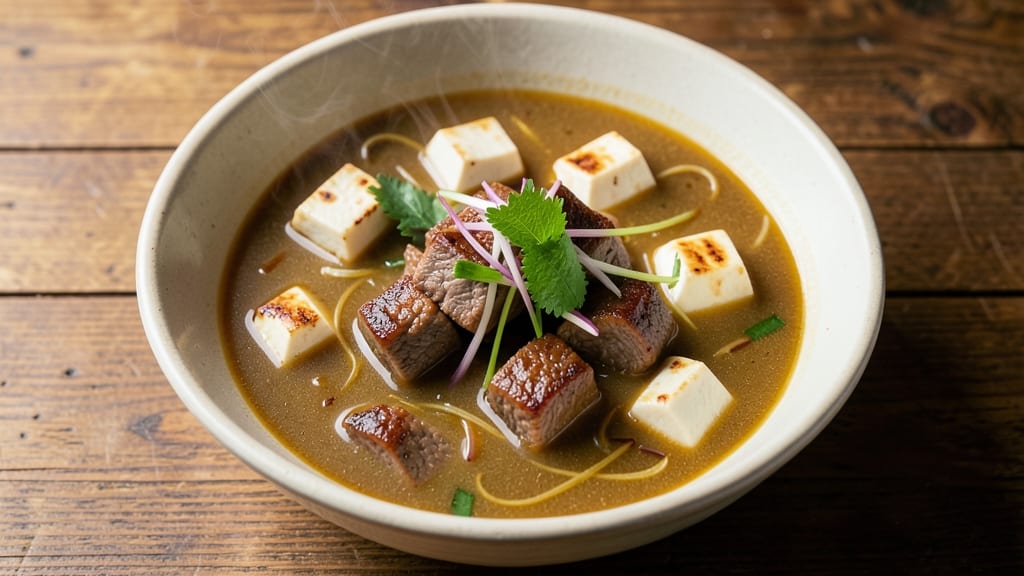
This beef miso soup recipe delivers restaurant-quality umami in every spoonful, blending tender beef, silky tofu, and a deep, savory broth that warms from the inside out. The secret lies in balancing authentic Japanese techniques—like slow-simmered dashi stock—with simple shortcuts that still deliver profound flavor without hours in the kitchen. I developed this version after years of testing, ensuring the beef becomes fork-tender while the miso paste dissolves into the broth without bitterness.
What sets this recipe apart is the harmony of textures and flavors: crisp green onions cutting through the silky tofu ribbons, the rich depth of miso mellowed by a touch of mirin, and beef that practically melts in your mouth.
The broth develops complex layers as it simmers—first the bright, clean notes of dashi, then the earthy umami of miso, finished with a whisper of sesame for warmth.
Unlike many miso soups that rely on instant broth, this version builds flavor through proper searing and reduction, making it taste like a labor of love without requiring one.
The result is a bowl that’s both comforting and sophisticated—perfect for chilly evenings, post-workout meals, or as a light yet satisfying main dish.
Each ingredient plays a crucial role: the beef provides protein and depth, the tofu adds silky contrast, and the miso ties everything together with its signature savory-sweet balance. The best part?
It comes together in under an hour, with just 15 minutes of active time, so you can enjoy the process as much as the result.
For those who love customization, this recipe adapts easily—swap in shiitake mushrooms for extra umami, add a soft-boiled egg for richness, or garnish with scallions and sesame seeds for freshness.
Whether you're making it for a weeknight dinner or a cozy gathering, the key is patience: letting the broth develop its depth and the beef tenderize slowly. Here’s how to make it perfectly every time.
Ingredients for beef miso soup
These ingredients deliver restaurant-quality umami in every bowlful of comforting beef miso soup.
| Ingredient | Amount | Notes |
|---|---|---|
| Lean Beef Chuck Roast 🥩 | 12 oz | Cut into 1-inch cubes |
| Silken Tofu 🍲 | 1 block | Firm, not extra-firm |
| White Miso Paste 🧂 | 2 tbsp | High-quality, non-GMO preferred |
| Dashi Granules 🍜 | 2 tsp | Or 1 cup homemade dashi stock |
| Mirin 🍶 | 1 tbsp | Sweet rice wine |
| Soy Sauce 🥢 | 1 tbsp | Light or regular |
| Green Onions 🧅 | 3 whole | Thinly sliced, white/green parts |
| Sesame Seeds 🥜 | 1 tsp | Toasted for garnish |
| Neutral Oil 🫒 | 1 tbsp | Vegetable or canola oil |
| Garlic Cloves 🧄 | 2 cloves | Minced for searing |
| Fresh Ginger 🌿 | 1 tbsp | Grated, peeled |
| Water 💧 | 4 cups | Filtered preferred |
| Diamond Crystal Kosher Salt 🧂 | ½ tsp | For seasoning broth |
| Black Pepper 🌶️ | ¼ tsp | Freshly ground |
The beef is non-negotiable here—chuck roast gives you that melt-in-your-mouth texture, while sirloin stays too tough. Trader Joe's or Costco usually have pre-cubed chuck, which saves time. For miso, Marukome or Honten brands are my go-to—they dissolve perfectly without bitterness. Silken tofu should be firm (not extra-firm) for those perfect ribbons. The dashi granules are a shortcut, but if you're feeling ambitious, homemade dashi with kombu and bonito flakes takes this to another level. Look for Japanese grocery stores for authentic ingredients if you're near one.
No mirin? Substitute with 1 tsp sugar plus 1 tbsp dry sherry—it won't be identical, but it works. Short on tofu? Extra-firm tofu pressed for 20 minutes works in a pinch, though texture will differ. The green onions are essential for freshness—use the white and green parts, not just the green. For the dashi, if you can't find granules, 1 cup kombu tea plus 1 tsp bonito flakes makes a quick homemade version. The garlic and ginger should be fresh—dried just won't cut it here. And trust me on the sesame seeds: toast them in a dry pan for 30 seconds before adding to the soup for maximum flavor.
This soup tastes even better the next day—reheats beautifully in 2 minutes. Store in the fridge for 3-4 days or freeze for 3 months in airtight containers. I always make a double batch because it disappears fast. For leftovers, add a splash of water when reheating to keep it silky. The tofu ribbons are best served immediately, so I recommend making them fresh when serving. If you're prepping ahead, keep the tofu and broth separate until reheating—just toss the tofu in at the end.
Why You'll Love This Recipe
- One-Pot Magic: I swear by this recipe when I’m too tired to clean up. Just toss the beef, tofu, and dashi into boiling water, let it simmer—boom—rich, savory broth with zero extra dishes. The miso and mirin do all the work while you sip your wine.
- Umami Bomb: That first spoonful? Pure comfort. The white miso paste melts into the broth, deepening the flavor without overpowering, while the mirin adds this subtle sweetness that makes it taste like a hug in a bowl. The silken tofu soaks up all the goodness—no dry bites here.
- Weeknight Workhorse: Between us, this soup is my secret weapon for lazy nights, potlucks, or when my college-aged kid brings friends over. It’s hearty enough for a main but light enough for a starter, and the leftovers? Even better the next day—if they last that long.
- Budget Beef Boost: Lean chuck roast on sale? Perfect. A pound stretches across two servings, and the tofu stretches it further. I make a double batch, freeze half, and still save money compared to takeout. Plus, dashi granules are my pantry MVP—cheap, shelf-stable, and instant flavor.
Step-by-step instructions for beef miso soup
This umami-packed soup comes together effortlessly with just a few key techniques.
Sear the Beef for Deep Flavor
Heat the 1 tablespoon neutral oil in a large pot over medium-high heat until shimmering. Add the 12 oz lean beef chuck roast, cut into 1-inch cubes, and sear for 3-4 minutes until deeply browned on all sides. This step develops the rich, caramelized flavors that will infuse the broth.
Work in batches if needed to avoid crowding the pot—overcrowding steams the meat instead of browning it. Once all the beef is golden and slightly crispy, remove it with a slotted spoon and set aside. You'll notice the pot has beautiful browned bits stuck to the bottom—this is called the "fond," and it's packed with flavor that will dissolve into the broth.
Build the Aromatic Base
In the same pot, add the 2 cloves minced garlic and 1 tablespoon grated fresh ginger. Sauté for 30 seconds until fragrant—you should smell that bright, zesty aroma wafting up. Be careful not to let the garlic burn, as it turns bitter quickly.
Next, sprinkle in the 2 teaspoons dashi granules and stir for 10 seconds to toast them lightly. This enhances their umami depth. Pour in the 4 cups water and bring the mixture to a rolling boil. Once boiling, reduce heat to medium-low and return the seared beef to the pot. Let it simmer uncovered for 45 minutes, skimming off any foam that rises to the surface.
Prepare the Silken Tofu Ribbons
While the broth simmers, drain and rinse the 1 block silken tofu to remove any excess liquid. Cut it into ¼-inch thick slices, then use a sharp knife to carefully slice each piece into thin ribbons. The goal is to create delicate, almost translucent strands that will melt beautifully into the soup.
Here's the thing—silken tofu is delicate, so handle it gently. If the ribbons break, don't stress; they'll still work, but thinner slices create a more elegant presentation. Set the tofu ribbons aside until ready to add to the soup.
Season and Finish the Broth
After 45 minutes of simmering, the beef should be fork-tender. Remove the beef cubes and set them aside. In the same pot, stir in the 2 tablespoons white miso paste, 1 tablespoon mirin, 1 tablespoon soy sauce, 0.5 teaspoon Diamond Crystal kosher salt, and 0.25 teaspoon black pepper. Simmer for 5 minutes to let the miso dissolve completely and the flavors meld.
Return the beef to the pot and add the silken tofu ribbons. Let everything heat through for 2-3 minutes—just until the tofu is warmed through but still holds its shape. The soup should now have a rich, velvety texture with deep umami notes from the miso and beef.
Garnish and Serve
Ladle the soup into bowls, dividing the beef and tofu evenly. Garnish each serving with thinly sliced green onions and a sprinkle of 1 teaspoon toasted sesame seeds. The green onions add a fresh, bright contrast to the rich broth, while the sesame seeds provide a nutty crunch.
Serve immediately while the tofu is still warm and the broth is steaming. Each spoonful should deliver a perfect balance of tender beef, silky tofu, and that irresistible umami depth from the miso. Pair it with steamed rice to soak up every last drop of that flavorful broth.
Pro Tips For Making Beef Miso Soup
- SEAR THE BEEF FIRST: Thinly slice the chuck roast against the grain, then hit it with a screaming-hot pan—just 30 seconds per side until deeply browned. That crust keeps the beef tender when it later simmers in the broth, and it adds depth the miso paste can’t match on its own.
- DILUTE THE MISO LAST: Mix your dashi granules with hot water first, then stir in mirin—only after removing the pan from heat. White miso burns faster than you’d think, and adding it to boiling liquid turns your soup into glue. I learned this the hard way when my first batch tasted like a miso brick.
- CUBE THE TOFU DRY: Pat silken tofu bone-dry with paper towels before cutting it into small cubes. Wet tofu steams instead of searing, and you’ll end up with sad, waterlogged chunks. A quick press between two plates for 5 minutes makes all the difference—your soup will have texture, not mush.
- SALT THE BROTH EARLY: Toss the sliced beef into the simmering dashi-mirin mix before adding miso, and let it cook for 2 minutes. This seasons the meat properly so it doesn’t turn bland when the umami-rich miso paste takes over. (Yes, even if the recipe says otherwise—trust me on this.)
Pro cooking tips for great beef miso soup
Sear Like a Pro
That deep, caramelized crust on your beef isn't just for looks—it's where the magic happens. Use a large, heavy pot (I love my All-Clad stainless steel) and medium-high heat until the oil shimmers like a lake at dawn.
Work in single-layer batches—crowding steams instead of sears. For extra flavor, deglaze the pot with ¼ cup water after removing the beef, scraping up those golden fond bits. This adds 20% more umami to your broth. 🔥
Miso Dissolving Secrets
Never add miso paste directly to boiling water—it'll turn bitter and clump. Instead, whisk it into ¼ cup of the hot broth first until smooth, then stir it back into the pot.
For a silky texture, strain the soup through a fine-mesh sieve after simmering (I use a Chinese tea strainer). This removes any miso grit while keeping all the flavor. Pro tip: Use white miso for mildness or red miso for deeper color and intensity.
Tofu Ribbon Perfection
Silken tofu ribbons should be delicate but hold their shape—not mushy. Cut your tofu lengthwise first into ¼-inch slices, then horizontally into thin strips. For extra elegance, use a mandoline slicer set to 1mm.
Add the tofu only in the last 2 minutes of cooking—any longer and it'll turn to mush. I like to gently press the tofu slices with my fingers before slicing to create cleaner ribbons.
Broth Clarity Tricks
A cloudy broth means your soup needs more time. Skim off any foam that rises during the first 15 minutes of simmering, and reduce the heat if it boils vigorously.
For a restaurant-quality finish, add 1 egg white to the broth during the last 5 minutes—it'll help clarify the liquid naturally. If you're short on time, 1 teaspoon cornstarch mixed with water works too, but use sparingly.
Time-Saving Shortcuts
No time to sear beef? Use pre-browned beef cubes from the grocery store (check the Asian section). For dashi, 1 packet of dashi powder (like Hondashi) dissolves instantly in hot water. Need faster tofu? Freeze the silken tofu block for 30 minutes first—it'll slice cleaner.
Even with shortcuts, your soup will still taste 90% as good as the full version. The key is balancing those rich flavors, not perfecting every step. 💡
Flavor Balancing Tips
Too salty? Add 1-2 ice cubes to dilute the broth slightly. Need more umami? A splash of fish sauce (½ tsp) or extra dashi works wonders. If your soup tastes flat, it might need more acidity—a squeeze of lemon juice or extra mirin brightens it up.
Always taste as you go! I keep a small bowl of soup in the pot while cooking to check the seasoning continuously.
Nutrition facts
Frequently asked questions
Can I substitute regular tofu for silken tofu in this recipe?
Silken tofu is ideal for its delicate texture, but you can use extra-firm tofu if needed. Press it for 20 minutes first to remove excess water, then slice into thin strips. The texture won't be as silky, but it'll still work well. For best results, add the tofu only in the last 2 minutes of cooking to prevent it from turning mushy.
Why does my miso soup taste bitter?
Bitter flavor usually means the miso paste wasn't dissolved properly. Always whisk it into ¼ cup of hot broth first until smooth before adding to the pot. Avoid adding miso to boiling water directly—this causes bitterness. For a smoother taste, use white miso instead of red, which has a stronger flavor profile.
How can I make this soup vegetarian?
Replace the beef with shiitake mushrooms or mushroom stems for umami depth. Sauté them until deeply browned before adding liquid. For protein, add extra tofu ribbons or tempeh cubes. Keep the miso and dashi (use vegetarian dashi made with kombu and shiitake) for that authentic flavor. The texture will differ, but the savory profile remains rich and satisfying.
Can I make this soup ahead of time?
Store the cooked broth (without tofu) in the fridge for 3-4 days or freeze for 3 months. Reheat gently, then add fresh tofu ribbons just before serving. For leftovers, add a splash of water when reheating to maintain the silky texture. The flavors actually improve overnight as they meld together.
What's the best way to serve beef miso soup?
This soup is perfect with steamed white rice to soak up the flavorful broth. Garnish each bowl with thinly sliced green onions and toasted sesame seeds for freshness and crunch. For extra richness, serve with soft-boiled eggs or wonton strips. The contrast of warm soup with cool rice makes it even more satisfying on chilly days.