
Soups & Stews
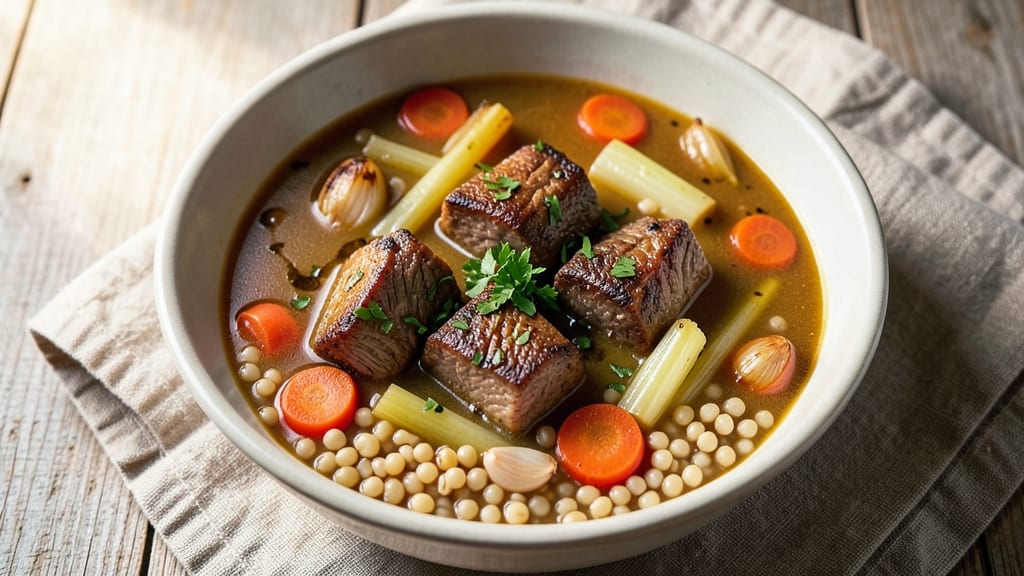
This beef barley soup pressure cooker recipe transforms a comforting classic into a one-pot, 25-minute meal that’s rich, hearty, and effortless. The pressure cooker’s magic lies in its ability to tenderize beef and infuse flavors in a fraction of the time—no long simmering required.
I’ve perfected this version to deliver a broth so deeply savory it’ll have everyone asking for seconds, with barley that’s perfectly al dente and chunks of beef that practically melt in your mouth.
The secret to restaurant-quality results at home starts with a high-heat sear for the beef, locking in flavor before the pressure cooker does its work. Aromatics like onions, carrots, and celery form the flavor base, while bay leaves and thyme add layers of depth.
The pressure cooker handles the rest, building a velvety broth without requiring constant attention—ideal for busy weeknights or meal prep.
What you’ll end up with is a steaming bowl of warmth—golden broth studded with tender beef, chewy barley, and vibrant vegetables. The texture is where this recipe excels: fork-tender beef, barley that holds its shape, and a sauce thick enough to coat every spoonful.
It’s the kind of soup that feels like a hug in a bowl, but without the hours of simmering.
Serve it as-is for a rustic touch, or garnish with fresh parsley and a squeeze of lemon for brightness. The beauty of this method is its versatility—double the batch for leftovers that taste just as good reheated. Let’s get cooking!
Ingredients for beef barley soup pressure cooker
Sixteen ingredients to create restaurant-quality beef barley soup with pressure cooker efficiency.
| Ingredient | Amount | Notes |
|---|---|---|
| Chuck Roast 🥩 | 2 lb | Cut into 1.5-inch cubes, boneless |
| Yellow Onion 🧅 | 1 whole | Large, chopped into 0.5-inch pieces |
| Carrots 🥕 | 4 medium | Peeled, cut into 0.5-inch chunks |
| Celery Stalks 🧄 | 3 whole | Trimmed, cut into 0.5-inch pieces |
| Pearl Barley 🌾 | 1 cup | Uncooked, rinsed before adding |
| Garlic Cloves 🧄 | 4 cloves | Minced, fresh preferred |
| Beef Broth 💧 | 4 cups | Low-sodium preferred, homemade or quality store-bought |
| Tomato Paste 🍅 | 2 tbsp | Smooth, not chunky |
| Dried Thyme 🌿 | 1 tsp | Or 1 tbsp fresh, finely chopped |
| Bay Leaves 🍃 | 2 whole | Fresh preferred, remove before serving |
| Olive Oil 🫒 | 2 tbsp | Extra-virgin for high-heat searing |
| Salt 🧂 | 1 ½ tsp | Diamond Crystal kosher salt, adjust to taste |
| Black Pepper 🌶️ | ½ tsp | Freshly ground, coarse grind |
| Fresh Parsley 🌿 | ¼ cup | Chopped, for garnish (optional) |
| Lemon Juice 🍋 | 1 tbsp | Freshly squeezed, for brightness |
The chuck roast is non-negotiable for fork-tender results—it's the only cut with enough connective tissue to melt into rich, velvety broth. Look for well-marbled pieces at your local butcher or the meat department of Whole Foods or Costco. Pre-cut cubes save time, but if buying whole, trim excess fat and cut into 1.5-inch chunks for even cooking. The barley should be pearl barley (not steel-cut)—it cooks faster and holds its shape better in the pressure cooker. Bob's Red Mill or Quaker brands are reliable choices, but any grocery store carries them. For the aromatics, organic celery and carrots from the produce section add vibrant color and subtle sweetness, but conventional will work fine if organic isn't available.
No fresh thyme? Dried works perfectly at one-third the amount, but fresh releases more aroma. The tomato paste can be substituted with 1 cup crushed tomatoes if you prefer, though paste gives better depth of flavor. For the broth, homemade beef stock delivers the best results, but Swanson or Pacific Foods low-sodium options are solid shortcuts. If you're using pre-cut vegetables, rinse them well to remove any dirt or debris. The bay leaves should be fresh if possible—they add a subtle floral note that dried leaves miss. For the olive oil, California Olive Ranch or Bertolli extra-virgin varieties handle high heat beautifully without burning.
This soup reheats beautifully—simmer on low heat for 10 minutes to restore its velvety texture. Store leftovers in airtight containers for up to 5 days in the fridge or 3 months in the freezer. The barley actually improves overnight as it absorbs more broth. For meal prep, portion into individual containers with a splash of lemon juice to preserve freshness. Garnish with fresh parsley and a squeeze of lemon just before serving to brighten the flavors. The soup thickens as it cools, so add a splash of broth when reheating if it seems too thick.
Why You'll Love This Recipe
- Dump-and-Go Magic: I swear, this is the kind of recipe where you toss in the chuck roast, dump in the chopped veggies, and walk away. The pressure cooker does all the heavy lifting—no stirring, no watching, no stress—just rich, tender beef and perfectly cooked barley when you open it up.
- Deep, Savory Payoff: That chuck roast? It melts into shreds, so tender it falls apart at the touch of a spoon. The onions and celery soften into a sweet, aromatic base, while the barley soaks up all the beefy broth—no blandness here, just layers of hearty, comforting flavor in every bite.
- Weeknight Workhorse: Between us, this is my go-to when I need something filling but don’t want to slave over it. It’s the kind of soup that doubles as a meal prep staple—reheats beautifully for lunches, and even impresses when I serve it to guests. (Yes, even on a Tuesday night.)
- Budget-Friendly Powerhouse: A big cut of chuck roast and a handful of veggies stretch into six servings without breaking the bank. Honestly, it’s the kind of recipe that makes me feel like I’m feeding a crowd without the grocery bill to match—plus, the leftovers taste just as good the next day.
Step-by-step instructions for beef barley soup in a pressure cooker
This method delivers restaurant-quality beef barley soup with minimal cleanup and maximum flavor.
Sear the Chuck Roast for Deep Flavor
Set your pressure cooker to "Sauté" function and heat the 2 tablespoons olive oil over medium-high heat. Add the 2 lb chuck roast cut into 1.5-inch cubes, working in batches if needed to avoid crowding. Sear each piece for 2-3 minutes per side until they develop a deep brown crust—this Maillard reaction builds the soup's foundation flavor.
As you sear, remove the cooked beef and set aside. The goal is to create a flavorful browned layer in the pot that will dissolve into the broth later. If the oil starts smoking excessively, reduce heat slightly to maintain control without losing the sear.
Sauté Vegetables and Build the Base
In the same pot, add the 1 whole yellow onion, 4 medium carrots, and 3 whole celery stalks, all prepped as specified. Cook for 5-6 minutes, stirring occasionally, until the vegetables soften slightly and the onions become translucent. Add the 4 cloves minced garlic and cook for 30 seconds until fragrant.
Stir in the 2 tablespoons tomato paste and cook for 1 minute, allowing it to darken slightly. This creates a rich umami base that complements the beef. Sprinkle with 1 teaspoon dried thyme and 2 whole bay leaves, then pour in the 4 cups beef broth. Scrape up any browned bits from the bottom—these contain concentrated flavor.
Pressure Cook Until Tender
Return the seared beef to the pot and add the 1 cup pearl barley (pre-rinsed). Secure the lid and set the pressure cooker to high pressure for 20 minutes. The barley needs this time to fully hydrate and soften while the beef becomes fork-tender.
Resist the urge to peek during cooking—releasing pressure prematurely can extend the cooking time. Instead, trust the timer. When the cooking cycle completes, allow the pressure to release naturally for 10 minutes before quick-releasing any remaining pressure. This gradual release prevents the barley from becoming mushy.
Season and Finish the Soup
Once pressure is fully released, taste the soup and adjust seasoning with 1.5 teaspoons salt and 0.5 teaspoon black pepper as needed. The barley should be tender but still hold its shape, and the beef should pull apart easily with a fork. If the soup is too thick, add ½ cup water to reach your desired consistency.
Stir in the 1 tablespoon freshly squeezed lemon juice to brighten the flavors. Remove and discard the bay leaves. For serving, ladle the soup into bowls and garnish with 0.25 cup chopped fresh parsley. The acidity from the lemon juice cuts through the richness of the beef and barley, balancing the dish perfectly.
Pro Tips For Making Beef Barley Soup Pressure Cooker
- Sear the Chuck Roast First: I learned this the hard way—skipping the sear means flavor that’s more watery than rich. Brown the chuck roast in batches on high heat before adding liquids; the crust locks in depth. (Yes, even if you’re impatient like me, give it 3-4 minutes per side.)
- Cut Celery and Carrots Large: Tiny diced veggies turn to mush in the pressure cooker. Leave celery stalks 1-inch chunks and carrots ½-inch slices—they’ll soften perfectly without disappearing. (Your future self will thank you when the soup still has texture.)
- Don’t Overfill the Pot: The pressure cooker needs room to build pressure. Fill it no more than halfway with ingredients and liquid—packing it tight leads to burnt barley or a lukewarm mess. (I once ignored this and ended up with a sad, gummy soup.)
- Toast the Barley First: Sounds weird, but it works: dry-toast the pearl barley in a separate pan for 2 minutes before adding it to the pot. The nutty aroma and slight crunch make a real difference—no extra effort, just better flavor. (I skip this when I’m lazy, but the dish is noticeably better when I don’t.)
Best sauces and condiments for this beef barley soup pressure cooker
Creamy Mushroom Addition
Sauté 8 oz sliced cremini mushrooms in 1 tablespoon olive oil until golden, then stir into the soup during the final 5 minutes of pressure cooking. The mushrooms add an earthy depth that pairs beautifully with the barley.
For extra richness, whisk in ¼ cup heavy cream after releasing pressure for a velvety texture. 🍄
Umami Boost with Worcestershire
Add 1 tablespoon Worcestershire sauce when you incorporate the tomato paste. This adds a savory complexity that enhances the beef flavor without overpowering the broth. For a vegetarian-friendly version, substitute with 1 teaspoon soy sauce or 1 tablespoon balsamic vinegar. The sauce blends seamlessly into the soup's flavor profile.
Herb-Infused Oil Garnish
Create a finishing oil by gently heating 2 tablespoons olive oil with 1 teaspoon dried rosemary and 1 teaspoon dried sage until fragrant. Drizzle this over individual servings just before eating.
The aromatic herbs elevate the soup's natural flavors while adding a visual pop of color. Store any leftover oil in an airtight container for up to 1 week.
Spicy Kick with Chili Crème
Mix 2 tablespoons sour cream with ½ teaspoon smoked paprika and ¼ teaspoon cayenne pepper for a cooling-spicy contrast. Dollop this chili crème on top of each bowl before serving. The coolness of the sour cream balances the soup's heartiness, while the paprika adds a subtle smokiness.
This garnish works especially well for those who enjoy a bit of heat. 🌶️
Crispy Topping with Breadcrumbs
Toast ¼ cup panko breadcrumbs with 1 tablespoon melted butter until golden brown. Sprinkle these over the soup just before serving for a delightful crunch contrast. For extra flavor, mix in ½ teaspoon garlic powder and ½ teaspoon dried parsley before toasting.
The crunch adds texture that complements the soup's soft components perfectly.
Bright Citrus Twist
Zest 1 orange and add the zest along with the lemon juice during the final seasoning step. The citrus notes cut through the richness of the beef and barley while adding a refreshing brightness.
Serve with an additional 1 teaspoon orange zest on top for an elegant presentation. This variation works particularly well when serving the soup at lunch or brunch. 🍊
Nutrition facts
Frequently asked questions
Why does the recipe call for chuck roast instead of a more expensive cut?
The chuck roast is perfect for pressure cooking because its connective tissue breaks down into rich, flavorful broth while the meat becomes fork-tender. More expensive cuts like sirloin would dry out in the pressure cooker. The fat marbling in chuck also adds natural richness to the soup without needing extra oil.
Can I use a different type of barley in this recipe?
Pearl barley is ideal because it cooks quickly and holds its shape, but you can substitute with wild rice blend or short-grain brown rice. Just adjust cooking time to 15 minutes for rice blends, as they require less time. Steel-cut oats or quinoa won't work—they need much longer cooking.
What if my pressure cooker doesn't have a "Sauté" function? No problem! Use a separate skillet to sear the beef and vegetables, then transfer everything to the pressure cooker. Just
How do I know when the barley is perfectly cooked?
The barley should be tender but still hold its shape—like al dente pasta. Test by tasting a few grains: they should be soft inside with a slight bite. If they're mushy, you overcooked them. For best results, always do a 10-minute natural release after pressure cooking.
Can I make this soup in an Instant Pot?
The recipe works perfectly in an Instant Pot. Just use the same 20-minute high-pressure setting and follow the natural release instructions. The Instant Pot's rapid heating makes this one of the fastest ways to create restaurant-quality beef barley soup at home.