
Soups & Stews
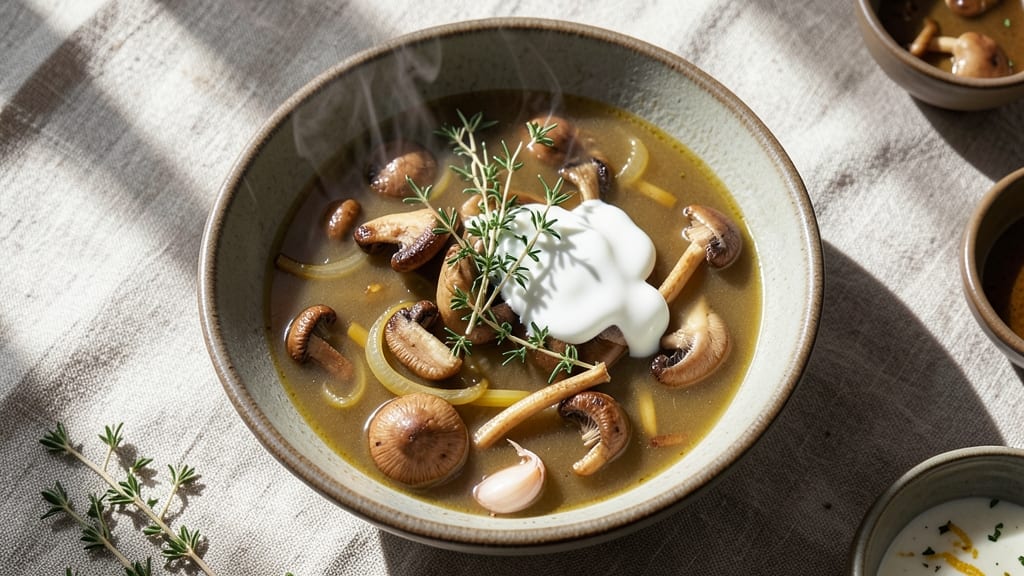
This beech mushroom soup recipe delivers restaurant-quality earthiness with a velvety texture that feels like a warm hug on a chilly evening. The secret lies in slow-cooked mushrooms and aromatic herbs that transform simple ingredients into something deeply satisfying.
Unlike store-bought versions, this recipe builds rich umami flavor through proper technique rather than shortcuts.
What sets this soup apart is the balance between deep umami and smooth texture—achieved by proper mushroom preparation and careful blending. We'll start with a flavorful base of sautéed onions, garlic, and thyme before adding the mushrooms to develop their natural sweetness.
The result is a soup that's both comforting and sophisticated, perfect for impressing guests or treating yourself after a long week.
By the time you serve this soup, you'll have created something that's rich yet light, with mushrooms that melt into the broth while maintaining subtle texture. The velvety finish comes from proper blending technique, ensuring every spoonful delivers that perfect balance of earthy depth and creamy smoothness.
This is the kind of soup that gets better with leftovers as flavors meld overnight.
Whether you prefer a classic cream-based version or a lighter vegetable broth option, this recipe adapts beautifully while maintaining its core characteristics. The method is straightforward but delivers professional results—ideal for both beginner cooks and seasoned home chefs looking to elevate their soup game.
Let's get started with the ingredients.
Ingredients for beech mushroom soup
Earthy mushrooms meet aromatic herbs in this sophisticated yet approachable soup recipe.
| Ingredient | Amount | Notes |
|---|---|---|
| Fresh Beech Mushrooms 🍄 | 1 ½ lb | Sliced into 1/4-inch pieces |
| Yellow Onions 🧅 | 1 whole | Thinly sliced for even cooking |
| Garlic Cloves 🧄 | 4 cloves | Minced for aromatic depth |
| Fresh Thyme 🌿 | ¼ cup | Stems removed, leaves chopped |
| Vegetable Broth 💧 | 4 cups | Low-sodium preferred for balance |
| Heavy Cream 🥛 | ½ cup | Full-fat for velvety texture |
| Extra-Virgin Olive Oil 🫒 | ¼ cup | For sautéing mushrooms |
| Fresh Parsley 🌿 | 0.1 cup | Chopped for garnish |
| Dried Bay Leaves 🌿 | 2 whole | For subtle earthy notes |
| Salt 🧂 | 1 ½ tsp | Diamond Crystal preferred |
| Ground Black Pepper 🌶️ | ½ tsp | Freshly ground for heat |
| Shallots 🧅 | 2 whole | Minced for delicate sweetness |
| Butter 🧈 | 2 tbsp | Unsalted, for sautéing onions |
| All-Purpose Flour 🌾 | 1 tbsp | For thickening broth |
The beech mushrooms are the heart of this dish—fresh, wild-harvested varieties deliver the most complex umami flavor, but store-bought cremini or baby bella mushrooms work beautifully as a substitute. For the best quality, shop at Whole Foods or your local specialty grocer where they're often sold in bulk. If using dried mushrooms, soak them first and use the soaking liquid in the broth. The fresh thyme and bay leaves should be vibrant, not wilted—look for organic options at Trader Joe's for consistent quality. Shallots add a delicate sweetness that balances the earthy mushrooms; if unavailable, substitute with an extra 1/4 cup minced yellow onion.
No heavy cream? Coconut milk or cashew cream creates a rich, dairy-free alternative, though texture will differ slightly. For a lighter option, reduce the cream to 1/4 cup and add 1/4 cup plain Greek yogurt for tang. The vegetable broth can be homemade (simmer onion peels, celery, and carrots) or store-bought—Imagine or Pacific Foods brands offer low-sodium options that won't overpower the mushrooms. If you prefer a creamier finish without dairy, silken tofu blended into the soup adds protein and creaminess. The flour slurry is critical for achieving that velvety texture; whisk it vigorously to avoid lumps, and let it simmer for at least 5 minutes to fully develop the roux.
This soup tastes even better the next day as flavors meld—portion into airtight containers and refrigerate for up to 5 days. For longer storage, freeze in single-serving portions for up to 3 months. Reheat gently on the stove with 1-2 tablespoons of water or broth to restore creaminess. Fresh parsley wilts quickly, so add it just before serving. The bay leaves can be removed before blending for a smoother finish, but leaving them in during cooking enhances the earthy depth. For meal prep, double the recipe and freeze half—thaw overnight in the fridge before reheating for optimal texture.
Why You'll Love This Recipe
- No-Fuss Cleanup: I swear by this one—just sauté the onions and mushrooms, add broth, and let it simmer. The thyme ties everything together, and honestly? One pot, one spoon, and you’re done. My counter stays spotless, and my stress levels drop.
- Earthy Umami Magic: That first bite of beech mushrooms—meaty, slightly nutty, with garlic and thyme weaving through—is ridiculously good. It’s the kind of flavor that makes you pause mid-sip of wine and go, “Wait, why don’t I eat this more often?”
- Weeknight to Dinner Party: Between us, this soup is my secret weapon. Toss it together for a tired Tuesday, or dress it up with crusty bread and a drizzle of cream for guests. Same recipe, two vibes—no extra work, just different settings.
- Budget-Friendly Leftovers: Fresh beech mushrooms might sound fancy, but they stretch further than you’d think. A single batch feeds me for three lunches, and the broth base means I’m not breaking the bank. Freeze extras? Even better—just reheat and forget.
Step-by-step instructions for beech mushroom soup
Transform earthy beech mushrooms into a velvety soup with rich umami depth and subtle herbal notes.
Sauté the Aromatics for Flavor Foundation
Heat the 2 tablespoons butter in a large pot over medium heat until it melts and begins to foam. Add the 2 whole shallots and 1 whole yellow onion, both thinly sliced, cooking for 5-6 minutes until softened and translucent. The onions should release their sweetness without browning.
Add the 4 cloves minced garlic and 0.25 cup chopped fresh thyme, stirring constantly for 30 seconds until fragrant. This aromatic base creates the flavor backbone of your soup. If you notice the garlic starts to brown too quickly, reduce the heat slightly to prevent bitterness.
Cook the Mushrooms Until Deeply Flavorful
Push the onions to one side of the pot and add 0.25 cup extra-virgin olive oil. When the oil shimmers, add the 1.5 pounds sliced beech mushrooms in a single layer. Cook for 8-10 minutes without stirring, allowing them to develop a golden crust on one side before gently flipping each piece.
Continue cooking for another 5-7 minutes until the mushrooms release their moisture and develop a rich, caramelized depth. The mushrooms should be tender but still hold their shape. If they release too much liquid, reduce heat to medium-low to prevent steaming instead of browning.
Build the Broth and Season
Add the 2 whole dried bay leaves, 1.5 teaspoons salt, and 0.5 teaspoon freshly ground black pepper to the pot. Pour in the 4 cups vegetable broth, scraping up any browned bits from the bottom of the pot. Bring the mixture to a gentle simmer over medium heat and cook for 15 minutes, allowing the flavors to meld.
Remove the bay leaves and stir in the 1 tablespoon all-purpose flour, whisking vigorously for 1-2 minutes until the broth thickens slightly. This step creates a silky texture without making the soup overly heavy. Taste and adjust seasoning if needed—beech mushrooms have a naturally earthy flavor that may require additional salt.
Finish with Cream for Velvety Texture
Reduce the heat to low and stir in the 0.5 cup heavy cream, allowing it to warm through for 2-3 minutes without boiling. The cream should blend seamlessly with the broth, creating a luxurious texture. If the soup thickens too much, whisk in 1-2 tablespoons of hot broth to reach your desired consistency.
Remove from heat and let the soup rest for 5 minutes, allowing the flavors to settle. The final result should be a rich, velvety soup with deep umami notes from the mushrooms and bright herbal accents from the thyme and bay leaves.
Garnish and Serve
Ladle the soup into bowls and garnish each serving with 0.1 cup chopped fresh parsley. The parsley adds a fresh contrast to the earthy mushrooms and creamy broth. Serve immediately while warm, as the flavors continue to develop even after the soup is off the heat.
For an extra touch, consider topping with a drizzle of extra-virgin olive oil or a sprinkle of crumbled feta cheese for added complexity. This soup pairs beautifully with crusty bread or a simple green salad, making it a satisfying dish for any occasion.
Pro Tips For Making Beech Mushroom Soup
- Slice Mushrooms Thinly—Like You Mean It: Beech mushrooms soak up flavor like sponges, but if they’re thick, they’ll turn to mush instead of melting into the broth. Aim for 3–4mm slices—no thicker, or you’ll end up with a watery soup. I learned this the hard way after serving a batch where the mushrooms just fell apart. Use a sharp knife and don’t be lazy—this is the thing that matters most.
- Sweat the Onions Low and Slow: Skip the high heat, or you’ll burn the onions before they soften. Instead, cook them over medium-low for 8–10 minutes until they’re translucent and just starting to caramelize—this builds depth of flavor. After burning three batches, I finally figured out that patience here makes a real difference.
- Toast the Garlic—But Don’t Walk Away: Add the minced garlic to the onions when they’re almost done, then let it sizzle for 30 seconds until fragrant. Walk away for even 10 seconds, and it’ll turn bitter. Keep the heat at medium and stir constantly—this is where the magic happens, not where you burn it.
- Strain the Broth—Unless You Love Grit: Beech mushrooms release fine sand-like particles when cooked, and nothing ruins a smooth soup like gritty mouthfeel. After simmering, strain the broth through a fine-mesh sieve or cheesecloth. It’s not the prettiest method, but it’s the tastiest—trust the process.
Storing and reheating this recipe
Refrigerator Storage
Let your beech mushroom soup cool completely before transferring it to airtight glass containers—I prefer Pyrex with snap-on lids for easy reheating. Store it in the fridge for up to 4 days, but trust me, the flavors actually deepen overnight as the mushrooms and herbs meld.
The cream may separate slightly, but a quick whisk restores that velvety texture. Always leave ½ inch headspace to prevent spills when reheating. 💛
Freezer Storage
For longer storage, freeze your soup in single-serving portions using quart-sized freezer bags (they stack neatly and thaw faster). Press out excess air to prevent freezer burn, and label with the date—this soup stays delicious for up to 3 months.
When ready to eat, transfer a portion to the fridge to thaw overnight for even texture. Avoid refreezing, as the cream can develop graininess. 🧊
Stovetop Reheating
My preferred method is reheating on the stove over medium-low heat with a splash of 1-2 tablespoons broth or water. This prevents the soup from curdling and restores its creamy consistency. Stir frequently and keep the heat low to avoid overheating the cream.
If the soup looks too thick, add another tablespoon of liquid—it should reach 165°F before serving. This method takes about 5-7 minutes for complete portions. 🔥
Microwave Reheating
For quick reheating, transfer soup to a microwave-safe bowl and cover loosely with a microwave-safe lid or damp paper towel. Heat on medium power (50%) for 2-3 minutes, stir, then continue in 30-second intervals until steaming.
Avoid high power to prevent the cream from breaking. If the soup separates, whisk vigorously before serving. This method is fastest but slightly less gentle on the texture. ⚡
Reviving Texture
If your reheated soup is too thick, whisk in 1 tablespoon cold water or broth to restore balance. For extra richness, stir in 1 teaspoon heavy cream or a pat of soft butter. The key is gentle heat—never let it boil.
I also recommend adding a pinch of salt after reheating, as flavors can mellow during storage. This simple adjustment makes all the difference in restoring that restaurant-quality mouthfeel. 💡
Garnish Refresh
Always add fresh parsley and a drizzle of olive oil after reheating, as these elements lose their vibrancy during storage. For extra flair, sprinkle with toasted breadcrumbs or crumbled goat cheese—these toppings should be added immediately before serving.
The contrast between the warm soup and fresh garnishes makes it feel like a brand-new dish every time. ✨
Nutrition facts
Frequently asked questions
Can I substitute beech mushrooms with other varieties?
If you can't find beech mushrooms, use cremini, shiitake, or oyster mushrooms—they all deliver rich umami flavors. For a milder taste, try white button mushrooms, but increase the amount to 2 pounds since they're less flavorful. Avoid portobello mushrooms—they're too meaty and watery for this delicate soup.
Why does my soup look too thin after adding cream?
This usually happens when the broth wasn't reduced enough or the cream was added too quickly. First, let the soup simmer uncovered for 5-7 minutes to reduce excess liquid. Then stir in the cream over low heat while whisking constantly. If still too thin, mix 1 tablespoon flour with 1 tablespoon cold water and stir into the soup, simmering for 2 minutes to thicken.
Can I make this soup vegetarian or vegan?
Yes! Replace the heavy cream with ½ cup coconut milk or ¼ cup cashew cream (blend soaked cashews with water). For a vegan broth, use vegetable or mushroom broth. To boost umami, add 1 teaspoon soy sauce or ½ teaspoon nutritional yeast when simmering. The texture will be slightly lighter but still delicious.
How do I prevent my mushrooms from turning rubbery?
Rubbery mushrooms happen from overcooking or improper prep. First, slice mushrooms evenly (¼-inch thick) and cook them in one layer without crowding the pan. Use medium-high heat and flip pieces only once—they should develop a golden crust before turning. If they release too much liquid, reduce heat to medium-low to evaporate excess moisture. Never cover while cooking!
What's the best way to serve this soup?
This soup shines with a few simple touches. Serve in warm bowls with crusty bread or garlic toast for dipping. For extra flair, garnish with crumbled feta, toasted pine nuts, or a drizzle of truffle oil. Pair with a simple green salad or roasted Brussels sprouts to balance the richness. The creaminess makes it perfect for chilly evenings or as a starter before a hearty main course.