
Soups & Stews
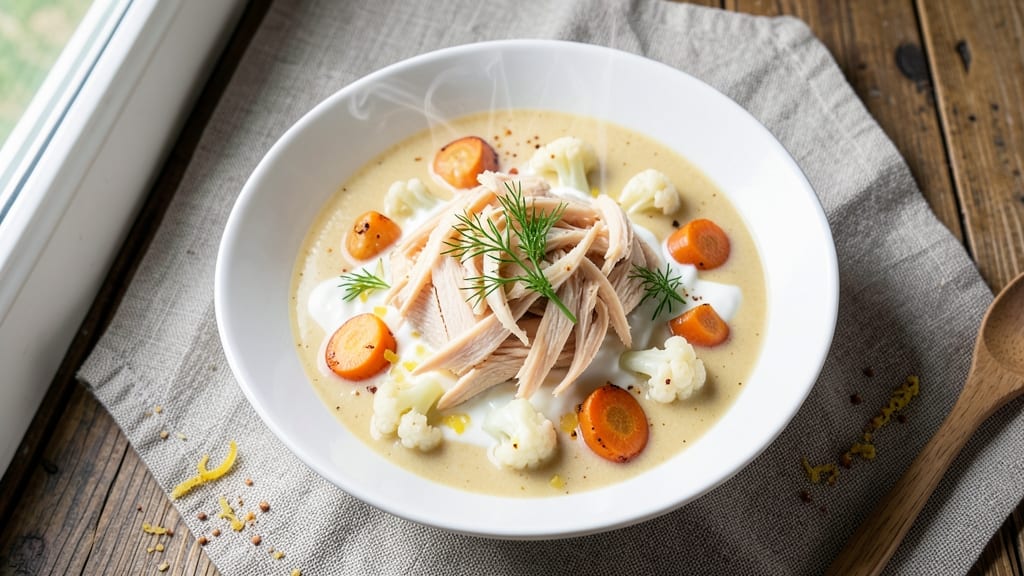
This bariatric cream of chicken soup delivers all the comforting flavors of classic cream of chicken without the heavy calories or digestive discomfort.
The secret lies in using lean chicken breast, Greek yogurt instead of heavy cream, and pureed cauliflower for natural thickening—creating a lightweight, protein-rich version that still satisfies cravings while supporting post-surgery dietary needs.
The recipe focuses on gentle digestion with a smooth, velvety texture achieved through careful blending and simmering. Unlike traditional versions loaded with butter and cream, this version prioritizes high protein, low fat, and easy-to-digest ingredients while maintaining that familiar, comforting taste.
The result is a nourishing soup that aligns with bariatric guidelines without sacrificing flavor.
What sets this apart is the balanced nutrition—each bowl provides substantial protein to help with satiety and recovery, while the pureed texture makes it gentle on sensitive digestive systems.
The broth is rich yet light, and the addition of cauliflower not only thickens naturally but also adds subtle vegetable nutrition without altering the classic cream of chicken profile.
Perfect for meal prep or a comforting post-surgery meal, this soup proves that lightweight eating can still feel indulgent. The instructions include precise blending techniques to ensure the perfect consistency—smooth enough for easy digestion, creamy enough to feel like a treat.
Ready in under an hour, it’s a game-changer for anyone navigating bariatric-friendly comfort food.
Ingredients for bariatric cream of chicken soup
Lean protein, gentle thickening, and bariatric-friendly ingredients create velvety comfort in every spoonful.
| Ingredient | Amount | Notes |
|---|---|---|
| Boneless, Skinless Chicken Breast 🍗 | 12 oz | Lean protein for gentle digestion |
| Plain Greek Yogurt 🧀 | ½ cup | Non-fat, for creamy texture |
| Fresh Cauliflower 🥬 | 1 small head | Steamed and pureed for thickening |
| Low-Sodium Chicken Broth 💧 | 4 cups | Homemade or high-quality store-bought |
| Fresh Carrots 🥕 | ½ cup | Diced for subtle sweetness |
| Yellow Onion 🧅 | ¼ cup | Finely diced for aromatic base |
| Garlic Cloves 🧄 | 2 cloves | Minced for depth of flavor |
| Extra-Virgin Olive Oil 🫒 | 1 tbsp | For sautéing vegetables |
| Diamond Crystal Kosher Salt 🧂 | ½ tsp | Adjust to taste |
| Freshly Ground Black Pepper 🌶️ | ¼ tsp | For subtle seasoning |
| Fresh Parsley 🌿 | ¼ cup | Chopped for garnish and freshness |
| Low-Fat Milk 🥛 | ¼ cup | Optional for creaminess |
| Lemon Juice 🍋 | 1 tbsp | Freshly squeezed for brightness |
The chicken breast is the cornerstone of this recipe—lean but flavorful, ensuring high protein without excess fat. Opt for organic or free-range when possible, as it tends to have better texture. For the Greek yogurt, select non-fat, plain varieties like Fage or Siggi's—these provide creaminess without the heavy calories. The cauliflower isn't just a thickener; it adds subtle nutrition while keeping the soup lightweight yet satisfying. Most grocery stores carry pre-cut cauliflower florets, but a whole head is more cost-effective and just as easy to steam and puree. Low-sodium chicken broth is essential here—brands like Swanson or Pacific Foods offer great options, or make your own using homemade stock for even better flavor control.
No Greek yogurt? Silken tofu blended until smooth works surprisingly well—it mimics the creaminess without dairy. Running short on cauliflower? Zucchini or butternut squash can substitute at the same quantity, though texture may vary slightly. The carrots and onion can be swapped for celery or leeks if preferred, but stick to low-FODMAP options like carrots for gentle digestion. For extra richness without added fat, a splash of coconut milk (unsweetened) can replace the optional milk. The lemon juice isn't just for flavor—it brightens the soup and adds a touch of acidity that balances the creaminess, so don't skip it even if you're short on time.
Store the soup in airtight glass containers for up to 4 days in the fridge, though it reheats best within 2 days for optimal texture. For longer storage, portion into ice cube trays and freeze—each cube makes a perfect single serving later. The Greek yogurt and fresh herbs should be added just before serving to preserve their freshness. This soup reheats beautifully—simmer gently on low heat or use the microwave with a splash of water to restore creaminess. Portion control is key for bariatric diets, so consider serving with a small side salad or whole-grain crackers to round out the meal without overindulging.
Why You'll Love This Recipe
- No Chopping Chaos: I swear by this recipe because you only need to dice the carrots—everything else is either pre-cut or thrown in whole. That Greek yogurt swap for cream? It’s the secret weapon that makes it silky smooth without the fuss.
- Creamy Without Guilt: The yogurt creates this velvety texture that’s rich but still light, and the cauliflower adds a subtle sweetness that balances the chicken. Honestly, I’ve had people ask if it’s homemade—no one believes it’s bariatric-friendly until I tell them.
- Lunchbox Hero: Between us, this soup is my go-to for meal prep because it reheats beautifully and keeps its creamy magic. Pack it in thermoses for work, or freeze portions—it’s the kind of dish that tastes just as good cold as it does hot.
- Budget-Friendly Comfort: A single chicken breast and a head of cauliflower stretch across multiple servings, and the broth? You can use low-sodium store brands without sacrificing flavor. It’s the kind of recipe that makes grocery day feel like a win.
Step-by-step instructions for bariatric cream of chicken soup
Here's how to create a nourishing, protein-rich soup that delivers comfort without heaviness.
Prepare the Chicken and Vegetable Base
In a medium saucepan, combine the 12 oz boneless, skinless chicken breast, 4 cups low-sodium chicken broth, 0.5 cup diced fresh carrots, 0.25 cup finely diced yellow onion, and 2 minced garlic cloves. Bring to a gentle boil over medium-high heat, then immediately reduce to a simmer for 15 minutes. This ensures the chicken cooks through while the vegetables soften—you'll see the broth develop a light golden hue from the caramelizing aromatics.
Real talk: Don't skip the simmering time. The chicken needs to reach 165°F internally for safe consumption, and the vegetables should become fork-tender. I use a meat thermometer to verify doneness—this prevents overcooking that can make the chicken dry. Once the chicken is fully cooked, remove it from the broth using tongs and set aside to cool slightly before shredding.
Sauté the Cauliflower for Thickening
In a separate skillet, heat 1 tablespoon extra-virgin olive oil over medium heat. Add the 1 small head fresh cauliflower, cut into florets, and sauté for 8-10 minutes until the edges begin to soften and the pieces release easily from the pan. The cauliflower should develop a slight golden color—this indicates it's ready for pureeing.
Here's the thing—cauliflower absorbs flavors beautifully, so don't overcrowd the pan. If your skillet gets too crowded, work in batches. Once cooked, transfer the cauliflower to a blender or food processor. Add 0.5 cup plain Greek yogurt and 0.25 cup low-fat milk (if using) and puree until completely smooth. The texture should be velvety, like heavy cream but much lighter.
Combine and Season the Soup
Return the shredded chicken to the broth and bring the mixture to a gentle simmer over medium-low heat. Stir in the cauliflower puree and cook for 5 minutes, allowing the flavors to meld. Season with 0.5 teaspoon Diamond Crystal kosher salt and 0.25 teaspoon freshly ground black pepper, then stir in 1 tablespoon freshly squeezed lemon juice. The lemon brightens the flavors and balances the richness of the yogurt.
This is the moment that matters: Taste and adjust seasoning if needed. The soup should be flavorful but not overly salty—remember, we're keeping this bariatric-friendly. If the soup thickens too much, whisk in 1-2 tablespoons of hot broth to reach your desired consistency. The final texture should coat the back of a spoon lightly, ensuring it's easy to digest while still satisfying.
Finish and Serve with Fresh Herbs
Remove the soup from heat and stir in 0.25 cup chopped fresh parsley. The parsley adds a fresh, vibrant note that cuts through the creaminess of the yogurt. Let the soup rest for 5 minutes before serving—this allows the flavors to fully integrate and the soup to reach its optimal temperature.
Serve immediately while warm. The soup should be smooth, comforting, and packed with protein from the chicken and yogurt. Each spoonful delivers gentle digestion while satisfying that craving for something hearty. For extra flavor, garnish with an additional sprinkle of black pepper or a drizzle of lemon juice.
Pro Tips For Making Bariatric Cream Of Chicken Soup
- Shred Chicken at 165°F: DESCRIPTION: Chicken breast hits 165°F fast—pull it at 155°F and tent with foil for 5 minutes. I learned this the hard way: overcooking turns it rubbery, and you’ll end up with a soup that’s more glue than comfort. Let it rest before shredding, or you’ll fight dry, stringy strands.
- Blend Yogurt Last: DESCRIPTION: Stir the Greek yogurt in after the soup simmers. Heat it separately to 160°F first—this keeps it from curdling into a lumpy mess. I used to dump it in cold, and the texture suffered. Warm it gently, then fold it in like you’re tucking in a blanket.
- Slice Carrots Thin: DESCRIPTION: Cut carrots into ¼-inch matchsticks—they cook faster and stay tender. Thick chunks turn to mush, and you’ll end up with a soup that’s more about texture than flavor. A sharp knife and a steady hand make all the difference here.
- Strain the Broth: DESCRIPTION: Pour the low-sodium broth through a fine-mesh sieve after simmering with chicken. This removes bits that make the yogurt-based soup grainy. I skipped this once and got a mouthful of collagen every spoonful—now I always strain, even if it’s an extra 30 seconds.
Make-ahead tips for leftovers
Prep Ahead Components
Start by prepping the chicken and veggies the night before. Store the raw 12 oz boneless, skinless chicken breast, 0.5 cup diced carrots, 0.25 cup finely diced yellow onion, and 2 minced garlic cloves in a resealable plastic bag in the fridge.
This saves 15 minutes of prep time the next day. Just toss everything into your pot and simmer as directed. 💡
Blend and Store Puree
Make the cauliflower puree in advance and store it separately. Sauté the 1 small head cauliflower as directed, then blend with 0.5 cup plain Greek yogurt and 0.25 cup low-fat milk. Transfer to an airtight container and refrigerate for up to 3 days.
When ready to cook, simply reheat the puree gently on the stove before adding it to the broth. This step ensures your soup stays creamy without extra effort. ✨
Portion Control Made Easy
For bariatric-friendly portioning, divide the finished soup into 4 individual airtight containers (about 1 cup per serving). Label each with the date and store in the fridge for up to 4 days.
Freeze extras in ice cube trays—each cube makes a perfect single serving later. This keeps portions consistent and prevents overeating. 🥄
Freezer-Friendly Tips
If freezing, cool the soup completely before transferring to freezer-safe bags or containers. Leave 1 inch headspace to prevent expansion cracks. Thaw overnight in the fridge and reheat gently on the stove with a splash of low-sodium broth to restore creaminess.
Avoid microwaving directly from frozen—this can make the yogurt separate. ❄️
Herb Garnish Hack
Chop the 0.25 cup fresh parsley just before serving to keep it vibrant. Store the whole stems in a glass of water on the counter like flowers—they’ll stay fresh for 5-7 days. This ensures your soup always looks and tastes fresh, even when using prepped ingredients. 🌿
Reheating for Best Texture
Reheat soup on the stove over low heat for 5-7 minutes, stirring occasionally. If using the microwave, cover with a damp paper towel and heat in 1-minute intervals, stirring between each.
Add 1-2 tablespoons of hot broth if the soup thickens too much during reheating. This maintains the smooth, velvety consistency bariatric diets need. 🔥
Nutrition facts
Frequently asked questions
Can I use chicken thighs instead of breast for more flavor?
While chicken thighs add richness, they're higher in fat which may not align with bariatric goals. For a lighter version, stick with skinless breast but marinate it in lemon juice and garlic for 30 minutes before cooking to boost flavor without extra calories. This keeps the protein high while maintaining gentle digestion.
How do I adjust the texture for sensitive stomachs?
For extra smoothness, blend the entire soup (including shredded chicken) until completely silky. Use an immersion blender for convenience, or pulse in batches. If the texture is too thick after blending, whisk in 1-2 tablespoons of hot broth until you reach a velvety, easy-to-digest consistency.
Is this soup suitable for dumping syndrome?
Yes, this recipe is designed to be gentle on digestion. The pureed cauliflower and Greek yogurt create a smooth texture that's easy to process. Serve in small portions (½ cup) and avoid adding high-fat toppings like croutons. For extra safety, serve at room temperature rather than piping hot.
Can I make this soup dairy-free?
Replace the Greek yogurt with ½ cup unsweetened coconut milk blended with ¼ cup cooked cauliflower puree for creaminess. Use dairy-free broth and omit the optional milk. The flavor remains rich while keeping it fully plant-based.
Why does my soup separate when reheating?
This happens when the yogurt breaks down from overheating. Always reheat on low heat and stir frequently. If separation occurs, whisk in 1 tablespoon of cold broth or a splash of lemon juice to restore smoothness. For microwave reheating, use 30-second intervals with stirring.