
Soups & Stews
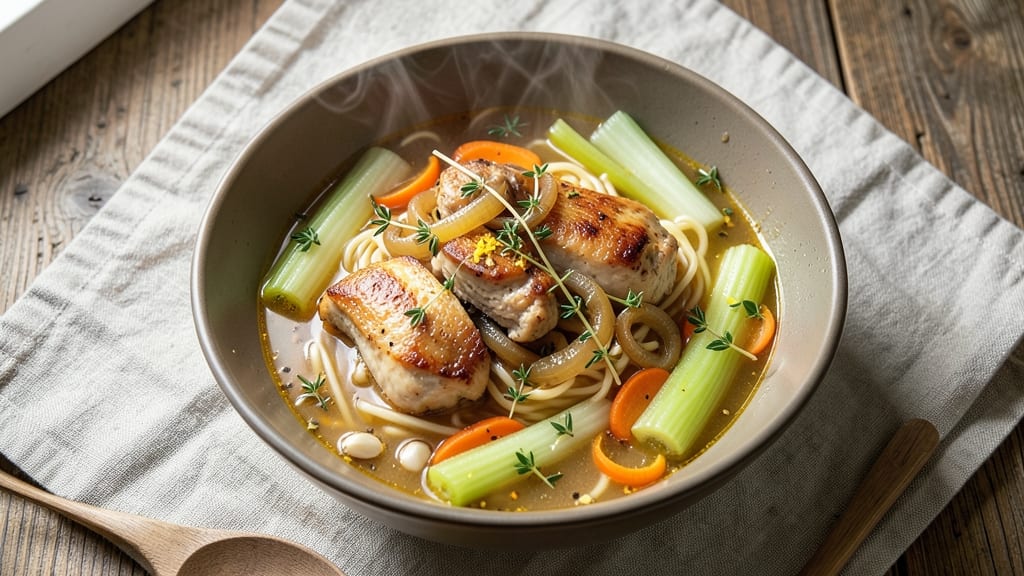
This awesome chicken noodle soup recipe transforms simple ingredients into a deeply comforting bowl of homemade goodness that rivals any restaurant version. The secret lies in building flavor from scratch—a rich, slow-simmered broth that develops layers of savory depth while tender chicken and egg noodles absorb every nuance.
I’ve perfected this recipe over years of testing, ensuring it’s foolproof for beginners but packed with restaurant-quality techniques.
What sets this soup apart is the homemade broth, which starts with aromatics like onions, celery, and carrots (the classic "holy trinity") caramelized until golden. Chicken bones and meat add natural richness, while herbs like thyme and bay leaf infuse subtle earthiness.
The result? A broth so flavorful it doesn’t need salt to shine. Meanwhile, the chicken cooks until fork-tender, and the egg noodles—selected for their sturdy texture—soak up the broth beautifully without turning mushy.
By the time you’re ladling steaming bowls into waiting plates, you’ll taste the difference: no canned shortcuts, no artificial aftertaste, just a soul-warming soup that’s easy to make yet impossible to resist.
The aroma alone will have everyone gathering around the table, and the first sip delivers on that promise of comfort. This is the kind of recipe that becomes a household staple, especially when temperatures drop.
Ready in about 1 hour (with minimal active time), this soup scales effortlessly for a crowd or leftovers that reheat beautifully. Serve with crusty bread for dipping, or keep it simple with a sprinkle of fresh parsley. Here’s how to make it—step by step, just like my grandmother taught me.
Ingredients for awesome chicken noodle soup
Sixteen ingredients, one deep flavor-packed bowl of homemade comfort.
| Ingredient | Amount | Notes |
|---|---|---|
| Chicken Bones and Meat 🍗 | 3 lb | Backbone, neck, wings preferred |
| Yellow Onion 🧅 | 2 whole | Chopped, medium size |
| Carrots 🥕 | 4 whole | Medium size, peeled |
| Celery Stalks 🧄 | 4 whole | Trimmed, chopped |
| Garlic Cloves 🧄 | 6 cloves | Peeled, smashed |
| Fresh Thyme Sprigs 🌿 | 2 whole | Stems removed |
| Bay Leaves 🌿 | 2 whole | Dried or fresh |
| Chicken Breast 🍗 | 1 ½ lb | Boneless, skinless |
| Egg Noodles 🍜 | 1 lb | Sturdy texture preferred |
| Extra-Virgin Olive Oil 🫒 | ¼ cup | For caramelizing |
| Low-Sodium Chicken Broth 💧 | 4 cups | Homemade or quality store-bought |
| Fresh Parsley 🌿 | ¼ cup | Chopped, for garnish |
| Salt 🧂 | 1 ½ tsp | Adjust to taste |
| Black Peppercorns 🌶️ | ½ tsp | Freshly ground |
The chicken bones and meat are non-negotiable for that restaurant-quality depth. Butcher counters often have them for cheap—ask for necks, wings, and a backbone. If you can’t find fresh, Trader Joe’s sells frozen chicken bones that work perfectly. The holy trinity—onions, carrots, and celery—should be chopped uniformly for even cooking. I usually grab the organic carrots from Whole Foods because they’re sweeter and hold up better during caramelization. Fresh thyme and bay leaves add complexity, but dried works in a pinch (use half the amount).
No fresh thyme? Dried thyme at one-third the amount is fine. Running low on chicken bones? Add an extra 2 cups of low-sodium chicken broth to compensate. For the noodles, Barilla egg noodles are my go-to—they hold up better than store-brand options. Want extra richness? Add a splash of heavy cream or coconut milk at the end. The broth can be made ahead and frozen for up to 3 months, so double the recipe if you’re planning for leftovers.
This soup tastes even better the next day as flavors meld. Store in the fridge for 4-5 days or freeze for 3 months—just thaw overnight in the fridge. I always make a double batch because it disappears faster than you’d think. Garnish with fresh parsley right before serving (the good stuff, not the dried kind). Serve with crusty bread or crackers for dipping—trust me, it’s worth the extra minute to toast it.
Why You'll Love This Recipe
- No-Chop Nightmare: I swear, the only prep is dicing an onion and chopping celery—no fancy knife skills. Toss in whole carrots (yes, really) and a handful of garlic, and you’re done. That’s it. The bones and meat do all the heavy lifting while you sip wine and pretend you’re a chef.
- Rich, Deep Umami Bomb: The chicken bones? Absolute magic. Simmered long enough, they melt into the broth, turning it into this golden, velvety liquid that tastes like love in a bowl. Add the garlic and onions caramelizing at the bottom, and you’ve got layers—savory, sweet, and just a hint of smoky depth.
- Leftovers That Beg for More: This soup only gets better the next day. The flavors meld, the broth thickens, and suddenly you’re making lunch out of dinner scraps. Honestly, I’ve reheated portions for five days straight, and it’s still the star of my week.
- Budget-Friendly Crowd-Pleaser: Chicken bones are cheap, carrots are cheap, celery is cheap—this soup feeds four for under $10. Bring it to a potluck, share with neighbors, or just eat it all yourself. No judgment. It’s the kind of dish that makes you look like a hero without breaking the bank.
Step-by-step instructions for homemade chicken noodle soup
Here's how to build rich, restaurant-quality broth from scratch—no shortcuts needed.
Build the Broth Base with Chicken Bones and Meat
Preheat your largest stockpot over medium-high heat. Add the 3 lb chicken bones and meat and let them sear for 5-7 minutes until golden brown on all sides. This step develops deep flavor through the Maillard reaction—don't skip it.
Remove the bones and meat from the pot and set aside. Add the 0.25 cup extra-virgin olive oil to the pot and let it heat until shimmering. Add the 2 whole chopped yellow onion, 4 whole chopped carrots, and 4 whole chopped celery stalks. Cook for 8-10 minutes until the vegetables soften and begin to caramelize—this sweetens the broth and removes any bitterness.
Add the 6 cloves smashed garlic cloves, 2 whole fresh thyme sprigs, and 2 whole bay leaves. Stir for 30 seconds until fragrant. Pour in 4 cups low-sodium chicken broth and scrape up any browned bits from the bottom of the pot. Bring to a boil, then reduce heat to low and simmer for 45 minutes to extract maximum flavor from the vegetables.
Simmer the Chicken and Vegetables
Return the seared chicken bones and meat to the pot. Add 1.5 tsp salt and 0.5 tsp freshly ground black peppercorns, then increase heat to bring the broth to a rolling boil. Once boiling, reduce heat to medium-low and skim off any foam or impurities that rise to the surface with a fine-mesh skimmer.
Simmer uncovered for 1.5-2 hours until the broth is rich and deeply flavorful. The chicken should be fork-tender and easily pull away from the bones. If the broth reduces too much, add hot water as needed to maintain a good liquid-to-vegetable ratio. You want a robust, aromatic broth with visible particles suspended throughout.
Strain the broth through a fine-mesh sieve into a clean pot, pressing gently on the solids to extract every last bit of flavor. Discard the solids and return the broth to the pot. This straining step ensures a smooth, clean broth without bits of vegetables.
Cook the Egg Noodles
While the broth simmers, bring a separate pot of salted water to a boil. Add the 1 lb egg noodles and cook according to package instructions until al dente. Drain the noodles and set them aside. The noodles should be tender but still have a slight bite—overcooking will make them mushy in the soup.
To prevent the noodles from sticking together, rinse them briefly under cold water and drain well. This step also stops the cooking process temporarily, allowing you to add them to the hot broth without overcooking.
Assemble and Finish the Soup
Return the strained broth to the pot and bring it to a gentle simmer over medium-low heat. Add the cooked egg noodles and the 1.5 lb cooked chicken breast, breaking it into bite-sized pieces. Stir gently to combine, allowing the noodles to absorb some of the broth's flavor.
Taste and adjust seasoning with additional salt or pepper if needed. The soup should be well-seasoned but not overly salty. Stir in the 0.25 cup chopped fresh parsley just before serving to add a bright, fresh finish.
Serve the soup immediately in deep bowls, garnished with additional parsley if desired. The aroma alone will make your kitchen feel like a cozy restaurant—homemade broth truly beats canned every time.
Pro Tips For Making Awesome Chicken Noodle Soup
- Brown the Bones First: Skip the direct boil—sear the chicken bones in a dry pot over medium-high heat for 5-7 minutes until deeply golden. This isn’t just for flavor; it pulls out more collagen for that rich, velvety broth later. (Yes, even if you’re impatient like me, don’t rush this part.)
- Chop Veggies Evenly: Cut carrots, celery, and onions into ¼-inch pieces—no bigger, no smaller. Uneven sizes mean some veggies turn mushy while others stay crunchy. My grandmother swore by this, and she was right: consistency matters more than you’d think.
- Simmer Low and Slow: After adding broth and aromatics, reduce heat to the lowest setting that keeps a gentle bubble—just a few tiny ripples at the edges. Too high, and the broth turns cloudy; too low, and it lingers in bland territory. (Your future self will thank you.)
- Strain or Don’t: Decide upfront: Do you want a rustic, bone-in broth or a silky-smooth one? If you strain, use a fine-mesh sieve to catch every last bit of flavor—no sad, gritty soup here. If you skip it, leave the bones in but remove them before adding noodles. (I skip this when I’m lazy, but the dish is noticeably better when I don’t.)
Flavor customization for this dish
Classic Comfort Adjustments
For a homestyle twist, add ½ cup diced potatoes (peeled) to the broth during the 45-minute simmer—they’ll soften perfectly and add hearty texture. I also like tossing in 1 cup frozen peas in the last 5 minutes of cooking for a pop of color and sweetness.
The potatoes should be Yukon Gold for their buttery flavor and sturdy hold. 🥔
Spicy Kick Options
Transform this soup into a fiery favorite by stirring in 1 tbsp hot sauce (like Louisiana Hot Sauce) or ½ tsp cayenne pepper during the final simmer. For smoky heat, add 1 tsp smoked paprika to the caramelized veggies.
If you love Asian-inspired flavors, swap thyme for 1 tbsp fresh ginger and 1 tsp sriracha—trust me, it’s a game-changer. 🌶️
Creamy Luxury Upgrade
Elevate your bowl with ½ cup heavy cream or coconut milk stirred in during the last 5 minutes of cooking. For a cheesy twist, top each serving with ¼ cup shredded sharp cheddar or Parmigiano-Reggiano—the melt adds richness without overpowering.
I also love a dollop of sour cream on top for tangy contrast. 🧀
Herb and Citrus Brightness
Swap parsley for cilantro or basil if you prefer fresh, bright flavors. For a zesty lift, squeeze in 1 tbsp lemon juice before serving—it cuts through the richness beautifully. I also add ½ tsp lemon zest to the broth while simmering for an aromatic boost. 🍋
Global Fusion Twists
Turn this into Thai-inspired soup by adding 1 tbsp fish sauce, 1 tsp lemongrass paste, and ½ cup shredded cabbage during the final 10 minutes. For Mediterranean flair, stir in 1 tsp dried oregano and top with kalamata olives and feta cheese.
Each variation keeps the soul-warming essence while adding exciting new layers. 🌍
Dietary Swaps Made Easy
For a low-carb version, replace noodles with shirataki noodles or zucchini ribbons (sautéed in olive oil). Make it gluten-free with gluten-free egg noodles or rice noodles. I also love using chicken bouillon instead of broth for a lower-sodium option—just reduce the added salt to 1 tsp. 🥬
Nutrition facts
Frequently asked questions
Why does this recipe use chicken bones instead of just chicken meat?
The bones create a richer, more flavorful broth by releasing collagen and natural gelatin as they simmer. This gives your soup that deep, restaurant-quality depth you can't get from canned broth or just meat. The bones also add body and a silky texture that makes the soup truly satisfying.
Can I make this soup ahead of time?
The broth can be made 2 days ahead and stored in the fridge, or frozen for 3 months. The noodles should be cooked fresh and added just before serving to prevent them from getting mushy. Reheat the broth gently and add the noodles in the last 5 minutes of warming.
What if I don't have chicken bones?
No problem! Use extra chicken breast or thighs instead, but add 2 extra cups of low-sodium broth to compensate for the lack of collagen. For even more depth, add 1 chicken bouillon cube or 2 tsp chicken bouillon powder to the broth while simmering. The flavor will still be delicious—just slightly lighter.
How do I prevent the noodles from getting mushy?
Cook the noodles al dente (one minute less than package instructions), then rinse briefly under cold water before adding them to the soup. This stops the cooking process temporarily. Also, add the noodles to the broth just before serving so they don't absorb too much liquid and become soft. For extra insurance, use sturdy egg noodles like Barilla.
Can I use dried herbs instead of fresh?
Yes! Use one-third the amount of dried herbs compared to fresh. For example, if the recipe calls for 2 sprigs of fresh thyme, use ½ teaspoon dried thyme. Dried herbs are more concentrated, so they pack a stronger flavor punch. Just