
Soups & Stews
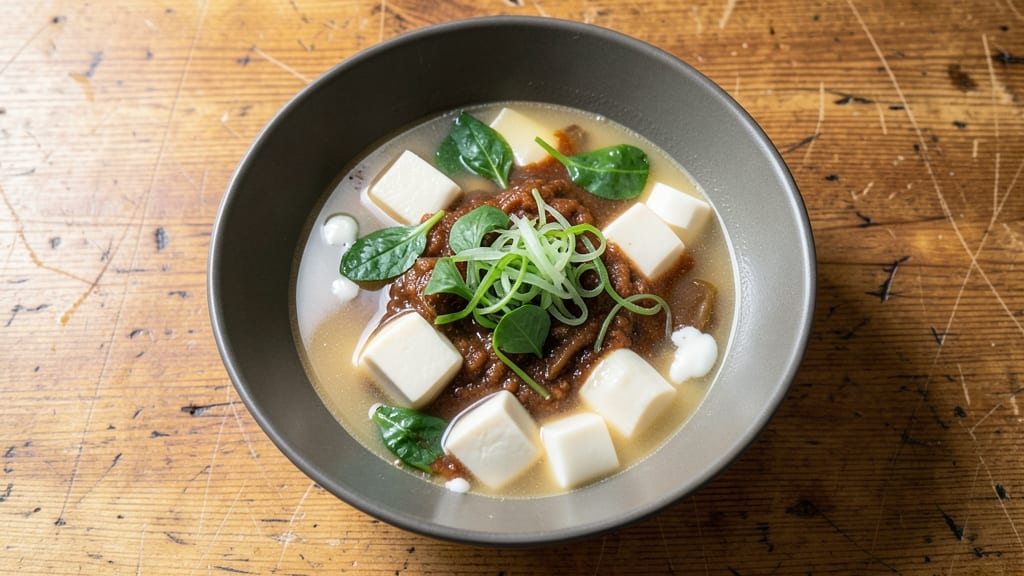
This awase miso soup recipe delivers the perfect balance of umami, texture, and tradition in every bowl. The secret lies in blending two miso pastes—red fermented and white—creating a depth of flavor that transforms simple ingredients into something extraordinary.
Silky tofu, crispy greens, and delicate wakame seaweed come together in a broth so rich it feels like a hug in a bowl. I've perfected this vegetarian version using kombu dashi, which builds umami naturally without meat, while keeping the technique accessible for home cooks.
The magic starts with the broth: kombu dashi simmers for hours to extract maximum flavor, while the miso blend dissolves gently to preserve its complex notes. Unlike instant miso soups, this method develops layers of savory sweetness that only deep cooking can achieve.
The tofu isn't just silky—it's cut into perfect cubes that maintain their shape while absorbing the broth's essence, and the greens blanch just enough to stay vibrant yet crispy. This isn't just soup; it's a meditative experience that honors Japanese culinary precision.
What makes this recipe special is how it adapts to seasons while staying true to tradition. In summer, you might add chilled tofu and cucumber; in winter, hearty mushrooms and scallions. The miso blend itself can be adjusted—more red for intensity, more white for brightness—to suit your taste.
Each bowl delivers that satisfying contrast of textures: tender tofu, crisp greens, and the velvety broth. The aroma alone will have your kitchen smelling like a Tokyo izakaya, but the taste proves you don't need to travel for authenticity.
Serve this awase miso as a starter to Japanese meals or as a complete vegetarian dish with steamed rice. The broth keeps well for days, so you can make a big batch and enjoy it all week.
Here's how to create this umami harmony in your own kitchen—where every spoonful tells a story of balance and tradition.
Ingredients for awase miso soup
Simple ingredients that transform into umami harmony in every bowl.
| Ingredient | Amount | Notes |
|---|---|---|
| Red Miso Paste 🧂 | ¼ cup | Fermented, deep umami flavor |
| White Miso Paste 🧂 | ¼ cup | Milder, sweeter variety |
| Kombu Dashi Stock 🍵 | 4 cups | Homemade or high-quality store-bought |
| Silken Tofu 🧀 | 1 block | Extra-firm preferred, cut into cubes |
| Baby Spinach 🌿 | 2 cups | Fresh, crisp leaves |
| Wakame Seaweed 🌊 | ½ oz | Dried, rehydrated in warm water |
| Green Onions 🧅 | 3 whole | Thinly sliced, white and green parts |
| Sesame Oil 🫒 | 1 tsp | Toasted for nutty aroma |
| Toasted Sesame Seeds 🌱 | 1 tsp | For garnish |
| Rice Vinegar 🍶 | 1 tbsp | For subtle tang |
| Salt 🧂 | ½ tsp | Adjust to taste |
| Dried Shiitake Mushrooms 🍄 | 2 pieces | Optional, for extra depth |
The miso pastes are the soul of this dish—red for deep umami and white for brightness. Grab Marukome or Honten brands at Japanese markets for authentic flavor, but any quality paste works. The kombu dashi stock is non-negotiable for that clean, mineral-rich broth. Make your own by simmering kombu in water for 30 minutes, or use Kikkoman dashi granules in a pinch. For the tofu, extra-firm silken holds its shape best—cut it into uniform cubes so they cook evenly. Baby spinach adds that perfect crisp-tender texture, while wakame brings oceanic depth.
No red miso? Substitute with more white miso plus a dash of soy sauce—it won't be identical, but you'll still get umami. Short on wakame? Nori sheets torn into strips work in a bind. The dried shiitake mushrooms? Soak them first—they expand dramatically and add earthy notes. For a summer twist, swap spinach for thinly sliced cucumber and chill the soup slightly. The sesame oil and seeds are purely for flavor—don't skimp on the toasted kind, or you'll miss that nutty aroma. And if you're feeling adventurous, add a drizzle of chili oil for heat.
This broth keeps beautifully—5-6 days refrigerated or 3 months frozen. Make a big batch and store it in glass jars for easy reheating. The tofu and greens are best added fresh when serving, but you can prep them ahead and store separately. For a quick assembly, keep the miso blend in a small jar in your fridge—just stir it into the hot broth when ready to serve. The aroma alone will transform your kitchen into a Tokyo izakaya, but the taste? That's where the real magic happens.
Why You'll Love This Recipe
- No-Fuss Simplicity: I swear by this recipe because it’s the kind of soup where you can almost close your eyes while making it. Just simmer the kombu stock, dissolve those two miso pastes (red for depth, white for brightness), and toss in the tofu and spinach—no chopping, no fuss. The hardest part is waiting for the spinach to wilt, honestly.
- Umami Magic: Between us, the miso combo is next-level. That deep, fermented richness from the red miso? It’s like a warm hug in a bowl. Then the white miso lifts it—creamy, almost sweet—while the kombu stock adds this subtle oceanic brightness. I’ll be real: the first time I tasted it, I immediately texted my mom to ask if she’d been hiding this from me.
- Weeknight & Meal Prep Hero: This soup is my go-to for lazy nights, but it’s also the star of my meal prep game. Make a big batch on Sunday, and you’ve got lunch or a side for days—just reheat with a splash of water. (Yes, even on a Tuesday night.) The tofu holds up perfectly, and the spinach stays vibrant if you reheat gently. Plus, it’s the kind of thing that tastes just as good cold the next day.
- Budget-Friendly Powerhouse: I’m always impressed by how little costs go into something this satisfying. A block of kombu, a jar of miso, silken tofu, and spinach—all staples that won’t break the bank. And because it’s so filling, a single batch feeds my family for two meals without me feeling guilty about leftovers. Not to mention, the miso paste lasts forever, so you’re not scrambling to use it up.
Step-by-step instructions for awase miso soup
Here's how to create a balanced, umami-rich awase miso soup with perfect texture contrast.
Prepare the Miso Base
In a medium saucepan, gently heat the 4 cups Kombu Dashi Stock over medium-low heat until it reaches a gentle simmer. You'll notice small bubbles forming at the edges—but don't let it boil vigorously. Remove from heat and let it cool slightly for 2-3 minutes until it's just warm to the touch.
While the stock cools, combine the 0.25 cup Red Miso Paste and 0.25 cup White Miso Paste in a small bowl. I like to use a silicone spatula to create a smooth paste—this ensures even distribution of flavors throughout the soup. The red miso adds deep umami while the white miso provides a sweeter, more delicate note. Once the stock is warm (not hot), slowly whisk in the miso paste until fully dissolved and smooth.
Rehydrate and Prepare Vegetables
While the miso base simmers gently, prepare the 0.5 oz Wakame Seaweed by placing it in a small bowl and covering it with 1 cup hot water from the dashi stock. Let it soak for 5-7 minutes until it softens and expands. Drain, reserving the soaking liquid. The wakame should be tender but still hold its shape—it should look like delicate, rehydrated ribbons.
Cut the 1 block Silken Tofu into ½-inch cubes and set aside. Thinly slice the 3 whole Green Onions into ¼-inch rings, separating the white and green parts. Wash the 2 cups Baby Spinach thoroughly and drain well—you want crisp leaves that'll wilt beautifully in the hot broth. If using the 2 pieces Dried Shiitake Mushrooms, soak them in warm water for 10 minutes until pliable, then slice thinly.
Build the Soup Layer by Layer
Return the miso-infused stock to medium-low heat and add the rehydrated wakame along with its soaking liquid. Stir gently and let it warm through for 2 minutes. Add the sliced shiitake mushrooms (if using) and simmer for 1 minute to infuse their earthy flavor. Here's where it gets interesting—the order matters. Add the silken tofu cubes first—they cook quickly and won't over-wilt.
Simmer for 1 minute until the tofu is just heated through but still silky. Remove the pan from heat and gently stir in the 1 tbsp Rice Vinegar and 0.5 tsp Salt. This brightens the flavors and balances the richness of the miso. The soup should taste harmonious but still allow room for seasoning adjustments.
Finish with Fresh Ingredients
Working quickly, add the baby spinach and stir gently for 30 seconds until just wilted but still vibrant. The spinach should maintain its crisp texture—it should look like it's been lightly kissed by heat, not fully cooked. Remove from heat and let it sit for 1 minute to allow the flavors to meld.
Just before serving, drizzle with 1 tsp Sesame Oil and sprinkle with 1 tsp Toasted Sesame Seeds. The sesame oil adds a nutty aroma that complements the umami, while the seeds provide texture contrast. Ladle into bowls and garnish with the green onion rings, arranging them artistically on top for both beauty and flavor. Serve immediately while the tofu is still silky and the spinach maintains its crisp edge.
Adjust and Serve
Taste and adjust seasoning if needed—you might want to add a pinch more salt or a splash of rice vinegar to balance the flavors. The ideal awase miso soup should have a perfect harmony of sweet, salty, umami, and slightly tangy notes. Each spoonful should deliver that crisp contrast between the silky tofu, tender wakame, and crisp spinach against the smooth miso broth.
This soup is best enjoyed fresh when all the textures and flavors are at their peak. The combination of the two miso pastes creates a complex umami profile that's greater than the sum of its parts. Serve with steamed rice to soak up every last drop of that flavorful broth—you'll want to savor every bite of this comforting, balanced bowl of awase miso soup.
Pro Tips For Making Awase Miso Soup
- STIR AFTER THE FIRST BOIL: I learned this the hard way—when you add the miso pastes, let the kombu dashi stock come to a full rolling boil first, then immediately turn off the heat. Stirring in the pastes while still simmering can cook out their delicate umami flavors. Once off the heat, give it a solid 30-second stir to fully dissolve the miso without heating it further.
- USE FROZEN SPINACH FOR CRISP: Fresh baby spinach wilts into sad mush in seconds. I now keep frozen chopped spinach on hand—toss in the last 20 seconds of cooking, no thawing needed. It keeps its bright color and slight crunch, which actually makes the soup feel more substantial. (Yes, even if you're impatient like me.)
- DON’T OVERMIX THE MISO: The red and white pastes need to swirl together, not blend into a uniform sludge. After dissolving them off the heat, give the pot a gentle figure-eight stir with a wooden spoon—just enough to marry the colors. Overmixing turns the soup into a single muddy brown and loses the visual (and flavor) contrast that makes awase miso special.
- SIMMER TOFU IN SEPARATELY: Silken tofu gets rubbery when it hits hot broth. Instead of dropping it in with the spinach, preheat a small pot with just the dashi stock (no miso) to 160°F (70°C), then add the tofu cubes. Let them sit for 2 minutes before transferring to the main pot. This keeps them silky while the spinach cooks in the hotter broth.
Perfect pairings for these flavors
Broth Pairings
Start with a high-quality kombu dashi as your base—it's the foundation of authentic flavor. For extra depth, try shiitake dashi (simmer dried shiitake mushrooms in water) or awase dashi (a blend of kombu and bonito flakes for traditional umami).
I love using Honten kombu sheets for homemade dashi, or Kikkoman dashi granules for convenience. 🍵
For a vegetarian twist, consider mushroom dashi made from shiitake, enoki, and king oyster mushrooms—simmer them together for a rich, earthy broth.
If you're feeling adventurous, blend in fermented soybean paste (natto) for an extra layer of complexity, but use it sparingly—just 1 tsp is enough to elevate the entire bowl.
Vegetable Contrasts
Baby spinach is my go-to for its perfect wilt, but don't be afraid to experiment. Try bok choy for a slightly sweeter bite or mizuna for peppery freshness. For heartier soups, add thinly sliced daikon radish or shredded cabbage—they hold up beautifully to the miso's richness.
The key is to add them last so they stay crisp-tender.
Seasonal swaps work wonders: in summer, cucumber ribbons or edamame add refreshing contrast, while winter calls for shredded carrots or celery root. I often keep a small bowl of prepped veggies ready—just blanch them for 30 seconds before adding to the soup to preserve their texture. 🌿
Protein Additions
While this recipe is vegetarian, you can easily add protein without compromising flavor. Silken tofu remains the star, but try soft-boiled eggs (marinated in soy sauce) for a classic touch.
For a seafood option, shrimp or scallops cook in just 1-2 minutes—add them last for perfect doneness. I like using freshwater shrimp for their delicate sweetness.
For plant-based protein, tempeh or seitan hold up well when sliced thin and simmered briefly. If you're using tempeh, marinate it first in 1 tbsp soy sauce + 1 tsp mirin for 10 minutes to enhance its nutty flavor.
The protein should complement, not overpower, the miso's depth—think of it as a supporting actor in this umami drama. 🧀
Garnish Game-Changers
Toasted sesame seeds and oil are non-negotiable, but don't stop there. A sprinkle of furikake (Japanese seasoning blend) adds a crunchy, savory finish. For color, try microgreens or shiso leaves—their bright hues make the soup visually stunning.
I also love a drizzle of yuzu kosho (citrus-chili paste) for a tangy kick.
For texture, add crispy fried shallots or toasted nori strips—they contrast beautifully with the silky broth. A final touch of grated daikon or ginger adds freshness. The garnish should feel intentional, not just decorative—each element should enhance the soup's harmony. ✨
Drink Pairings
Green tea is the classic match, but sencha or gyokuro (shade-grown) bring out the miso's umami beautifully. For something bolder, try a lightly chilled Japanese sake like Hakkaisan Junmai—its clean finish cuts through the richness.
If you prefer beer, a crisp lager or sour ale complements the soup's tangy-sweet balance.
For non-alcoholic options, yuzu soda or matcha latte add refreshing contrast. I also enjoy a hot herbal tea like hōjicha (roasted green tea) for a cozy pairing. The drink should enhance, not compete with, the soup's flavors—think of it as the perfect palate cleanser between bites. 🍶
Nutrition facts
Frequently asked questions
Why do we mix red and white miso in awase miso?
The combination creates a perfect balance of flavors—red miso delivers deep, earthy umami while white miso adds sweetness and brightness. This harmony is what makes awase miso uniquely complex compared to single-miso soups. The ratio in this recipe (1:1) ensures neither flavor dominates, creating that signature layered taste.
Can I make awase miso soup without kombu dashi?
Yes, but the flavor will differ. For a vegetarian option, use shiitake mushroom broth or vegetable dashi (carrots, celery, onion). If you prefer umami depth, try 1 tsp soy sauce + 1 tsp mirin per cup of water instead. The key is to avoid bonito flakes if keeping it vegetarian—this will prevent that fishy note.
How do I prevent the tofu from turning rubbery?
Never boil the tofu—always simmer gently at low heat for just 1 minute after adding to the broth. Use extra-firm silken tofu and cut it into ½-inch cubes for even cooking. Remove from heat immediately after adding to preserve its silky texture. The spinach should cook separately for 30 seconds before adding to keep it crisp-tender.
What's the best way to store leftover awase miso soup?
Store the broth (without tofu or greens) in an airtight container for up to 5 days refrigerated or 3 months frozen. Reheat gently on low heat—never microwave directly from cold. Add fresh tofu, spinach, and wakame when reheating to maintain texture. The miso paste itself keeps well in the fridge for 6 months if stored properly.
Can I use instant miso soup packets as a shortcut?
Not for authentic awase miso—those packets contain powdered miso and additives that won't give you the same depth. However, you can use them as a base and enhance with 1 tbsp red miso + 1 tbsp white miso per packet, plus fresh ingredients. For true awase flavor, start with homemade dashi and quality miso pastes—the difference is dramatic. The layering technique (adding ingredients in order) is key to that restaurant-quality texture.