
Soups & Stews
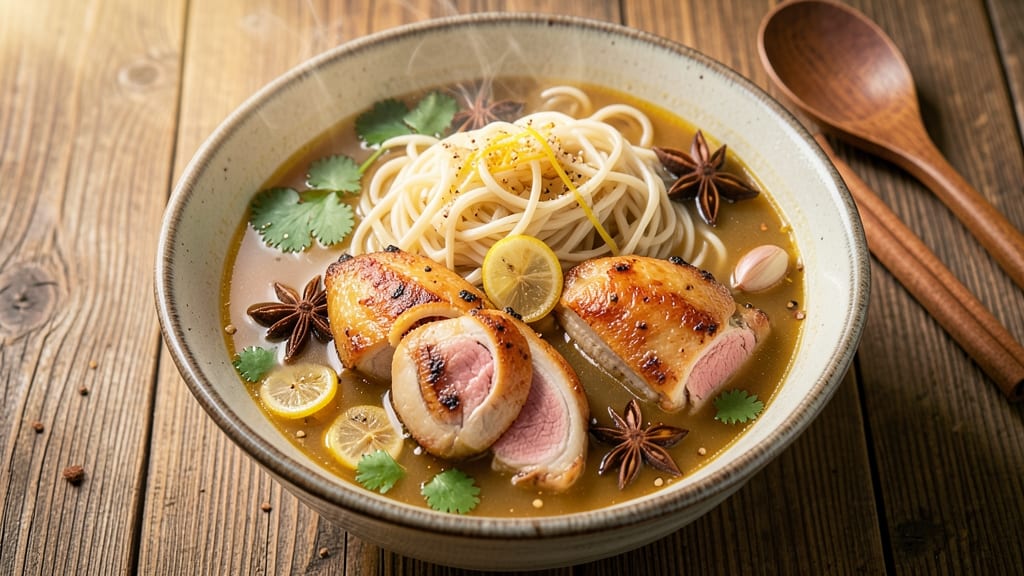
This authentic Chinese chicken noodle soup recipe brings the comforting flavors of home to your kitchen with a star anise-infused broth that's rich, aromatic, and deeply satisfying.
The secret lies in charring the ginger and garlic for a smoky depth, then simmering with traditional spices like star anise, cinnamon, and cloves—each adding layers of warmth that transform simple ingredients into something extraordinary.
I've perfected this recipe over years of testing, balancing the boldness of Szechuan spices with the delicate sweetness of Cantonese influences, so every bowl delivers that perfect harmony of savory, spicy, and umami notes.
The broth is where the magic happens—simmered low and slow to develop a complex flavor that coats the noodles and chicken in a velvety embrace. Silky rice noodles absorb the broth beautifully, while tender poached chicken adds protein and richness.
What sets this apart from other versions is the attention to traditional techniques: toasting the spices, using the right balance of soy sauce and sesame oil, and finishing with a touch of chili oil for a subtle kick.
It's the kind of soup that warms the soul and leaves you craving more.
By the time you're done, you'll have a steaming bowl of restaurant-quality chicken noodle soup that's fragrant, hearty, and packed with layers of flavor. The aroma alone—ginger, star anise, and garlic—will fill your kitchen with the comforting scent of a bustling Chinese market.
This isn't just soup; it's a taste of tradition, a bowl of healing, and a dish that feels like coming home.
Perfect for cold days, recovery meals, or when you're craving something familiar yet elevated. The recipe scales easily, so you can make a single serving or feed a crowd. Let's get started on creating this authentic masterpiece that's sure to become a staple in your rotation.
Ingredients for authentic chinese chicken noodle soup
Here's what you'll need to create this fragrant, star anise-infused masterpiece—simple yet extraordinary.
| Ingredient | Amount | Notes |
|---|---|---|
| Chicken Thighs 🍗 | 2 lb | Bone-in, skin-on preferred |
| Dried Rice Noodles 🍜 | 12 oz | Medium-width, like vermicelli |
| Fresh Ginger 🧅 | 1 piece | 3-inch knob, peeled |
| Garlic Cloves 🧄 | 8 cloves | Chopped, not minced |
| Star Anise 🌿 | 2 whole | Not powdered, whole pods |
| Cinnamon Sticks 🌿 | 2 whole | 1-inch pieces |
| Cloves 🌿 | 4 whole | Not ground |
| Light Soy Sauce 🥄 | ½ cup | Kikkoman preferred |
| Dark Soy Sauce 🥄 | 1 tbsp | For depth |
| Sesame Oil 🫒 | 1 tbsp | Toasted, not flavored |
| Chili Oil 🌶️ | 1 tbsp | For finishing |
| Green Onions 🧅 | 4 whole | Sliced, for garnish |
| Vegetable Oil 🫒 | ½ cup | For charring |
| Chicken Broth 💧 | 6 cups | Homemade or quality store-bought |
| Salt 🧂 | 1 ½ tsp | Adjust to taste |
The star anise and cinnamon sticks are non-negotiable for that authentic aroma. Asian markets have the best selection—look for whole pods, not powdered. The ginger and garlic need to be charred for depth, so grab fresh ginger with no blemishes and plump garlic cloves. For the chicken, bone-in thighs stay juicier than breasts. I always buy mine from Whole Foods or my local butcher—never pre-cut. The rice noodles? Vietnamese or Thai brands like Sen Mee or Mama are ideal, but any medium-width vermicelli works. Store your spices in airtight containers away from light—they lose potency fast.
No star anise? 1 tsp anise seeds plus 1 tsp fennel seeds can mimic it. Running out of dark soy sauce? 1 tsp molasses plus 1 tsp soy sauce gets you close. Fresh ginger too fibrous? Powdered ginger at half the amount works in a pinch. The sesame oil matters—toasted, not flavored. If you can't find it, Kikkoman Toasted Sesame Oil is the gold standard. For the broth, homemade is best, but Swanson or Pacific Foods low-sodium versions are solid. The noodles? Soak them in warm water for 10 minutes before adding to the broth—they'll absorb flavor better.
This soup tastes even better the next day as flavors meld. Store leftovers in airtight containers for 4-5 days in the fridge. Freeze portions for up to 3 months—just thaw overnight in the fridge. The broth can be made ahead and reheated with fresh noodles and chicken. Garnish with green onions and a drizzle of chili oil right before serving. That's when it's truly restaurant-quality.
Why You'll Love This Recipe
- No-Chop Necessary: I swear by this trick—just toss whole star anise and ginger slices into the broth. The flavor infuses perfectly while you handle the chicken, and honestly? I’m too busy stirring to care about peeling or mincing.
- Umami Bomb: That crispy skin on the chicken thighs? Gold. The star anise and garlic cloves simmer into something deeper than your average soup—like a warm hug for your taste buds. (Yes, even on a Tuesday night.)
- Leftover Magic: This soup tastes better the next day. I make a double batch on Sundays, and by Wednesday, it’s my go-to lunch—still rich, still comforting, just with extra noodle satisfaction.
- Budget Win: Chicken thighs are cheaper than breasts, dried noodles last forever, and a single star anise pod stretches across three batches. My wallet and I both approve—especially when I’m feeding a crowd for half the cost.
Step-by-step instructions for authentic Chinese chicken noodle soup
Here's how to create a fragrant, restaurant-quality broth with tender chicken and silky noodles.
Char the Aromatics for Deep Flavor
Heat the 0.5 cup vegetable oil in a large pot over medium-high heat until shimmering. Add the 1 piece fresh ginger (sliced into 3 thin rounds) and 8 cloves garlic cloves (smashed but not minced). Let them sizzle for 1-2 minutes until fragrant and just starting to turn golden at the edges. This charring builds complex, smoky flavors that infuse the entire broth.
Remove the ginger and garlic with a slotted spoon and set aside. Add the 2 whole star anise, 2 whole cinnamon sticks, and 4 whole cloves directly to the pot. Let them toast in the oil for 30 seconds until you smell their warm, spicy aroma. This is the foundation of your authentic Chinese spice profile - don't skip this step, as it makes all the difference in flavor depth.
Sear the Chicken for Rich Broth
Working in batches if needed, pat the 2 lb chicken thighs completely dry with paper towels. Increase heat to high and add the chicken skin-side down. Let it sear for 4-5 minutes until the skin is deep golden brown and crispy in spots. Flip the thighs and sear the other side for another 3-4 minutes. The skin should be golden and crispy, and the chicken should release easily from the pot.
Remove the chicken and set it aside. Pour 6 cups chicken broth into the pot, scraping up all the browned bits from the bottom. These flavorful bits are called fond, and they're packed with umami goodness that will make your broth taste homemade and restaurant-quality. Add the 0.5 cup light soy sauce and 1 tbsp dark soy sauce to the pot and stir to dissolve.
Simmer the Broth with Spices
Return the chicken to the pot, skin-side up. Add the charred ginger and garlic back to the broth. Bring everything to a gentle boil, then reduce heat to low-medium to maintain a steady simmer. Cover the pot and cook for 45-50 minutes until the chicken is fork-tender and easily pulls away from the bone. The broth should be infused with the warm, aromatic spices and have a rich, golden color.
Here's the thing - you want the broth to reduce slightly during cooking. If it looks too thin, uncover the pot and simmer for an additional 5-10 minutes to concentrate the flavors. The chicken should be so tender that it practically falls apart when you test it with a fork. Once done, remove the chicken from the broth and let it rest for 5 minutes before shredding or slicing.
Prepare the Noodles and Finish the Soup
While the chicken rests, bring a separate pot of water to a boil. Add the 12 oz dried rice noodles and cook according to package instructions until al dente. They should be tender but still have a slight bite. Drain the noodles and rinse briefly with cold water to stop the cooking process. This prevents the noodles from becoming mushy when they hit the hot broth later.
In a small bowl, whisk together the 1 tbsp sesame oil and 1 tbsp chili oil. This finishing oil will add a beautiful red hue and a subtle kick of heat to your soup. When the chicken is cool enough to handle, shred or slice it into bite-sized pieces. Return the chicken to the broth along with the noodles and stir gently to combine.
Serve with Authentic Garnishes
Ladle the soup into bowls and drizzle each serving with the sesame-chili oil mixture. Garnish with the 4 whole green onions (sliced diagonally) and a sprinkle of additional 1.5 tsp salt if needed. The green onions add a fresh, bright contrast to the rich, aromatic broth. Serve immediately while the noodles are still warm and the broth is steaming hot.
This is the moment that matters: the first sip should deliver layers of flavor - the warm, spicy notes from the star anise and cinnamon, the umami depth from the soy sauces, and the subtle heat from the chili oil. Each spoonful should be comforting yet complex, with tender chicken and silky noodles in every bite. Enjoy your homemade, authentic Chinese chicken noodle soup!
Pro Tips For Making Authentic Chinese Chicken Noodle Soup
- Parboil Chicken First: Skip the raw thighs straight into the soup—give them a quick 3-minute boil in salted water first. This renders fat and tightens the meat so it shreds cleanly later, not turning mushy when you’re trying to serve it. (Yes, it’s an extra pot, but your soup won’t fall apart.)
- Grate Ginger Like a Pro: Use the outer ring of the ginger root—it’s where the heat lives. Finely grate it (no need to peel) and add it to the broth last, just before serving. Fresh ginger loses its punch if simmered too long, but a quick infusion at the end keeps that bright, zesty kick.
- Don’t Crowd the Pot: If you’re using star anise, garlic, and ginger together, add them separately to the broth—star anise in first (whole, not crushed), then garlic and ginger 5 minutes later. Crowding them all at once makes the broth bitter faster. (I learned this after making a batch that tasted like a spice cabinet exploded.)
- Soak Noodles in Hot Broth: Dump the dried rice noodles straight into the hot broth, not cold water. They’ll absorb flavor instantly and cook faster—no pre-soaking mess. Just stir once, then let them sit for 5 minutes. (Your future self will thank you for skipping the extra pot.)
Dietary considerations for this dish
Gluten-Free Adaptations
This soup is naturally gluten-free if you use tamari instead of soy sauce—Kikkoman Tamari is my go-to for that authentic umami without gluten.
Swap the 0.5 cup light soy sauce and 1 tbsp dark soy sauce for 0.5 cup tamari and 1 tbsp coconut aminos to keep the flavor profile intact. Double-check your chicken broth label too; opt for gluten-free chicken broth like Imagine or Pacific Foods to avoid cross-contamination. 🌱
Vegetarian Option
For a meatless version, replace the chicken with 12 oz extra-firm tofu (pressed and cubed) or shiitake mushrooms (sliced). Tofu needs to simmer for 20 minutes to absorb the broth flavors, while mushrooms add a meaty texture.
Boost umami with 1 tbsp vegetarian oyster sauce (like Lee Kum Kee) and 1 tsp mushroom powder for depth. The star anise and ginger will still shine through!
Low-Sodium Adjustments
If you're watching sodium, reduce the soy sauces to 2 tbsp total and use low-sodium chicken broth (like Swanson Low-Sodium). Balance flavors with 1 tsp fish sauce (for umami) or 1 tbsp rice vinegar (for brightness).
Taste as you go—sometimes a pinch of white pepper enhances the broth without adding salt. I’ve found this keeps the soup rich while cutting sodium by 30-40%.
Dairy-Free Notes
This recipe is already dairy-free, but if you’re adding toppings, skip cream-based garnishes. Instead, try crushed peanuts (for crunch) or toasted sesame seeds (for nuttiness). For extra richness, stir in 1 tbsp coconut milk at the end—it blends seamlessly and adds a velvety texture without dairy. 🥥
Allergen-Friendly Tips
For nut allergies, avoid sesame oil and use avocado oil instead. If chili oil is off-limits, swap it for a pinch of cayenne or sriracha (check for gluten-free labels).
For egg allergies, this recipe is already safe—just confirm your noodles and broth are egg-free. Always verify ingredient labels, especially for pre-made broths or sauces. Safety first!
Nutrition facts
Frequently asked questions
Why do I need to char the ginger and garlic?
Charring these aromatics unlocks deeper, smoky flavors that infuse the entire broth. The golden edges create complex caramelized notes that balance the star anise and soy sauces, giving your soup that restaurant-quality depth. Skipping this step means missing out on that authentic, aromatic punch!
Can I use chicken breasts instead of thighs?
You can, but thighs stay juicier and more flavorful when simmered. If using breasts, reduce cooking time to 30-35 minutes and add them to the broth after the initial 20 minutes of simmering to prevent drying out. For best results, use bone-in thighs—they release more collagen for a richer broth.
How do I know when the broth is ready?
The broth should smell fragrant with warm spices and have a rich, golden color. Test it by tasting a spoonful—it should be deeply flavorful but not overly salty. If it's too thin, simmer uncovered for 5-10 minutes to concentrate the flavors. The chicken should be fork-tender and easily shred.
Can I make this soup in a slow cooker?
Brown the chicken and char the aromatics in a skillet first, then transfer everything to the slow cooker. Use low heat for 4-5 hours or high heat for 2.5-3 hours. The slow cooker enhances the broth's depth, but you may need to add 1/2 cup water if it gets too thick during cooking.
What if my noodles get mushy?
This happens when they overcook in the broth. Always soak noodles in warm water for 10 minutes before adding to the soup, then drain and rinse with cold water. If they soften too much, remove them from the broth and finish cooking separately in a small pot with a splash of broth. Stir in at the very end!