
Soups & Stews
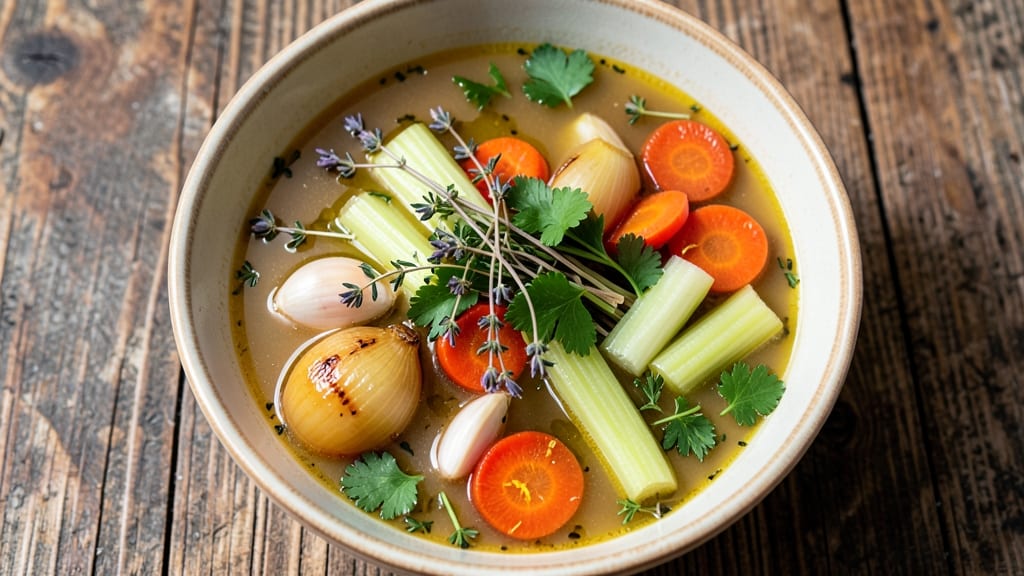
This Au Bon Pain vegetable soup recipe delivers the cozy, herb-infused flavor that made their classic famous—starting with a caramelized onion and celery base that builds rich depth.
The secret lies in roasting the vegetables first, which intensifies their natural sweetness and creates a velvety texture that transforms simple ingredients into something truly special. What begins as a humble broth becomes a symphony of flavors, with each spoonful offering layers of caramelized onions, tender carrots, and aromatic herbs.
What sets this recipe apart is the balance of simplicity and sophistication. You'll begin by roasting the vegetables until deeply caramelized, then simmer them in a light vegetable broth infused with fresh herbs and garlic.
The result is a soup that's hearty yet light, packed with flavor but never heavy. This method ensures every bite delivers that comforting, restaurant-quality taste without requiring advanced techniques or expensive ingredients.
The finished soup features tender vegetables that hold their shape beautifully, all suspended in a fragrant broth that's rich with herbal notes. The caramelized onions and celery form a flavorful backbone, while the carrots add natural sweetness.
This recipe serves as both a comforting weeknight meal and an impressive dish for gatherings—perfect for those who appreciate the classic Au Bon Pain experience at home.
Ready in about 45 minutes, this soup is ideal for meal prepping or enjoying fresh. The flavors develop even more as it sits, making it perfect for reheating throughout the week.
Whether you're serving it as a starter or a main course, this vegetable soup delivers the warmth and satisfaction of a beloved bakery-café classic.
Ingredients for au bon pain vegetable soup
Roasted vegetables, aromatic herbs, and a velvety broth create this restaurant-quality vegetable soup.
| Ingredient | Amount | Notes |
|---|---|---|
| Yellow Onions 🧅 | 2 whole | Cut into even wedges |
| Celery Stems 🥬 | 4 whole | Trimmed and cut into chunks |
| Carrots 🥕 | 3 pieces | Peeled and cut into chunks |
| Garlic Cloves 🧄 | 4 cloves | Peeled and smashed |
| Fresh Thyme Sprigs 🌿 | 2 whole | Stems removed for flavor |
| Fresh Parsley Sprigs 🌿 | 2 whole | Stems removed for garnish |
| Vegetable Broth 💧 | 6 cups | Low-sodium preferred |
| Extra-Virgin Olive Oil 🫒 | ¼ cup | For roasting vegetables |
| Russet Potatoes 🥔 | 2 pieces | Peeled and cubed evenly |
| Orange Sweet Potatoes 🍠 | 2 pieces | Peeled and cubed evenly |
| Sea Salt 🧂 | 1 ½ tsp | Diamond Crystal preferred |
| Freshly Ground Black Pepper 🌶️ | ½ tsp | For seasoning |
| Bay Leaves 🌿 | 2 whole | For broth infusion |
| Fresh Dill Weeds 🌿 | ¼ cup | Chopped for brightness |
The foundation begins with yellow onions and celery—these should be fresh, with crisp stems and no browning. Whole Foods or local farmers markets often carry the best quality. For the carrots and sweet potatoes, opt for organic when possible to avoid soil residue. The key to caramelization is even cutting—mandoline slicer ensures consistency. Fresh herbs like thyme and parsley should have vibrant leaves with no wilting, indicating peak freshness. Store these in the fridge wrapped in damp paper towels for up to 5 days.
No fresh dill? Substitute with 1 tbsp dried dill, but reduce by one-third. For extra depth, add 1 tsp smoked paprika to the roasted vegetables. Vegetable broth quality matters—Imagine or Pacific Foods brands deliver the best flavor. If using canned broth, reduce the salt since most are already seasoned. The potatoes and sweet potatoes should be firm with no soft spots, ensuring they'll hold their shape during cooking. For a lighter broth, strain some of the vegetables after roasting.
Roasted vegetables retain flavor for 3-4 days in the fridge when stored in an airtight container. The finished soup keeps well for 5 days refrigerated or 3 months frozen. For best texture, reheat gently on the stove with a splash of water or broth. Garnish with fresh herbs just before serving to preserve their aroma. Portion into ramekins for elegant individual servings or serve family-style for gatherings.
Why You'll Love This Recipe
- Here’s what sold me: every single ingredient is cheap, lasts forever, and you’ll use them up before they go bad. Carrots, celery, onions—these are the pantry workhorses that make this soup my go-to when I’m pinching pennies.
- Five-Ingredient Base: I swear by this combo—onions, celery, carrots, garlic, and thyme—because it’s the soul of the soup. The onions caramelize just enough to give it depth, while the thyme adds that earthy warmth that makes it taste like a hug in a bowl.
- One-Pot Simplicity: Between us, this is the kind of recipe where you can chop while the water boils and still walk away feeling accomplished. No fancy techniques, no last-minute scrambling—just throw everything in, simmer, and let it do its magic.
- Weeknight to Potluck: Honestly, I make this for lazy nights when I’m too tired to think, but it’s also the star of my holiday potlucks. The flavors hold up for days, and it’s always the first bowl to disappear—no one even notices it’s not fancy.
Step-by-step instructions for herb-enhanced roasted veggie base
This method delivers deep, caramelized vegetable flavors that form the soul of your soup.
🔥 Step 1: Roast Vegetables Until Deeply Caramelized
Preheat your oven to 425°F and line two rimmed baking sheets with parchment paper. Arrange the 2 whole yellow onions (cut into even wedges), 4 whole celery stems (trimmed and chunked), and 3 peeled carrots (cut into chunks) in a single layer on one sheet. Spread the 2 russet potatoes and 2 orange sweet potatoes (peeled and cubed evenly) on the second sheet.
Drizzle both sheets with half of the 0.25 cup extra-virgin olive oil each, then season with 1 teaspoon sea salt and 0.25 teaspoon freshly ground black pepper. Toss the vegetables gently to coat evenly. Roast for 30 minutes, flipping halfway through, until the edges are deeply caramelized and the potatoes begin to soften slightly. This roasting step builds complex, sweet flavors that infuse the broth.
🍳 Step 2: Build the Herb-Infused Broth
While the vegetables roast, heat the remaining 0.25 cup extra-virgin olive oil in a large Dutch oven over medium heat. Add the 4 peeled and smashed garlic cloves and cook for 30 seconds until fragrant but not browned. Add the 2 whole fresh thyme sprigs (stems removed) and 2 whole bay leaves, stirring for 10 seconds to release their essential oils.
Pour in the 6 cups vegetable broth and bring to a gentle simmer. You want just enough heat to maintain activity without boiling vigorously. Let it simmer uncovered for 10 minutes to allow the herbs to steep and the broth to develop depth. This infusion creates the aromatic foundation of your soup.
🥘 Step 3: Combine Roasted Vegetables and Simmer
Remove the roasted vegetables from the oven and transfer them to the simmering broth. Add the 1.5 teaspoon sea salt and 0.25 teaspoon freshly ground black pepper to balance the flavors. Bring the mixture to a gentle boil, then reduce heat to medium-low and let it simmer uncovered for 20 minutes. The vegetables should be fork-tender, and the broth should have absorbed all their caramelized flavors.
Here's the thing—don't rush this step. The vegetables need time to release their sweetness and meld with the broth. You'll know it's ready when the potatoes collapse easily under gentle pressure and the broth has a rich, golden hue. Taste and adjust seasoning if needed, adding a pinch more salt or a crack of black pepper.
⏰ Step 4: Finish with Fresh Herbs and Rest
Remove the pot from heat and discard the thyme sprigs and bay leaves. Stir in the 0.25 cup chopped fresh dill weeds and the 2 whole fresh parsley sprigs (stems removed). Let the soup rest for 5 minutes to allow the flavors to fully integrate. This final step brightens the soup with fresh, vibrant notes that cut through the richness of the roasted vegetables.
The soup should be thick but still fluid enough to ladle easily. If it's too thick, you can thin it with a splash of warm water or additional broth. For best results, serve immediately while the vegetables are still warm and the flavors are at their peak intensity. The roasted vegetable base creates a rich, comforting texture that makes this soup truly exceptional.
Pro Tips For Making Au Bon Pain Vegetable Soup
- Sweat, Don’t Burn: The onions and celery need to soften, not turn to charcoal. Keep the heat at a steady medium—low enough that you’re not seeing smoke but high enough that a drop of water sizzles immediately. I learned this the hard way when my first batch tasted bitter and overcooked.
- Dice Celery Small: Tiny dice (¼-inch pieces) cooks faster and blends smoother than big chunks. Skip the thick slices—you’ll end up with a soup that’s still crunchy or requires extra blending time. Yes, it takes a minute longer, but the texture is worth it.
- Salt the Water: Add a pinch of salt to the pot before boiling the broth base—it seasons the vegetables as they cook. I used to skip this, and the soup always tasted flat until I realized the veggies were absorbing plain water.
- Toast the Garlic: After the onions and celery soften, turn up the heat just a touch and add the garlic. Let it sizzle for 30 seconds until fragrant—this builds depth. My grandmother swore by this, and she was right: the flavor jumps from good to actually delicious.
Wine and beer pairings for au bon pain vegetable soup
Crisp White Wine
For this herb-enhanced vegetable soup, I reach for a dry Sauvignon Blanc—its bright acidity and citrus notes complement the roasted vegetables beautifully.
Look for a New Zealand Sauvignon Blanc like Cloudy Bay or Oyster Bay, which offer zesty grapefruit and herbal undertones that mirror the dill and thyme in the soup. The crispness cuts through the richness of the caramelized onions, creating a refreshing contrast.
Serve chilled to enhance the wine's refreshing qualities. 🍷
Light-Bodied Red
If you prefer red wine, opt for a Pinot Noir with delicate fruit flavors. A Willamette Valley Pinot Noir from Oregon, like Domaine Serene, pairs exceptionally well—its red berry notes harmonize with the sweet potatoes and carrots while its silky texture won’t overpower the soup’s delicate broth.
Keep it slightly cooler than room temperature to preserve its freshness. 🍇
Herbal Beer Pairing
A Belgian witbier like Hoegaarden or St. Bernardus Witbier brings a perfect balance of spicy coriander and citrusy orange peel to the table. The effervescence cleanses your palate between bites, while the herbal notes echo the dill and parsley in the soup.
For a darker option, try a German Helles—its malty sweetness complements the caramelized vegetables without competing. 🍺
Non-Alcoholic Options
For a refreshing non-alcoholic pairing, serve sparkling apple cider like Martinelli’s or Woodchuck Hard Cider (non-alcoholic version). The crisp apple notes mirror the sweetness of the carrots and sweet potatoes, while the bubbles keep the palate fresh.
Alternatively, a ginger beer like Feather’s adds a spicy kick that enhances the soup’s depth. 🍎
Garnish Matters
Before pairing, garnish your soup with a sprinkle of fresh parsley or a drizzle of extra-virgin olive oil—this elevates the dish and makes it more inviting. The garnish not only adds visual appeal but also enhances the wine or beer pairing by highlighting the soup’s fresh, herbal notes.
A final touch of crusty bread on the side helps soak up the rich broth for a complete experience. ✨
Nutrition facts
Frequently asked questions
Can I make this soup without roasting the vegetables?
The roasting step is key to developing the deep caramelized flavors that make this soup taste like Au Bon Pain's classic. If you're short on time, sauté the onions, celery, and carrots in olive oil over medium heat for 15-20 minutes until softened and slightly browned. The flavor won't be as rich, but it'll still be delicious. For best results, roasting creates that signature depth that sets this recipe apart.
How can I make this soup vegan?
This recipe is already vegetarian, but to make it fully vegan, simply use vegetable broth that's certified vegan (many store-bought versions are already vegan). Skip the butter entirely—this recipe uses olive oil instead. Double-check your salt is vegan (some contain animal-derived additives), and ensure your fresh herbs are organic to avoid potential contamination. The flavor profile remains identical!
Can I prepare this soup ahead of time?
This soup tastes even better the next day as the flavors meld together. Store in an airtight container in the refrigerator for up to 5 days. Reheat gently on the stove with a splash of water or broth to restore its creamy texture. For longer storage, freeze for up to 3 months. Thaw overnight in the fridge before reheating. The roasted vegetable flavors actually intensify when reheated properly.
What if my soup tastes too salty?
If your soup ends up too salty, don't panic! You can dilute it by adding 1/2 cup warm water or vegetable broth at a time, stirring well between additions. For a more flavorful approach, add 1/2 cup unsweetened coconut milk or a splash of lemon juice to balance the saltiness while adding richness. Taste after each addition—you may need to adjust seasoning again after diluting.
Can I add other vegetables to this recipe?
Yes!