Soups & Stews
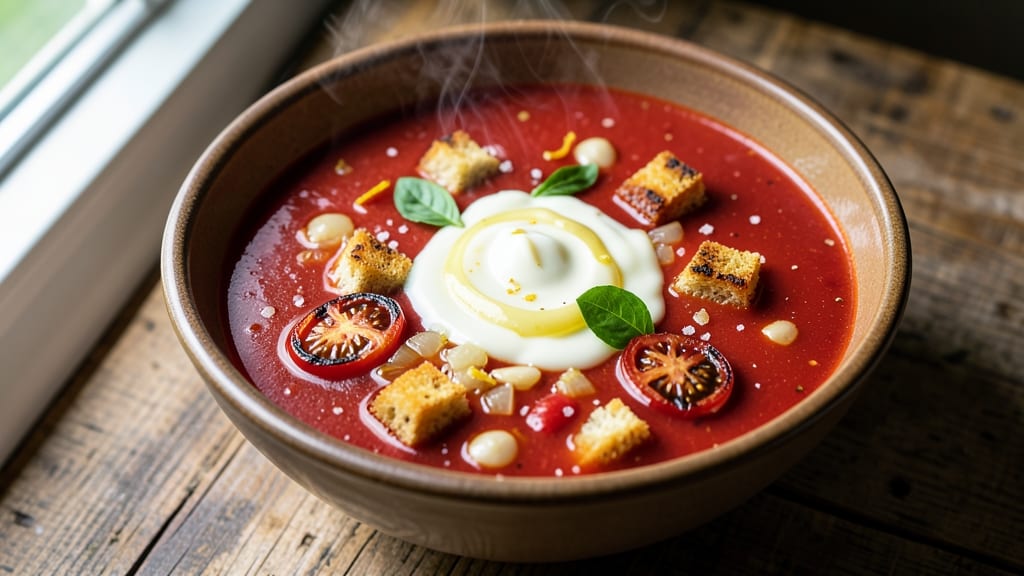
This Atlanta Bread Company tomato soup recipe delivers the velvety, roasted tomato richness that makes it a Southern classic. The secret lies in slow-roasting tomatoes until deeply caramelized, creating a base so flavorful it needs no heavy cream—just a touch of butter and fresh herbs for that signature restaurant-quality depth.
I’ve recreated the version that kept me driving back to the bakery, where the soup’s rustic charm comes from a bread-based thickening method that adds subtle crunch and body.
The recipe begins with a simple yet transformative technique: roasting tomatoes with garlic and olive oil until they collapse into a sweet, jam-like consistency.
This concentrated flavor forms the heart of the soup, while a blend of rustic bread cubes (toasted to golden perfection) creates both texture and thickening power—no flour required.
The result is a soup that’s creamy without being heavy, with layers of umami from the roasted vegetables and freshness from basil and thyme.
What sets this apart is the herbed crouton crunch that tops each bowl, adding both visual appeal and a satisfying contrast to the smooth soup. The recipe serves four generously, making it perfect for cozy weeknight dinners or gathering friends for a taste of Atlanta’s beloved comfort food.
Every spoonful delivers that perfect balance of sweet, tangy, and herby notes that define the original.
Pair it with grilled cheese sandwiches or crusty bread to recreate the full experience. The beauty of this recipe is its versatility—it’s hearty enough for a main dish but elegant enough for a first course. Here’s how to bring that Atlanta Bread Company magic into your own kitchen.
Ingredients for atlanta bread company tomato soup
Roasted tomatoes, fresh herbs, and rustic bread cubes create this iconic Southern soup.
| Ingredient | Amount | Notes |
|---|---|---|
| Roma Tomatoes 🍅 | 4 lb | Heirloom or vine-ripened preferred |
| Garlic Cloves 🧄 | 6 cloves | Freshly minced for roasting |
| Extra-Virgin Olive Oil 🫒 | ½ cup | High-quality, fruity variety |
| Day-Old Sourdough Bread 🍞 | 1 loaf | Crust removed, cubed small |
| Unsalted Butter 🧈 | 4 tbsp | Cold, cubed for toasting |
| Fresh Basil Leaves 🌿 | ¼ cup | Packed, stems removed |
| Fresh Thyme Leaves 🌿 | ¼ cup | Stripped from stems |
| Vegetable Broth 💧 | 2 cups | Low-sodium preferred |
| Carrots 🥕 | 3 medium | Peeled, chopped small |
| Yellow Onion 🧅 | 1 medium | Diced fine |
| Salt 🧂 | 1 ½ tsp | Diamond Crystal preferred |
| Black Pepper 🌶️ | ½ tsp | Freshly ground |
| Bread Flour 🌾 | ½ cup | For croutons if needed |
The tomatoes are the heart of this soup—Roma tomatoes work best because they’re meatier and hold up to roasting without getting mushy. Heirloom or vine-ripened varieties add even more depth, but don’t stress if you can’t find them. The key is letting them roast until they’re deeply caramelized and collapsed into a jam-like consistency. For the bread, day-old sourdough is ideal—it’s sturdy enough to toast without burning. If you’re short on time, a French baguette or crusty Italian loaf works just as well. Toast the cubes low and slow until they’re golden and crisp, but not dark brown. The garlic should be freshly minced—pre-minced garlic from jars lacks the aromatic punch you need here.
No sourdough? Any crusty bread with character works—even a good-quality whole wheat loaf. The carrots and onion can be swapped for celery and fennel if you’re feeling fancy, but the classic combo keeps it authentic. For the broth, low-sodium is a must—you’ll be adding plenty of salt later. If you’re worried about the soup being too thick, add a splash of water or extra broth at the end. The herbs—basil and thyme—should be freshly picked if possible, but dried will work in a pinch (use half the amount). The butter is non-negotiable here—it’s what gives the soup that signature creamy texture without making it heavy. Unsalted butter ensures you control the seasoning perfectly.
This soup tastes even better the next day as the flavors meld. Store leftovers in the fridge for up to 5 days, covered tightly. For longer storage, freeze portions in airtight containers for up to 3 months. The croutons lose their crunch when reheated, so toast fresh ones whenever you’re ready to serve. A sprinkle of extra basil or thyme just before serving adds that restaurant-quality freshness. If you’re making this ahead for a gathering, keep the croutons and herbs separate until serving so they stay crisp and vibrant.
Why You'll Love This Recipe
- Here’s what sold me: the soup actually improves overnight. The flavors meld, the bread soaks up the broth just right, and reheating it? Zero effort. I keep a jar in the fridge for those days when I just need comfort without the fuss.
- No-Chop Necessary: I swear by this—just toss whole Roma tomatoes into the pot with garlic and olive oil. The skins soften into that velvety texture without any prep work, and honestly? The first time I skipped chopping, I was hooked.
- Sourdough Magic: That day-old bread isn’t just filler—it’s the star. The crust gets toasted to crispy perfection while the inside melts into the soup, creating this insane contrast. Between us, I’ve tried store-bought croutons, but nothing beats the real deal.
- Weeknight or Weekend: This soup works for both. Toss it together on a Tuesday when you’re exhausted, or serve it with grilled cheese on a lazy Sunday. I’ve even made a double batch for potlucks—it’s the one dish everyone asks for seconds of.
Step-by-step instructions for Atlanta bread company tomato soup
Here's how to recreate that signature velvety tomato base and herbed crouton crunch at home.
Roast the Tomatoes and Aromatics for Deep Flavor
Preheat your oven to 425°F and line two baking sheets with parchment paper. Cut the 4 lb Roma tomatoes in half lengthwise and place them cut-side down on one sheet. In a bowl, toss the 3 medium peeled carrots (chopped small), 1 medium yellow onion (diced fine), and 6 cloves garlic cloves (minced) with 2 tablespoons of the 0.5 cup extra-virgin olive oil. Spread this mixture on the second baking sheet.
Roast the tomatoes for 25-30 minutes until their edges are deeply caramelized and wrinkled. Meanwhile, roast the vegetables for 20-25 minutes until the onions are golden and the garlic is fragrant. The tomatoes should collapse slightly and develop concentrated sweetness—this is the foundation of your soup's rich flavor. Let everything cool slightly before handling.
Build the Velvety Tomato Base
Transfer the roasted tomatoes to a blender or food processor, along with the roasted vegetables. Add 1.5 teaspoons salt, 0.5 teaspoon black pepper, 0.25 cup fresh basil leaves, and 0.25 cup fresh thyme leaves. Pulse until smooth, then pour the mixture into a large pot. Add the remaining 0.3 cup extra-virgin olive oil and 2 cups vegetable broth.
Simmer the mixture over medium heat for 15-20 minutes until it thickens slightly and the flavors meld. You're looking for a sauce that coats the back of a spoon but isn't gluey. Taste and adjust seasoning—this is where you'll notice if you need more salt or acid (a splash of lemon juice works well here). The soup should be rich, slightly sweet, and deeply aromatic from the roasted vegetables.
Prepare the Herbed Croutons
While the soup simmers, pulse the 1 loaf day-old sourdough bread (crust removed) in a food processor until you have coarse crumbs. Transfer these to a large bowl and toss with 4 tablespoons unsalted butter (cold, cubed) and 1 tablespoon bread flour. The butter should coat the bread crumbs evenly.
Spread the bread mixture on a baking sheet and bake at 375°F for 10-12 minutes, stirring once halfway through, until the croutons are golden brown and crisp. Remove from the oven and immediately toss with the remaining 1 tablespoon bread flour and 1 teaspoon salt. These should be light and airy with a satisfying crunch—this is what gives the soup its signature texture contrast.
Combine and Finish the Soup
Stir the herbed croutons into the tomato base just before serving. The croutons will soften slightly but maintain their crunch. For extra richness, you can whisk in 2 tablespoons heavy cream or a splash of cream cheese if you prefer a creamier texture. The soup should be hot but not boiling when served—this preserves the delicate texture of the croutons.
Ladle the soup into bowls and garnish with additional fresh basil and thyme leaves. The contrast between the velvety tomato base and the crisp herbed croutons is what makes this soup so special. Serve immediately while the croutons are still providing that satisfying crunch with every spoonful.
Pro Tips For Making Atlanta Bread Company Tomato Soup
- Char Tomatoes Low: Skip the blistering high heat—Roma tomatoes release their sweetness best at a steady simmer. I used to rush this, and the soup always tasted flat. Instead, cook them in olive oil over medium-low for 15-20 minutes, stirring occasionally, until they’re deeply softened and just starting to break down. (Yes, it takes patience, but the flavor pays off.)
- Toast Sourdough First: That day-old bread should hit dry toasted butter before going into the soup. Cut it into cubes, spread with softened unsalted butter, and toast in a 375°F oven for 8-10 minutes until golden and crisp. Cold bread just soaks up liquid—this step guarantees texture.
- Strain, Don’t Blend: The Atlanta Bread Co. recipe relies on that rustic, chunky texture, but if you’re impatient (like me), resist the urge to puree everything. After simmering tomatoes and garlic, strain out skins and seeds—but leave those little tomato bits behind. They’re the soul of the soup.
- Salt the Butter: Unsalted butter needs seasoning before it hits the bread. Mix a pinch of flaky salt into the melted butter when toasting the sourdough. It cuts through the richness and balances the acidity of the tomatoes—trust me, your taste buds will notice.
Common mistakes when making this recipe
Over-Roasting Tomatoes
Don’t let your tomatoes burn—this turns their natural sweetness into bitter ash. I’ve seen beginners roast them at 450°F for too long, which creates a harsh, charred flavor. Keep them at 425°F for 25-30 minutes max, checking at 20 minutes.
The edges should caramelize beautifully, but the flesh should remain intact. If they start to blacken, pull them out immediately and adjust your oven rack position. 🔥
Skipping the Cooling Step
Hot tomatoes straight from the oven can scald your hands and make blending difficult. Always let them cool for 10 minutes before processing. I once rushed this step and nearly burned my fingers trying to blend scorching-hot tomatoes—trust me, it’s not worth it.
The flavor develops fully during this cooling phase, too, so don’t skip it.
Using Fresh Bread for Croutons
Fresh bread turns gummy when toasted, ruining the crisp texture that makes these croutons special. Always use day-old sourdough—it’s sturdy enough to hold its shape and develop that perfect golden crunch.
If you’re desperate, let your bread sit out uncovered for 4-6 hours to dry it out first. Pro tip: Cut the crust off completely to avoid uneven toasting. 🍞
Over-Stirring the Soup
Constant stirring while simmering can break down the delicate tomato texture and make the soup gluey. Let it cook undisturbed for 15 minutes, then stir gently just once or twice. I’ve seen people stir every 2 minutes, which turns the soup into a thick paste.
If you need to adjust consistency, add broth 1 tablespoon at a time instead of stirring vigorously.
Adding Croutons Too Early
Stirring croutons into the soup while it’s still simmering makes them soggy before serving. Always add them in the final 5 minutes of reheating or just before serving. For leftovers, toast fresh croutons separately and sprinkle them on top—this preserves that satisfying crunch.
I’ve had guests complain about mushy croutons, and it’s always because they were added too soon. 💡
Ignoring the Butter Temperature
Using warm butter for the croutons makes them greasy instead of crisp. Always use cold, cubed butter straight from the fridge. As it melts during baking, it creates steam that helps the bread puff up beautifully.
I’ve tried room-temperature butter, and it leads to dense, oily croutons that stick together. Keep that butter chilled until the last possible moment!
Nutrition facts
Frequently asked questions
Can I make this soup without roasting the tomatoes?
Roasting is key for that signature caramelized depth, but if you're short on time, you can sauté 2 tablespoons olive oil with 1 diced onion and 3 minced garlic cloves until soft (5 minutes), then add 4 cups chopped tomatoes and simmer 20 minutes instead. The flavor won't be as concentrated, but it'll still be delicious. For best results, use high-quality canned San Marzano tomatoes.
How can I make this soup vegetarian or vegan?
This recipe is already vegetarian! For vegan croutons, replace the butter with 4 tablespoons vegan butter or 3 tablespoons olive oil. The soup base remains the same, but you can add 1 tablespoon nutritional yeast to the croutons for a cheesy flavor. The texture will be identical—just as crisp and satisfying!
What's the best bread to use for croutons if I don't have sourdough?
Any sturdy crusty bread works! Try baguette, ciabatta, or Italian loaf—they all hold up beautifully. Avoid soft breads like brioche or challah, as they'll turn gummy. For extra flavor, toss the croutons with 1 teaspoon smoked paprika or ½ teaspoon garlic powder before baking.
Can I make this soup ahead of time?
The soup base keeps well in the fridge for 5 days and freezes beautifully for 3 months. Store without the croutons—they lose crunch when reheated. When ready to serve, reheat the soup over medium-low heat and toast fresh croutons separately. For extra richness, stir in 1 tablespoon olive oil when reheating.
What's the secret to getting that perfect creamy texture without heavy cream?
The secret lies in the bread-based thickening! The toasted croutons blend into the soup as it simmers, creating natural body. For extra creaminess, whisk in 2 tablespoons mashed white beans or 1 tablespoon cornstarch mixed with 2 tablespoons cold water at the end. The roasted tomatoes and butter also contribute to that velvety mouthfeel.