
Soups & Stews
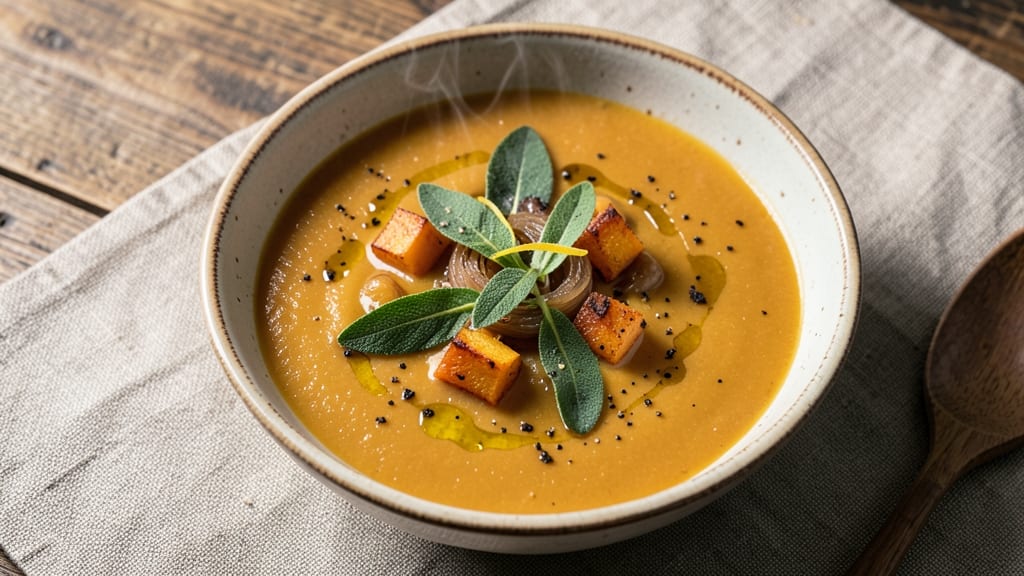
This Asylum Restaurant butternut squash soup recipe delivers the restaurant's signature velvety depth and aromatic complexity at home.
The secret lies in slow-roasting the squash until caramelized, then blending it with a rich base of onions, garlic, and fresh sage—a technique that builds layers of umami flavor most home versions miss.
What sets this apart is the balance: creamy enough to feel indulgent, but with enough texture to keep it interesting.
The process starts with roasting the squash for concentrated sweetness and depth, then simmering it with aromatic vegetables and herbs until tender. A proper reduction of the broth creates that signature restaurant-quality richness without needing heavy cream.
The result is a soup that's smooth, velvety, and packed with autumnal warmth—exactly what makes Asylum's version so beloved.
Finishing touches like toasted pumpkin seeds and fresh sage elevate it from good to exceptional. This recipe captures the restaurant's approach while making it accessible for home cooks—no fancy equipment or shortcuts, just careful layering of flavors.
The technique ensures every spoonful delivers that perfect balance of sweet, savory, and herbal notes.
Perfect for chilly evenings or holiday gatherings, this soup scales beautifully and tastes even better the next day. The key to success is patience—letting the flavors develop fully. Ready in about 45 minutes, it's the kind of dish that transforms a simple meal into something memorable.
Let's get started on recreating that restaurant magic at home.
Ingredients for asylum restaurant butternut squash soup
Roasted squash and aromatic herbs form the heart of this restaurant-inspired velvety soup.
| Ingredient | Amount | Notes |
|---|---|---|
| Medium Butternut Squash 🎃 | 2 lb | Peeled, seeded, cut into 1-inch cubes |
| Yellow Onion 🧅 | 1 whole | Medium, finely diced |
| Garlic Cloves 🧄 | 4 cloves | Fresh, minced |
| Fresh Sage Leaves 🌿 | ½ cup | Chopped, stems removed |
| Vegetable Broth 💧 | 4 cups | Low-sodium preferred |
| Extra-Virgin Olive Oil 🫒 | ¼ cup | High-quality, fruity |
| Heavy Cream 🥛 | ½ cup | Full-fat for richness |
| Salt 🧂 | 1 ½ tsp | Diamond Crystal preferred |
| Black Pepper 🌶️ | ½ tsp | Freshly ground |
| Pumpkin Seeds 🥜 | ¼ cup | Raw, for garnish |
| Fresh Thyme Leaves 🌿 | 1 tbsp | Chopped, optional garnish |
| Brown Sugar 🍯 | 1 tbsp | Lightly packed |
The butternut squash is the star, so prioritize quality—look for firm, heavy squash with smooth skin and minimal blemishes. Local farmers markets often have the freshest varieties, but any well-stocked grocery store will carry good options. Roasting the squash until caramelized develops its natural sweetness, which is crucial for the soup's depth. Organic squash from stores like Whole Foods or Trader Joe's tends to have better flavor, though conventional squash works fine. For the sage, fresh is non-negotiable—dried lacks the bright, herbal notes that make this soup special. The same goes for thyme, which adds subtle earthiness to complement the sage.
No fresh sage? Dried at half the amount will work in a pinch, though the flavor won't be as vibrant. Substituting vegetable broth for chicken broth keeps this vegetarian-friendly, but ensure it's low-sodium to avoid over-salting. For a dairy-free version, swap the heavy cream for full-fat coconut milk, though the texture will be slightly lighter. The pumpkin seeds can be omitted if you prefer, but they add a delightful crunch and nutritional boost. If you can't find pumpkin seeds, pepitas or sunflower seeds make decent alternatives. The brown sugar enhances the natural sweetness of the squash—don't skip it, but adjust to taste if your squash is particularly sweet or tart.
Roasted squash cubes can be prepped ahead and stored in the fridge for 3 days or frozen for 2 months, making this a great make-ahead dish. The finished soup tastes even better the next day as flavors meld, so plan to make it a day in advance for gatherings. Store in an airtight container in the fridge for 4-5 days, or freeze for 3 months. For serving, toast the pumpkin seeds in a dry pan over medium heat for 3-5 minutes until golden—watch closely to avoid burning. Garnish with fresh thyme and a drizzle of olive oil for an elegant finish.
Why You'll Love This Recipe
- One-Pot Magic: I swear by this recipe—just chop the squash, toss it in with the onion and garlic, and let the broth do its thing. No straining, no fuss, and that sage? It infuses the whole thing with this earthy warmth that makes every spoonful feel like a hug.
- Sage-Kissed Goodness: Between us, the fresh sage leaves take this soup from "good" to "I’ll make it twice in a week." You roast them until crispy, then drop them in—crunchy edges, aromatic broth, and that butternut sweetness? It’s the kind of flavor combo that sticks with you.
- Weeknight & Holiday: Honestly, this is my go-to for both lazy Tuesdays and impressing guests. Serve it with crusty bread for a cozy night in, or add a swirl of cream and toasted pumpkin seeds for a restaurant-worthy dish. Same ingredients, totally different vibes.
- Budget-Friendly Leftovers: A single butternut squash stretches across three meals, and the broth keeps it rich without breaking the bank. Freeze portions for those days when you’d rather microwave than cook—and trust me, it reheats just as well as it tastes fresh.
Step-by-step instructions for Asylum restaurant butternut squash soup
This velvety soup delivers restaurant-quality depth through precise roasting and layering.
Roast the Butternut Squash and Aromatics
Preheat your oven to 400°F. Toss the 2 lb medium butternut squash cubes, 1 whole yellow onion, 4 cloves garlic, 1 tbsp brown sugar, 1.5 tsp salt, and 0.5 tsp black pepper with 2 tablespoons of the extra-virgin olive oil on a large baking sheet. Spread in a single layer, leaving space between pieces for even browning.
Roast for 35-40 minutes until the squash is tender when pierced with a fork and the edges are caramelized. You'll smell that deep, nutty aroma—this is where the soup's complexity begins. The sugar in the squash and brown sugar will caramelize, creating natural sweetness that balances the earthy flavors. Don't rush this step; proper roasting transforms the soup from ordinary to extraordinary.
Build the Base with Roasted Vegetables
Transfer the roasted vegetables to a large pot or Dutch oven. Add the remaining 0.25 cup extra-virgin olive oil and 0.5 cup fresh sage leaves. Pour in the 4 cups vegetable broth and bring to a gentle simmer over medium heat. Let it cook uncovered for 15 minutes, stirring occasionally, until the flavors meld and the liquid reduces slightly.
Here's where the magic happens: the roasted vegetables release their concentrated flavors into the broth. You'll see the liquid take on a rich, golden hue. The sage leaves will infuse the soup with their piney aroma, creating that signature Asylum Restaurant depth. Taste the broth at this stage—it should be deeply flavorful but not overly sweet. If it needs more balance, add a pinch of salt or a splash of water.
Blend to Silky Perfection
Use an immersion blender to purée the soup directly in the pot until completely smooth. Work in batches if needed, ensuring no lumps remain. For a perfectly velvety texture, strain through a fine-mesh sieve if you prefer an ultra-smooth consistency. The result should be a rich, golden soup with no visible chunks.
This blending step is critical—it creates the signature creamy texture that makes this soup so satisfying. If you're using a countertop blender, let the soup cool slightly first to prevent splattering. The blended soup should coat the back of a spoon and have a luxurious mouthfeel. If it's too thick, whisk in 2-3 tablespoons of broth to reach your desired consistency.
Finish with Cream and Season
Return the soup to medium-low heat and gently whisk in the 0.5 cup heavy cream. Simmer for 5-7 minutes, stirring occasionally, until heated through but not boiling. The cream will create that signature velvety finish while adding a subtle richness. Taste and adjust seasoning—you may need a touch more salt to balance the sweetness from the roasted squash.
Here's the professional touch: the cream should be warm but not hot when added, or it may curdle. If you notice any separation, whisk in 1 teaspoon of cornstarch mixed with 1 tablespoon of cold water to stabilize the emulsion. The finished soup should be silky, flavorful, and perfectly balanced between sweet, savory, and herbal notes.
Serve with Garnish and Warm Bread
Ladle the soup into bowls and garnish with 0.25 cup pumpkin seeds and 1 tbsp fresh thyme leaves. The pumpkin seeds add a delightful crunch that contrasts beautifully with the smooth soup, while the thyme enhances the herbal notes. Serve immediately with crusty bread to soak up every last drop of that velvety goodness.
This soup shines when served hot, so don't let it sit too long before eating. The flavors continue to develop as it cools, so enjoy it while the cream is still silky and the aromatics are at their peak. For an extra touch, drizzle with a little more olive oil just before serving—it adds another layer of richness that complements the soup's depth perfectly.
Pro Tips For Making Asylum Restaurant Butternut Squash Soup
- ROAST THE SQUASH FIRST: I learned this the hard way—peeling raw butternut squash is a nightmare. Cut it in half, scoop out the seeds, then roast the halves skin-on at 400°F (200°C) for 40 minutes. The flesh will fall apart effortlessly, and the caramelized edges add depth the pot won’t replicate.
- SWEEAT THE ONION LOW: This isn’t the prettiest method, but it’s the tastiest: cook the onion over medium-low heat for 10-12 minutes until it’s deep golden and almost jammy. Rushing it turns the soup into onion-flavored broth—no one wants that. (Yes, even if you’re impatient like me.)
- TOAST THE SAGE: Toss the fresh sage leaves in a dry pan for 20 seconds until fragrant—just enough to release their oils without burning. Add them to the soup at the end, stems first, so they infuse the broth properly. Skip this, and you’ll just be eating raw, bitter leaves instead of aromatic perfume.
- PUREE IN BATCHES: Don’t dump all the roasted squash into the blender at once—it’ll seize up. Work in 2-cup increments, letting the motor rest 10 seconds between batches. This keeps the soup silky without turning your kitchen into a sauna. (Your future self will thank you.)
Flavor customization for this asylum restaurant butternut squash soup
Sweet & Spicy Twist
Add 1 tsp smoked paprika and ½ tsp cayenne pepper to the roasted squash mixture for a smoky kick.
Balance the heat with an extra ½ cup heavy cream at the finish—this creates a creamy, slightly spicy profile that pairs beautifully with a drizzle of honey or maple syrup at the table. 🌶️
Creamy Coconut Adaptation
Swap the heavy cream for 1 cup full-fat coconut milk and add ½ tsp ground cinnamon while roasting the squash. This tropical-inspired version keeps the soup rich and velvety while adding warm, spiced notes. Garnish with toasted coconut flakes instead of pumpkin seeds for a complete flavor transformation.
Herb-Forward Variation
Boost the herbal profile by adding 2 sprigs fresh rosemary and 1 sprig fresh thyme to the roasting pan alongside the sage. After blending, strain out the herbs and garnish with extra chopped rosemary and thyme leaves. This version is brighter and more aromatic, perfect for herb lovers.
Umami Depth Boost
For a deeper savory profile, add 1 tbsp soy sauce or 1 tsp miso paste to the simmering broth. The umami richness complements the natural sweetness of the squash beautifully. For extra depth, stir in 1 tbsp tomato paste with the aromatics before roasting.
Spiced Pumpkin Seed Crust
Toast the pumpkin seeds with ½ tsp ground cumin and ¼ tsp cayenne before using as garnish. This adds a warm, nutty spice that contrasts perfectly with the creamy soup. For a crunchier texture, press the spiced seeds into the bottom of bowls before ladling the soup on top.
Creamy Roasted Garlic
Roast the garlic cloves for 10 minutes longer until deeply caramelized, then blend them directly into the soup. This adds a sweet, mellow garlic depth that enhances the overall richness. For extra flavor, roast the garlic with ½ tsp chili flakes for a subtle heat.
Nutrition facts
Frequently asked questions
Can I substitute sweet potato for butternut squash?
Yes, but expect different flavor and texture results. Sweet potato has a milder, slightly earthier taste and a denser texture that may require longer roasting (45-50 minutes). For best results, use 2 lbs of sweet potato and reduce the brown sugar to ½ tbsp since sweet potatoes are naturally sweeter. The soup will still be creamy but with a more rustic, hearty character.
How do I fix soup that's too thick after blending?
Whisk in 2-3 tablespoons of warm broth at a time until you reach your desired consistency. If it's still too thick, gently reheat the soup and stir in 1 teaspoon of cornstarch mixed with 1 tablespoon of cold water to stabilize the texture. Avoid adding too much liquid at once—build flavor gradually by simmering uncovered for 5-7 minutes after thinning.
What's the secret to getting that restaurant-quality velvety texture?
The key is proper roasting and blending technique. Roast the squash until completely tender (35-40 minutes) to break down fibers, then blend thoroughly with an immersion blender for a silky finish. For extra richness, ensure the cream is warmed to 100°F before adding—never hot—to prevent curdling. Straining through a fine-mesh sieve also removes any remaining lumps for that signature smoothness.
Can I make this soup ahead of time?
This soup tastes even better the next day as flavors meld. Store in an airtight container in the fridge for 4-5 days or freeze for 3 months. Reheat gently on the stove over low heat, stirring occasionally, and add a splash of broth if it thickens. For serving, simply reheat and garnish with fresh toasted seeds and herbs to restore that restaurant-fresh appeal.
What if I don't have an immersion blender?
Transfer the hot soup to a countertop blender in batches, working carefully to avoid splattering. Let the soup cool slightly first (about 5 minutes) to prevent steam buildup. For extra-smooth results, strain through a fine-mesh sieve after blending. If you prefer some texture, blend only half the soup and leave the rest chunky for visual interest.