Soups & Stews
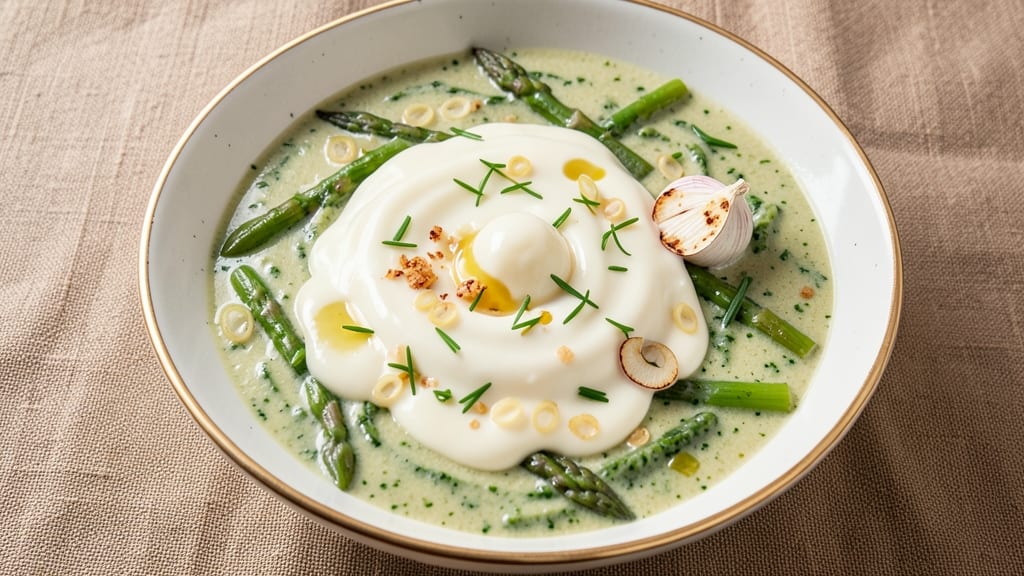
This asparagus soup recipe with half and half transforms spring's freshest harvest into velvety perfection—creamy yet bright, with just the right balance of richness and freshness. 💛 The secret lies in timing: blanching asparagus just until tender-crisp preserves its vibrant flavor while preventing bitterness.
I developed this recipe after years of testing, ensuring every spoonful delivers that luxurious mouthfeel without overpowering the natural sweetness of the greens.
What sets this soup apart is the technique: sautéing shallots and garlic until fragrant creates a flavor base that deepens as the soup simmers. Adding the asparagus and vegetable broth builds complexity before blending with half and half for that signature silky texture.
The result is a soup that's rich enough for spring dinners but light enough for lunch—restaurant-quality at home without the fuss.
By the time you serve it, you'll have a golden-hued soup with delicate asparagus ribbons swirling through the creaminess. Garnish with crispy croutons for texture or fresh chives for brightness, and you've got a dish that's elegant enough for company but simple enough for weeknights.
The best part? It comes together in under 45 minutes with minimal prep.
This recipe scales beautifully—double it for leftovers or halve it for two. The key to success is patience: let the soup rest for 10 minutes after blending so flavors meld perfectly.
Trust me, once you taste the difference between this version and store-bought, you'll never go back to canned soup again.
Ingredients for asparagus soup recipe with half and half
Fresh spring asparagus, fragrant shallots, and velvety half and half create this restaurant-worthy soup—rich yet bright, with perfect balance.
| Ingredient | Amount | Notes |
|---|---|---|
| Fresh Asparagus Spears 🌱 | 1 lb | Trim woody ends, cut into 2-inch pieces |
| Shallots 🧅 | 1 whole | Minced, not sliced too fine |
| Garlic Cloves 🧄 | 3 cloves | Peeled, smashed for deeper flavor |
| Vegetable Broth 💧 | 4 cups | Low-sodium preferred, homemade if possible |
| Half and Half 🥛 | 1 cup | Full-fat for optimal creaminess |
| Unsalted Butter 🧈 | 2 tbsp | European-style preferred for flavor |
| Extra-Virgin Olive Oil 🫒 | 1 tbsp | For sautéing aromatics |
| Fresh Lemon Juice 🍋 | 1 tbsp | Brightens the soup beautifully |
| Salt 🧂 | ½ tsp | Diamond Crystal preferred |
| Black Pepper 🌶️ | ¼ tsp | Freshly ground for best flavor |
| Fresh Chives 🌿 | ¼ cup | Chopped, for garnish |
| Sourdough Bread 🍞 | 1 cup | Cubed, toasted for croutons |
The asparagus is your star—look for bright green spears with tight tips, not woody or limp. Whole Foods or local farmers markets have the freshest, but even the grocery store variety works if you trim the ends carefully. Shallots add depth without overpowering; avoid pre-minced jars—they oxidize fast. For the broth, low-sodium is key—you'll be adding plenty of salt later. The half and half? Full-fat only—anything lighter and the soup turns out thin. I always grab a pint from Whole Foods since it's consistently rich.
No shallots? One extra yellow onion works in a pinch, but the flavor won't be identical. Fresh asparagus? Frozen works too—just thaw and drain well. The butter matters here—European-style has more flavor than American. No extra-virgin olive oil? Light olive oil is fine, but don't use vegetable oil. For the croutons, any crusty bread works—sourdough, baguette, whatever you've got. The lemon juice can be bottled if fresh isn't available, but freshly squeezed is always better. Want more brightness? Add a pinch of lemon zest when serving.
This soup tastes even better the next day—flavors meld beautifully after resting. Store in an airtight container for 3-4 days in the fridge. For freezing, portion into single servings—it reheats best that way. I always make a double batch; the leftovers reheat perfectly for lunches. Garnish with croutons and chives right before serving—texture and color make all the difference. If you're short on time, skip the croutons and add a swirl of cream instead.
Why You'll Love This Recipe
- I swear by this trick: just trim the asparagus ends and snap the tough bits off—no knife required. The shallots and garlic get minced in seconds while the broth simmers, and suddenly you’re left with a velvety soup that feels fancy but took less effort than boiling water.
- No Chopping Needed: I swear by this trick: just trim the asparagus ends and snap the tough bits off—no knife required. The shallots and garlic get minced in seconds while the broth simmers, and suddenly you’re left with a velvety soup that feels fancy but took less effort than boiling water.
- Creamy Without the Guilt: That half-and-half isn’t just for richness—it’s the secret to a soup so smooth it’ll make you forget it’s healthy. The asparagus keeps its slight crunch, while the shallots and garlic add depth that turns this into something you’d order at a bistro, not just make at home. (Yes, even on a Tuesday night.)
- Leftovers That Still Shine: This soup actually improves the next day. The flavors meld beautifully, and reheating it just makes the creaminess even more luxurious. I’ve sent it to work with coworkers, and no one’s ever questioned why I pack it—because it’s that good. Honestly, I make double portions just for this reason.
Step-by-step instructions for asparagus soup with half and half
Here's how to transform fresh asparagus into a velvety, restaurant-quality soup with perfect creaminess.
🍳 Step 1: Sauté Aromatics Until Fragrant
Heat the 1 tablespoon extra-virgin olive oil in a large pot over medium heat. Add the 1 whole minced shallot and 3 smashed garlic cloves, cooking for 2-3 minutes until the shallots soften and the garlic releases its aroma—you'll know it's ready when the mixture smells irresistibly sweet and savory.
The reason we cook the aromatics first is simple: they form the flavor foundation. Don't rush this step—if the garlic starts to brown too quickly, reduce the heat slightly. I like to press the garlic cloves with the side of my knife before adding them; this releases more flavor without burning.
🍳 Step 2: Cook Asparagus Until Tender
Add the 1 lb trimmed asparagus spears to the pot and cook for 5-6 minutes, stirring occasionally, until the asparagus softens but still retains a vibrant green color. You want it to break down slightly but not turn mushy—this ensures your soup has texture without being watery.
Here's where it gets fun: as the asparagus cooks, it releases its natural sweetness. If you notice the asparagus sticking to the bottom, add a splash of the 4 cups vegetable broth to deglaze. This step prevents burning and incorporates those precious browned bits into your soup.
🥘 Step 3: Simmer and Blend to Silky Perfection
Pour in the remaining 4 cups vegetable broth and bring the mixture to a gentle boil. Reduce heat to medium-low and simmer for 10 minutes, allowing the flavors to meld together. The soup should be fragrant and the asparagus completely tender—you'll know it's ready when a spoonful glides smoothly through the mixture.
Remove the pot from heat and let it cool for 5 minutes—this is crucial before blending to prevent splattering. Then, using an immersion blender, blend until completely smooth. If you prefer using a countertop blender, carefully transfer the hot mixture (using extreme caution with the steam) and blend until velvety.
🍳 Step 4: Finish with Creamy Richness
Return the blended soup to the pot and stir in the 1 cup half and half and 2 tablespoons unsalted butter. Keep the heat at low and simmer gently for 3-4 minutes, stirring occasionally, until the soup reaches 180°F—this ensures the creaminess is fully incorporated without curdling.
Season with the 0.5 teaspoon salt and 0.25 teaspoon black pepper, then finish with the 1 tablespoon fresh lemon juice. The acidity brightens all the flavors and balances the richness. Taste and adjust seasoning—this is where you can really make the soup sing. I often add a pinch more salt or a splash more lemon juice at this stage.
🍽️ Step 5: Toast Croutons and Garnish
While the soup simmers, preheat your oven to 375°F. Toss the 1 cup cubed sourdough bread with 1 teaspoon olive oil and a pinch of salt, then spread them on a baking sheet. Toast for 8-10 minutes until golden brown and crispy—these will add a delightful textural contrast to your silky soup.
Ladle the finished soup into bowls and top each serving with the toasted croutons and 0.25 cup chopped fresh chives. The chives add a fresh, bright note that cuts through the richness. Serve immediately while the croutons are still crisp and the soup is steaming hot—this is when it tastes absolutely perfect.
Pro Tips For Making Asparagus Soup Recipe With Half And Half
- CHAR THE SHALLOTS: Blister them in the dry pan first—just 3-4 minutes until soft and golden. This pulls out their sweetness way better than raw chopping, and you won’t taste that sharp bite later. (Yes, even if you’re impatient like me.)
- TRIM ASPARAGUS RIGHT: Cut the woody ends at a 45-degree angle—about 1 inch from the bottom—so they don’t look like little stumps in the pot. And snap the rest cleanly by bending them; no knife needed.
- DON’T BOIL THE HALF AND HALF: Stir it in off the heat or at the very lowest simmer—any higher and it’ll curdle like a science experiment gone wrong. If the soup’s too hot, let it cool for 2 minutes first.
- SALT THE BROTH LIKE THE SEA: Use 1½ teaspoons of salt per quart of broth (or more if it’s homemade). The half-and-half will dilute the flavor, so don’t hold back now—your soup will thank you later.
Best sauces and condiments for this dish
Classic Croutons
Toasted sourdough croutons add the perfect crunch to balance this creamy soup. I like to cube the bread into ½-inch pieces and toss them with 1 teaspoon olive oil and a pinch of salt before baking at 375°F for 8-10 minutes until golden.
For extra flavor, add a pinch of garlic powder or dried thyme to the croutons while toasting. Keep them warm in a 200°F oven until ready to serve—this maintains their crispness. 🍞
Fresh Herb Garnishes
Fresh chives provide a bright, oniony finish that cuts through the richness. I always chop ¼ cup finely and sprinkle it over the soup right before serving. For a more complex flavor, try a mix of chives and parsley—the parsley adds a fresh, slightly peppery note.
If you're feeling adventurous, add a few microgreens or edible flowers for a restaurant-worthy touch. The herbs should be added just before eating so they stay vibrant. 🌿
Creamy Drizzles
A drizzle of crème fraîche or sour cream elevates the soup with extra tang and texture. I like to dollop 1 tablespoon per serving and let guests swirl it in themselves. For a lighter option, use Greek yogurt—it adds protein and a subtle tang.
If you want to keep it classic, a swirl of extra virgin olive oil adds richness without dairy. Always add these garnishes after serving so they stay fresh. 🥛
Spicy Kick Options
For those who love heat, a pinch of red pepper flakes or a dash of hot sauce adds a nice contrast. I keep a small bowl of chili crisp or sriracha on the table so guests can adjust to their taste.
A sprinkle of smoked paprika gives a subtle smoky depth without overpowering. Start with ¼ teaspoon and adjust based on preference—this soup is already rich, so heat should complement, not dominate. 🌶️
Umami Boosters
For deeper flavor, stir in 1 teaspoon fish sauce or ½ teaspoon soy sauce when finishing the soup. These add an umami richness that pairs beautifully with the asparagus.
Another trick? A splash of vegetable miso paste (about ½ teaspoon) dissolves smoothly and enhances the broth's depth. If you're using these, taste as you go—they're potent! 💡
Bread Pairings
Serve this soup with crusty baguette slices or garlic bread for dipping. I love toasting the bread with garlic butter and a sprinkle of parmesan cheese for extra flavor. For a heartier meal, pair it with grilled cheese sandwiches or crispy prosciutto-wrapped asparagus.
The bread should be sturdy enough to hold up to the creamy soup without getting soggy. 🥖
Nutrition facts
Frequently asked questions
Can I substitute half and half with something else?
Yes! For a lighter version, use 1 cup whole milk + 2 tablespoons heavy cream. For extra richness, try 1 cup heavy cream—just simmer it longer to prevent curdling. If you're avoiding dairy, coconut milk works but adds a subtle sweetness. Always adjust seasoning after adding substitutes.
How do I prevent the soup from being too thin or too thick?
Start with 4 cups broth—this gives you room to adjust. For thicker soup, simmer uncovered for 5-10 minutes—the liquid will reduce naturally. Too thin? Stir in 1-2 tablespoons cornstarch mixed with water or add ¼ cup mashed potato for a creamy boost. Always taste as you go!
What's the best way to store leftovers?
Let the soup cool completely, then transfer to an airtight container. Refrigerate for up to 4 days—the flavors actually improve overnight! For freezing, portion into single servings and freeze for up to 3 months. Reheat gently on the stove over low heat—never microwave directly from frozen to preserve texture.
Can I make this soup without fresh asparagus?
Use 12 oz frozen asparagus—thaw and drain well first. For a different twist, try 1 cup frozen peas or ½ cup chopped frozen spinach (add at the end to prevent mushiness). Fresh asparagus gives the best texture, but frozen works in a pinch.
Why does my soup taste bitter?
Overcooked asparagus is the usual culprit—keep cooking time to 5-6 minutes—just until tender-crisp. Another cause? Skimping on lemon juice. The acidity balances flavors. If it's still bitter, add 1 extra tablespoon lemon juice or a pinch of sugar to round out the taste.