
Soups & Stews
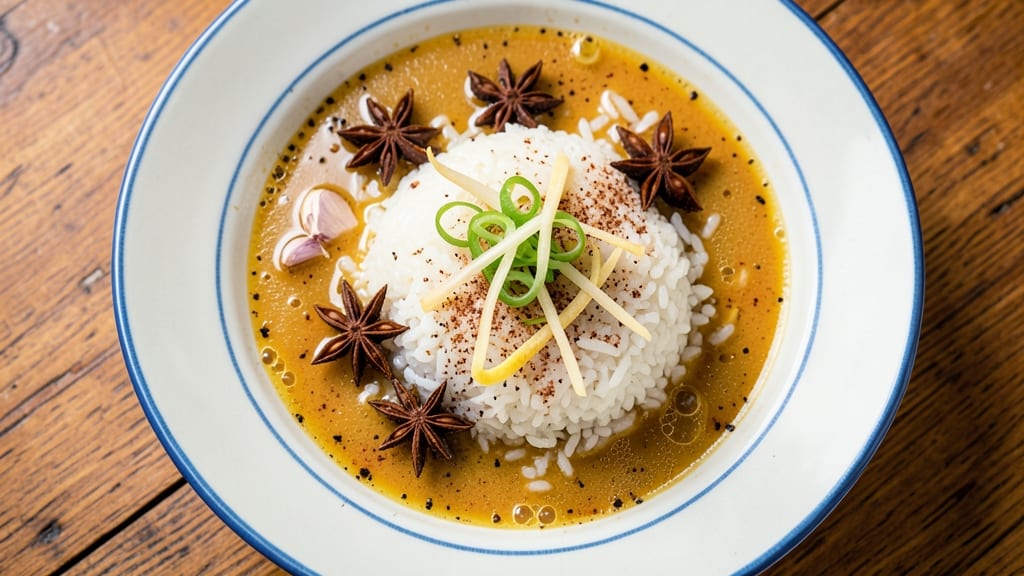
This Asian rice soup recipe transforms simple ingredients into a deeply comforting bowl of fragrant, five-spice-infused broth with perfectly tender rice and a toasted sesame crunch.
The secret lies in slow-simmered aromatics—ginger, garlic, and star anise—that build layers of warmth, while the rice absorbs the broth into a velvety, satisfying texture. Unlike heavy stews, this soup balances lightness with depth, making it ideal for chilly evenings or quick weeknight meals.
What sets this version apart is the toasted sesame crunch, which adds nutty texture and a subtle bitterness that cuts through the broth’s richness.
The five-spice blend (star anise, cinnamon, cloves, fennel, and pepper) creates an aromatic profile that’s both familiar and intriguing, bridging traditional Asian flavors with modern adaptability. Whether you prefer a creamy, congee-like consistency or a lighter, brothy style, this recipe delivers with minimal effort but maximum reward.
Ingredients for asian rice soup
Fragrant spices, toasted sesame, and tender rice—this soup delivers comfort in every spoonful.
| Ingredient | Amount | Notes |
|---|---|---|
| Jasmine Rice 🍚 | 1 cup | Uncooked, medium-grain preferred |
| Chicken Broth 💧 | 4 cups | Homemade or low-sodium store-bought |
| Garlic Cloves 🧄 | 4 cloves | Minced for aromatic base |
| Fresh Ginger 🌿 | 1 tbsp | Finely grated, peeled |
| Star Anise Pods 🌶️ | 2 whole | Lightly crushed for infusion |
| Ground Cinnamon 🌿 | ½ tsp | Freshly ground preferred |
| Ground Cloves 🌶️ | ¼ tsp | Whole cloves work too |
| Fennel Seeds 🌿 | ¼ tsp | Toasted for enhanced aroma |
| Ground Black Pepper 🌶️ | ¼ tsp | Freshly cracked preferred |
| Sesame Oil 🫒 | 1 tbsp | Toasted for nutty depth |
| Sesame Seeds 🥜 | 1 tbsp | Toasted until golden |
| Green Onions 🧅 | 3 whole | Sliced for garnish |
| Soy Sauce 🍶 | 1 tbsp | Light or dark preferred |
| Sesame Paste 🥜 | 1 tbsp | For added richness |
| Vegetable Oil 🫒 | 1 tbsp | For toasting sesame seeds |
The five-spice blend is the soul of this dish. Star anise and fennel seeds should be toasted briefly in a dry pan before grinding to unlock their aromatic oils—Whole Foods or Asian markets carry the best quality. If you can't find whole spices, Penzeys Spices sells pre-ground blends, but freshly ground always tastes superior. The ginger and garlic should be freshly minced, not pre-chopped from the jar. For the broth, homemade chicken stock delivers the deepest flavor, but Swanson or Pacific Foods low-sodium versions work in a pinch. The sesame paste adds a luxurious texture—Kadoya brand is widely available and consistently excellent.
No star anise? Anise seeds or a pinch of anise extract will mimic the flavor, though the aroma won't be identical. Substituting dried ginger for fresh? Use half the amount since it's less potent. The sesame oil can be swapped for toasted peanut oil, though the flavor profile shifts slightly. For a vegetarian version, replace chicken broth with mushroom or kombu broth and add a splash of vegetable miso paste for umami depth. The soy sauce can be reduced to 1 tsp if you prefer less saltiness, but don't skip it entirely—the balance is key to that authentic Asian depth.
Toasted sesame seeds lose their crunch within 24 hours, so store them in an airtight container away from light. The cooked soup keeps for 4-5 days in the fridge, though the texture becomes slightly softer with each passing day. For longer storage, freeze portions in airtight containers for up to 3 months. Reheat gently on the stove—microwaving can make the rice gummy. Garnish with extra sesame seeds and green onions just before serving to preserve their freshness and visual appeal.
Why You'll Love This Recipe
- One-Pot Magic: I swear by this recipe when I’m too tired to dirty extra dishes—just toss everything into one pot, stir, and let it simmer. The jasmine rice soaks up the broth like a sponge, turning into fluffy, fragrant grains without a single grain of effort.
- Ginger-Garlic Bomb: That first spoonful of broth—warm, aromatic, with star anise whispering spice and fresh ginger cutting through—is my favorite part. It’s the kind of flavor that makes you pause mid-sip and think, “Why don’t I do this more often?”
- Lunchbox Hero: Between us, this soup is my secret weapon for meal prep. The leftovers reheat beautifully, and I’ll pack it in thermoses for work or school—especially when the rice has that perfect chewy bite from the broth.
- Budget Comfort: Honestly, it’s the kind of meal that makes frugality feel luxurious. A handful of star anise and ginger root stretch a cheap bag of jasmine rice into something that tastes like a restaurant takeout. My wallet and my taste buds thank me.
Step-by-step instructions for fragrant five-spice Asian rice soup
This method builds complex flavor layer by layer—start with the aromatic base, then toast the spices to unlock their depth.
Toast Spices and Prepare the Broth Base
Heat a dry skillet over medium-low heat and add the 1 tablespoon vegetable oil. Add the 2 whole star anise pods, 0.25 teaspoon fennel seeds, 0.25 teaspoon ground cloves, 0.5 teaspoon ground cinnamon, and 0.25 teaspoon ground black pepper. Toast for 1-2 minutes until fragrant and the spices begin to sizzle—you should smell warm, earthy aromas developing.
Remove the skillet from heat and transfer the toasted spices to a small bowl. In a separate saucepan, combine the 4 cups chicken broth, 1 tablespoon soy sauce, and 1 tablespoon sesame paste. Bring to a gentle simmer over medium heat and let it reduce slightly for 3-4 minutes until the liquid is infused with flavor. This pre-infusion ensures every spoonful of soup carries depth.
Build the Aromatic Foundation
Return the saucepan to medium heat and add the 4 cloves minced garlic and 1 tablespoon finely grated fresh ginger. Sauté for 1-2 minutes until the garlic becomes translucent and the ginger loses its raw bite—this step prevents harsh flavors and builds the soup's aromatic backbone.
Add the toasted spices back to the broth and stir gently. The spices should bloom fully in the warm liquid, releasing their oils and creating a fragrant, aromatic base. Let this mixture simmer uncovered for 5 minutes to allow the flavors to meld together. This is where the five-spice blend transforms into a cohesive, complex seasoning.
Cook the Jasmine Rice to Perfect Texture
Rinse the 1 cup jasmine rice under cold water until the water runs clear, then drain well. Add the rice to the simmering broth and stir gently to distribute it evenly. The rice should be fully submerged—if not, add a splash of water to cover it completely. Return the heat to medium-low and bring the mixture to a gentle simmer.
Cover the saucepan with a tight-fitting lid and cook for 15-18 minutes without lifting the lid. The rice should be tender with a slight bite, absorbing the broth while maintaining its shape. If the rice begins to stick to the bottom, stir gently and add 1-2 tablespoons water to maintain even cooking. The goal is plump, individual grains that hold their structure.
Finish with Toasted Sesame and Garnish
While the rice cooks, heat a dry skillet over medium heat and add the 1 tablespoon sesame seeds. Toast for 1-2 minutes, stirring constantly, until they turn a rich golden brown and release their nutty aroma. Transfer the toasted sesame seeds to a small bowl and set aside.
Once the rice is tender, stir in the 1 tablespoon sesame oil and let the soup simmer uncovered for an additional 2-3 minutes to allow the oil to infuse and create a glossy finish. Remove the star anise pods and adjust seasoning with additional soy sauce if needed. Ladle the soup into bowls and garnish each serving with the toasted sesame seeds and 3 sliced green onions. The contrast of crisp sesame against the warm broth elevates every spoonful.
Pro Tips For Making Asian Rice Soup
- TOAST THE RICE FIRST: I used to skip this step, thinking it was unnecessary—big mistake. Dry-toast 2 tablespoons of jasmine rice in a pot over medium heat for 2-3 minutes until it smells nutty and golden. This deepens the flavor and prevents the soup from tasting bland, especially if your broth isn’t ultra-rich.
- GRATE GINGER FINE: Sounds basic, but I’ve had soups where the ginger was either too chunky (like eating a mouthful of wood) or too pulpy (mushy texture). Use the smallest holes on your grater or finely mince it—about 1 teaspoon of fresh ginger, no bigger than the tip of your pinky. It dissolves evenly and infuses the broth without fighting for space.
- SIMMER LOW AND COVERED: After adding the rice and broth, reduce heat to the lowest setting that keeps a gentle simmer—just enough to see tiny bubbles at the edges. Cover the pot and resist the urge to peek or stir often. I learned this the hard way: boiling rice soup turns it gluey, and you’ll end up with a sad, pasty mess instead of tender grains.
- STRAIN STAR ANISE: I used to leave the star anise pods in until the very end, thinking they’d add more flavor. Wrong. After 20 minutes, remove them and strain the broth—otherwise, you’ll get a bitter, resinous aftertaste. If you’re lazy (like me), wrap the pods in cheesecloth before dropping them in, so you can fish them out cleanly without a sieve.
Health benefits of this recipe
Digestive Comfort
This rice soup is a gentle, soothing option for digestion—jasmine rice is easy to break down while the warm broth helps stimulate stomach acids. The ginger and garlic in the base act as natural anti-inflammatory agents, easing any discomfort.
I find it especially helpful after heavy meals or when I'm feeling under the weather. 🌿
Protein Boost
While this recipe uses chicken broth, you can easily boost protein by adding shredded chicken, tofu, or shrimp. A ½ cup cooked chicken breast adds about 26 grams of protein to the entire pot, making it a satisfying meal.
For a vegetarian version, silken tofu or edamame provide plant-based protein without altering the soup's delicate texture.
Anti-Inflammatory Spices
The five-spice blend—especially star anise, cinnamon, and cloves—contains potent anti-inflammatory compounds. Star anise has been shown to help regulate blood sugar, while cinnamon improves insulin sensitivity. I always keep these spices on hand because they add so much more than just flavor—they actively support overall wellness. ✨
Hydration Helper
Warm broth-based soups like this one help maintain proper hydration levels, especially during cold months when we tend to drink less water. The electrolytes in chicken broth also replenish what you lose through normal daily activities.
I make a big pot on Sundays to keep in the fridge for quick, hydrating meals all week.
Low-Calorie Comfort
At just 150-180 calories per serving, this soup delivers comforting flavors without the heaviness of creamy soups. The rice provides complex carbs for sustained energy, while the sesame oil adds healthy fats in moderation. It's the perfect balance for a light yet satisfying meal that won't weigh you down.
Gut-Friendly Fiber
Jasmine rice contains small amounts of fiber that support digestive health, though for more fiber, consider adding ½ cup sliced mushrooms or ½ cup shredded cabbage to your soup.
These additions boost fiber content while maintaining the dish's comforting texture. I often add a handful of baby spinach at the end for an extra nutrient punch. 💪
Nutrition facts
Frequently asked questions
Can I use short-grain rice instead of jasmine?
Yes, but the texture will differ. Short-grain rice like sushi rice creates a creamier, more congee-like consistency, while jasmine rice maintains individual grains. For a firmer texture, use 1 cup short-grain rice but increase broth to 4.5 cups and simmer 20-25 minutes covered. The soup will be richer but less brothy.
How do I make this soup vegetarian?
Replace chicken broth with 4 cups mushroom or kombu broth and add 1 tablespoon vegetable miso paste for umami depth. For protein, stir in ½ cup silken tofu or ½ cup edamame during the last 5 minutes of cooking. The five-spice blend still shines in plant-based versions!
Why does my rice soup turn out too thick?
This usually happens from two issues: underestimating broth volume or lifting the lid too soon. Always use 4 cups broth per 1 cup rice and avoid stirring during the 15-minute cooking time. If it's still thick, add ¼ cup warm water and simmer 2-3 minutes uncovered. For a creamier texture, mash 1-2 rice grains with a fork to thicken naturally.
Can I prepare this soup ahead of time?
The soup tastes even better the next day as flavors meld. Store in an airtight container for up to 4-5 days in the fridge. Reheat gently on the stove with 1-2 tablespoons water to restore moisture. For freezing, portion into airtight containers and freeze for up to 3 months. Thaw overnight in the fridge—never microwave directly from frozen.
What's the best way to adjust the spice level?
Start with the full five-spice blend, then adjust based on your preference. For milder heat, reduce black pepper to ¼ teaspoon and omit star anise. For extra warmth, add ½ teaspoon chili flakes or a pinch of Sichuan peppercorns during the toasting step. Always taste the broth before adding rice—you can't easily adjust seasoning after cooking.