
Soups & Stews
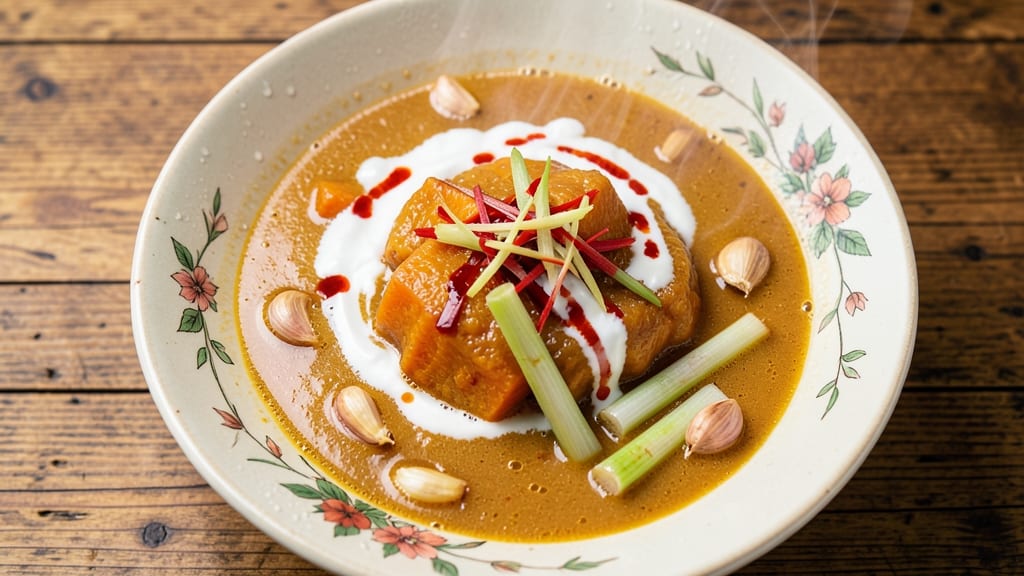
This Asian pumpkin soup recipe transforms humble ingredients into a velvety, aromatic masterpiece that bridges Thai and Japanese traditions. The secret lies in slow-simmered coconut milk and fresh ginger, creating a balance of creamy richness and bright, spiced warmth.
I developed this version after years of experimenting with plant-based soups that still deliver restaurant-quality depth.
The crispy shallot garnish is where the magic happens—those golden, shatteringly crisp edges contrast perfectly with the smooth, spiced pumpkin broth. We achieve this through a simple pan-fry technique that takes just 5 minutes, ensuring every spoonful delivers both texture and flavor.
The soup itself comes together in under 45 minutes, making it ideal for weeknight dinners or cozy gatherings.
What makes this recipe truly special is its versatility—serve it as a standalone vegetarian dish or add optional protein like silken tofu or shrimp for extra heartiness.
The aromatic blend of lemongrass, garlic, and chili creates layers of complexity that linger on the palate, while the coconut milk adds a luxurious creaminess without dairy.
Perfect for fall menus or holiday tables, this soup pairs beautifully with steamed jasmine rice or crusty baguettes. The crispy shallots not only elevate the presentation but also add a satisfying crunch that keeps everyone reaching for seconds. Let's create this comforting bowl of warmth.
Ingredients for asian pumpkin soup
Velvety coconut milk and aromatic ginger create a restaurant-quality Asian-inspired pumpkin soup with crispy shallot garnish.
| Ingredient | Amount | Notes |
|---|---|---|
| Sugar Pumpkin 🎃 | 2 lbs | Peeled, seeded, cubed (about 6 cups) |
| Full-Fat Coconut Milk 🥥 | 1 can | 13.5 oz can, unsweetened |
| Vegetable Stock 💧 | 4 cups | Low-sodium preferred |
| Fresh Ginger 🌿 | 3 tbsp | Finely grated, aromatic |
| Lemongrass 🌱 | 2 stems | Bruised, cut into 2-inch pieces |
| Garlic Cloves 🧄 | 4 cloves | Minced, aromatic |
| Red Curry Paste 🌶️ | 2 tbsp | Thai brand preferred |
| Fish Sauce 🍶 | 1 tbsp | Vegetarian alternative if needed |
| Shallots 🧅 | 1 whole | For garnish, thinly sliced |
| Olive Oil 🫒 | 2 tbsp | For crisping shallots |
| Silken Tofu 🥬 | ½ block | Optional protein, cubed |
| Lime Juice 🍋 | 1 tbsp | Freshly squeezed |
| Salt 🧂 | 1 tsp | Diamond Crystal preferred |
| Black Pepper 🌶️ | ½ tsp | Freshly ground |
| Brown Sugar 🍚 | 1 tbsp | For balance |
The pumpkin is the foundation—sugar pumpkin yields the smoothest texture, but butternut works in a pinch. Whole Foods or specialty markets often carry sugar pumpkins in fall. For the coconut milk, Thai Kitchen brand delivers the richest flavor, but any full-fat canned variety suffices. Fresh ginger and lemongrass are non-negotiable for authentic depth—Asian markets usually sell pre-bruised lemongrass stems, which saves time. The red curry paste should be Thai brand (like Maesri) for that signature heat and umami.
No fish sauce? Vegetarian fish sauce (like Thai Kitchen brand) or soy sauce in a 1:1 ratio works. For the shallot garnish, red shallots caramelize more beautifully than white. Short on silken tofu? Extra-firm tofu pressed and cubed adds protein without altering texture. The brown sugar balances the soup's richness—lightly packed is perfect. If using butternut squash, roast it first to soften before blending for a smoother consistency.
Store leftover soup in airtight containers for 4-5 days—flavor intensifies overnight. The crispy shallots stay crunchy for 2 days if kept in a sealed container. Freeze soup portions without the garnish for 3 months. For the crispy shallot garnish, fry just before serving—5 minutes max—to maintain that shatteringly crisp texture that elevates every spoonful.
Why You'll Love This Recipe
- No Chopping Needed: I swear by this—just halve the pumpkin, scoop out the seeds, and toss it in whole. The stock and coconut milk do all the heavy lifting while you sip your coffee.
- Creamy Without Guilt: That full-fat coconut milk? It turns this soup into a velvety dream, but the ginger and lemongrass keep it bright and balanced—not heavy or cloying. Honestly, my kids ask for seconds before I even finish serving.
- Leftover Goldmine: This soup actually tastes better the next day. I’ll make a big batch on Sunday, and by Wednesday, it’s still rich and comforting—perfect for reheating with a sprinkle of chili flakes.
- Budget Bright Spot: Pumpkin’s cheap this time of year, and a stalk of lemongrass lasts me for weeks if I freeze it. For under $10, I feed four people a soup that feels fancy but costs next to nothing.
Step-by-step instructions for spiced coconut pumpkin soup
Mastering this velvety Asian-inspired soup requires precise technique and aromatic balance.
Sauté Aromatics Until Fragrant and Golden
Heat the 2 tablespoons olive oil in a large pot over medium heat. Add the 2 stems lemongrass (bruised), 4 cloves garlic, and 3 tablespoons finely grated fresh ginger. Sauté for 3-4 minutes until the lemongrass releases its citrusy aroma and the garlic turns light golden—this prevents bitterness and builds flavor depth.
Next, add the 2 tablespoons red curry paste, stirring constantly for 1 minute until it darkens slightly and releases its signature warmth. The paste contains chili oils that need to bloom fully. If it smells too raw, cook another 30 seconds—this ensures the spices meld properly with the oil.
Build the Soup Base with Pumpkin and Stock
Increase heat to medium-high and add the 2 lbs cubed sugar pumpkin (about 6 cups). Stir to coat the cubes in the aromatic paste, then pour in the 4 cups vegetable stock. Bring to a gentle boil, then reduce heat to medium-low and simmer uncovered for 15 minutes—this allows the pumpkin to soften while developing flavor.
After 15 minutes, the pumpkin should be fork-tender when pierced. If it's not quite soft enough, continue simmering for another 5 minutes. The soup should be thick but not reduced—this ensures a velvety texture later. Taste and adjust seasoning with 1 teaspoon salt and ½ teaspoon black pepper before proceeding.
Blend to Silky Smoothness
Remove the pot from heat and let it cool slightly for 5 minutes—this prevents splattering when blending. Using an immersion blender, blend until completely smooth, scraping the sides as needed. For a restaurant-quality finish, strain through a fine-mesh sieve to remove any fibrous bits, pressing with a spatula to extract all the liquid.
Return the soup to the pot and stir in the 1 can full-fat coconut milk and 1 tablespoon brown sugar. Simmer gently for 5 minutes to meld the coconut's richness with the pumpkin's sweetness. The sugar balances the earthy pumpkin while enhancing the coconut's natural sweetness—this is where the soup's signature harmony develops.
Finish with Protein and Bright Acid
Add the ½ block silken tofu (cubed) and simmer for 3 minutes—this gentle heat keeps the tofu tender while infusing the soup with subtle protein. Remove from heat and stir in 1 tablespoon fish sauce and 1 tablespoon lime juice. The fish sauce deepens the umami, while the lime cuts through the richness, creating balance.
Taste again and adjust seasoning—you may need a touch more salt or lime to achieve the perfect equilibrium. The soup should be creamy, aromatic, and subtly sweet with a lingering spice note. If it's too thick, thin with ½ cup warm water to reach your desired consistency.
Garnish with Crispy Shallots for Texture Contrast
While the soup simmers, heat 2 tablespoons olive oil in a small skillet over medium-high heat. Add the 1 whole shallot (thinly sliced) and cook undisturbed for 2-3 minutes until deep golden brown and crispy. Flip the slices and cook another 1-2 minutes—this creates the perfect textural contrast to the velvety soup.
Ladle the soup into bowls and immediately top with the crispy shallots. The shallots should be fragile yet crisp, adding a satisfying crunch with each bite. Serve with steamed jasmine rice or crusty bread to soak up every last drop of this aromatic, balanced soup.
Pro Tips For Making Asian Pumpkin Soup
- CHAR THE GINGER: Use a microplane instead of grating—it releases more oil and aroma without the fibrous texture. I learned this the hard way after straining out too much ginger pulp and wondering why my soup lacked depth.
- PEEL THE LEMONGRASS STALKS: Scrape the tough outer layers off with a spoon before bruising the inner white and pale green parts—this is where the flavor lives. Skip this, and you’ll end up with a soup that tastes like you used a whole stalk of celery by accident.
- SIMMER NOT BOIL: Keep the soup at a gentle bubble (tiny ripples, not rolling) to prevent the coconut milk from curdling. After burning through three batches of split cream, I finally accepted that patience here saves cleanup later.
- ROAST THE PUMPKIN FIRST: Cut into chunks, toss with oil and salt, then roast at 400°F (200°C) for 20 minutes before simmering—it deepens the sweetness and softens it faster than raw. I was skeptical until I tried it; now it’s non-negotiable for me.
Troubleshooting your asian pumpkin soup
Grainy Texture Fix
If your soup turns out grainy despite blending, it’s likely because the pumpkin wasn’t fully cooked before blending. Simmer the pumpkin for an extra 5-10 minutes until it’s completely soft—it should mash easily with a fork.
For extra smoothness, strain the blended soup through a fine-mesh sieve after blending to catch any lingering fibrous bits. 🌱
Overly Thick Consistency
If your soup is too thick after blending, don’t panic—just stir in ½ cup warm water or vegetable stock and heat gently for 2-3 minutes. If it’s still too thick, add another ¼ cup until you reach a creamy, spoonable consistency.
The coconut milk will naturally thicken the soup as it cools, so adjust while it’s still warm.
Weak or Bitter Flavors
If your soup tastes bland or bitter, the aromatics (garlic, ginger, lemongrass) likely didn’t cook long enough. Sauté them for an extra 1-2 minutes until deeply fragrant—you should smell the garlic’s sweetness and ginger’s warmth.
For bitterness, add a pinch of brown sugar or a splash of lime juice to balance the flavors. 🍋
Crispy Shallots Fail
If your shallot garnish turns soggy instead of crispy, you’re likely cooking them at too low a heat. Use medium-high heat and cook undisturbed for 2-3 minutes per side—they should be deep golden brown and shatter when touched.
Work in batches if needed, and keep them warm in a 200°F oven while finishing the soup.
Lumpy Coconut Milk
To prevent coconut milk from separating or creating lumps, whisk it vigorously before adding it to the soup. If it starts to curdle, stir in 1 tablespoon cornstarch mixed with 2 tablespoons cold water and simmer for 1 minute to restore smoothness.
Always use full-fat coconut milk for the creamiest, most stable texture.
Fish Sauce Overpowering
If the fish sauce flavor dominates, reduce it to ½ tablespoon or swap for soy sauce (use 1 teaspoon). For a vegetarian option, try 1 teaspoon miso paste or ½ teaspoon nutritional yeast for umami depth without the fishy taste.
Always taste as you go—you can add more, but you can’t take it out! 🌶️
Nutrition facts
Frequently asked questions
Can I substitute butternut squash for sugar pumpkin?
Yes, butternut squash works beautifully—just roast it first for 20 minutes at 400°F to soften before blending. Sugar pumpkin yields a smoother texture naturally, but roasting helps break down butternut's fibrous strings. Peel and cube it first for easier cooking.
How do I make this soup spicier without adding heat?
Boost spice by increasing the red curry paste to 3 tablespoons and adding ½ teaspoon chili flakes at the end. For depth without heat, try ½ teaspoon smoked paprika instead. Always taste first—you can adjust, but you can't remove excess spice!
What's the best way to store leftovers?
Store in an airtight container for 4-5 days refrigerated or freeze for 3 months. Save the crispy shallots separately—they stay crunchy for 2 days if kept in a sealed container. Reheat gently on low heat, adding 1 tablespoon water to restore creaminess.
Can I make this soup without coconut milk?
Yes! Replace with ½ cup cashew cream (blended soaked cashews) or ½ cup Greek yogurt for tang. For a dairy-free alternative, use ½ cup blended silken tofu. The soup will be lighter but still flavorful—just adjust seasoning with extra salt or lime.
Why does my soup taste bitter?
Bitterness usually comes from overcooked ginger or garlic. Sauté aromatics for 3-4 minutes max until golden, not brown. Balance with 1 teaspoon brown sugar or ½ teaspoon vanilla extract—both mask bitterness while adding complexity.