
Soups & Stews
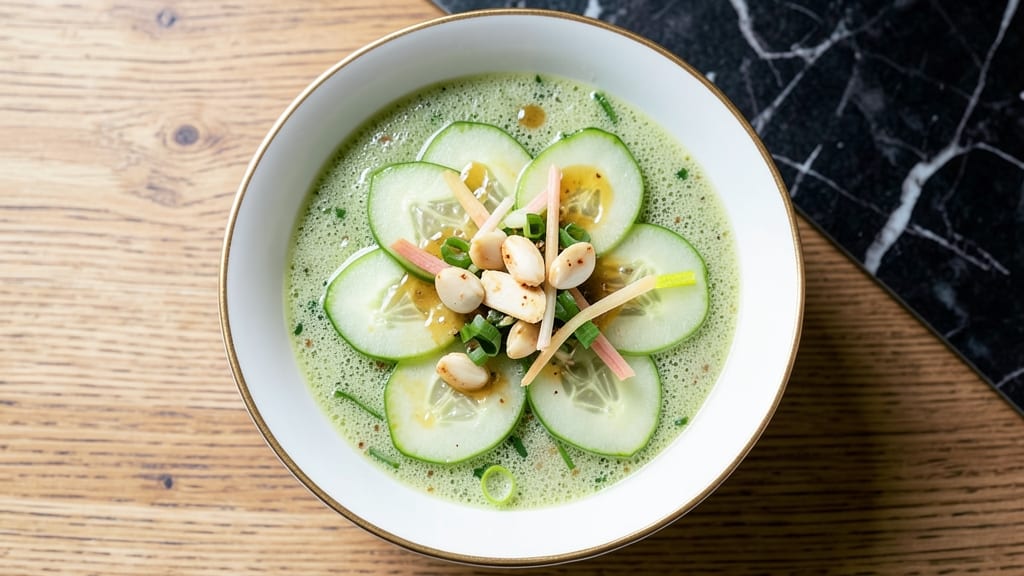
This Asian cucumber soup recipe delivers refreshing, cooling comfort in just 20 minutes, balancing crisp cucumber with bright ginger and zesty lime. Inspired by traditional Vietnamese bún riêu and Korean oi muchim guk, this version skips heavy broths for a light, vegetable-forward soup that’s perfect for summer.
The secret lies in properly prepping the cucumbers—thinly slicing and soaking them to remove excess water ensures they stay crisp rather than soggy, while a quick simmer with aromatic ginger and garlic infuses the broth with warmth.
The recipe builds on classic techniques with modern simplicity: no blender required, just a fine-mesh strainer for silky texture. A splash of rice vinegar and lime juice at the end brightens the flavors, cutting through the cucumber’s natural bitterness.
What you end up with is a soup that’s refreshingly light yet deeply satisfying—a perfect balance of cooling and zingy. It’s the kind of dish that feels both nostalgic and entirely new, transforming humble cucumbers into something restaurant-worthy.
This version works beautifully as a vegetarian main or light lunch, especially when garnished with toasted sesame seeds and fresh herbs. The broth remains clear and vibrant, highlighting the cucumber’s crisp texture and the ginger’s subtle heat.
For extra protein, stir in soft tofu or shredded chicken at the end—though purists will love it just as is. It’s the ideal solution for hot days or when you crave something both nourishing and effortless.
Ready in under 20 minutes, it’s perfect for meal prep or last-minute entertaining. The ingredients list is short but impactful: cucumbers, ginger, garlic, lime, and a touch of chili for depth.
No special equipment needed—just a pot, a knife, and patience for the cucumbers to shine. Let’s make this soup that’s as easy as it is delicious.
Ingredients for asian cucumber soup
Crisp cucumbers, zesty lime, and aromatic ginger—just 14 ingredients transform into restaurant-worthy soup.
| Ingredient | Amount | Notes |
|---|---|---|
| Persian Cucumbers 🥒 | 2 lb | Thinly sliced, soaked in cold water |
| Fresh Ginger Root 🧄 | 2 tbsp | Finely grated, aromatic |
| Garlic Cloves 🧄 | 3 cloves | Minced, aromatic |
| Green Onions 🧅 | 1 whole | White and green parts separated |
| Fresh Limes 🍋 | 2 whole | Juiced, zest reserved |
| Rice Vinegar 🍶 | 2 tbsp | Seasoned preferred |
| Red Chili Flakes 🌶️ | ½ tsp | Adjust for heat preference |
| Tofu 🥬 | 8 oz | Soft or silken, cubed |
| Vegetable Broth 💧 | 4 cups | Low-sodium preferred |
| Sesame Seeds 🌰 | 1 tbsp | Toasted for garnish |
| Fresh Cilantro 🌿 | ¼ cup | Chopped, for garnish |
| Diamond Crystal Kosher Salt 🧂 | ½ tsp | For seasoning |
| Granulated Sugar 🍚 | 1 tsp | Balances acidity |
| Extra-Virgin Olive Oil 🫒 | 1 tbsp | For finishing |
The cucumbers are the star—Persian cucumbers with their thin skin and crisp texture hold up beautifully. Look for firm, straight ones with vibrant green skin at Whole Foods or your local Asian market. The secret to crispness? Slice them paper-thin with a mandoline or sharp knife, then soak in ice water for 10 minutes to remove excess water. Fresh ginger and garlic are non-negotiable here—organic ginger from the produce section has more punch than the jarred stuff. Toast your sesame seeds in a dry pan for 30 seconds until fragrant—they’ll add a nutty depth that store-bought can’t match.
No rice vinegar? Apple cider vinegar works in a pinch, though it lacks that delicate sweetness. Short on fresh herbs? Dried cilantro at half the amount gets you close, but fresh is ideal. The tofu can be swapped for shredded carrots or mushrooms if you prefer a vegan option, though the texture will differ slightly. For extra umami depth, add 1 tsp soy sauce to the broth. The lime juice is crucial—use freshly squeezed for that bright, tangy punch that cuts through the cucumber’s natural bitterness. If you’re sensitive to heat, reduce the chili flakes to just a pinch.
This soup keeps beautifully—reheat gently on the stove with a splash of water to restore crispness. Store in an airtight container for up to 3 days in the fridge, though it’s best enjoyed fresh. For meal prep, double the batch and freeze half in portion-sized containers. When reheating from frozen, add a splash of broth to prevent drying. The tofu and herbs are best added fresh after reheating—they wilt fast when heated. Garnish with extra lime zest and a drizzle of chili oil for restaurant-style flair.
Why You'll Love This Recipe
- No-Fuss Freshness: Honestly, this soup takes me 15 minutes from start to finish—just slice the cucumbers, quick-fry the garlic and ginger, add broth, and let it simmer. The Persian cucumbers stay crisp even after cooking, so you’re not stuck with mushy veggies.
- Zesty Brightness: That lime-ginger punch? It’s the real star—tangy, spicy, and refreshing all at once. The green onions add a sharp finish that cuts through the richness, making every sip feel like a little vacation.
- Weeknight to Potluck: I’ll make a big batch on Sundays and reheat it all week—it’s perfect cold or warm. Bring it to a picnic, a dinner party, or just eat it straight from the pot while scrolling through your phone.
- Budget-Buster Win: Fresh ginger and limes last forever, and Persian cucumbers are often cheaper than regular ones. You’ll get three meals out of one batch, and the leftovers taste just as good the next day—no sad, wilted soup here.
Step-by-step instructions for cooling Asian cucumber soup
This vibrant soup comes together faster than you can say "refreshing summer meal."
🍳 Step 1: Prepare the Cucumber Base
First, slice the 2 lb Persian cucumbers thinly—about ⅛-inch thick—using a mandoline or sharp knife. Immediately place them in a colander and soak in cold water for 10 minutes to remove excess moisture. This step prevents a watery soup later. Drain thoroughly before using.
While the cucumbers soak, cube the 8 oz tofu into ½-inch pieces and set aside. The tofu will absorb the soup's flavors beautifully, adding protein without overpowering the delicate cucumber taste. For best texture, use soft or silken tofu—it blends seamlessly into the broth.
👨🍳 Step 2: Build the Aromatic Broth
In a large pot, combine the 4 cups vegetable broth, 2 tbsp finely grated fresh ginger root, and 3 minced garlic cloves. Bring to a gentle simmer over medium heat and let it cook for 5 minutes—you'll smell the aromatic oils release. This is where the soup's signature zing begins to develop.
Add the 0.5 tsp red chili flakes and stir for 30 seconds to distribute the heat evenly. Then, pour in the 2 tbsp rice vinegar and 1 tsp granulated sugar, which balances the acidity and sweetness. Taste the broth now—it should be tangy, slightly sweet, and subtly spicy. If needed, adjust with more vinegar or sugar.
🥘 Step 3: Assemble and Simmer the Soup
Drain the cucumbers completely and add them to the simmering broth along with the cubed tofu. Stir gently to combine, then reduce heat to low. Let the soup simmer for 8-10 minutes until the cucumbers soften slightly but still retain their shape. You want them tender but not mushy—think "al dente."
While the soup simmers, separate the 1 whole green onion into white and green parts. Finely chop the white parts and reserve the green for garnish. Add the chopped white parts to the soup and stir for 2 minutes to infuse flavor. The white parts will dissolve, leaving a subtle oniony depth without overpowering the dish.
🔥 Step 4: Finish with Freshness and Texture
Remove the pot from heat and stir in the juice of 2 whole fresh limes and the 0.5 tsp Diamond Crystal kosher salt. The lime juice brightens the soup, cutting through the richness of the tofu and cucumbers. Taste again—this is your final flavor checkpoint. The soup should be balanced: tangy, slightly sweet, with a hint of spice and umami from the broth.
Ladle the soup into bowls and drizzle each serving with 1 tbsp extra-virgin olive oil. The oil adds a silky finish and helps the soup cling to the cucumber slices. Sprinkle with toasted sesame seeds and chopped fresh cilantro, plus the reserved green onion tops for color and freshness. Serve immediately while the tofu is still warm and the flavors are vibrant.
Pro Tips For Making Asian Cucumber Soup
- Slice Cucumbers Thin: Persian cucumbers have thick skins and watery centers—cut them into ¼-inch half-moons so they soften evenly without turning to mush. (Yes, even if you’re in a hurry, thinner slices release flavor faster.)
- Blanch Ginger First: Peel and slice the ginger, then drop it in simmering water for 30 seconds to dull the bite. After draining, add it to the soup—this keeps the aroma bright without overpowering. (I learned this the hard way when my soup tasted like a mouthwash commercial.)
- Don’t Overcrowd the Pot: If you’re stir-frying the garlic and ginger first, keep the heat medium and move the pan around so the garlic doesn’t burn. Burnt garlic makes the whole soup taste bitter, and no one wants that. (Trust me, I’ve made this mistake.)
- Zest Limes Last: Add lime juice at the very end, but zest the peel first and toss it in while the soup’s still warm—it brightens the whole dish. (Your future self will notice the difference.)
Flavor customization for this asian cucumber soup
Spicy Kick Options
For extra heat, add 1 tbsp fresh Thai chili paste (like Maesri) or ½ tsp gochugaru (Korean chili flakes) to the broth. These bring deeper, fruitier heat than standard red chili flakes.
If you love fire, finish with a drizzle of sriracha or a squeeze of chili oil—just ½ tsp per bowl—right before serving. 🌶️
Citrus Brightness
Swap limes for yuzu (if available) or lemons for a sharper tang, but reduce juice by ½ to avoid overpowering. For a tropical twist, add 1 tbsp fresh mint juice along with the lime.
The mint’s coolness balances the ginger beautifully—just muddle 4 fresh mint leaves with the lime juice before adding.
Herb Variations
Swap cilantro for Thai basil or mint for a Southeast Asian vibe. For a Japanese-inspired version, use shiso leaves (if available) or add ½ tsp furikake to the broth for umami depth. Garnish with chopped scallions instead of green onions for a milder onion flavor.
Protein Swaps
Replace tofu with shredded rotisserie chicken (½ cup) for a heartier version, or add ½ cup cooked shrimp for a seafood twist. For a vegan option, use ½ cup king oyster mushrooms—they absorb flavors like tofu but add earthy texture.
Marinate protein in 1 tbsp soy sauce + 1 tsp sesame oil before adding to the soup.
Sweet-Tangy Balance
Boost sweetness with 1 tsp honey or agave instead of sugar, or add ½ cup pineapple juice to the broth for a tropical note. For tang, use apple cider vinegar (reduce by ½ tsp) or fish sauce (½ tsp for umami depth—skip if vegan).
Texture Contrasts
Add crunch with toasted coconut flakes (2 tbsp) or crispy fried shallots (1 tbsp). For creaminess, stir in 2 tbsp coconut milk at the end. For a smoky touch, top with ½ tsp smoked paprika or a pinch of bonito flakes (if using fish-based broth).
Nutrition facts
Frequently asked questions
Why do I need to soak the cucumbers?
Soaking removes excess water that would make your soup watery and dilute the flavors. Thinly sliced cucumbers release moisture quickly, but a 10-minute ice water soak draws out the liquid while keeping them crisp. This step is key for that perfect refreshing texture—don't skip it!
Can I make this soup without tofu?
For a vegan version, use ½ cup king oyster mushrooms or shredded carrots instead. If you prefer protein, add ½ cup cooked shrimp or chicken at the end. The tofu simply adds a neutral protein base—your soup will still be delicious without it.
How can I make this soup spicier? Boost the heat by adding 1 tsp fresh Thai chili paste to the broth or finishing with ½ tsp gochugaru (Korean chili flakes). For extra kick, stir in 1 tsp sriracha at the end.
Will this soup keep well for leftovers?
Yes! Store in an airtight container for 3 days in the fridge. For best texture, reheat gently on the stove with a splash of water. Add fresh herbs and a squeeze of lime after reheating—they won't survive being cooked again.
What if I don't have rice vinegar?
Use apple cider vinegar instead, but reduce the amount by ½ tsp—it's tangier. For a milder option, try white vinegar (½ tsp). The key is balancing the acidity, so taste as you go!