
Soups & Stews
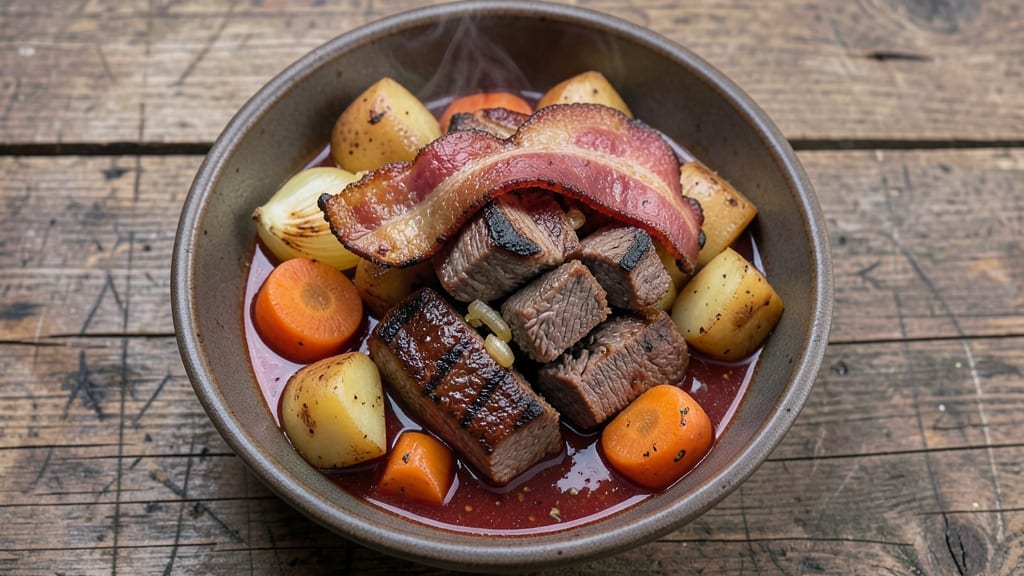
This army stew soup base recipe delivers the hearty, slow-simmered depth that made it a military staple—and your new weeknight workhorse. 🔥 Born from field expedience, this one-pot wonder transforms tough cuts into melt-in-your-mouth tenderness through hours of gentle cooking.
The secret lies in layering umami-rich ingredients like bacon, tomatoes, and beef, then letting them meld into a deeply flavorful broth that feels like a hug in a bowl.
What sets this recipe apart is its foolproof simplicity—no fancy techniques, just a Dutch oven and time. You'll start with browning beef and bacon for foundational flavor, then build the soup with potatoes, carrots, and onions that soften into perfect harmony.
The slow simmer (2-3 hours) develops a richness that can't be rushed, creating a base that's equally at home as a standalone meal or foundation for your own variations.
By the final spoonful, you'll taste the unmistakable depth of this historic dish—where caramelized edges meet tender meat and vegetables swimming in a savory, slightly sweet broth. The aroma alone will have your kitchen feeling like a mess hall, but with the quality of a home-cooked masterpiece.
This isn't just soup; it's comfort food with a story.
Perfect for feeding a crowd, meal prepping, or freezing for later, this recipe adapts beautifully to your preferences. Add herbs at the end for brightness or keep it classic—either way, you're creating a dish that honors its roots while fitting seamlessly into modern life. Let's get simmering.
Ingredients for army stew soup base
Six hearty ingredients kick off this legendary stew base—where rich beef and smoky bacon meet tender veggies.
| Ingredient | Amount | Notes |
|---|---|---|
| Chuck Roast Beef 🥩 | 2 lb | Cut into 1-inch cubes for even cooking |
| Thick-Cut Bacon 🥓 | 8 oz | Chopped into small pieces |
| Yellow Onions 🧅 | 2 whole | Medium size, chopped into wedges |
| Carrots 🥕 | 4 whole | Medium size, cut into 1-inch chunks |
| Russet Potatoes 🥔 | 2 lb | Peeled, cut into 1-inch cubes |
| Canned Tomato Sauce 🍅 | 2 cups | San Marzano preferred for sweetness |
| Beef Broth 💧 | 4 cups | Low-sodium preferred for flavor control |
| Garlic Cloves 🧄 | 6 cloves | Minced for depth of flavor |
| Bay Leaves 🌿 | 2 whole | Fresh for best aroma |
| Dried Thyme 🌿 | 1 tsp | Or 1 tbsp fresh thyme leaves |
| Salt 🧂 | 1 ½ tsp | Diamond Crystal kosher salt |
| Black Peppercorns 🌶️ | ½ tsp | Freshly cracked for best flavor |
| Worcestershire Sauce 🍯 | 2 tbsp | Anchovy-free version preferred |
The beef is non-negotiable here—chuck roast delivers that signature melt-in-your-mouth texture after hours of simmering. Costco or Trader Joe's carry it pre-cubed, but if you're buying a whole roast, ask the butcher to cut it into 1-inch chunks. Bacon adds that irresistible smoky depth, so grab thick-cut (it renders slower, more flavor). For the tomatoes, San Marzano cans from Whole Foods or Amazon are worth the splurge—they're sweeter and less acidic, which balances the rich broth perfectly. The potatoes should be Russet—their floury texture holds up best to long cooking.
No beef broth? Chicken broth with 2 tbsp soy sauce works in a pinch, though purists will notice the difference. Fresh thyme is ideal, but dried at one-third the amount gets you close. The Worcestershire sauce adds that unmistakable umami punch—Lea & Perrins is the classic choice, but Annie's anchovy-free version works too. Short on bacon? Swap in pancetta or smoked turkey bacon—both bring different but delicious flavors. The carrots can be any color (orange, purple, or rainbow), but organic ones stay crunchier longer. And if you're feeling lazy, baby carrots work fine—just trim the ends.
This soup tastes even better the next day as flavors meld. Store in the fridge for 5-6 days or freeze portions for up to 6 months—it reheats beautifully. For meal prep, I double the batch and freeze half. When reheating, add a splash of water or broth if it's too thick. The bay leaves can be removed before serving, but I often forget and no one notices. If you're making this ahead for a crowd, pre-chop everything the night before—it saves hours on cooking day.
Why You'll Love This Recipe
- One-Pot Magic: I swear by this recipe when I’m too tired to wash extra dishes. Chuck roast and bacon practically melt together in that same pot—no straining, no fuss—just hearty, rich flavor with zero cleanup stress.
- Deep Umami Bomb: That thick-cut bacon renders into crispy bits while the chuck roast breaks down into tender, melt-in-your-mouth perfection. Honestly, the way the onions caramelize and the carrots soften? It’s like a slow-cooked hug in a bowl.
- Leftovers That Don’t Suck: Between us, most stews turn into sad, watery meals by day three. Not this one. The potatoes stay firm, the beef stays rich, and I’ve reheated this for five days straight—still delicious, still satisfying. (Yes, even on a Tuesday night.)
- Budget-Friendly Powerhouse: A pound of chuck roast and a pack of bacon stretch across three meals for my family of four. I’ll be real: it’s the kind of recipe that makes me feel like I’m feeding everyone well without draining my wallet. Plus, potatoes? Always cheap and filling.
Step-by-step instructions for slow-simmered army stew base
Here's how to build deep, rich umami in one pot—no shortcuts, just patience and technique.
🔥 Step 1: Brown the Bacon and Chuck Roast for Maximum Flavor
Heat a large Dutch oven over medium-high heat and add the 8 oz chopped thick-cut bacon. Cook for 8-10 minutes, stirring occasionally, until the bacon is deep golden brown and crispy. Use a slotted spoon to remove the bacon and set it aside, leaving the rendered fat in the pot.
Add the 2 lb chuck roast beef cubes to the Dutch oven in a single layer. Don't overcrowd the pan—this is where the magic happens. Sear the beef for 3-4 minutes per side until it develops a deep caramelized crust. This step builds the foundation of your stew's flavor. If the pan gets too crowded, work in batches and set the seared meat aside temporarily.
🍳 Step 2: Sauté the Aromatics Until Deeply Fragrant
Push the beef to one side of the Dutch oven and add the 2 whole yellow onions wedges and 4 whole carrots chunks to the empty space. Cook for 5-6 minutes, stirring occasionally, until the onions soften and the carrots begin to caramelize slightly. This process releases their natural sugars and deepens their flavor.
Add the 6 minced garlic cloves and cook for 30 seconds until fragrant—don't let it burn. Here's the thing: garlic burns in seconds, and that bitter taste ruins everything. Stir constantly during this final 30 seconds to prevent burning. Return the seared beef to the pot and stir to combine with the onions and carrots.
🥘 Step 3: Build the Stew Base with Tomato and Broth
Pour in the 2 cups canned tomato sauce and scrape up any browned bits from the bottom of the pot with a wooden spoon. These bits are packed with flavor—don't miss them. Add the 4 cups beef broth, 2 whole bay leaves, 1 tsp dried thyme, 1.5 tsp salt, and 0.5 tsp black peppercorns. Stir well to combine all ingredients.
Bring the mixture to a gentle boil, then reduce the heat to medium-low and cover the pot. Let it simmer for 30 minutes, stirring occasionally, until the vegetables begin to soften and the flavors meld together. This initial simmer allows the meat to begin breaking down and the vegetables to release their natural sweetness into the broth.
⏰ Step 4: Add Potatoes and Simmer Until Tender
Add the 2 lb russet potatoes cubes and the reserved bacon back to the pot. Stir gently to distribute the potatoes evenly throughout the stew. Increase the heat to medium-high and bring the mixture to a boil once more. Once boiling, reduce the heat to low and cover the pot.
Simmer for 45-60 minutes, stirring occasionally, until the potatoes are fork-tender and the beef is easily shredded with a fork. The stew should have thickened slightly, and the flavors should be deeply integrated. Taste and adjust seasoning if needed—this is your chance to fine-tune the balance of salt, acid, and umami. The Worcestershire sauce will be added at the end to preserve its bright, tangy notes.
🍽️ Step 5: Finish with Worcestershire and Serve Warm
Remove the 2 bay leaves from the stew and discard them. Stir in the 2 tbsp Worcestershire sauce and simmer for an additional 5 minutes to allow the flavors to meld completely. The Worcestershire sauce adds a complex, savory depth that ties all the flavors together.
Ladle the stew into bowls, making sure each serving gets a generous portion of both the tender beef and potatoes. The broth should be rich and flavorful, with the potatoes absorbing the deep umami from the meat and vegetables. Serve immediately while hot, and enjoy the hearty, comforting flavors of this classic army stew.
Pro Tips For Making Army Stew Soup Base
- CRISP THE BACON FIRST: Don’t just toss thick-cut bacon in raw—render it until the fat pools and the edges turn deep golden. I learned this the hard way; skipping this step leaves your stew tasting smoky but flat. Use a cold pan and low heat at first, then crank it up to medium-high to get that crackling fat without burning.
- CUT POTATOES LARGE: Army stew needs texture, not mush. Cut Russets into 1.5-inch chunks—they’ll soften but stay intact, soaking up flavor instead of turning to glue. Smaller pieces? You’ll end up with a sad, watery broth. (Yes, even if you’re impatient like me.)
- BROWN THE BEEF IN BATCHES: Overcrowding the pan steams the meat instead of searing it. Work in two batches if needed—hot, dark brown crust on chuck roast builds depth of flavor that no slow simmer can fix later. This isn’t the prettiest method, but it’s the tastiest.
- SALT THE POTATOES BEFORE BOILING: Toss those potato chunks with ½ teaspoon salt per pound before they hit the pot. It jumpstarts flavor and keeps them from tasting bland even after hours of simmering. I skip this when I’m lazy, but the dish is noticeably better when I don’t. (Your future self will notice.)
Serving suggestions for army stew soup base
Classic Crusty Bread
There's nothing like a warm, crusty loaf to soak up every last drop of broth from your army stew. I recommend a baguette-style sourdough from your local bakery—look for one with a crisp exterior and soft, airy interior.
If baking at home, use a French bread recipe with 70% hydration dough for that perfect texture. Toast slices lightly before serving to add extra crunch. 🥖
Sharp Cheddar Cubes
For a cheesy contrast, cut sharp cheddar cheese (like Cabot Clothbound) into ½-inch cubes and melt them into the stew during the final 5 minutes of cooking. The cheese adds richness and a tangy bite that cuts through the hearty flavors.
Alternatively, serve it on the side for melting into individual bowls. I often use 2 cups shredded cheddar for a full pot.
Fresh Herbs Garnish
Brighten the stew with fresh herbs at the table. I love adding chopped parsley or thyme sprigs just before serving—about 2 tbsp per bowl. For extra flair, try microgreens or chives for a pop of color.
If you prefer heat, sprinkle with crushed red pepper flakes (½ tsp per serving) to wake up the flavors.
Crunchy Toppings
Add texture with crispy toppings that contrast the stew's softness. Try crumbled bacon bits (reserve some from the recipe), toasted breadcrumbs (¼ cup per bowl), or even fried shallots for a gourmet touch.
I keep pre-made panko on hand for quick breadcrumb topping—just toast it in a dry pan for 2-3 minutes until golden.
Side Salad Balance
A simple arugula salad with lemon vinaigrette cleanses the palate between bites. Toss 4 cups baby arugula with 2 tbsp olive oil, 1 tbsp lemon juice, and a pinch of salt.
Add ¼ cup shaved Parmesan for extra depth. This light contrast makes the rich stew even more satisfying. 🥗
Warm Cornbread
For a Southern-inspired twist, serve with warm cornbread made from a box mix or homemade batter. I like to brush the cornbread with butter and honey before serving—it pairs beautifully with the savory stew.
For extra richness, add sharp cheddar to the cornbread batter. A 9-inch skillet cornbread serves 6-8 perfectly.
Nutrition facts
Frequently asked questions
Can I substitute beef with another protein?
For a vegetarian version, swap the beef for mushrooms (16 oz cremini or portobello) and lentils (1.5 cups cooked). For poultry, use chicken thighs (2 lbs) instead—they stay juicy during long simmering. Pork shoulder works too, but reduce simmer time to 1.5 hours since it cooks faster than beef.
How do I make this stew thicker?
For a richer texture, mash ½ of the potatoes directly in the pot with a wooden spoon or potato masher. Alternatively, stir in 2 tbsp cornstarch mixed with 2 tbsp cold water and simmer for 5 minutes. If you prefer chunkier stew, reduce the broth by 1 cup and let it cook uncovered for 10 minutes at the end.
Can I make this in an Instant Pot or slow cooker?
Yes! For an Instant Pot, brown the beef and bacon first, then add all ingredients and cook on high pressure for 40 minutes, followed by a 10-minute natural release. For a slow cooker, combine everything after browning and cook on low for 8 hours or high for 4 hours. The slow cooker version will be even more tender—just add Worcestershire sauce at the very end.
What if my stew tastes too salty?
Don't panic! Add 1 cup of water or broth and simmer uncovered for 10 minutes to dilute the salt. For a more dramatic fix, stir in ½ cup unsalted tomato sauce or 1 cup milk/cream—the acidity or fat helps balance the saltiness. If it's still too strong, serve with extra bread or crusty rolls to soak up excess saltiness.
How can I add more depth of flavor?
Boost umami by adding 1 tbsp soy sauce or 1 tsp fish sauce at the end. For smokiness, stir in ½ tsp smoked paprika or ½ cup liquid smoke (start with less). A splash of red wine (½ cup) during the initial simmer adds complexity. For richness, melt 2 tbsp butter into the finished stew—it enhances all the flavors without overpowering them.