
Soups & Stews
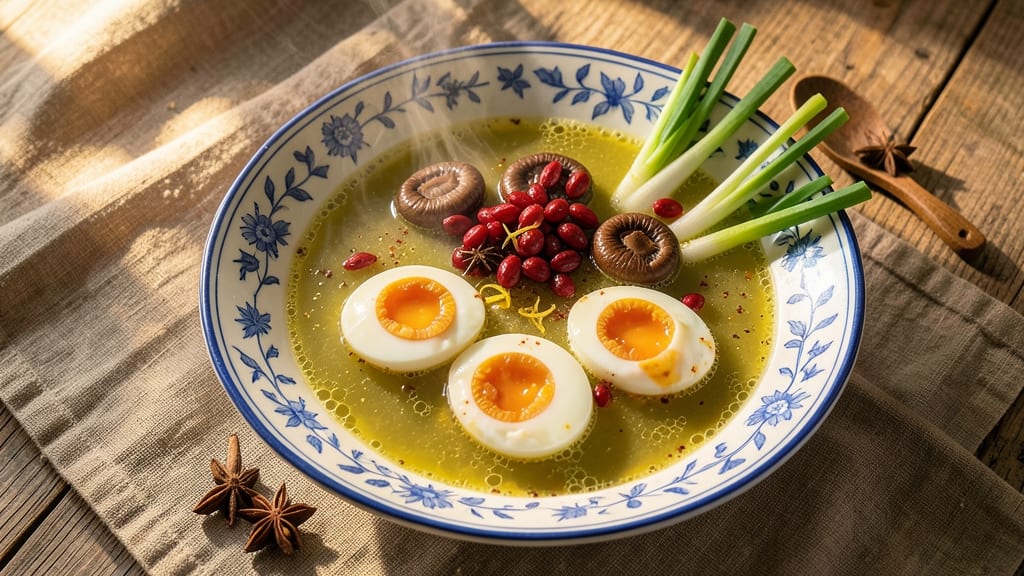
This Ant Egg Soup recipe transforms delicate egg threads into a luxurious, silken centerpiece over aromatic star anise broth—an elegant dish that bridges comfort and sophistication.
The secret lies in the slow-simmered broth infused with warm spices and the precise technique of stretching raw eggs into delicate strands that melt into the hot liquid.
I first encountered this dish in a dimly lit restaurant where the first sip revealed layers of herbal depth and velvety texture that defied ordinary soup expectations.
The foundation of this recipe is the broth, where star anise, ginger, and goji berries create a fragrant base that's both comforting and complex. While the broth simmers gently, the egg strands are prepared separately using a whisk and hot water technique that creates their signature silky texture.
This method ensures each bite delivers that perfect balance between the rich, spiced broth and the delicate egg threads that dissolve on your tongue.
What makes this dish truly special is how it elevates simple ingredients into something extraordinary. The egg strands transform from ordinary into restaurant-quality silkiness, while the broth's aromatic profile develops depth through careful spice toasting.
This soup is equally at home as a light lunch for two or as a sophisticated starter for a larger gathering—its elegance lies in its simplicity and the care taken in each preparation step.
The final presentation matters just as much as the cooking process. Garnished with fresh cilantro and a drizzle of chili oil, this soup becomes a visual masterpiece that complements its rich flavors.
The contrast between the vibrant garnishes and the golden broth creates an appealing dish that's as beautiful as it is delicious. Ready in about 45 minutes, it's the perfect way to impress guests while keeping the preparation manageable.
Ingredients for ant egg soup
Six eggs and aromatic spices transform into this luxurious soup—simple ingredients, extraordinary result.
| Ingredient | Amount | Notes |
|---|---|---|
| Large Eggs 🥚 | 6 whole | Freshly laid preferred for silkiness |
| Star Anise Pods 🌿 | 3 whole | Whole pods, lightly crushed |
| Fresh Ginger 🧅 | 2 tbsp | Finely minced, peeled |
| Dried Goji Berries 🍇 | ½ cup | Rinsed and drained |
| Dried Shiitake Mushrooms 🍄 | 4 whole | Rehydrated in hot water |
| Green Onions 🧅 | 4 whole | White and green parts separated |
| Fresh Cilantro 🌿 | ¼ cup | Chopped for garnish |
| Chili Oil 🌶️ | ¼ cup | Store-bought or homemade |
| Low-Sodium Chicken Broth 💧 | 4 cups | Homemade or quality store-bought |
| Sesame Oil 🫒 | 1 tbsp | For finishing |
| Salt 🧂 | 1 tsp | Kosher or sea salt |
| White Pepper 🌶️ | ¼ tsp | Freshly ground |
| Cornstarch 🌾 | 1 tsp | For thickening egg strands |
The star anise and goji berries are non-negotiable for that signature depth. Whole Foods or Asian markets carry the best quality—look for plump, fragrant pods and berries with vibrant color. Fresh ginger should smell zesty, not musty. The shiitake mushrooms? Dried is ideal—rehydrate them in hot water for 20 minutes before using. I always buy extra shiitake and freeze the rest; they keep for months this way. For the broth, homemade is best, but Kitchen Basics or Pacific Foods brands are solid store-bought options.
No star anise? Anise seeds work in a pinch, but the flavor won't be identical. Substitute dried goji berries with raisins at half the amount, though they lack the same depth. Fresh ginger missing? Ginger powder at one-third the amount gets you close, but it won't have the same punch. For the egg strands, cornstarch is key—it creates that signature silkiness. If you don't have it, arrowroot powder works too. The chili oil can be homemade (chili flakes + neutral oil) or store-bought—Lao Gan Ma is a classic choice. For the broth base, vegetable broth works for vegetarian versions, though chicken broth gives more depth.
Store the broth base for 3 days in the fridge or 3 months frozen—it's worth making extra. The egg strands should be prepared fresh, but you can make the broth ahead. Portion the broth into containers with a layer of oil on top to prevent skin formation. The cilantro and chili oil should be added just before serving to keep the garnishes vibrant. This soup reheats beautifully—just warm gently on the stove, stirring occasionally to maintain that silky texture.
Why You'll Love This Recipe
- No-Chop Needed: I swear by this—just slice the ginger thin and toss in whole shiitake mushrooms (no pre-soaking required). The star anise infuses the broth while you prep the eggs, and the goji berries add a sweet pop with zero effort.
- Umami Bomb: That combo of shiitake, star anise, and ginger? It’s like a warm hug in a bowl. The eggs poach silky-smooth while the broth gets this deep, savory richness—no heavy cream or fancy sauces needed.
- Leftover Hero: This soup actually improves overnight. The flavors meld, the eggs get even more tender, and you can reheat it without breaking a sweat. I keep a jar of dried shiitake and goji in my pantry just for this reason.
- Budget Magic: Dried shiitake and star anise last forever, and eggs are cheap protein. A single batch feeds four for under $8, and I’ve made it for everything from sick-day meals to potlucks—no one ever guesses how affordable it is.
Step-by-step instructions for silken egg threads over spiced star anise broth
Master this delicate technique to create silken egg threads that float like clouds over aromatic broth.
Prepare the Star Anise-Ginger Broth
In a medium saucepan, combine the 4 cups low-sodium chicken broth, the 3 whole star anise pods, and the 2 tbsp finely minced fresh ginger. Bring to a gentle boil over medium-high heat, then immediately reduce to a simmer. Let it cook uncovered for 15 minutes to infuse the broth with deep aromatic flavors.
Watch for the star anise pods to release their essential oils—you'll notice a subtle licorice-like fragrance filling your kitchen. This is your signal that the broth is properly infused. Strain the broth through a fine-mesh sieve into a clean saucepan, pressing gently on the star anise to extract every last drop of flavor. Discard the pods and ginger.
Rehydrate and Sauté the Shiitake Mushrooms
Place the 4 whole dried shiitake mushrooms in a heatproof bowl and cover with hot water. Let them soak for 20 minutes until they've absorbed the water and softened significantly. Drain well, then finely chop the rehydrated mushrooms.
In a separate small skillet, heat 1 teaspoon of the sesame oil over medium heat. Add the chopped shiitake mushrooms and sauté for 3-4 minutes until they release their moisture and develop a rich, earthy aroma. Remove from heat and set aside—they'll continue cooking in the soup.
Create the Silken Egg Mixture
In a small bowl, whisk together the 6 whole large eggs until the yolks and whites are completely blended. In a separate small bowl, mix the 1 tsp cornstarch with 2 tablespoons of cold water to create a smooth slurry. Slowly whisk the cornstarch mixture into the eggs until fully combined.
This cornstarch slurry is crucial—it helps create those signature silken egg threads by slightly thickening the egg mixture while maintaining its delicate texture. The ratio is precise: don't add more water or the threads will be too thin to hold their shape.
Assemble and Cook the Soup
Return the strained star anise broth to medium-low heat. Add the 0.5 cup rinsed dried goji berries and the sautéed shiitake mushrooms. Let the broth simmer gently for 5 minutes to allow the goji berries to plump slightly and absorb some of the broth's flavors.
Season the broth with the 1 tsp salt and 0.25 tsp white pepper. Taste and adjust the seasoning—you want a balance of saltiness and subtle spice that complements the egg threads. The broth should be well-seasoned but not overwhelming, as the egg will be the star.
Cook the Egg Threads to Perfection
With the broth gently simmering, slowly pour the egg mixture in a thin, steady stream into the broth while stirring continuously with chopsticks or a long spoon. The key here is to maintain constant motion—this creates those signature silken strands rather than scrambled eggs.
Cook for exactly 1 minute, stirring gently but continuously. You'll see the egg begin to set into delicate threads that float on the surface. Remove from heat immediately—the egg should still appear slightly translucent, not fully opaque. If you wait too long, the threads will become tough.
Finish and Serve Immediately
Divide the soup among 4 serving bowls. Drizzle each portion with 1 tablespoon of the sesame oil and 1 tablespoon of the chili oil. Garnish with the white and green parts of the 4 whole green onions, separated, and sprinkle with the 0.25 cup chopped fresh cilantro.
Serve immediately while the egg threads are at their peak texture. Each bite should deliver a contrast of temperatures—the silken egg threads at room temperature against the warm, aromatic broth. The soup is best enjoyed fresh, as the egg strands lose their delicate texture as they cool.
Pro Tips For Making Ant Egg Soup
- SOAK SHIITAKES LONG: I learned this the hard way—dried shiitakes need at least 30 minutes in hot water to rehydrate properly, not 10. If you’re short on time, use pre-soaked ones from the store, but drain them well and pat dry before adding to the broth. Soggy mushrooms water down the soup faster than you’d think.
- GINGER SLICE THIN: Skip the peeling if you’re in a rush, but slice the ginger paper-thin—about 1/16-inch thick—and pound it lightly with the flat side of a knife. This releases the oils better than grating, and you won’t end up with a bitter, fibrous bite. (Yes, even if you’re impatient like me.)
- STAR ANISE TOAST FIRST: Toss the star anise pods into the dry pot before adding liquid and toast them for 30 seconds on medium heat. The aroma jumps from subtle to wow—like walking into a spice shop. If you skip this, the flavor will still work, but it’ll taste more like a background note than the star of the show.
- EGGS COOK LOW AND SLOW: The moment the broth hits a gentle simmer, lower the heat to the point where you barely see bubbles—just tiny ripples. If you let it boil, the eggs will turn into rubbery, cloudy blobs instead of silky, jiggly bites. Trust me, this is the thing that matters most.
Regional styles of these flavors
Southern Chinese Style
In Cantonese cuisine, this soup often includes a touch of pork belly or shrimp for added richness. I like to add 2 oz diced pork belly to the broth during the final 5 minutes of simmering, allowing it to infuse the broth with its savory depth.
The pork belly should be tender but not falling apart—just enough to enhance the broth without overpowering the delicate egg threads. Garnish with extra green onions and a sprinkle of toasted sesame seeds for texture. 🌟
Fujian Provincial Twist
Fujian-style versions often incorporate tangerine peel and dried tangerine seeds for a citrusy aroma that brightens the broth. Add 1 tsp dried tangerine peel (soaked in warm water for 10 minutes) and ½ tsp dried tangerine seeds along with the star anise.
This variation also sometimes includes baby bok choy—add 2 cups chopped bok choy to the broth during the final 3 minutes of simmering. The crisp-tender greens provide a delightful contrast to the silken egg strands. 🍊
Modern Fusion Approach
For a contemporary take, I’ve experimented with adding miso paste to deepen the umami profile. Stir in 1 tsp white miso paste during the final 2 minutes of broth simmering, just before adding the egg strands.
Pair this with a drizzle of yuzu kosho (a Japanese citrus chili paste) instead of chili oil for a bright, spicy finish. This fusion version works beautifully as a starter for Japanese-inspired menus. 🍜
Vietnamese-Inspired Adaptation
In Vietnamese cuisine, this soup might feature lemongrass and fish sauce for a tangy, herbal note. Infuse the broth with 1 stalk lemongrass (bruised) and 1 tsp fish sauce added during the final 5 minutes of simmering.
Garnish with Thai basil leaves instead of cilantro and a squeeze of lime juice. The lemongrass adds a fragrant complexity that pairs wonderfully with the egg threads. 🌿
Herbal Tea-Inspired Broth
For a lighter, tea-infused version, replace the star anise with jasmine tea bags or pu-erh tea leaves. Steep 2 jasmine tea bags in the hot broth for the initial 10 minutes of simmering, then remove them.
This approach creates a floral, delicate broth that highlights the egg strands’ silkiness. I often pair this with a drizzle of honey and a sprinkle of toasted coconut flakes for a tropical touch. 🍃
Spicy Sichuan Variation
Sichuan cooks might add dried chili peppers and Sichuan peppercorns for a fiery kick. Toast 1 tsp Sichuan peppercorns in a dry pan until fragrant, then add them to the broth along with 2 dried chili peppers (cut in half).
Simmer for 10 minutes before straining. The numbing heat of Sichuan peppercorns pairs surprisingly well with the egg’s delicate texture. Serve with extra chili oil and a side of pickled mustard greens for balance. 🌶️
Nutrition facts
Frequently asked questions
Why do the egg strands need cornstarch?
The 1 tsp cornstarch creates those signature silken threads by slightly thickening the egg mixture while keeping it delicate. Without it, the eggs would scramble instead of forming elegant strands. The slurry also helps the eggs set more evenly in the hot broth.
Can I make this soup vegetarian?
Replace the chicken broth with vegetable broth and add shiitake mushrooms for umami depth. For extra protein, stir in tofu cubes during the final 5 minutes of simmering. The egg strands will still be the star of the show.
What's the secret to perfect egg threads?
Three things: constant stirring while pouring the egg mixture, cooking for exactly 1 minute (no longer!), and using room-temperature eggs. The broth must be at a gentle simmer—not boiling—when you add the eggs. The cornstarch slurry is also non-negotiable for that signature texture.
How do I store leftover broth?
Let the broth cool completely, then store it in airtight containers in the fridge for 3 days or freeze for 3 months. For longer storage, add a thin layer of oil on top to prevent skin formation. Reheat gently—never boil—to preserve the delicate flavors. The egg strands should always be prepared fresh, though!
Can I substitute star anise?
In a pinch, use anise seeds (same amount) or fennel seeds, but the flavor won't be identical. For a different aroma, try cardamom pods (½ tsp) or cinnamon sticks (1 small stick). The key is toasting the spices lightly before adding to the broth to release their oils.