
Soups & Stews
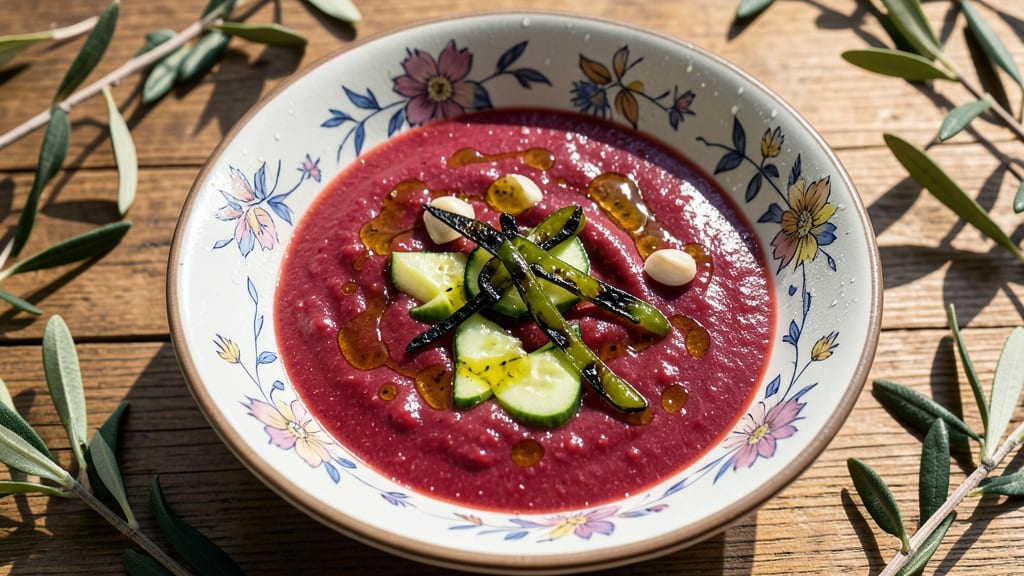
This Andalusian gazpacho soup recipe brings the vibrant flavors of southern Spain to your table with its refreshing blend of tomatoes, cucumbers, and bell peppers. The traditional method transforms simple vegetables into a velvety, chilled soup that's perfect for hot summer days.
What makes this recipe special is the balance of bright, fresh flavors—tangy sherry vinegar, aromatic garlic, and rich olive oil—all coming together in a harmonious broth.
The process is straightforward yet rewarding: roast the vegetables to deepen their flavors, blend them with breadcrumbs for texture, and let the soup chill for hours to achieve that signature cool, creamy consistency. Unlike its thick, spoonable cousin, this gazpacho is light enough to sip yet substantial enough to satisfy.
The breadcrumbs add a rustic crunch that contrasts beautifully with the smooth soup, while a final drizzle of olive oil elevates every spoonful.
What you'll end up with is a dish that's as nourishing as it is refreshing—packed with vitamins, antioxidants, and the bright, summery essence of Andalusia.
The soup's vibrant color and fragrant aroma make it as visually appealing as it is delicious, perfect for serving with crusty bread or as a light starter before a hearty meal. This recipe captures the essence of Spanish summer dining in every bowl.
For added depth, consider garnishing with fresh herbs, a sprinkle of smoked paprika, or even a dash of chili for those who prefer a spicy kick. The possibilities are endless, but the foundation remains the same: a chilled, vibrant soup that's as comforting as it is refreshing.
Let's bring a taste of Andalusia to your kitchen.
Ingredients for andalusian gazpacho soup
Fresh vegetables, bold flavors, and simple techniques create this Andalusian summer classic.
| Ingredient | Amount | Notes |
|---|---|---|
| Ripe Roma Tomatoes 🍅 | 4 whole | Large, firm, vine-ripened preferred |
| English Cucumbers 🥒 | 2 whole | Peeled, seeded, skin removed |
| Green Bell Peppers 🧅 | 1 whole | Stemmed, cored, seeds removed |
| Extra-Virgin Olive Oil 🫒 | ¾ cup | High-quality, fruity variety |
| Sherry Vinegar 🍷 | ¼ cup | Aged, not balsamic substitute |
| Garlic Cloves 🧄 | 4 cloves | Freshly peeled, unpeeled for roasting |
| Crusty Bread 🍞 | ½ cup | Stale or lightly toasted, cubed |
| Fresh Basil Leaves 🌿 | ¼ cup | Packed, stems removed |
| Smoked Paprika 🌶️ | 1 tsp | Sweet or hot variety |
| Sea Salt 🧂 | 1 ½ tsp | Diamond Crystal preferred |
| Ground Black Pepper 🌶️ | ½ tsp | Freshly ground preferred |
| Ice Water ❄️ | 1 ½ cups | For chilling and consistency |
The tomatoes and cucumbers are the heart of this soup—look for vibrant, firm produce at your local farmers market or specialty store like Whole Foods. Roma tomatoes have the perfect balance of sweetness and acidity, while English cucumbers stay crisp longer. Avoid seedless cucumbers for this recipe—they lack the fresh, bright flavor needed. If you can't find fresh basil, dried will work at one-third the amount, but fresh is ideal for that signature aroma. The sherry vinegar should be aged (not balsamic) for that authentic tang.
No sherry vinegar? Substitute white wine vinegar or apple cider vinegar—just know the flavor will be slightly less complex. Using pre-seeded cucumbers? Scoop out seeds with a spoon for the smoothest texture. For extra depth, toast the garlic cloves in their skins before peeling—roasting them with the vegetables enhances their natural sweetness. The breadcrumbs add texture; stale bread or lightly toasted cubes work best. If you're short on time, pulse stale baguette slices in a food processor for quick crumbs.
This soup tastes even better after 4-6 hours in the fridge—the flavors meld beautifully. Store in an airtight container for up to 3 days, though the texture may soften slightly. For longer storage, freeze for up to 1 month (without the breadcrumbs). To serve, drizzle with extra olive oil and garnish with fresh basil leaves. The soup makes 6 servings—perfect for meal prep or entertaining. Double the batch and freeze half for later.
Why You'll Love This Recipe
- No-Fuss Blender Magic: I swear, this comes together in one blitz—no chopping, no peeling, just toss in tomatoes, cucumbers, and peppers straight from the fridge. The blender does all the work while I sip my coffee, and honestly? That’s my kind of cooking.
- Sunshine in a Bowl: The sherry vinegar cuts through the sweetness of ripe tomatoes like a whisper, while the olive oil adds this velvety richness. It’s bright, it’s tangy, it’s alive—the kind of flavor that makes you reach for seconds without thinking.
- Lunch for Days: Make a big batch on Sunday, and you’ve got effortless lunches all week. Keeps beautifully in the fridge, and the flavors actually deepen overnight—my kids now beg for it, and that’s saying something after their "no veggies" phase.
- Pocketbook Performer: Fresh tomatoes and cucumbers are cheap this time of year, and a little olive oil goes a long way. I’ve fed four people for under $8, and the leftovers? Still delicious three days later. Budget-friendly doesn’t get much better than this.
Step-by-step instructions for Andalusian gazpacho soup
Transform simple summer vegetables into a vibrant, chilled Andalusian gazpacho with this straightforward method.
Roast Vegetables for Deep Flavor
Preheat your oven to 425°F and line a baking sheet with parchment paper. Place the 4 whole ripe Roma tomatoes, 2 whole English cucumbers (peeled and quartered), and 1 whole green bell pepper (cut into large chunks) on the sheet. Drizzle with 2 tablespoons of the extra-virgin olive oil and sprinkle with ½ teaspoon of the sea salt.
Toss the vegetables gently to coat evenly, then roast for 25-30 minutes until the edges are golden brown and the tomatoes begin to blister. This roasting step develops a deep, caramelized flavor that sets this gazpacho apart from raw versions. Remove from the oven and let cool completely before handling.
Toast the Bread and Garlic
While the vegetables roast, place the ½ cup crusty bread cubes on another baking sheet and toast in the same oven for 8-10 minutes until golden and crisp. This step adds a satisfying texture contrast to the smooth soup. In a small dry skillet, toast the 4 cloves garlic (peeled) over low heat for 2-3 minutes until fragrant and just beginning to color. Be careful not to burn them—you want a nutty aroma, not bitter flavor.
The toasted bread will absorb some of the soup's liquid, creating a thicker, more substantial texture. The garlic, when cooled, will release its oils into the mixture, adding depth without overpowering the fresh vegetable flavors.
Blend Until Silky Smooth
Transfer the roasted vegetables, toasted bread, and toasted garlic to a high-powered blender. Add the remaining ½ cup extra-virgin olive oil, ¼ cup sherry vinegar, 1 teaspoon smoked paprika, 1 teaspoon sea salt, and ½ teaspoon ground black pepper. Blend on high speed for 1-2 minutes until completely smooth, stopping to scrape down the sides as needed. The mixture should be velvety with no visible texture.
For the perfect consistency, gradually add the 1½ cups ice water while blending. This chilled water not only thins the soup to your preferred texture but also helps stabilize the flavors. Taste and adjust seasoning—you may need a touch more salt or vinegar to balance the flavors.
Chill and Finish with Fresh Basil
Transfer the gazpacho to a large bowl or pitcher and refrigerate for at least 2 hours, or until completely chilled. This step allows the flavors to meld and the soup to reach its ideal refreshing temperature. Before serving, stir in the ¼ cup fresh basil leaves, reserving a few leaves for garnish. The basil adds a bright, herbal note that cuts through the richness of the roasted vegetables.
Serve the gazpacho well-chilled in individual bowls, garnished with the reserved basil leaves and a drizzle of extra-virgin olive oil. The contrast between the cool soup and warm garnish creates an unforgettable dining experience. This soup keeps well in the refrigerator for up to 3 days, making it perfect for meal prep.
Pro Tips For Making Andalusian Gazpacho Soup
- Blister Peppers First: Toss the green bell peppers in a dry skillet over high heat for 3-4 minutes until their skins blacken and blister—this removes bitterness and deepens their flavor. I learned this the hard way after serving a batch where the peppers tasted sharp and raw.
- Core the Tomatoes: Cut a shallow "X" on the bottom of Roma tomatoes before peeling—this prevents them from exploding when plunged into boiling water. Skip this, and you’ll have a tomato soup disaster on your hands.
- Chill Before Serving: Let the soup sit in the fridge for at least 2 hours before serving—this balances the flavors and makes the texture silky. I used to rush it, and the dish always tasted too sharp or thin.
- Toast the Cucumber: Quickly sear cucumber slices in olive oil for 1 minute per side until faintly golden—this adds a nutty depth that cuts through the acidity. Sounds weird, but it works: the soup tastes richer without extra fat.
Storing and reheating this recipe
Refrigerator Storage
Store your gazpacho in an airtight glass container—I love using Pyrex bowls—covered with plastic wrap pressed directly on the surface to prevent a skin from forming.
Keep it refrigerated at 40°F or below for up to 3 days, but trust me, it tastes best after 4-6 hours when flavors fully meld. The texture may soften slightly over time, but a quick stir with a splash of ice water restores its silky consistency. 💫
Freezer-Friendly Tips
For longer storage, freeze gazpacho without the breadcrumbs (they turn soggy) in quart-sized freezer bags, leaving 1-inch headspace for expansion. Thaw overnight in the fridge, then stir in fresh breadcrumbs and basil before serving.
I’ve found it keeps well for up to 1 month without losing its vibrant color or bright flavors. Just avoid freezing with added garnishes—they won’t survive the thaw. ❄️
Reheating for Best Texture
Gazpacho isn’t meant to be reheated hot, but if you need to revive it after refrigeration, place the chilled soup in a large bowl and gradually whisk in 2-3 tablespoons of ice water while stirring.
This restores its creamy, drinkable texture without diluting flavors. For extra freshness, add a dash of sherry vinegar and 1 teaspoon of extra-virgin olive oil to brighten the taste. Serve immediately with fresh garnishes. 🌿
Garnish Like a Pro
Before serving, always garnish with fresh basil leaves, a drizzle of high-quality olive oil, and a pinch of smoked paprika for that authentic Andalusian touch. For extra flair, add toasted almond slices or crispy croutons just before eating—they add crunch and elevate the dish.
Pro tip: Reserve a few basil leaves for garnishing to keep the soup’s vibrant green color intact. ✨
Avoid Common Mistakes
Never skip the chilling time—rushing this step makes the soup taste flat. Also, avoid using metal spoons while storing, as they can react with the acidic vinegar. For best results, use wooden or plastic utensils.
And remember: breadcrumbs should be added fresh after thawing, not frozen with the soup. These small details make all the difference! 💡
Meal Prep Magic
Double the recipe and freeze half for quick summer meals—just thaw and serve. I like to prep two batches on weekends: one for immediate use and one for freezing. Label containers with dates to track freshness.
When serving, always taste and adjust seasoning—gazpacho often needs a pinch more salt or vinegar after chilling. This makes it perfect for lunch prep or picnic baskets! 🧺
Nutrition facts
Frequently asked questions
Can I make Andalusian gazpacho without roasting the vegetables?
While you can make a quick version with raw vegetables, roasting develops deeper, caramelized flavors that define traditional gazpacho. The roasting process (25-30 minutes at 425°F) enhances the natural sweetness of tomatoes and adds a rich, smoky depth. For a shortcut, try lightly sautéing the vegetables in a pan for 5-7 minutes before blending.
What's the best way to adjust the thickness of my gazpacho?
Start with 1½ cups ice water and adjust gradually while blending. For a thicker soup, reduce the water by ¼ cup increments. For a lighter, drinkable version, add 2 tablespoons at a time. The key is to blend thoroughly after each addition to maintain a silky texture. Always taste as you go!
Can I substitute sherry vinegar with something else?
Yes! Use white wine vinegar or apple cider vinegar as substitutes, but the flavor will be slightly less complex. For a sweeter note, try red wine vinegar (use 2 tablespoons less). The vinegar's acidity balances the soup's richness—don't skip it entirely! If you prefer less tang, reduce to 2 tablespoons instead of ¼ cup.
Why does my gazpacho taste bland after chilling?
This happens when flavors haven't melded properly or the soup needs more acidity. Let it chill for at least 4 hours (overnight is best). If still bland, stir in ½ teaspoon more sherry vinegar or a pinch of smoked paprika. The chilling process intensifies flavors—patience is key! For extra depth, add a splash of high-quality olive oil before serving.
How can I make this gazpacho spicier?
Add ½ teaspoon cayenne pepper or 1 finely diced jalapeño (seeds removed) during blending. For a smoky kick, increase the smoked paprika to 1½ teaspoons. Garnish with red pepper flakes or a drizzle of hot sauce just before serving. Start with small amounts—you can always add more!