
Soups & Stews
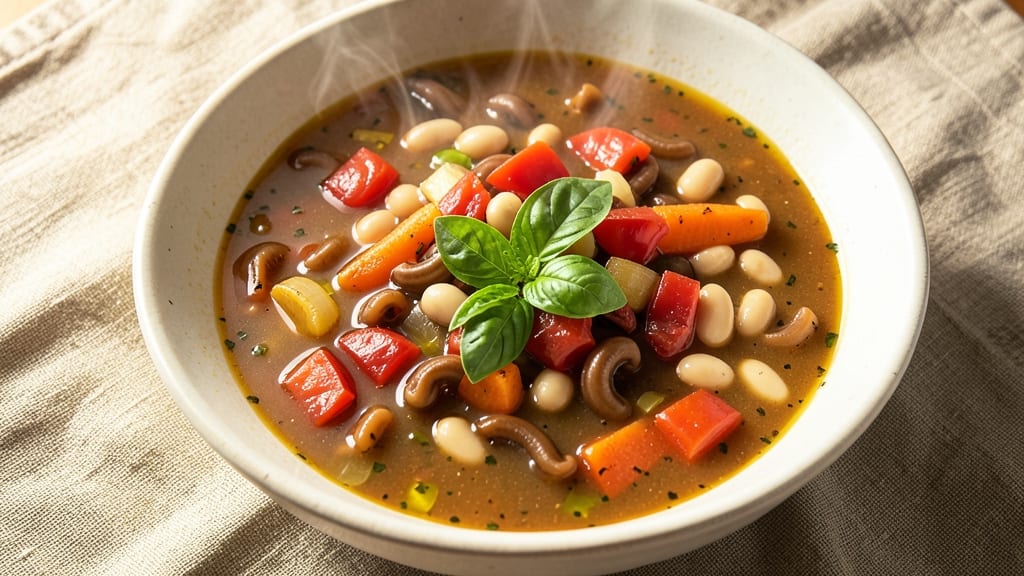
This amazing minestrone soup recipe delivers the cozy, hearty comfort of Italy in every steaming bowl—packed with al dente pasta, tender beans, and a medley of fresh vegetables that sing with flavor. 💛 The secret lies in slow-simmered tomatoes and aromatic herbs that transform simple ingredients into restaurant-quality depth, while roasting the veggies first adds a caramelized richness you won’t find in canned versions.
What makes this minestrone truly special is the balance of textures: creamy white beans, chewy pasta, and crisp-tender vegetables all swimming in a savory broth that gets better with each sip.
I developed this recipe during a chilly winter when I needed something nourishing yet light enough for lunch—it’s become my go-to for feeding crowds or meal prepping for the week.
By the time you’re stirring in the final herbs, your kitchen will smell like a Tuscan countryside, and every spoonful will deliver that perfect harmony of earthy beans, bright vegetables, and rich tomato base.
The pasta stays al dente even after simmering, and the broth reduces just enough to concentrate the flavors without drying out.
Serve it with crusty bread for soaking up every last drop, or let it cool slightly for packed lunches that taste just as good hours later. Here’s how to make it—simple steps for a soup that feels like a hug in a bowl.
Ingredients for amazing minestrone soup
Pantry staples meet fresh produce for this hearty vegetarian minestrone that feeds a crowd.
| Ingredient | Amount | Notes |
|---|---|---|
| Canned Diced Tomatoes 🍅 | 2 cups | San Marzano preferred for sweetness |
| Vegetable Broth 💧 | 4 cups | Low-sodium preferred |
| White Kidney Beans 🌱 | 1 ½ cups | Canned, drained and rinsed |
| Ditalini Pasta 🍝 | 1 cup | Uncooked, al dente preferred |
| Yellow Onion 🧅 | 1 whole | Medium, diced |
| Carrots 🥕 | 3 medium | Peeled, chopped into chunks |
| Celery Stalks 🧄 | 3 whole | Chopped, including leaves |
| Zucchini 🥒 | 1 medium | Sliced into half-moons |
| Garlic Cloves 🧄 | 4 cloves | Minced for depth |
| Extra-Virgin Olive Oil 🫒 | ½ cup | For roasting and finishing |
| Fresh Parsley 🌿 | ¼ cup | Chopped, for garnish |
| Fresh Basil 🌿 | 0.2 cup | Torn, for brightness |
| Dried Oregano 🍃 | 1 tsp | Italian preferred |
| Salt 🧂 | 1 ½ tsp | Adjust to taste |
| Black Pepper 🌶️ | ½ tsp | Freshly cracked |
The tomatoes are the soul of this soup—San Marzano if you can find it, but any good-quality canned works. I always grab the no-salt-added vegetable broth from the store's organic section—it's worth the extra 50 cents. For the beans, canned is fine, but if you've got time, soak dried overnight for deeper flavor. The pasta? Ditalini holds up best, but any small shape works. Pro tip: Roast the veggies first (tossed in olive oil, 400°F for 20 minutes)—it caramelizes them and concentrates their sweetness.
No fresh herbs? Dried oregano at half the amount works in a pinch, but fresh basil and parsley make all the difference. Short on zucchini? Substitute with yellow squash or even more carrots. The onion, celery, and carrot combo is classic for a reason—it builds flavor as it simmers. For extra richness, stir in a splash of red wine when you add the tomatoes. And if you're prepping ahead, cook the pasta separately and add it just before serving so it doesn't get mushy.
This soup tastes even better the next day—3-4 days in the fridge, no problem. For meal prep, I portion it into glass containers with tight lids—keeps flavors locked in. Freezes beautifully for up to 3 months, though the pasta might get slightly softer. The herbs? Add them fresh when reheating. And trust me, the crusty bread you'll need for soaking up broth is worth buying the good stuff from Whole Foods or your local bakery.
Why You'll Love This Recipe
- No Chopping Needed: I swear by this trick—just toss in that pre-diced onion straight from the jar. No knife skills required, just stir and simmer. Between us, that’s how I survived my first month of cooking for myself.
- Tomato-Bean Magic: Those canned tomatoes and kidney beans? They’re the dynamic duo. The acidity cuts through the richness of the broth while the beans add this satisfying heartiness—like a hug in a bowl. Honestly, I’ve tried fancy versions, but this combo never lets me down.
- Leftovers That Beg for More: This soup actually tastes better the next day. The pasta softens perfectly, the flavors meld, and it’s still warm enough to reheat in minutes. I’ll be real: I’ve frozen portions and thrown them into salads later—zero waste, all flavor.
- Budget-Friendly Crowd-Pleaser: A single can of tomatoes and a bag of beans stretch to feed four (or five if someone’s extra hungry). It’s the kind of dish where I can serve it to guests without stressing over cost or leftovers. Plus, ditalini pasta? Cheap and cheerful.
Step-by-step instructions for hearty minestrone soup
Here's how to transform simple ingredients into a rich, flavorful bowl that's perfect for any day.
🍳 Step 1: Roast the Vegetables for Deep Flavor
Preheat your oven to 400°F and line a baking sheet with parchment paper. In a large bowl, toss together the diced yellow onion, chopped carrots, chopped celery stalks, sliced zucchini, and minced garlic cloves with 2 tablespoons of the extra-virgin olive oil, 1 teaspoon salt, and ½ teaspoon black pepper. Spread them evenly on the baking sheet.
Roast for 25-30 minutes until the vegetables are tender and beginning to caramelize at the edges. This roasting step develops deep, sweet flavors that will make your soup truly amazing. Stir halfway through for even cooking. The zucchini should soften while still holding its shape—overcooking will make it mushy.
🥘 Step 2: Build the Soup Base with Tomatoes and Beans
While the vegetables roast, heat 1 tablespoon of the extra-virgin olive oil in a large pot over medium heat. Add the roasted vegetables and cook for 2 minutes to release their aromas. Pour in the 2 cups canned diced tomatoes (with their juices), 4 cups vegetable broth, and the 1.5 cups white kidney beans.
Bring to a gentle boil, then reduce heat to medium-low and simmer for 10 minutes. Stir occasionally to prevent sticking. The tomatoes will break down slightly, releasing their sweetness, while the beans begin to absorb the flavors. This is where the soup starts to come together—don't rush this step, as the flavors need time to meld.
🍳 Step 3: Add Pasta and Seasonings
Add the 1 cup ditalini pasta to the pot and stir gently to coat it with the soup. Pour in 1 cup fresh water (to prevent the pasta from sticking together) and add the 1 teaspoon dried oregano. Increase heat to medium-high and bring to a boil again. Once boiling, reduce heat to medium-low and simmer for 8-10 minutes.
You'll know the pasta is done when it's al dente—tender but still with a slight bite. Taste the soup and adjust seasoning with more salt or black pepper if needed. The pasta should be fully submerged, but if it's not, add a splash more water. The soup should be hearty but not overly thick—it should coat the back of a spoon but still be easy to ladle.
🔥 Step 4: Finish with Fresh Herbs and Olive Oil
Remove the pot from heat and stir in the ¼ cup fresh parsley and ⅕ cup fresh basil. Drizzle in the remaining ¼ cup extra-virgin olive oil and toss everything together. Let the soup sit off the heat for 5 minutes to allow the flavors to meld one last time. The fresh herbs will brighten the soup, while the olive oil adds richness and helps balance the acidity from the tomatoes.
Taste one final time and adjust seasoning if needed. The soup should be vibrant, with layers of sweet roasted vegetables, savory beans, and herby freshness. Ladle into bowls and serve immediately, garnished with additional fresh basil and a sprinkle of black pepper. Each spoonful should deliver that comforting, hearty feeling that makes this soup truly amazing.
Pro Tips For Making Amazing Minestrone Soup
- SOFTEN BEANS FIRST: Drain and rinse the white kidney beans, then simmer them in fresh vegetable broth for 10 minutes before adding to the soup. I learned this the hard way—raw beans make the broth gummy and the texture off. The extra step guarantees they stay tender without falling apart, and the broth gets a deeper flavor from the beans’ starch.
- SWEEP THE POT: After draining the ditalini pasta, give the pot a quick wipe with a paper towel to remove any residual starch. This prevents the soup from turning gluey when reheating—something that happens more often than you’d think. Trust me, it’s worth the 10 seconds of effort.
- CHAR THE ONION: Cook the yellow onion in olive oil over medium-high heat until it’s deep golden and slightly caramelized, not just translucent. I used to rush this, and the soup lacked that rich, sweet depth. Let it sit for 5-6 minutes, stirring occasionally—it’s the thing that matters most for flavor.
- ADD PASTA LAST: Toss the ditalini into the simmering soup just 6-8 minutes before serving, not all at once at the start. This keeps the pasta from absorbing too much liquid and turning mushy, especially if you’re using the beans’ broth. Yes, it means timing it right, but the texture makes a real difference.
Wine and beer pairings for this amazing minestrone soup
Italian White Wine
For an authentic pairing, reach for a crisp Vermentino from Sardinia or a Pinot Grigio from Alto Adige. These wines complement the soup's bright herbs and tomato base beautifully—their citrusy acidity cuts through the richness while highlighting the roasted vegetables.
I keep a bottle of Santa Margherita Pinot Grigio on hand for exactly this reason. 🍷
Crisp Lager Pairing
A refreshing Italian lager like Peroni or Birra Moretti balances the soup's heartiness without overpowering it. The light malt sweetness and subtle hop bitterness cleanse your palate between spoonfuls.
For a craft option, try a Belgian witbier—the coriander and citrus notes create an unexpected but delightful contrast with the basil and oregano.
Red Wine Option
If you prefer red, a light-bodied Chianti or Sangiovese works surprisingly well. The bright acidity and cherry notes echo the tomatoes while the earthy tannins complement the beans. I recommend a Chianti Classico with at least 12% alcohol—it's robust enough to stand up to the soup's depth.
Decant it for 30 minutes before serving to soften the tannins.
Non-Alcoholic Options
For a non-alcoholic pairing, try a sparkling blood orange soda like San Pellegrino Aranciata Rossa. The effervescence and citrus notes mirror the soup's brightness. Alternatively, a cucumber-mint infused water with a splash of lemon juice provides refreshing contrast.
I also love serving it with garlic bread—the buttery crust soaks up the broth perfectly while adding a satisfying crunch.
Seasonal Adjustments
In summer, I reach for a dry Riesling—its crisp acidity and peach notes complement the zucchini beautifully. For winter, a full-bodied Chianti with its spicy notes adds warmth.
The key is matching the wine's acidity to the soup's tomato base while ensuring enough body to handle the pasta and beans. Never underestimate the power of a well-chosen pairing! 💫
Nutrition facts
Frequently asked questions
Can I make this minestrone soup without roasting the vegetables?
Yes, but you'll miss the caramelized depth that makes this recipe amazing. If you skip roasting, sauté the chopped vegetables in olive oil for 5-7 minutes until softened before adding the tomatoes and broth. The flavor will still be good, but less complex. For best results, roasting develops those sweet, concentrated flavors that take this from ordinary to extraordinary.
How do I keep the pasta from getting mushy?
Add the pasta only in the last 8-10 minutes of cooking and use 1 cup fresh water when simmering. The extra water prevents the pasta from sticking together while it cooks. Also, never overfill the pot—keep it at medium-high heat to maintain a gentle boil. If the soup gets too thick, add a splash more water or broth.
Can I make this soup in a slow cooker?
Follow the same prep steps, then combine everything (except fresh herbs) in your slow cooker and cook on low for 6-7 hours or high for 3-4 hours. Add the pasta and herbs during the last 30 minutes of cooking. The slow cooker method actually enhances the flavors, making the broth even more concentrated and rich.
What can I substitute if I don't have ditalini pasta?
Any small pasta shape works—try orzo, small shells, or acini di pepe. For a gluten-free option, use chickpea pasta or rice pasta. Just note that cooking times may vary slightly. The key is choosing a shape that holds up well to simmering without breaking apart.
How can I make this soup spicier?
Add ½ teaspoon red pepper flakes when you sauté the vegetables or stir in 1 chopped jalapeño with the tomatoes. For heat lovers, finish with a drizzle of hot sauce or a sprinkle of crushed chili flakes. You can also add a pinch of cayenne pepper to the broth while simmering. Start with small amounts and adjust to taste.