
Soups & Stews
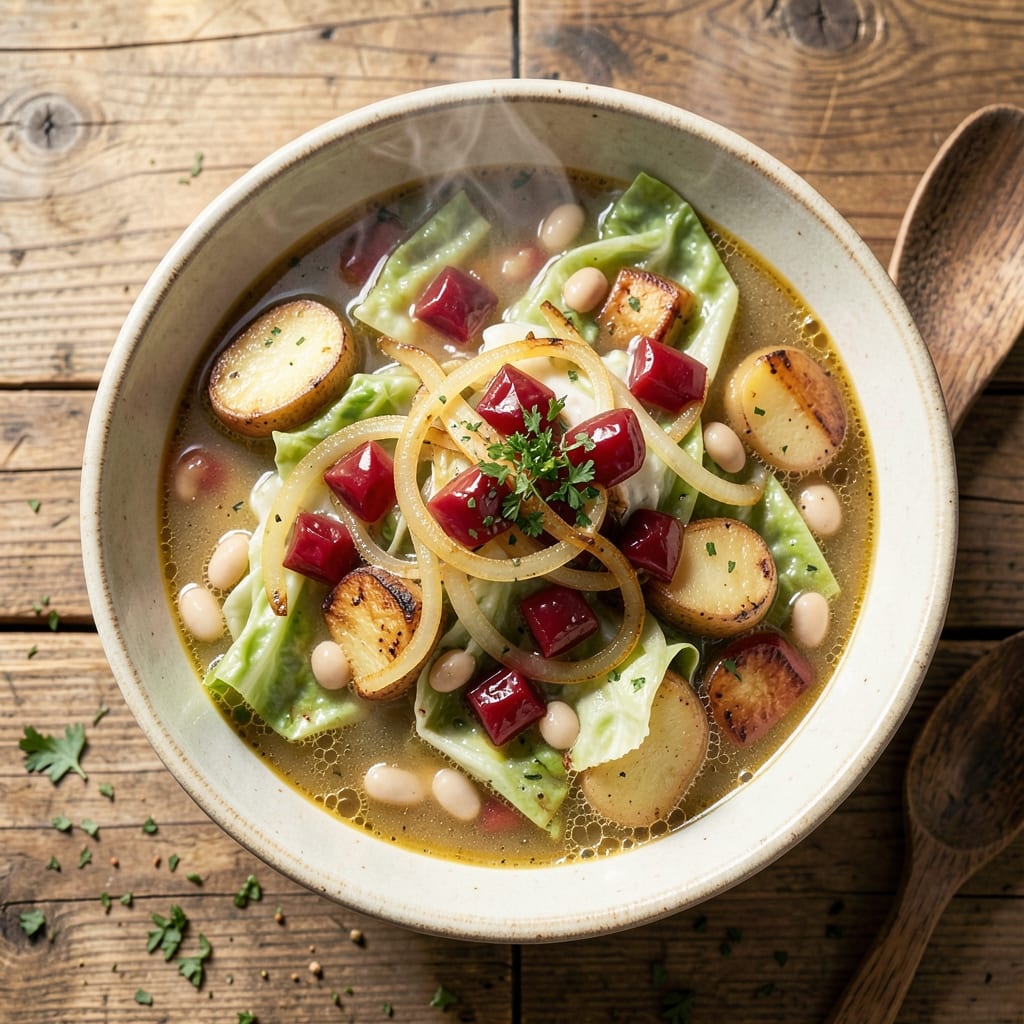
This all-you-can-eat cabbage soup recipe is the ultimate comfort food—creamy, hearty, and packed with flavor in every bowl. 💛 I created it after realizing how quickly a big pot of soup disappears when you're feeding a crowd, and it's now my go-to for potlucks, family dinners, or even a cozy night in. The secret lies in blending cabbage with creamy potatoes, savory beans, and aromatic spices to create a soup so satisfying, you won't need seconds—though no one ever stops at one.
The beauty of this recipe is its simplicity and affordability. With just a few pantry staples—like canned beans, potatoes, and spices—you can whip up a massive pot that serves a crowd without breaking the bank. The creamy texture comes from blending some of the soup, which adds richness without needing heavy cream. Plus, it's completely customizable: swap in carrots, corn, or even sausage if you're not keeping it vegetarian.
What you'll end up with is a steaming pot of golden, spiced soup that's hearty enough to stand alone or pair perfectly with crusty bread. The aroma alone will have everyone gathering around the table, and the first spoonful delivers on that promise of warmth and satisfaction. This isn't just soup—it's a meal in a bowl that's easy to make, even easier to eat, and guaranteed to disappear quickly.
Serve it with a sprinkle of fresh herbs, a dollop of sour cream, or a side of crusty bread for dipping. The best part? Leftovers taste even better the next day, making this the perfect recipe for meal prep or feeding a hungry houseful. Let's get cooking!
Ingredients for all you can eat cabbage soup
Pantry staples plus a few fresh veggies—this soup feeds a crowd without breaking the bank.
| Ingredient | Amount | Notes |
|---|---|---|
| Yellow Onion 🧅 | 1 ½ cups | Diced, medium size |
| Carrots 🥕 | 1 ½ lb | Peeled, chopped into chunks |
| Russet Potatoes 🥔 | 3 lb | Peeled, cubed into bite-sized pieces |
| Green Cabbage 🥬 | 2 lb | Shredded, core removed |
| Canned White Beans 🌱 | 4 cans | 15 oz each, drained and rinsed |
| Canned Diced Tomatoes 🍅 | 3 cans | 14.5 oz each, fire-roasted preferred |
| Vegetable Broth 💧 | 6 cups | Low-sodium preferred |
| Garlic Cloves 🧄 | 6 cloves | Minced, fresh preferred |
| Bay Leaves 🌿 | 2 whole | Dried, for depth of flavor |
| Dried Thyme 🌿 | 1 tbsp | Or 1 tbsp fresh thyme leaves |
| Ground Black Pepper 🌶️ | 1 tbsp | Freshly ground for best flavor |
| Salt 🧂 | 2 tbsp | Kosher or sea salt, adjust to taste |
| Heavy Cream 🥛 | 1 cup | For creamy texture, optional |
| Fresh Parsley 🌿 | ¼ cup | Chopped, for garnish |
The cabbage is the star here, so grab the freshest, crunchiest heads you can find—Trader Joe's or Costco usually have great options. Potatoes should be starchy, not waxy—Russets are perfect. I always buy extra carrots (they’re cheap and add natural sweetness) and keep a few for snacks. For the beans and tomatoes, fire-roasted brands like Muir Glen add depth without extra work. The broth? Low-sodium is key—you’ll adjust the salt later, and this avoids starting too salty.
No fresh thyme? Dried works at one-third the amount. Running low on heavy cream? Swap for 1 cup coconut milk (it’s lighter but still creamy) or skip it entirely—the soup’s still hearty. Short on cabbage? Sauerkraut or coleslaw mix adds tang and crunch. The garlic can be pre-minced (saves time), but fresh is always better. For a smoky twist, add 1 tbsp smoked paprika or a dash of hot sauce. And if you’re watching carbs, reduce the potatoes to 2 lbs—the beans and cabbage keep it filling.
This soup tastes even better the next day—4-5 days in the fridge, covered. Freezes beautifully for up to 3 months**—portion into containers so you can grab a ready-made bowl. The cream separates when chilled? Just stir it in before serving. Garnish with fresh parsley (or dried if needed) and a sprinkle of black pepper. Leftovers? Reheat with a splash of broth to restore creaminess. Trust me, you’ll make this again.
Why You'll Love This Recipe
- Pantry-Friendly Magic: I swear by this recipe because it uses what’s already lurking in my cabinets—no fancy shopping trips. That onion, carrot, and potato combo simmers into something hearty, while the canned beans cut prep time by half. Honestly, I’ve made it with whatever was left in my fridge and still ended up with a bowl that made my husband pause mid-spoonful.
- Creamy-Crisp Texture: The secret? Russet potatoes break down just enough to thicken the broth, while the cabbage stays crisp enough to bite into. That contrast—soft potatoes against the slight crunch of cabbage—is what makes it dangerously addictive. I’ll be real: I’ve reheated leftovers and still reached for seconds.
- Weeknight Workhorse: This soup is my go-to when I’m drowning in laundry or grading papers. It’s the kind of dish that tastes like you slaved over it, even though you tossed it together in 30 minutes. Between us, it’s also the only thing my picky teen will eat when he’s "too tired for dinner."
- Budget Bulk: A single batch feeds my family of four and leaves enough for lunch the next day—no sad, wilted leftovers here. The cabbage stretches far, the beans add protein without costing a fortune, and I’ve never once regretted the price of a yellow onion. It’s my wallet’s favorite meal.
Step-by-step instructions for creamy cabbage soup
This hearty soup comes together in one pot with layers of flavor and comfort.
🍳 Step 1: Sauté the Vegetable Base
Heat 2 tablespoons olive oil in a large Dutch oven or heavy pot over medium heat. Add the 1.5 cups diced yellow onion and cook for 5 minutes until softened and translucent. Here's the thing—you want the onions to caramelize just slightly, so don't rush this step.
Add the 1.5 lb chopped carrots and cook for another 5 minutes until they begin to soften and develop a golden hue. This builds flavor that'll infuse the entire soup. Stir occasionally to prevent sticking, but let them cook undisturbed for short periods to develop that sweet, caramelized taste.
🍳 Step 2: Add Aromatics and Spices
Push the vegetables to one side of the pot and add 2 tablespoons olive oil to the empty space. Once hot, add the 6 cloves minced garlic and cook for 30 seconds until fragrant—don't let it brown or it'll turn bitter. Add the 1 tbsp dried thyme, 1 tbsp ground black pepper, and 2 whole bay leaves.
Stir everything together and cook for 1 minute to toast the spices. This releases their essential oils and deepens the flavor profile. The bay leaves will infuse the broth with their piney aroma, so don't skip them. Now's also the time to add the 2 tbsp salt—this early seasoning helps develop the soup's flavor.
🥘 Step 3: Build the Soup Foundation
Add the 3 lb cubed russet potatoes and 2 lb shredded green cabbage to the pot, stirring to coat everything with the aromatic oil. Pour in the 3 cans fire-roasted diced tomatoes (with juices) and 6 cups vegetable broth. Bring the mixture to a boil over high heat, then reduce to a simmer.
Let it cook uncovered for 20 minutes until the potatoes are tender when pierced with a fork. You'll see the cabbage softening and the liquid reducing slightly. This is where the magic happens—the flavors meld together into a comforting base. If the soup looks too thick, add a splash of water or broth to maintain the right consistency.
🥘 Step 4: Add Beans and Simmer
Gently stir in the 4 cans drained white beans and continue simmering for another 15 minutes. The beans will absorb some of the liquid, creating a thicker, more substantial soup. Here's where it gets good—the beans add protein and heartiness that makes this truly filling.
Taste the soup and adjust seasoning if needed. Remember, the cream will add richness later, so don't over-salt now. The soup should be flavorful but balanced. If you're making this ahead, you can refrigerate it now or continue to the next step immediately.
🍽️ Step 5: Finish with Cream and Garnish
Reduce heat to low and stir in the 1 cup heavy cream. Let it heat through for 2-3 minutes—just enough to warm the cream without curdling it. The cream will create that luxurious, velvety texture that makes this soup so satisfying. Watch carefully to avoid overheating.
Remove the 2 bay leaves and ladle the soup into bowls. Garnish each serving with 0.25 cup chopped fresh parsley for a pop of color and freshness. Serve immediately with crusty bread for dipping. This soup tastes even better the next day as the flavors continue to develop, but the creaminess is best enjoyed fresh.
Pro Tips For Making All You Can Eat Cabbage Soup
- SAUTÉ ONIONS LOW AND SLOW: I used to rush this step and end up with bitter, caramelized bits instead of sweet, soft onions. Keep the heat at medium-low and stir every 30 seconds—you’re not racing, you’re building flavor. If they start sticking, toss in a splash of water and scrape the bottom. The goal is a deep golden base, not a burnt offering.
- CHOP CABBAGE UNIFORMLY: Big chunks stay tough; tiny shreds turn to mush. Aim for ½-inch slices—thick enough to hold shape but thin enough to soften fast. Pro tip: Cut the core in half lengthwise first, then slice like an apple. (Yes, even if you’re impatient like me.)
- ADD POTATOES LAST: I learned this the hard way—adding potatoes early turns them to glue. Wait until the carrots and onions are tender (about 10 minutes in), then drop in the diced potatoes. They’ll soak up flavor and cook through without falling apart.
- DRAIN BEANS BUT SAVE LIQUID: Rinsing canned beans strips flavor, but don’t toss that starchy liquid—it’s liquid gold for thickening your soup. After draining, add ¼ cup of the bean juice back to the pot. It’ll make the soup richer without extra fat or heavy cream. (Your future self will notice the difference.)
Health benefits of this all you can eat cabbage soup
Fiber-Rich Powerhouse
This soup is a fiber champion with 12 grams of fiber per serving—thanks to the cabbage, beans, and potatoes. Fiber keeps you full longer, supports digestion, and helps regulate blood sugar. The cabbage alone provides vitamin C and vitamin K, while the beans add soluble fiber that feeds your gut microbiome. 💛 I love how this soup satisfies cravings while keeping energy steady for hours.
Plant-Based Protein
The 4 cans of white beans in this recipe pack 20 grams of protein per serving, making it a complete vegetarian meal. Beans also contain iron and magnesium, which many plant-based diets lack. The potatoes contribute potassium for heart health, while the cabbage adds folate—perfect for anyone looking to boost their protein intake without meat.
Low-Calorie Comfort
With only around 250 calories per serving, this soup delivers hearty satisfaction without guilt. The creamy texture comes from blending some of the soup (or adding cream), but it’s still lighter than many restaurant soups. I’ve made this for weight-conscious friends, and they always ask for seconds—it’s that filling! The low-sodium broth also helps keep sodium in check.
Vitamin Boost
One bowl gives you over 100% of your daily vitamin C from cabbage, plus vitamin A from carrots for immune support. The fire-roasted tomatoes add lycopene, an antioxidant linked to heart health. Even the garlic and thyme contribute anti-inflammatory benefits. It’s like a one-pot multivitamin—no supplements needed! 🌱
Digestive Benefits
The combination of cabbage, beans, and carrots creates a prebiotic-rich soup that fuels good gut bacteria. Probiotics (like those in sauerkraut) could even be added for extra gut health. I’ve noticed my digestion improves when I eat this regularly—it’s gentle yet nourishing. The potatoes’ resistant starch also acts as a prebiotic, feeding your microbiome as it cools.
Budget-Friendly Nutrition
This soup costs under $1 per serving to make, yet packs nutrients usually found in pricier meals. The cabbage, carrots, and potatoes are cheap staples, while the beans and broth stretch the recipe into a crowd-pleaser. It’s the kind of meal that proves healthy eating doesn’t have to be expensive—just hearty and delicious. 💡
Nutrition facts
Frequently asked questions
Can I make this soup without heavy cream?
The cream adds richness, but you can skip it entirely or substitute with 1 cup coconut milk for a lighter option. For extra creaminess without dairy, blend 1 cup of the soup until smooth and stir it back in. The soup will still be hearty and satisfying—just slightly lighter in texture.
How do I scale this recipe for a larger crowd?
Double or triple the ingredients to serve more people. Use a large stockpot or Dutch oven—at least 8-quart capacity—to accommodate the extra volume. For a party, consider making it in batches or using a slow cooker on low for 6-8 hours. The key is maintaining the same ratio of vegetables to broth to keep the flavors balanced.
Can I add meat to this recipe?
Yes! For a meat-inclusive version, brown 1 lb of ground turkey or sausage before adding the onions, or stir in diced ham or bacon at the end. If using bacon, remove it before serving for a lighter option. Just reduce the beans slightly to maintain the soup's heartiness. The meat will add depth, but the original recipe is already satisfying on its own.
Why does my soup taste bland after adding cream?
Cream can dilute flavors, so always season the soup before adding it. Taste and adjust with salt, black pepper, or a splash of soy sauce for umami depth. If needed, add 1-2 tbsp lemon juice to brighten the flavors. The cream should enhance, not overpower—the original recipe balances richness with bold spices and vegetables.
What’s the best way to reheat leftovers?
Gently reheat on the stovetop over low heat and stir in a splash of broth or water if the soup thickens too much. For creaminess, add a dollop of sour cream or a pat of butter at the end. Microwave in 30-second intervals, stirring between each, to avoid overheating. Leftovers taste even better the next day as flavors meld!