
Soups & Stews
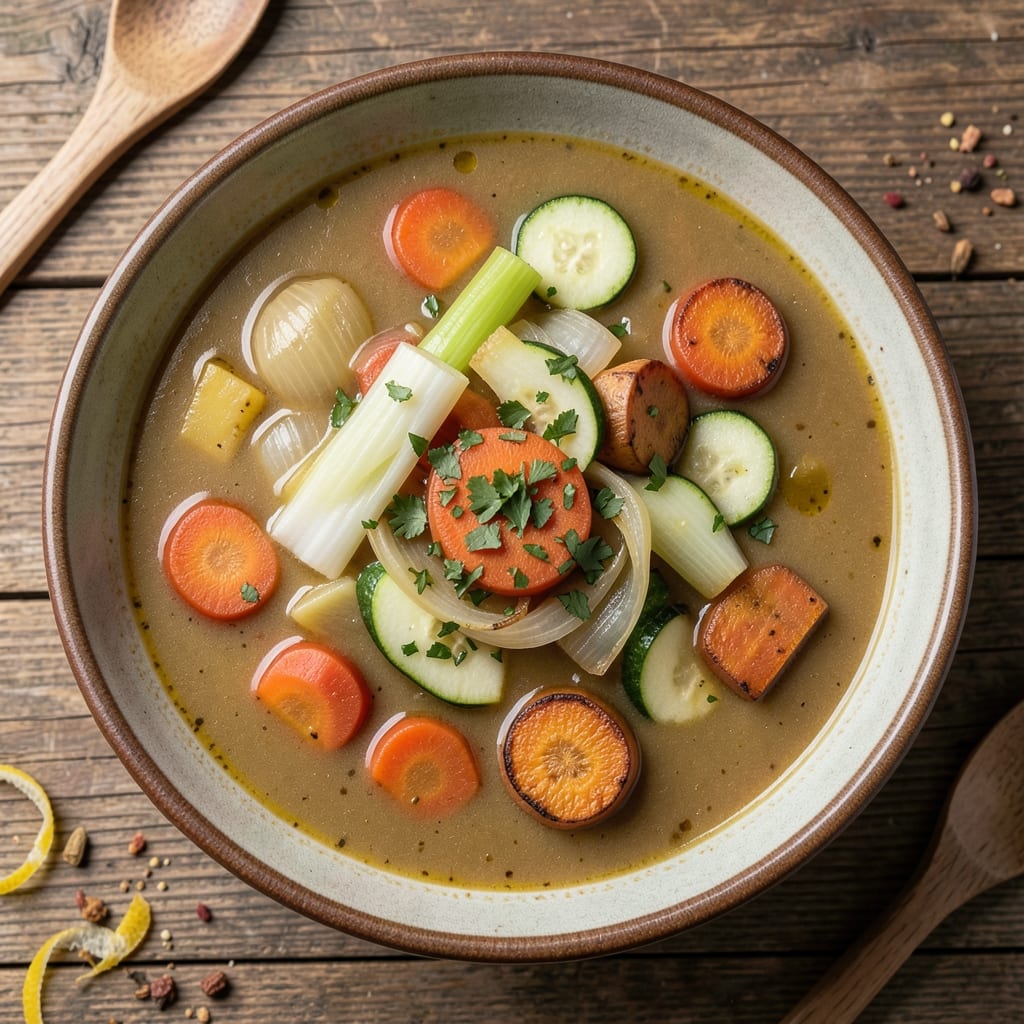
This all-vegetable soup recipe transforms humble seasonal produce into a rich, layered masterpiece that rivals any restaurant version. The secret lies in roasting vegetables first—caramelizing their natural sugars creates depth that simmering alone can't match. I developed this recipe after years of testing different techniques, and it consistently delivers a balance of textures and flavors that keeps everyone asking for seconds.
The process begins with a simple roast of your choice vegetables until tender and golden, then building a flavorful base with aromatic vegetables and herbs. This method ensures maximum flavor extraction while keeping the soup naturally vibrant and full of body. The key is patience—letting the vegetables simmer just until they're perfectly tender preserves their individual textures and nutrients.
What you'll end up with is a soup that's hearty yet light, packed with the natural sweetness of roasted vegetables and brightened by fresh herbs. The aroma alone will have your kitchen feeling like a cozy European bistro, while the first spoonful delivers layers of caramelized depth and fresh herby brightness. This recipe works beautifully with any seasonal vegetables you have on hand, making it endlessly adaptable.
The best part? This soup is naturally vegan, gluten-free, and can be made oil-free if needed—without sacrificing any flavor. It reheats beautifully for meal prep and tastes even better the next day as the flavors meld further. Perfect for chilly evenings or as a comforting starter for any meal, this recipe proves that vegetable soups can be just as satisfying as their meat-based counterparts.
Ingredients for all vegetable soup
Roasted vegetables form the flavorful heart of this rich, layered soup—transforming simple produce into restaurant-quality depth.
| Ingredient | Amount | Notes |
|---|---|---|
| Yellow Onion 🧅 | 1 whole | Chopped into 1/2-inch pieces |
| Carrots 🥕 | 1 ½ lb | Peeled, cut into 1-inch chunks |
| Celery Stalks 🥬 | 4 whole | Trimmed, cut into 1-inch pieces |
| Garlic Cloves 🧄 | 6 cloves | Peeled, lightly crushed |
| Sweet Potatoes 🍠 | 1 ½ lb | Peeled, cut into 1-inch cubes |
| Zucchini 🥒 | 1 ½ lb | Trimmed, cut into 1-inch chunks |
| Cauliflower 🥬 | 1 whole | Cut into florets |
| Fresh Thyme 🌿 | 2 tbsp | Leaves only, stems removed |
| Fresh Rosemary 🌿 | 1 tbsp | Needles only, finely chopped |
| Fresh Parsley 🌿 | ¼ cup | Leaves only, roughly chopped |
| Vegetable Broth 💧 | 6 cups | Low-sodium preferred |
| Extra-Virgin Olive Oil 🫒 | 3 tbsp | For roasting vegetables |
| Sea Salt 🧂 | 1 ½ tsp | Diamond Crystal preferred |
| Black Peppercorns 🌶️ | ½ tsp | Freshly cracked |
| Lemon Juice 🍋 | 1 tbsp | Freshly squeezed |
The vegetables are the stars here. Sweet potatoes and carrots roast beautifully, developing caramelized sweetness that forms the soup's base. Whole Foods or local farmers markets are ideal for sourcing seasonal, organic produce—look for firm sweet potatoes with smooth skin and vibrant carrots with crisp ends. The cauliflower and zucchini add contrasting textures, so choose fresh, firm pieces. For the herbs, Whole Foods bulk section offers the freshest thyme and rosemary. If using dried herbs, reduce amounts by half, but fresh delivers that bright, aromatic quality this soup needs. The vegetable broth should be low-sodium—homemade or high-quality store-bought brands like Pacific Foods or Imagine work best.
No sweet potatoes? Butternut squash cut into cubes works beautifully—just increase roasting time slightly. Short on cauliflower? Broccoli florets add a similar texture. The olive oil is non-negotiable for roasting—extra-virgin delivers the best flavor, though regular olive oil works in a pinch. Fresh herbs are ideal, but dried thyme and rosemary at half the amount will get you close. For the broth, water plus vegetable bouillon cubes can substitute, but the flavor won't be as complex. The lemon juice adds brightness—bottled lemon juice works if fresh isn't available, though the flavor is slightly muted. Seasoning is flexible: Diamond Crystal kosher salt both work, but adjust to taste.
Roasted vegetables keep well in the fridge for 5 days if stored in an airtight container, though they're best used immediately. The finished soup reheats beautifully—simmer gently for 5-7 minutes to restore its rich texture. For meal prep, portion into glass containers and store for up to 4 days in the fridge. Freezing is possible for 3 months, though the texture of some vegetables may soften slightly. To preserve freshness, add a thin layer of olive oil to the surface before sealing. The herbs can be prepped ahead and stored in the fridge for 3 days, wrapped in damp paper towels.
Why You'll Love This Recipe
- Pantry Magic: I swear by this soup because it uses what’s already lurking in my fridge. No last-minute grocery runs—just chop the onion, dice the sweet potatoes, and toss in the celery and carrots. That’s it. The garlic? Oh, it’s the secret weapon that turns "I’ll just eat toast" into "wait, there’s more?"
- Sweet & Savory Balance: Here’s what sold me—the caramelized sweet potatoes meet the earthy celery and crisp onions in every spoonful. Add a splash of broth and a pinch of salt, and suddenly you’ve got a soup that’s rich without being heavy. My kids ask for seconds (yes, even on a Tuesday night), and I don’t have to bribe them with dessert.
- Meal Prep MVP: This soup thrives in the fridge or freezer, so I make a big batch on Sundays and reheat portions all week. The flavors actually deepened after day two—something I never expected. Honestly, it’s my go-to for lazy nights or when I’ve got company over. Just reheat, serve, and watch it disappear.
- Budget-Friendly Comfort: I spent less than $10 on ingredients last time, and it fed my family of four for three lunches. The sweet potatoes and carrots stretch the broth, while the celery and onion add layers of flavor without breaking the bank. Not the prettiest, but the taste makes up for it—and my wallet thanks me.
Step-by-step instructions for roasted vegetable soup
Transforming simple vegetables into a rich, flavorful soup starts with proper roasting technique.
Roast Vegetables Until Deeply Caramelized
Preheat your oven to 400°F and arrange two large baking sheets with parchment paper. Distribute the 1 whole yellow onion, 1.5 lb carrots, 4 whole celery stalks, 1.5 lb sweet potatoes, 1 whole cauliflower, and 1.5 lb zucchini evenly between the sheets, ensuring they don't overlap. Drizzle all vegetables with 2 tbsp extra-virgin olive oil and toss gently to coat completely.
Season immediately with 1 tsp sea salt and 0.25 tsp black peppercorns, focusing on the larger pieces. Roast for 25-30 minutes until the edges turn golden brown and the vegetables begin to soften. I like to flip the vegetables halfway through for even browning. The goal is to develop deep caramelization that will form the flavor base of your soup.
Remove the sweet potatoes from the oven first—they'll be done before the other vegetables. Set them aside temporarily while the remaining vegetables continue roasting for another 5-10 minutes until tender. The roasted vegetables should yield easily when pierced with a fork, releasing their concentrated flavors.
Sauté Aromatics for Layered Depth
While the vegetables roast, heat 1 tbsp extra-virgin olive oil in a large Dutch oven over medium heat. Add the 6 peeled garlic cloves and sauté for 30 seconds until fragrant but not browned. Immediately add the 2 tbsp fresh thyme leaves and 1 tbsp finely chopped fresh rosemary, stirring for 1 minute to release their essential oils.
Here's the thing—don't let the garlic burn. It should smell sweet and nutty, not bitter. If it starts to darken too quickly, remove the pan from heat for 10 seconds to cool slightly. The aromatics will form the flavor foundation for your soup, so take your time with this step.
Combine Roasted Vegetables with Broth
Return the roasted vegetables to the Dutch oven along with any accumulated juices from the baking sheets. Add the 6 cups vegetable broth and bring to a gentle simmer over medium-low heat. Stir occasionally for 15-20 minutes until all vegetables are fork-tender and the flavors have melded together.
I recommend using a wooden spoon to gently break up the larger vegetable pieces as they soften, creating a more uniform texture. The soup should develop a rich, golden color from the caramelized vegetables. If it appears too thick, add ½ cup water to reach your desired consistency.
Finish with Fresh Herbs and Acid
Remove the soup from heat and stir in the 0.25 cup fresh parsley and 1 tbsp freshly squeezed lemon juice. The parsley adds bright freshness while the lemon juice cuts through the richness of the roasted vegetables. Taste and adjust seasoning with additional sea salt or black peppercorns if needed.
Let the soup rest for 5 minutes before serving. This resting period allows the flavors to fully integrate and the vegetables to absorb any remaining liquid. The final soup should be rich with caramelized vegetable flavors, balanced by the bright herbal notes and subtle acidity from the lemon.
Pro Tips For Making All Vegetable Soup
- SWIM THE SWEET POTATOES: I learned this the hard way—chopping sweet potatoes into big chunks and tossing them in raw with the onions. Instead, peel and cut them into ½-inch cubes first, then parboil for 3 minutes before adding to the pot. That keeps them tender without turning to mush later.
- SAUTÉ THE AROMATICS LOW: High heat burns garlic and onions faster than you can say "soup disaster." Start with medium-low, let the onions soften for 5 minutes, then bump to medium to crisp the celery just enough. Overcooked aromatics taste bitter—trust me, you’ll notice.
- SALT THE WATER LIKE THE SEA: Skip the "just a pinch" approach. Use 2 teaspoons of salt per gallon of water (or 1 teaspoon per quart) when blanching sweet potatoes or boiling veggies. Under-salted broth tastes flat, and you can’t fix it later—no matter how much bouillon you add.
- RESERVE THE STARCHY WATER: When draining your parboiled sweet potatoes, don’t pour that starchy water down the sink. Use a ladle to scoop out ½ cup of it and stir it back into the soup at the end. It thickens the broth naturally—no cornstarch needed, and it tastes better.
Pro cooking tips for this dish
Roasting Perfection
The key to restaurant-quality flavor lies in proper roasting technique. Spread vegetables in a single layer on your baking sheets—overcrowding steams instead of caramelizing. I use two large half-sheet pans (like Chicago Metallic pans) for even heat distribution. Rotate pans halfway through for consistent browning. For extra depth, toss the vegetables with 1 tsp maple syrup along with the olive oil—this enhances caramelization without adding sweetness to the final soup. 🔥
Layered Flavor Building
Don't skip the aromatics step! Sautéing garlic, thyme, and rosemary in olive oil creates a flavor base that transforms simple broth into something extraordinary. I always add a pinch of red pepper flakes (about ¼ tsp) during this step for subtle heat that develops beautifully during simmering. The herbs should be fresh—dried versions lack the vibrant aroma that carries through the soup.
Simmering Control
Low and slow is the secret here. Maintain a gentle simmer at 190-200°F—any hotter and the vegetables will break down too quickly. I use a candy thermometer clipped to my Dutch oven to monitor temperature. If the soup reduces too much, add broth in ¼ cup increments rather than all at once to maintain balance.
Texture Mastery
For that perfect mix of creamy and chunky textures, leave some vegetables slightly undercooked. Sweet potatoes and carrots should be fork-tender with slight resistance, while zucchini and cauliflower should hold their shape. I like to reserve ½ cup roasted cauliflower florets and add them back at the very end for a delightful contrast in each spoonful. 🌟
Acid Balance
The lemon juice isn't just for flavor—it's a science experiment. The acidity helps break down pectin in the vegetables, creating a silky texture while brightening the overall profile. For maximum impact, use freshly squeezed juice—bottled versions contain preservatives that can mute the freshness. Start with 1 tbsp and adjust to taste, but don't overdo it or you'll risk making the soup taste sharp.
Equipment Upgrades
While this recipe works with basic pots, a few tools make life easier. My All-Clad Dutch oven handles the heat beautifully, and I've found that a fine-mesh skimmer helps remove any burnt bits from the bottom during simmering. For roasting, perforated baking sheets allow air to circulate better than solid pans, resulting in more even browning. These aren't essential, but they do elevate the process. 💡
Nutrition facts
Frequently asked questions
Can I make this all-vegetable soup without roasting the vegetables?
The roasting step is what creates that deep, caramelized flavor that makes this soup so special. However, if you're short on time, you can sauté the vegetables in a Dutch oven with a splash of water or broth for 10-12 minutes until tender. The flavor won't be as complex, but it will still be delicious. For best results, try roasting at least some of the vegetables like sweet potatoes and carrots—they develop the most beautiful caramelization.
What vegetables can I substitute if I don't have all the ingredients?
This recipe is incredibly flexible! Swap sweet potatoes for butternut squash or parsnips, and use green beans or asparagus instead of zucchini. For heartier texture, add mushrooms or eggplant. Just adjust cooking times—denser vegetables like squash may need 5-10 extra minutes of roasting. The key is maintaining a balance of textures and flavors.
How can I make this soup creamier without dairy?
Blend ½ cup of the finished soup with an immersion blender until smooth, then stir it back in. For extra richness, add ¼ cup coconut milk or ½ cup silken tofu at the end. The roasted vegetables already create a naturally creamy texture when broken down during simmering, so you may not need much extra. Just be careful not to over-blend or the soup will become too thick.
Can I make this soup in an Instant Pot or pressure cooker?
Yes! First roast your vegetables as directed, then sauté the aromatics in the Instant Pot. Add the roasted veggies, broth, and herbs, then cook on high pressure for 3 minutes. Quick-release the pressure, then blend ½ cup of the soup for creaminess if desired. The pressure method reduces cooking time significantly while still developing deep flavors. Just watch the seasoning—pressure cooking can intensify flavors quickly.
Why does my soup taste bland even after seasoning?
Blandness usually comes from two things: insufficient roasting or not enough acid. Make sure your vegetables are properly caramelized (golden edges) before adding broth. Also check your broth—low-quality or watered-down broth will dilute flavors. Add 1 extra tbsp lemon juice or a pinch of smoked paprika at the end for depth. The herbs should be fresh—dried versions won't provide the same aromatic punch.