
Soups & Stews
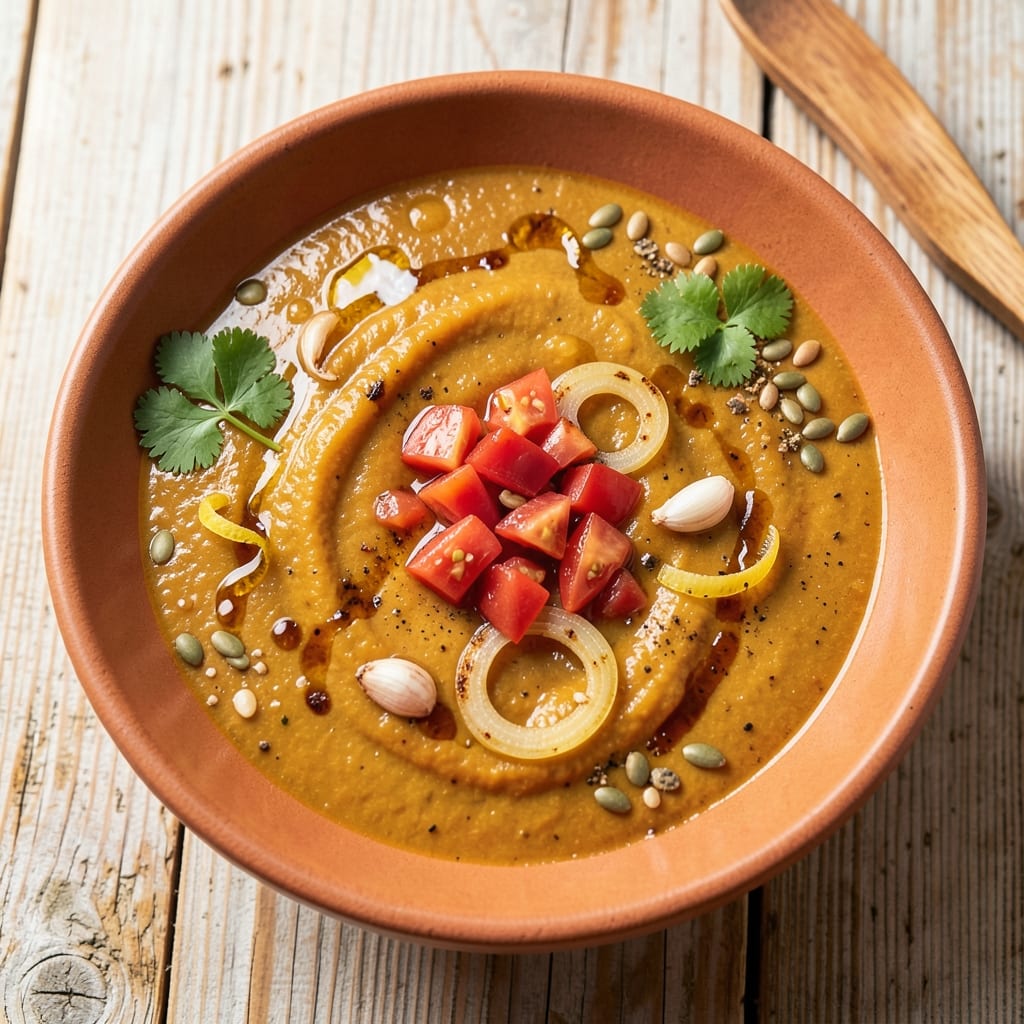
This African pumpkin soup recipe brings the rich, aromatic flavors of West African cuisine to your kitchen with its perfect blend of toasted spices and velvety coconut cream. 🌟 The secret lies in slow-toasting whole spices like cumin and coriander until fragrant, then simmering pumpkin and tomatoes into a deeply flavorful broth. This vegetarian dish is hearty enough for a main course but light enough for a comforting starter.
The recipe begins with a fragrant spice base—ground ginger, garlic, and chili—that infuses the pumpkin with warmth and depth. Coconut milk adds a luxurious creaminess, balancing the earthy sweetness of the pumpkin while keeping the dish rich without being heavy. The slow simmering process ensures every ingredient melds into a harmonious, velvety texture that’s both satisfying and nourishing.
What makes this soup truly special is its versatility—serve it with crusty bread for dipping or pair it with traditional sides like fufu or steamed rice to complete the meal. The toasted spices not only enhance the flavor but also add a beautiful aroma that fills your kitchen, making this soup as inviting as it is delicious. Whether you're cooking for a family gathering or a quiet weeknight dinner, this recipe delivers restaurant-quality results.
Ready in about 45 minutes, this soup is perfect for cooler weather when you crave something warm, comforting, and full of flavor. The best part? It’s easily customizable—add smoked fish for a protein boost or a splash of lime for brightness. Let’s get cooking and bring a taste of Africa to your table!
Ingredients for african pumpkin soup
Toasted spices, velvety coconut, and hearty pumpkin—this soup brings West African warmth to your table.
| Ingredient | Amount | Notes |
|---|---|---|
| Fresh Pumpkin 🎃 | 3 lbs | Cubed, skin removed, seeds discarded |
| Coconut Milk 🥥 | 1 can | Full-fat, unsweetened preferred |
| Diced Tomatoes 🍅 | 1 can | San Marzano preferred, no salt added |
| Yellow Onion 🧅 | 1 whole | Medium, diced finely |
| Fresh Garlic 🧄 | 4 cloves | Minced, not pre-minced jarred |
| Ground Ginger 🌿 | 1 tbsp | Freshly ground for best flavor |
| Ground Cumin 🌶️ | 1 tbsp | Toasted for deeper aroma |
| Ground Coriander 🌿 | 1 tbsp | Freshly ground preferred |
| Red Chili Flakes 🔥 | 1 tsp | Adjust for heat preference |
| Vegetable Stock 💧 | 2 cups | Low-sodium preferred |
| Olive Oil 🫒 | ½ cup | Extra-virgin for richness |
| Lemon Juice 🍋 | 2 tbsp | Freshly squeezed |
| Salt 🧂 | 1 tsp | Diamond Crystal preferred |
| Black Pepper 🌶️ | ½ tsp | Freshly ground |
| Fresh Cilantro 🌿 | ¼ cup | Chopped, for garnish |
The spices are everything here—toast the whole cumin and coriander seeds in a dry pan for 2 minutes until fragrant before grinding. Whole Foods or Indian grocery stores usually carry the best whole spices. For the pumpkin, sugar pumpkins or kabocha work best—their sweetness balances the spices perfectly. I always grab a few extra cloves of garlic and ginger at Trader Joe's because they're cheaper there, and you'll want them for other dishes too. The coconut milk? Full-fat is non-negotiable—it gives that luxurious creaminess the soup needs to shine.
No fresh ginger? Powdered works at half the amount, but trust me, the fresh stuff makes all the difference. Running out of vegetable stock? Mushroom broth or even water in a pinch—just add a pinch of salt to compensate. The San Marzano tomatoes are worth hunting down—they're sweeter and less acidic, which lets the spices really sing. If you can't find them, any good-quality diced tomatoes will do, just drain off some of the liquid. And for the chili flakes? Crushed red pepper works too, but it's got a different texture.
This soup tastes even better the next day—make a double batch and freeze half for lazy weeknights. Store leftovers in airtight containers for up to 5 days in the fridge. For freezing, portion into single servings so you can just grab and reheat. The coconut milk separates when chilled, so give it a quick stir before reheating. Garnish with fresh cilantro right before serving—it adds that bright pop of color that makes the dish look restaurant-worthy.
Why You'll Love This Recipe
- No Chopping Frenzy: I swear by this—just dice the onion and garlic, then let the blender do the rest. That creamy pumpkin-coconut base smooths out any uneven cuts, so even my "I-cut-this-in-a-hurry" skills work.
- Coconut-Garlic Magic: Honestly, the moment that coconut milk hits the simmering pumpkin and garlic? My mouth waters. It’s rich but not heavy, with that deep, toasty garlic aroma cutting through the sweetness—like a warm hug in a bowl.
- Weeknight to Potluck: I make this on Tuesdays when I’m exhausted, but it also stars at Sunday gatherings. Serve it with crusty bread for a cozy meal, or pour it into jars for office lunches—same recipe, endless uses.
- Leftovers That Beg: Between us, this soup only gets better the next day. The flavors meld into something even more comforting, and it reheats in minutes. I’ve fed it to skeptical teens and picky eaters—no complaints, just seconds.
Step-by-step instructions for African pumpkin soup
Here's how to create this rich, aromatic soup with layers of toasted spices and velvety coconut cream.
🔥 Step 1: Sauté Aromatics Until Fragrant and Golden
Heat the 0.5 cup olive oil in a large pot over medium heat. Add the diced yellow onion and cook for 5-6 minutes until softened and translucent. This is where the magic begins—you'll smell the onions caramelizing slightly, deepening the flavor foundation.
Add the 4 cloves minced fresh garlic and cook for 30 seconds until fragrant but not browned. Here's the thing—garlic burns fast, so keep an eye on it. Immediately add the 1 tbsp ground ginger, 1 tbsp ground cumin, and 1 tbsp ground coriander, stirring constantly for 1 minute until the spices release their toasty aroma. You should see them dancing in the oil, filling your kitchen with warm, earthy scents.
🍳 Step 2: Build the Spiced Tomato-Pumpkin Base
Pour in the 1 can diced tomatoes and 2 cups vegetable stock, scraping the bottom of the pot to release any browned bits. Add the 3 lbs cubed fresh pumpkin and bring everything to a gentle boil. Reduce heat to medium-low and simmer uncovered for 15 minutes until the pumpkin begins to soften.
Here's where we let the flavors meld. Stir occasionally, watching for the pumpkin to break down slightly—it should release its natural sweetness into the broth. After 15 minutes, taste the mixture. You should detect the warm spices and subtle sweetness of the pumpkin, but it needs depth. This is your checkpoint before moving forward.
🥘 Step 3: Blend to Silky Perfection
Using an immersion blender (or carefully transferring to a countertop blender), blend the soup until completely smooth. I prefer immersion blenders here—it's easier to control and less messy. The texture should be velvety, like a thick cream soup. If it's too thick, whisk in 2-4 tablespoons of water to reach your desired consistency.
Return the blended soup to the pot and stir in the 1 can coconut milk. The moment you add this, the soup will transform—it'll become richer and develop that luxurious creaminess we're after. Keep the heat at low and let it simmer gently for 5 minutes to allow the coconut flavor to meld with the spices. Don't walk away—this is where the soup comes together.
🍽️ Step 4: Finish with Bright Acid and Fresh Herbs
Remove the pot from heat and stir in the 2 tbsp lemon juice, 1 tsp salt, and 0.5 tsp black pepper. The acidity brightens all the flavors, cutting through the richness of the coconut. Taste and adjust seasoning—you might need a pinch more salt or a sprinkle of red chili flakes for heat if you prefer it spicier.
Ladle the soup into bowls and garnish with the 0.25 cup chopped fresh cilantro. The herbs add a fresh contrast to the warm, spiced soup. Serve immediately while hot—this soup tastes best fresh from the pot, with the coconut cream still velvety and the spices aromatic. The aroma alone will make your kitchen smell like a West African market!
Pro Tips For Making African Pumpkin Soup
- CHAR THE ONION LOW: Skip the rush—cook your yellow onion at a simmer, not a sizzle, for 8-10 minutes until it’s soft and translucent. I used to burn this step, and the whole soup ended up tasting bitter. Low heat builds flavor without caramelizing too much, so the pumpkin’s sweetness stays balanced.
- PEEL PUMPKIN AFTER COOKING: Save time by peeling and seeding the pumpkin after softening it in the pot. The skin slips off easily when cooked—no messy prep before starting. (Yes, even if you’re impatient like me, this cuts 10 minutes off your prep.)
- STIR THE COCONUT MILK: When adding coconut milk, give it a quick stir before pouring—especially if using canned. The cream often settles, and you don’t want a soup that’s suddenly too thick in one spot. A quick mix ensures smooth, creamy texture throughout.
- SALT THE PUMPKIN WATER: Add a pinch of salt to the water you boil the pumpkin in—it keeps the flesh from turning mushy. I learned this the hard way after a soup that fell apart. It’s a small step that makes a real difference in texture.
Troubleshooting this recipe
Spice Burnt or Bitter?
If your soup tastes burnt or overly bitter, you likely over-toasted the spices. Toast spices in a dry pan over medium-low heat for just 1-2 minutes until fragrant—no color change needed. For extra flavor without bitterness, try lightly toasting the cumin and coriander seeds whole (not ground) before grinding. 🌶️
Pumpkin Too Watery?
Overly thin soup? Reduce the vegetable stock to 1.5 cups next time, or simmer the pumpkin uncovered for 5 minutes longer to evaporate excess moisture. For instant thickness, stir in 1 tbsp cornstarch mixed with 2 tbsp water and simmer 2 minutes. Avoid adding coconut milk too early—it thickens when cold.
Coconut Milk Separating?
This happens when the soup sits too long before serving. Keep the soup warm on low heat until serving, and stir gently before ladling. For reheating, add 1 tbsp coconut milk per cup of soup to restore creaminess. Never microwave—it causes separation. Instead, reheat on the stovetop over low heat for 3-5 minutes.
Blender Clogging?
Use an immersion blender for smooth results—it handles pumpkin skins and seeds better than countertop blenders. If clogging occurs, remove the lid and pulse in short bursts. For stubborn chunks, strain through a fine-mesh sieve before blending again. Never force it—patience prevents motor strain.
Lacking Depth of Flavor?
Boost umami by adding 1 tsp soy sauce or ½ tsp smoked paprika during the simmer. For extra richness, stir in 1 tbsp tomato paste with the tomatoes. Let the soup rest 10 minutes off heat before tasting—flavors develop during this time. If still bland, add a pinch of nutritional yeast for a cheesy depth.
Garnish Disappearing?
Add fresh cilantro and chili flakes right before serving—they sink or wilt when added earlier. For extra flair, top with toasted coconut flakes** or crispy fried shallots. Store garnishes separately and add them fresh to maintain texture and vibrancy. 🌿
Nutrition facts
Frequently asked questions
Can I use butternut squash instead of pumpkin?
Butternut squash works beautifully—its natural sweetness complements the spices perfectly. Just peel and cube it like pumpkin, and expect slightly more moisture, so reduce the vegetable stock to 1.5 cups instead of 2 cups to maintain the right consistency.
How do I make this soup spicier?
For extra heat, add 1-2 extra teaspoons of red chili flakes during the simmer or stir in ½ teaspoon of cayenne pepper with the spices. If you love smoky flavors, swap ½ teaspoon of smoked paprika for regular coriander. Always taste as you go—spices build up in flavor!
Is this soup gluten-free or vegan?
This recipe is naturally gluten-free, but it contains coconut milk (check for vegan labels if needed). For a fully vegan version, omit the optional garnish of crispy fried shallots (use toasted coconut flakes instead). The base ingredients are all plant-based, making it easy to adapt for dietary preferences.
Can I prepare this ahead of time?
Yes! Make a double batch and store it in airtight containers for up to 5 days in the fridge. Reheat gently on the stovetop over low heat—never microwave, as it causes the coconut milk to separate. For freezing, portion into single servings and thaw overnight in the fridge for best texture.
What’s the best way to serve this soup?
This soup is hearty enough for a main course but works beautifully as a starter. Pair it with crusty bread for dipping, or serve with traditional sides like fufu, rice, or plantain chips. For extra protein, add grilled shrimp or smoked fish on top—it’s a common practice in West African cuisine!