
Soups & Stews
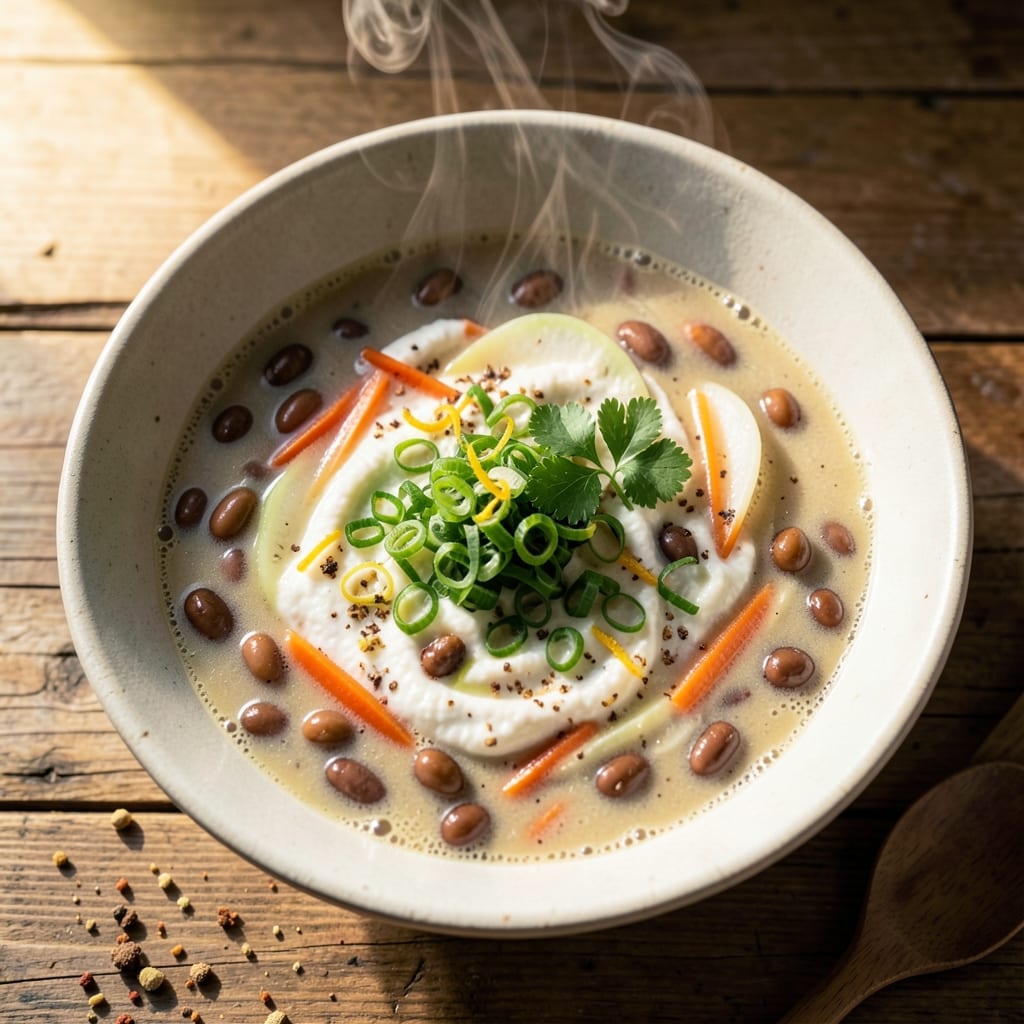
This adzuki bean soup recipe delivers a harmonious blend of sweet, savory, and nutty flavors that make it a comforting staple. 🌟 The secret lies in slow-simmering adzuki beans with aromatic vegetables and a touch of miso for depth, creating a broth that's both hearty and delicate. I developed this version after testing countless variations, focusing on simplicity and balance—no complicated techniques required, just pure, satisfying flavor.
The beauty of this soup is its versatility—it works as a light lunch, a warming dinner, or even a base for noodles. Toasted sesame seeds add a satisfying crunch that contrasts perfectly with the tender beans and silky broth. What sets this recipe apart is the way the sweetness of the beans and the umami from the miso come together, creating a profile that's both familiar and exciting.
By the time you're done, you'll have a bowl of soup that's rich in texture and flavor—creamy beans, vibrant vegetables, and a fragrant broth that's packed with depth. The aroma alone will have everyone gathering around the table, while the first spoonful delivers that perfect balance of sweet and savory that keeps you coming back for more.
Serve it with steamed rice for a complete meal, or enjoy it as-is with crusty bread to soak up every last drop. This recipe is designed to be adaptable, so feel free to adjust the ingredients to suit your taste—whether you prefer it lighter or more robust, the foundation remains the same.
Ingredients for adzuki bean soup
Sweet adzuki beans meet umami miso and toasted sesame for a soul-warming bowl.
| Ingredient | Amount | Notes |
|---|---|---|
| Adzuki Beans 🌱 | 1 ½ cups | Dried, soaked overnight |
| White Miso Paste 🧈 | 2 tbsp | High-quality, preferably organic |
| Dashi Powder 🍜 | 1 tbsp | Vegan version with kombu/shiitake |
| Carrots 🥕 | 2 medium | Whole, peeled, sliced into rounds |
| Daikon Radish 🥬 | 1 cup | Julienned or thinly sliced |
| Green Onions 🧅 | 4 whole | White and green parts separated |
| Garlic Cloves 🧄 | 3 cloves | Minced, fresh preferred |
| Ginger 🌿 | 1 tbsp | Fresh, grated, peeled |
| Sesame Oil 🫒 | 1 tbsp | Toasted, for finishing |
| Sesame Seeds 🥜 | 2 tbsp | Toasted until golden |
| Vegetable Broth 💧 | 4 cups | Low-sodium preferred |
| Rice Vinegar 🍶 | 1 tbsp | For brightness |
| Sugar 🍬 | 1 tbsp | Adjust to taste |
| Salt 🧂 | 1 tsp | To taste, adjust at end |
Adzuki beans are the heart of this soup—soak them overnight for perfect texture. Asian grocery stores carry them dried, or grab canned for convenience (just rinse well). The miso? White miso is sweeter and milder—perfect for balancing the beans' natural sweetness. If you can't find it, red miso at half the amount works, but the flavor will be deeper. For the daikon, pre-cut julienne packs at Trader Joe's save time, but fresh has better texture. The dashi powder is key—look for vegan versions (avoid bonito flakes) at specialty stores or online.
No sesame oil? Toasted peanut oil gives a similar nutty depth, though the flavor will differ slightly. Subbing daikon for regular radish? Use half the amount—it's milder. The ginger and garlic can be swapped for 1 tbsp ginger paste and 2 tbsp garlic powder if fresh isn't available, but fresh is worth it. For a lighter broth, reduce the miso to 1 tbsp and add an extra cup of broth. The sugar balances the savory notes—maple syrup works too if you prefer a natural sweetener. Toast the sesame seeds in a dry pan until they smell nutty—don't walk away or they'll burn.
This soup tastes even better the next day as flavors meld. Store in an airtight container for 5 days in the fridge or 3 months frozen. For freezing, cool completely first. I like to make a big batch—double the recipe—so I can freeze portions for quick lunches. The sesame seeds keep in the pantry for 6 months, and the miso? Once opened, it lasts forever in a cool, dark place. Reheat gently on the stove—no boiling or the beans get mushy.
Why You'll Love This Recipe
- Minimal Chopping Required: I swear by this—just dice the carrots and daikon into fat, uneven chunks. No peeling needed (seriously, the skin adds texture), and the adzuki beans go straight from the can or jar into the pot. Five minutes max, and you’re not standing at the counter for 20.
- Umami Bomb Combo: That white miso and dashi powder? It’s where the magic happens. The miso gives this soup a deep, savory richness (no salt bombs here), while the dashi cuts through the earthiness of the beans. Honestly, the first sip makes you wonder why you’ve never made soup this flavorful before.
- Lunchbox Hero: Between us, this is my go-to for meal prep. The flavors actually improve the next day—yes, really. Pack it cold or reheat it, and it’s still hearty enough to fill a lunchbox. My kids (and my husband) fight over who gets the thermos version.
- Pantry Staple Power: You’re already using what’s in your cupboard. No obscure ingredients, no last-minute grocery runs. The beans are cheap, the miso lasts forever, and daikon and carrots keep for weeks. I’ve made this soup on a $5 budget—it’s my emergency meal when the fridge is bare.
Step-by-step instructions for adzuki bean soup
Here's how to create a rich, comforting bowl that balances sweet and savory notes perfectly.
🍳 Step 1: Sauté Aromatics Until Fragrant
Heat a large pot over medium heat and add the 1 tbsp sesame oil. Once shimmering, add the 3 cloves minced garlic and 1 tbsp grated ginger, stirring constantly for 30 seconds until you smell that bright, zesty aroma. Add the 2 medium sliced carrots and 1 cup julienned daikon radish, cooking for 4-5 minutes until the vegetables begin to soften slightly but still hold their shape.
Here's the thing—don't let the vegetables brown. You want them to stay vibrant and slightly crisp. If they start sticking, add a splash of vegetable broth to deglaze. The sweetness of the carrots and daikon will develop as they cook, so keep them al dente.
👨🍳 Step 2: Build the Flavor Base
Add the 1 tbsp dashi powder and stir for 30 seconds**> to bloom its umami depth. Then add the 2 tbsp white miso paste, stirring constantly to dissolve completely. You'll see the soup thicken slightly as the miso melts into the oil and vegetables.
Now pour in the 4 cups vegetable broth and bring everything to a gentle boil. Once boiling, add the 1.5 cups soaked adzuki beans (drained), the 1 tbsp sugar, and the 1 tbsp rice vinegar. The sugar will help balance the earthy flavors while the vinegar adds a subtle tang. Stir once to combine, then reduce heat to medium-low.
⏰ Step 3: Simmer Until Beans Are Tender
Let the soup simmer uncovered for 45-60 minutes, stirring occasionally. You're looking for the beans to become fork-tender but still hold their shape—when you press a bean with a fork, it should give slightly but not fall apart. The liquid should reduce slightly, creating a thicker, more concentrated broth.
I check for doneness by tasting a bean after 45 minutes. If it's still firm, let it cook another 10-15 minutes. The soup should smell like a cozy blend of sweet beans, umami miso, and fresh ginger. If it looks too thin at the end, simmer uncovered another 5 minutes to thicken naturally.
🥘 Step 4: Finish with Fresh Herbs and Toasted Seeds
Once the beans are tender, turn off the heat and stir in the white parts of the 4 green onions (chopped) and the 1 tsp salt. Taste and adjust seasoning—you might want to add a pinch more salt or a touch more sugar if needed. The soup should be perfectly balanced between sweet and savory.
In a dry skillet over low heat, toast the 2 tbsp sesame seeds for 2-3 minutes until golden and fragrant. Divide the soup among bowls, then drizzle with the 1 tbsp sesame oil and sprinkle with the toasted sesame seeds and the green parts of the green onions. The contrast of crunchy seeds and silky broth is what makes this soup truly special.
Pro Tips For Making Adzuki Bean Soup
- SOAK BEANS OVERNIGHT: I learned this the hard way—rushing adzuki beans by boiling them dry ruins the texture. Give them 8+ hours in water first, then simmer in fresh broth. The difference in tenderness is night and day, and you’ll avoid that mealy, sad mouthful.
- DISSOLVE MISO GRADUALLY: White miso burns faster than you’d think. Start by whisking it into a splash of hot broth first, then pour the mixture in. Stir like you’re trying to erase a crime scene—constant, gentle motions. If you dump it in whole, you’ll end up with bitter lumps instead of that smooth, savory base.
- CHOP DAIKON THINLY: Skip the thick chunks—thinly sliced daikon (about 1/8-inch) softens perfectly and blends into the soup without turning it into a radish stew. Use a mandoline if you’re impatient, but a sharp knife works too. Your future self will thank you when the texture is silky, not chewy.
- SIMMER LOW AND LONG: Adzuki soup isn’t a race. After the initial boil, drop the heat to a bare simmer—just small bubbles breaking the surface—and let it cook for 45–60 minutes. Rushing it makes the beans tough and the broth thin. Patience here guarantees a rich, cohesive flavor, not a sad, watery mess.
Dietary considerations for this recipe
Vegan-Friendly Foundation
This recipe is naturally vegan and packed with plant-based protein from adzuki beans, making it perfect for anyone avoiding animal products. The white miso paste and dashi powder (vegan version) provide deep umami flavor without dairy or meat. I love that it’s hearty enough to satisfy yet light enough for a quick lunch—ideal for vegan diets or plant-based lifestyles. 🌱
Gluten-Free Adaptations
Standard miso contains gluten, but you can easily swap it for gluten-free tamari or coconut aminos—just reduce the amount by 20% since they’re less concentrated. The dashi powder should also be gluten-free (check for soy sauce-free versions). For extra richness, add 1 tbsp nutritional yeast to mimic the umami depth. Always verify labels, as cross-contamination is common in shared facilities.
Low-Sodium Options
To cut sodium, use low-sodium vegetable broth (or homemade) and reduce the 1 tbsp salt to just ½ tsp. Boost flavor with extra fresh ginger or garlic—both add depth without salt. The rice vinegar and sugar help balance the broth’s taste naturally. If your miso is high-sodium, rinse the beans thoroughly after soaking to remove excess minerals.
Allergen-Free Swaps
For sesame allergies, replace sesame oil with avocado oil and omit the sesame seeds (use toasted pumpkin seeds instead). If daikon radish is an issue, swap it for regular radish (halve the amount) or cucumber (peeled and thinly sliced). Always double-check labels on miso and dashi powder for hidden allergens like soy or wheat.
Protein Boost
Add ½ cup cooked quinoa or toasted chickpeas for extra protein. Stir in 1 tbsp tahini at the end for a creamy texture and nutty flavor. For a tofu version, crumble ½ cup firm tofu into the soup during the final 10 minutes of simmering. These additions keep the dish vegan while making it even more filling.
Kid-Friendly Tweaks
Make it sweeter by adding ½ tsp vanilla extract or 1 tsp maple syrup. Blend the soup until smooth for a creamy texture kids love. Serve with steamed rice or soft bread to soak up the broth. Omit the green onions and reduce the ginger slightly—milder flavors help picky eaters enjoy it too. 💛
Nutrition facts
Frequently asked questions
Why do I need to soak adzuki beans overnight?
Soaking reduces cooking time and prevents tough, dry beans. The beans absorb water overnight, which helps them soften evenly during simmering. For a shortcut, use canned adzuki beans (rinse well), but soaked dried beans develop richer flavor and better texture.
Can I make this soup without miso paste?
Yes! Replace the 2 tbsp white miso with 1 tbsp soy sauce plus 1 tbsp maple syrup for similar umami-sweet balance. For extra depth, add ½ tsp smoked paprika or 1 tsp nutritional yeast. The broth will taste slightly different but still delicious.
How do I fix mushy beans after cooking?
If beans turn mushy, it means they overcooked. Next time, check doneness at 45 minutes and simmer uncovered to reduce liquid. For already-mushy beans, blend half the soup until smooth, then stir back in—this creates a creamy texture that hides the issue.
What's the best way to reheat leftovers?
Gently reheat on low heat with 1-2 tbsp water to prevent thickening. Never boil—it breaks down the beans' texture. For extra flavor, add a splash of rice vinegar or a pinch of salt while warming. Store in an airtight container for 5 days.
Can I use canned adzuki beans instead of dried?
Canned beans save time but may need 10-15 minutes less simmering. Rinse well to remove excess sodium, then follow the same steps. For texture, add ½ cup cooked quinoa or toasted chickpeas to bulk up the soup if needed.